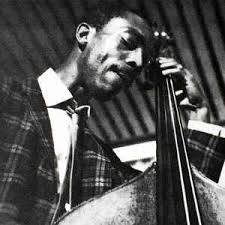
Requisites
East Coasting is an album by Charles Mingus, recorded in New York City on August 16, 1957 for the Bethlehem record label and released later the same year. All of the songs were composed by Mingus except where noted.
TRACKLIST | 38:49
- Memories of You [Take 7] (Eubie Blake, Andy Razaf) – 4:27
- East Coasting [Take 4] – 5:13
- West Coast Ghost [Take 6] – 10:2
- Celia [Take 5] – 7:54
- Conversation [Take 16] – 5:28
- Fifty-First Street Blues [Take 4] – 5:48
- East Coasting [alternate take] – 5:30
- Memories of You [alternate take] (Blake, Razaf) – 4:42
PERSONNEL
- Charles Mingus – bass
- Clarence Shaw – trumpet
- Jimmy Knepper – trombone
- Shafi Hadi – alto saxophone, tenor saxophone
- Bill Evans – piano
- Dannie Richmond – drums
East Coasting ~ Charles Mingus | By Eddie Carter
This next LP from the library is one of the underrated jewels in the discography of jazz legend, Charles Mingus. A distinguished bandleader, bassist, civil rights activist and composer, Mingus played on and produced some of the greatest albums during the fifties. He founded an independent record label, Debut Records in 1952 with his first wife, Celia, and drummer Max Roach. Charles also recorded for several record labels throughout his career, Atlantic, Candid, Columbia, Impulse, Mercury and United Artists Jazz. For his autobiography, Beneath the Underdog: His World as composed by Mingus, co-written with Louis Lomax, the bassist worked for nearly two decades writing the book until it was published in 1971. The original manuscript totaled nearly fifteen-hundred pages, but the published copy was reduced by nearly two thirds. The album offered now for your consideration is East Coasting (Bethlehem Records BCP 6019), released in 1957. It comes four years after Jazz at Massey Hall and two years before his 1959 Post-Bop masterpiece, Mingus Ah Um. The lineup is Clarence Shaw on trumpet; Jimmy Knepper on trombone; Shafi Hadi on alto and tenor saxes; Bill Evans on piano and Dannie Richmond on drums. My copy used in this report is the 2014 Pure Pleasure UK Mono Audiophile reissue (PPAN 6019).
The album opener is the 1930 song, Memories of You by legendary jazz, ragtime pianist Eubie Blake and Andy Razaf. Shaw on muted trumpet and Mingus present the introduction affectionately preceding the sextet’s tender melody. Evans takes the first solo with a brief reading of elegant sincerity, revealing a glimpse of what he would play two years later on Kind of Blue. Knepper is up next, caressing each note with a lushness and warmth conveying his deepest feelings and roots in a personal expression that will linger long after the song ends. Hadi opens things up on the song’s final interpretation with a short tenor solo of potent playing that’s superbly matched by Richmond’s pensive brushwork into the ensemble’s melodic closing chorus. The title tune is a lighthearted medium tempo swinger and the first of five originals by Mingus making up the remainder of the album. The solo order is Knepper, Evans, Shaw, Hadi and opens with the sextet’s spirited theme treatment. Jimmy is up first with a vivaciously spirited opening statement swinging smoothly to a splendid climax. Bill makes the next solo his own with an exceptional performance that’s completely infectious. Clarence also captivates with a reading that bounces along off the rhythm section’s supplement. Shafi, still on tenor, takes the stage last, wailing on a bewitchingly delightful presentation into a dazzling ending.
West Coast Ghost ends the first side with a distinctive mixture of bop and the blues bringing to mind the street musicians march through the French Quarter in New Orleans. Mingus describes the tune as himself because while living in New York, many of his peers thought him to be an East Coast musician exclusively. That wasn’t the case; Charles saw himself as a West Coast bassist because he also had a home in California and spent a lot of time there also. Clarence leads off with a bright, relaxed interpretation. Shafi soars seamlessly on the next solo, holding no punches with a stimulating sound that’s irresistible. Bill communicates his points well on a luminous performance, then Jimmy hits a splendid pace on the fourth interpretation with imposing authority. Charles puts an exclamation point on this enjoyable tune, casting his spell with a gripping presentation before the reprise. Celia, a poignantly beautiful ballad by Mingus named for his wife opens the second side. She was a producer of documentaries and they were married from 1951 to 1958. The song starts with a gentle introduction by the trio possessing a quiet fire that glows deeply into Clarence’s dreamy muted trumpet for the opening and closing melody. Shafi leads off this time on alto with a soft, sensuous interpretation. Jimmy comes next, delivering an affectionately delicate message. Bill follows him with an intimately lyrical performance that’s stunning. Clarence takes the final bow with the mute off for an enthralling performance before the tender-hearted coda.
The sextet carries on a medium tempo dialogue for Mingus’ Conversation, opening their chat with a bluesy melody in unison led by the front line. Clarence, Jimmy, and Shafi, back on tenor speak individually for one chorus each, then join forces for a three-instrument talk on the next two verses. Bill sums up the song and discussion nicely with an effective solo performance preceding the ending. The closer is Charles’ Fifty-First Street Blues named for the street he and Celia lived on at the time. She gave the song its name and it’s presented with a relaxed beat. Shafi goes to work first with a splendid opening statement, Clarence takes a brassy bite out of the second reading, then Jimmy gives an utterly charming reading exhibiting his rhythmic flexibility very effectively. Bill eases into the final interpretation as mild as a smooth sherry propelled by the sweet beat of Charles’ bass and Dannie’s drums.
The personnel on East Coasting were all members of The Jazz Workshop at the time it was recorded except for Bill Evans and Clarence Shaw. This is also the only time I know of that Evans and Mingus appeared together on an LP. Clarence Shaw comes from Detroit and played with Kenny Burrell, Donald Byrd, Wardell Gray, and T-Bone Walker among others. Jimmy Knepper was born and raised in Los Angeles, he was a significant musician in the orchestras of Woody Herman, Stan Kenton, and Claude Thornhill, and also played with alto saxophonist Charlie Parker. Shafi Hadi, born Curtis Porter comes from Philadelphia, Pennsylvania but grew up in Detroit gaining several years of rhythm and blues experience as an alto saxophonist, before embarking on a jazz career also playing the tenor sax. Bill Evans joined The Miles Davis Sextet in 1958, appearing on the album Jazz Track and Miles’ timeless classic, Kind of Blue a year later. After leaving Davis, he formed a trio that would become the gold standard for all piano, bass, drums groups that would follow and hailed as one of the greatest ensembles in jazz. Dannie Richmond who I became acquainted with on the 1960 album, Jenkins, Jordan, and Timmons was born in New York and raised in Greensboro, North Carolina. He began as a rhythm and blues tenor saxophonist but would abandon both the instrument and the music in 1956 to become a jazz drummer. The sound quality of this Mono reissue is breathtaking with crystal clear transparency throughout the highs, midrange, and low end. The remastering by Ray Staff also makes this album, a serious choice to consider auditioning for your library. If you’re a fan of Cool Jazz and Hard-Bop, East Coasting is an excellent and quite intriguing example of both styles by one of the best musicians in jazz, Charles Mingus!
~ Jazz at Massey Hall (Debut Records DEB-124); Jazz Track (Columbia CL 1268); Jenkins, Jordan, and Timmons (Prestige New Jazz NJLP 8232); Kind of Blue (Columbia CL 1355/CS 8163); Mingus Ah Um (Columbia CL 1370/CS 8171) – Source: Discogs.com
~ West Coast Ghost, Fifty-First Street Blues, Personnel – Source: Album liner notes by Nat Hentoff
~ Memories of You – Source: JazzStandards.com
~ Remastered by Ray Staff at Air Mastering, Lyndhurst Hall, London
Charles Mingus, Debut Records, Beneath the Underdog – Source: Wikipedia.org
More Posts: bass,choice,classic,collectible,collector,history,instrumental,jazz,music

Three Wishes
When the inquiry came his way from Pannonica, bassist John Ore gave his three wishes answer with:
-
-
“To be able to play – play well.”
-
“To be all over the world, in good health.”
-
“To have a time machine.”
-
*Excerpt from Three Wishes: An Intimate Look at Jazz Greats ~ Compiled and Photographed by Pannonica de Koenigswarter

More Posts: baroness,bass,history,instrumental,jazz,music,pannonica,three,wishes
Daily Dose Of Jazz…
Johnny Williams, Jr. was born on March 13, 1908 in Memphis, Tennessee he learned to play the violin as a child, switched to tuba as a teenager, playing both tuba and the stand-up bass while playing in regional territory bands in the southern states.
A move to New York City in 1936, had him working with jazz luminaries such as Red Allen, Buster Bailey, Sidney Bechet, Benny Carter, J.C. Higginbotham, Billie Holiday, Harry James, James P. Johnson, the Mills Blue Rhythm Band, Frankie Newton, and Teddy Wilson.
In the early 1940s he also played in the bands of Coleman Hawkins and Louis Armstrong before joining Teddy Wilson’s band once again. He and Edmond Hall recorded together in 1944 and worked together until 1947. Following this collaboration, Williams played with Tab Smith and then with Johnny Hodges in the mid-1950s.
From the 1960s onward, Williams was less active, though he worked occasionally with musicians such as Buddy Tate in 1968, Red Richards in the Seventies, and Bob Greene from 1978 to 1982. Tubist and double-bassist Johnny Wiliams Jr. performed with the Harlem Blues and Jazz Band from 1978 to1998 until he had a stroke and passed away later that year on October 23, 1998 in New York City.

Daily Dose Of Jazz…
Herb Bushler was born March 7, 1939 in New York City and played piano and tuba in his youth before picking up double bass. Classically trained in bass he has performed with symphony orchestras in this capacity. In 1966 he began a longtime association with ballet and film composer Coleridge-Taylor Perkinson.
He worked extensively in jazz idioms in the 1960s and 1970s, including David Amram, Ted Curson, Blossom Dearie, Tony Williams, and Paul Winter. He first played with Gil Evans in 1967, an association that would continue on and off until 1981.
Other work during the 1970s included sessions with Enrico Rava, Joe Farrell, Ryo Kawasaki, David Sanborn, and Harold Vick. He played with The Fifth Dimension in the 1960s and has also worked with Dee Dee Bridgewater, Billy Harper, Les McCann, Joe Chambers, and Howard Johnson. Bassist Herb Bushler, never recording as a leader, continues to perform and record utilizing both double bass and electric bass.
More Posts: bandleader,bass,history,instrumental,jazz,music,tuba

Daily Dose Of Jazz…
Bill Pemberton was born William McLane on March 5, 1918 in New York City and played violin as a child before switching to bass. From 1941 to 1945 he was a member of Frankie Newton’s orchestra and then went on to work with Herman “Ivory” Chittison, Mercer Ellington, Eddie Barefield, and Billy Kyle later in the 1940s.
During the Fifties, he worked with Art Tatum and Rex Stewart, and from 1966 to 1969 was Earl Hines’s bassist, including for international tours and at the 1967 Newport Jazz Festival and Monterey Jazz Festival.
He also worked with Buck Clayton in 1967. In 1969 he joined the JPJ quartet alongside Budd Johnson, Oliver Jackson, and Dill Jones, and remained with the group until 1975. Simultaneously he played with Ruby Braff, Max Kaminsky, and Vic Dickenson. He rejoined Hines in 1977, playing in Europe with him and Benny Carter. Into the Eighties, he played with Panama Francis, Bill Coleman, and Doc Cheatham.
Double-bassist Bill Pemberton passed away on December 13, 1984 in New York City.
More Posts: bass,history,instrumental,jazz,music