

Daily Dose Of Jazz…
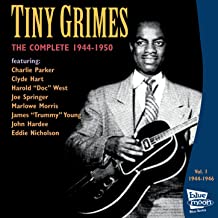
Jimmy Butts was born on September 24, 1917 in New York City, New York. Early in his career, he played with local groups Dr. Sausage and His Pork Chops and Daisy Mae’s Hepcats. Early in the 1940s, he played in the orchestras of Les Hite and Chris Columbus. He accompanied Frances Brock on USO tours during World War II.
In the 1940s Jimmy played with Don Redman, Art Hodes, Lem Johnson, Tiny Grimes, and Noble Sissle. Late in the decade he played in a duo with Doles Dickens and formed his own ensemble, which continued into the early 1950s.
The 1960s had Butts emigrating to Canada and playing with Juanita Smith. In the 1970s returning to New York City, he played with his own small group, working almost up until his death.
Double-bassist Jimmy Butts passed away on January 8, 1998 in New York City. His band remained together under the name Friends of Jimmy Butts after his death.

More Posts: bass,history,instrumental,jazz,music
Daily Dose Of Jazz…
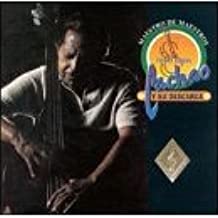
Israel López Valdés was born into a family of musicians on September 14, 1918 in Havana, Cuba. Better known as Cachao, a nickname and stage name given to him by his grandfather, as an 8-year-old bongo player, he joined a children’s son Cubano septet directed by a 14-year old Roberto Faz. A year later, already on double bass, he provided music for silent movies in his neighborhood theater, in the company of a pianist who would become a true superstar, the great cabaret performer Ignacio Villa, known as Bola de Nieve.
His parents made sure he was classically trained, first at home and then at a conservatory. In his early teens, Lopez was already playing contrabass with the Orquesta Filarmónica de La Habana, of which Orestes was a founding member. Under the baton of guest conductors such as Herbert von Karajan, Igor Stravinsky, and Heitor Villa-Lobos, he played with the orchestra from 1930 to 1960.
He and his older brother Orestes were the driving force behind one of Cuba’s most prolific charangas, Arcaño y sus Maravillas. As members of the Maravillas, Cachao and Orestes pioneered a new form of ballroom music derived from the danzón, the danzón-mambo, which subsequently developed into an international genre, mambo.
In the 1950s, Cachao became famous for popularizing improvised jam sessions known as descargas. In 1961, Cachao went into exile. He crossed the Atlantic by boat, reaching Madrid thanks to Ernesto Duarte, who demanded him to play with his orchestra–Orquesta Sabor Cubano–and where he spent a few years touring the country until the orchestra finally broke up in 1963. Moving to the United States that same year, Cachao became a session musician and was one of the most in-demand bassists in New York City, along with Alfonso “El Panameño” Joseph and Bobby “Big Daddy” Rodríguez.
Joseph and López substituted for each other over a span of five years, performing at New York City clubs and venues such as the Palladium Ballroom, The Roseland, The Birdland, Havana San Juan and Havana Madrid. While Cachao was performing with Machito’s orchestra in New York, Joseph was recording and performing with Cuban conga player Cándido Camero. When Joseph left Cándido’s band to work with Charlie Rodríguez and Johnny Pacheco, it was Cachao who took his place in Cándido’s band. In the 1970s, Cachao fell into obscurity after moving to Las Vegas, Nevada and then later Miami, Florida releasing albums sporadically as a leader.
The 1990s saw his re-discovery by actor Andy García, who brought him back to the forefront of the Latin music scene with the release of a documentary and several albums. Throughout his career, he performed and recorded in a variety of music styles ranging from classical music to salsa.
Double bassist and composer Cachao Lopez, who rose to prominence during the boogaloo years, who recorded sixteen albums as a leader and another twenty as singles, collaborator, and sideman, passed away in Coral Gables, Florida at age 89 on March 22, 2008.
More Posts: bandleader,bass,composer,history,instrumental,jazz
Daily Dose Of Jazz…
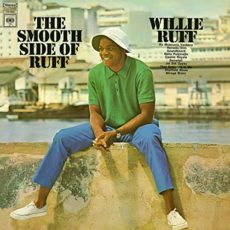
Willie Ruff was born on September 1, 1931 in Sheffield, Alabama and learned to play both the French horn and the double bass. He attended the Yale School of Music graduating with a Bachelor and Master of Music degrees by 1954.
He met pianist Dwike Mitchell in 1947 when they were teenage servicemen stationed at the former Lockbourne Air Force Base in Ohio. They began a professional relationship when Mitchell recruited him to play bass with his unit band for an Air Force radio program. They later played in Lionel Hampton’s band but left in 1955 to form their own group, then together as the Mitchell-Ruff Duo that lasted over fifty years. They also played as the second act to artists such as Louis Armstrong, Count Basie, Duke Ellington, and Dizzy Gillespie.
From 1955 to 2011, the duo regularly performed and lectured in the United States, Asia, Africa, and Europe. In 1950 the Mitchell-Ruff Duo was the first jazz band to play in the Soviet Union and in China in 1981. Ruff was chosen by John Hammond to be the bass player for the recording sessions of Songs of Leonard Cohen, was one of the founders of the W. C. Handy Music Festival in Florence, Alabama in 1982.
As an educator, Willie was a faculty member at the Yale School of Music, teaching music history, ethnomusicology, and arranging. He is founding Director of the Duke Ellington Fellowship Program at Yale, held a visiting appointment at Duke University, where he oversaw the jazz program and directed the Duke Jazz Ensemble, and also has been on faculty at UCLA and Dartmouth.
French hornist, double bassist, music scholar, and educator Willie Ruff, was awarded the Sanford Medal, the Connecticut Governor’s Arts Award, and was an inductee of the Alabama Jazz Hall of Fame, primarily a Yale professor from 1971 to 2017, and continues to reside in Alabama.
More Posts: bass,educator,french horn,history,instrumental,jazz,music
Daily Dose Of Jazz…
Red Kelly, born Thomas Raymond Kelly on August 29, 1927 in Shelby, Montana initially took lessons on drums, but he was unable to work the hi-hat because polio had inhibited the use of his feet. Switching to double-bass during his teen years, in 1949 he began playing bass in a big band led by Charlie Jackson.
In the early 1950s he toured with Charlie Barnet, Herbie Fields, Claude Thornhill, and Red Norvo. It was while working with Norvo that led to the moniker Red. Kelly and bassist Red Mitchell were living in the same apartment, and when Norvo called Mitchell to invite him to tour, he got Kelly on the phone instead.
He played with Woody Herman for several years, including on a 1954 tour of Europe, and around this time Red also recorded with Dick Collins and Nat Pierce. Relocated to the West Coast, he started playing briefly in Seattle, Washington and then in Los Angeles, California with Maynard Ferguson, Med Flory, Stan Kenton, and Lennie Niehaus.
He was a member of the Modest Jazz Trio with Red Mitchell and Jim Hall, who recorded an album in 1960, and worked with Harry James for most of the 1960s. Later in his life he moved to Tacoma, Washington where he left the music business and ran his own restaurant, Kelly’s. Double-bassist Red Kelly passed away on June 9, 2004 in Tacoma, Washington.

More Posts: bass,history,instrumental,jazz,music
Daily Dose Of Jazz…
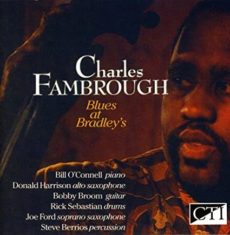
Charles Fambrough was born on August 25, 1950 in Philadelphia, Pennsylvania. He originally studied classical piano but switched to bass when he was 13. In 1968, he began playing with local pit bands for musicals and after some freelancing in 1970, he joined Grover Washington, Jr.’s band, staying with him until 1974.
Moving on he worked with Airto from 1975 to 1977), followed by McCoy Tyner for two years in 1978 and then on to be a part of the Jazz Messengers under Art Blakey from 1980 to 1982. Leaving the Messengers Charles freelanced as a sideman and led three CTI recordings with Wynton and Branford Marsalis, Roy Hargrove, Kenny Kirkland, Jerry Gonzalez, Steve Turre, Donald Harrison, Kenny Garrett, Abdullah Ibrahim, Grover Washington, Jr., Jeff “Tain” Watts, Stephen Scott, Billy Drummond, Bobby Broom, and Steve Berrios.
As a sideman, he worked and recorded sixteen albums with Kei Akagi, Craig Handy, Eric Mintel, and Roland Kirk among others. Reportedly been suffering from a number of serious ailments including end-stage renal disease and congestive heart failure, and benefit concerts had been held over the preceding several years in the Philadelphia area to help the bassist and his family defray the costs of his mounting medical bills.
Bassist, composer, and bandleader Charles Fambrough passed away at the age of 60 of a heart attack at his home in Allentown, Pennsylvania on January 1, 2011.
More Posts: bandleader,bass,composer,history,instrumental,jazz,music