

Requisites
In Action ~ J.R. Monterose and The Joe Abodeely Trio | By Eddie Carter
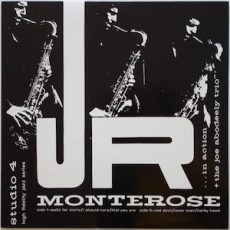
My next record from the library up for discussion is a little-known but highly sought-after 1964 studio album by tenor saxophonist J.R. Monterose and The Joe Abodeely Trio. In Action (Studio 4 SS 100) was recorded during a ten-month engagement at Iowa’s only jazz club at the time, The Tender Trap, which Abodeely owned. This album, with its historical significance in Monterose’s discography, is a unique release. There were only two hundred fifty original LPs made; fans could only purchase them at the cloakroom of the Cedar Rapids Jazz Club, and an original Mint pressing would cost a collector four figures or more. He was born Frank Anthony Peter Vincent Monterose, Jr. and the initials J.R. come from Jr.
Monterose began playing the clarinet at age thirteen, then took up the tenor sax two years later after hearing tenor man Tex Beneke, who was a member of the Glenn Miller Orchestra. The trio consists of Dale Oehler on the piano, Gary Allen on bass, and Joe Abodeely on drums. My copy is the 1983 U.S. Mono reissue (V.S.O.P. Records V.S.O.P. #1), a small record label known for its high-quality reissues of jazz LPs from the fifties and sixties. Waltz For Claire is a very pretty tune by J.R., starting with a cheerful theme. He continues with a blissful opening statement by the saxophonist, who communicates his feelings about the young lady with a charming performance. Dale takes the listener on a relaxing joyride in the closing solo ahead of the theme’s restatement and close.
I Should Care by Alex Stordahl, Paul Weston and Sammy Cahn premiered in the 1945 film Thrill of a Romance. The quartet begins with Monterose’s sensual sound of his tenor sax, delivering a delicate melody and then handling each note of the opening statement with tender, loving care. Oehler follows with a passionate performance packed with plenty of feeling before J.R. repeats the theme. That You Are, Monterose’s next tune, is a creative reimagining of All The Things You Are, a popular jazz standard. Monterose builds on the changes of the original with an upbeat, bright, bouncy theme. J.R. puts his thoughts into expressive verses first. Dave provides the exclamation point in an energetic solo, leading to the ending theme and fadeout.
The tempo moves upward to kick off the second side with Red Devil by Monterose, beginning at a brisk beat for the quartet’s theme. The saxophonist leads off with a flawless opening solo, and then Oehler dazzles on the finale with an imaginative flair. Lover Man by Jimmy Davis, Roger Ramirez, and James Sherman begins with a pensive melody by the foursome, segueing to J.R.s intimately warm interpretation. Dave responds with a delicately elegant and beautiful presentation. Monterose closes with a few final comments of exquisite softness anchored by Gary and Joe’s subtle supplement ahead of the tender close.
The final track is Monterose’s Herky Hawks, an uptempo tune that deceptively starts with a two-instrument conversation between the saxophonist and pianist at a slow tempo. This musical dialogue sets the stage for the rest of the piece. The discussion gradually builds in intensity, leading to a swift-moving speedy theme. This tune is a scorcher from the start, and the saxophonist turns the heat way up in the first of two solos. Dave attacks the next reading with aggressive fierceness, and then J.R. ends the album with a blistering final performance preceding the climax.
The recording engineers on this reissue are Dimitri Sotirakis and Myron Schiebel. Although there’s no information on either engineer, their work speaks volumes. They’ve done an excellent job with the sound quality of this album, bringing out the richness and depth of the music. The excellent sonics throughout the treble, midrange and bass complement the inspired performances by J.R. Monterose and The Joe Abodeely Trio, making In Action an underrated release deserving a spot in your jazz library!
~ Lover Man – Source: JazzStandards.com
~ I Should Care – Source: Wikipedia.org
© 2024 by Edward Thomas Carter

More Posts: choice,classic,collectible,collector,history,instrumental,jazz,music,saxophone
Requisites
The Final Tour: Copenhagen, March 24, 1960 ~ Miles Davis and John Coltrane | By Eddie Carter
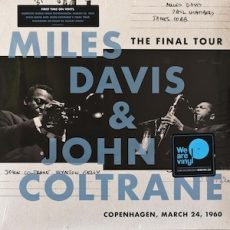
In this morning’s discussion, I’m presenting an album by Miles Davis and John Coltrane from the library for your consideration. The Miles Davis Quintet performed at the distinguished Denmark venue, Tivolis Koncertsal, for the first time as part of The Spring 1960 Jazz at The Philharmonic European Tour. However, changes were on the way, as the album’s title suggests, The Final Tour: Copenhagen, March 24, 1960 (Columbia Legacy 88985498741). It would mark the end of an era as tenor saxophonist John Coltrane was looking to leave and start his group. The rhythm section, Wynton Kelly on piano, Paul Chambers on bass, and Jimmy Cobb on drums, would also leave to become The Wynton Kelly Trio.
Despite the underlying questions facing the trumpeter, the quintet’s three performances for the capacity audience that evening were brilliant and a highlight of the tour. To kick things off, Norman Granz, the master of ceremonies, introduced each man individually, with the crowd’s largest ovations reserved for Paul, John, and Miles. My copy is the 2018 European Mono Limited Edition reissue. With a few snaps of the leader’s fingers, the trio kicks off So What by Miles Davis with a short introduction segueing into Miles’ and John’s infectious melody, a captivating tune that immediately draws you in. Davis ignites the first solo with intense heat. John comes in next to dispense a bit of rhythmic fury, and then Wynton infuses the finale with jubilant enthusiasm ahead of the closing chorus and climax.
The pace slows to mid-tempo as the ensemble begins On Green Dolphin Street by Bronislaw Kaper and Ned Washington from the 1947 film Green Dolphin Street. The first part of this standard opens with the theme unfolding at a leisurely pace and Miles, on the muted horn, leading the way into a delightful opening statement. John soars cheerfully into a captivating, well-behaved performance. Part Two of On Green Dolphin Street starts on the second side, with Wynton cruising at a comfortable speed behind both horns in the following interpretation, as smooth as silk. Paul takes his first opportunity to solo with a brisk footnote on the closing statement that swings masterfully into the theme’s return and finale.
All Blues by Miles Davis affords the leader, John, and Wynton ample solo space. Paul gets things off to a good start with a concise introduction, leading to Miles’s carefree theme back on the muted horn. He removes it to begin the opening statement. John follows him with a relaxing interpretation that is as enjoyable as a day at the beach. Wynton sustains the easygoing pace with a gorgeous performance into the ending theme and soft summation. The closer is an incomplete take of Miles’ The Theme, a deliberate choice that signals the end of the set and album, lasting only thirty seconds until it fades to nothingness. The mastering of The Final Tour: Copenhagen, March 24, 1960, by Mark Wilder is a demonstration class and a great way to show off a mid-level or high-end audio system.
The vinyl is exceptionally quiet until the music starts, and the instruments have outstanding detail. This reveals an incredible soundstage with superbly presented music, thanks to jazz producer George Wein, Danish Radio and the Danish Programming Company, who originally recorded the shows for broadcast. This is my first LP from the We Are Vinyl series from Columbia-Legacy, and judging by its superb sound quality, it won’t be the last. If you’re a fan of either of these giants and are looking for a live jazz album where each musician is at the peak of their creativity. In that case, I enthusiastically invite you to check out The Final Tour: Copenhagen, March 24, 1960, by Miles Davis and John Coltrane. It’s an LP that merits serious consideration for any jazz fan’s library, and I am sure you’ll enjoy it!
~ On Green Dolphin Street – Source: JazzStandards.com
© 2024 by Edward Thomas Carter
More Posts: choice,classic,collectible,collector,history,instrumental,jazz,music,saxophone,trumpet
Requisites
Sound Pieces ~ Oliver Nelson | By Eddie Carter
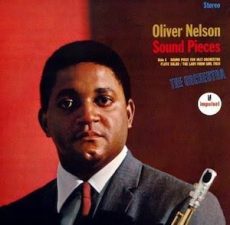
My next record from the library is by Oliver Nelson, one of jazz’s finest arrangers, composers, and multi-instrumentalists, which is too good to leave sitting on the shelf. Few performances on LP ever reached the heights of his 1961 release, The Blues and The Abstract Truth, producing his biggest hit, Stolen Moments. Sound Pieces (Impulse A-9129/AS-9129) is one that did, and in the process, became one of the best albums in Nelson’s discography. What sets Sound Pieces apart is its unique combination of a large ensemble for three works of orchestral jazz on Side One and a quartet in a more intimate setting on Side Two. My copy is the original 1966 US Stereo release.
The personnel on this date are an all-star ensemble. John Audino (tracks: A1 to A3), Bobby Bryant (A1), Conte Candoli, Oliver Mitchell (A1 to A3), Al Porcino (A2, A3) on trumpet; Bill Byers (A2, A3), Dick Noel (A1), Ernie Tack (A1 to A3) on trombone; Red Callender (A2, A3) on tuba; Bill Hinshaw, Richard Perissi (A1 to A3) on French horn; Gabriel Baltazar Jr. and Bill Green (A1 to A3) on alto sax; Plas Johnson, Bill Perkins (A1 to A3) on tenor sax; Jack Nimitz (A1 to A3) on baritone sax; Oliver Nelson (A1 to B3) on soprano sax; Gabriel Baltazar Jr., Bill Perkins (A2, A3) on clarinet; Steve Kuhn (B1 to B3), Mike Melvoin (A2, A3) on piano; Ray Brown (A2, A3), Ron Carter (B1 to B3) on bass; Shelly Manne (A2, A3), Grady Tate (B1 to B3) on drums.
Sound Piece For Jazz Orchestra is an unforgettable story of music told in two main themes: the first one is a calm state of tranquility. The second is a searing portrayal originally written for The Stuttgart Radio Dance Band in 1963. The song opens with the bass clarinets sounding a commanding call and an exceptional utilization of brass and winds to announce the majestic chorus with strong statements. Originally written for alto saxophone, Oliver is featured on soprano sax and is the song’s only soloist in both sections. When the pace slows down to a softer tempo, he delivers a thoughtfully sensitive interpretation, caressing each phrase with the clarinets and horns discreetly in the background, culminating in a tender finale. The rhythm section shifts the song back to uptempo for the orchestra to restate the melody, stepping aside for Nelson, who gives an intense workout on the closer before the stunning finale.
Flute Salad is an original by Oliver Nelson that, as the title suggests, places the flutes in front, leading the orchestra in the animated opening and ending melodies. Conte Candoli is the featured soloist, and his muted horn delivers an air of assurance that flows sonorously with the brass section in support. The Lady From Girl Talk by Oliver was written for Actress Virginia Graham, who hosted Girl Talk, a syndicated program using this tune as her theme. The trombones announce the introduction before evolving into the orchestra’s full-bodied melody. Mike Melvoin begins a taut opening solo of rhythmic joy, illustrating his nimble hands at work. Oliver follows, his soprano moving gracefully with soulful precision on the closer for a compelling reading that is especially impressive.
The Shadow of Your Smile by Johnny Mandel and Paul Francis Webster is also known as Love Theme From The Sandpiper. Steve, Ron, and Grady join Oliver in presenting a Bossa Nova version, opening with the introduction as if the quartet is playing the standard at a slow tempo. The mood moves upward to a medium beat for the melody with an energetic swing led by Nelson. Steve charges the opening statement with mild energy and agile phrases, exhibiting the cohesive harmony between himself, Carter, and Tate. Oliver closes with an affectionate performance of deep emotion, rich harmony, and warm phrasing that, to these ears, captures the essence of expressing the love the lyrics depict.
Patterns is an uptempo original that first appeared in Oliver’s 1966 Book, Patterns For Improvisation (Jamey Abersold), a collection of improvisational jazz patterns in various meters and feels that spells out some of the basic building blocks of the jazz language. It is the most adventurous and interesting tune on the album, beginning with a thematic statement that the quartet takes as far as it will go. The opening solo by Nelson is well-developed. Kuhn heightens the mood by supplying a scintillating closing presentation, held firmly by the always energetic foundation of Carter and Tate into the quartet’s reprise and climax.
The final track is Oliver’s Elegy For a Duck, which he recorded earlier in the year on Peter and The Wolf with organist Jimmy Smith. Based on the original work by Russian composer, conductor and pianist Sergei Prokofiev, Ron and Grady establish the introduction with a bouncy beat that is maintained throughout the entire song. Oliver and Steve join them for a bit of relaxed spontaneity on the theme. Then, the saxophonist settles in for a beautifully articulated opening statement that is brisk and merry. Kuhn closes with a refreshing performance of intriguing ideas, subtle moods, and impressions on each chorus, which is a deft musical portrayal.
The East Coast orchestra tunes were recorded by Bob Simpson of RCA Studios in New York, and the man behind the dials in the West Coast quartet sessions was Jim Lockert of Western Recorders. I was extremely impressed with each man’s work on Sound Pieces, and the sound quality is spectacular on both sides of the album. It is especially impressive during the orchestra tracks; Lockert accurately captures the brass, reeds, and drums and is as close to the real thing as I have heard. The highs are clear, the character of each instrument at midrange is crisp and natural, and there’s ample response in the bass region.
Oliver Nelson recorded six small group albums for Prestige, playing the alto and tenor sax, and nine more albums for Impulse, affirming his inspired leadership. He scored background music for films and television shows after moving to the West Coast in 1967. Oliver also recorded several excellent orchestra albums, including Afro-American Sketches in 1962 and Full Nelson in 1963, which are two of his finest LPs alongside The Blues and The Abstract Truth. He also arranged and produced records for some of the elite pop stars during the latter half of the sixties. It is no wonder why the Jazz and Pop communities mourned him deeply after his death from a heart attack at the age of forty-three on October 28, 1975!
I was fourteen when I first heard this album; it made quite an impression on me then, and I still find something new in the music each time I listen to it now. Impulse LPs also set a high standard for their releases with laminated gatefold covers, a distinctive spine color, incredible photography, knowledgeable liner notes, and great music. Sound Pieces is a tour-de-force of brilliant arrangements, incredible artistry, superb writing, and unparalleled listening pleasure by Oliver Nelson. A remarkable talent who, whether on record or in concert, always gave jazz fans exciting performances and albums that are still considered a must-have for any library!
~ Patterns For Improvisation – Source: Amazon.com
~ Afro-American Sketches (Prestige PRLP 7225/PRST 7225); Full Nelson (Verve Records V-8508/V6-8508); Peter and The Wolf (Verve Records V-8652/V6-8652); The Blues and The Abstract Truth (Impulse! A-5/AS-5); Bob Simpson, RCA Studios, Jim Lockert, Western Recorders – Source: Discogs.com
~ Sound Piece For Jazz Orchestra, The Stuttgart Radio Dance Band, Flute Salad, The Lady From Girl Talk, Patterns, Elegy For a Duck – Source: Album liner notes by Nat Hentoff
~ Girl Talk, Virginia Graham – Source: IMDB.com
~ Sergei Prokofiev – Source: Wikipedia.org
© 2024 by Edward Thomas Carter
More Posts: choice,classic,collectible,collector,history,instrumental,jazz,music,saxophone
Requisites
The Sound Of The Wide Open Spaces ~ James Clay and David “Fathead” Newman | By Eddie Carter
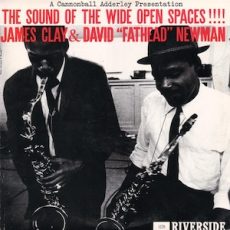
This morning’s album from the library brings together two Texas tenor saxophonists for the first of two recordings together. The Sound of The Wide Open Spaces (Riverside RLP 12-327/RLP 1148) is a 1960 release that marks the debut of James Clay and the second album by David “Fathead” Newman. The album’s title refers to the vast landscape of the Lone Star state. This hard bop blowing session allows both musicians to have a superb showcase in which to work. Wynton Kelly on piano, Sam Jones on bass, and Arthur Taylor on drums complete the quintet. My copy is the 1986 U.S. Original Jazz Classics Stereo reissue (Riverside OJC-257).
The quintet starts Side One with the opening ensemble to Wide Open Spaces by Babs Gonzales. David gets right down to business first. James takes the baton and gives an exhilarating interpretation; then Wynton comes in for a spirited reading. Clay and Newman return to share an energetic exchange ahead of the closing chorus. The front line eases up on the gas to begin They Can’t Take That Away From Me by George and Ira Gershwin. James steps into the opening statement with extreme confidence. David returns the compliment on the following reading, and then Wynton closes things out with masterful ease, leading to the theme’s reprise and ending.
Side Two begins with the rhythm section’s introduction to Some Kinda Mean by Keter Betts ahead of the front line’s laid-back theme. James is up first and moves leisurely through the opening solo. David is equally easygoing in the following reading. Wynton’s carefree interpretation precedes the theme’s restatement and the trio’s climax. James switches to the flute for the Johnny Burke, Bob Haggart standard, What’s New? The trio opens gently ahead of David’s tender melody. James leads the way with an emotionally sensitive statement. Wynton comes in next for a beautiful reading, and David delivers a gorgeous finale leading to the polite ending.
Figger-ration by Babs Gonzales takes off with the rhythm section’s quick introduction to the front line’s brisk melody. David is off to the races in the opening solo, then James takes a vigorous romp next. Wynton illustrates his agility in the following interpretation. Sam takes a short walk leading to a vigorous exchange by both horns ahead of the reprise and close. Julian “Cannonball” Adderley produced The Sound of The Wide Open Spaces and Jack Higgins was the recording engineer. The sound quality of this OJC reissue is exceptional, with an excellent soundstage allowing the instruments to come through your speakers vibrantly, as if the musicians are playing in front of your sweet spot, providing an immersive experience for the listener.
The Sound of The Wide Open Spaces by James Clay and David “Fathead” Newman is an overlooked, but wonderful album that, in my opinion, is a perfect place to start if you’re beginning your journey into either musician’s discography. Its got good tunes with great solos by five remarkable musicians who together have created an album that should appeal to any jazz collector and become a welcome addition to any jazz fan’s library!
~They Can’t Take That Away From Me, What’s New? – Source: Jazz Standards.com © 2024 by Edward Thomas Carter
More Posts: choice,classic,collectible,collector,history,instrumental,jazz,music,saxophone
Requisites
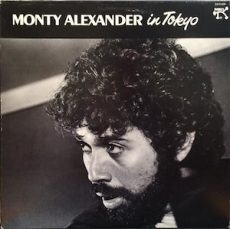
Monty Alexander In Tokyo | By Eddie Carter
I first heard Monty Alexander In Tokyo (Pablo Records 2310-836) in 1985 at the former jazz station, WNOP 740 AM, after my move to Cincinnati from Cleveland, Ohio. It was recorded during the pianist’s first trip to the city and is his nineteenth release as a leader. Here, he is working with two of the best in the business: Andy Simpkins on bass and Frank Gant on drums. My copy is the 1979 U.S. Stereo pressing, and the trio opens this musical adventure with a trip to Broadway by Billy Byrd, Teddy McRae and Henri Woode. They begin this catchy tune with a delightfully crafted melody. Monty cuts loose in a spirited statement that’s sure to have your fingers popping and toes tapping along until the song’s conclusion.
Just In Time by Jule Styne, Betty Comden, and Adolph Green starts with a short introduction by Monty, segueing into the threesome’s pulsating theme, who treats the standard like an old friend. Monty comes alive in the song’s only interpretation ahead of the closing chorus and finish. Sweet Lady is a lovely ballad by Dave Zoob, Frank Crumit, and Howard E. Johnson. It’s a showcase for Monty and Andy, who start the song with a tender introduction that leads to their enchanting melody. The duo sustains the gentle mood in the delicately sensitive statement they share, preceding a polite reprise and climax.
Tricotism by Oscar Pettiford begins with the trio introducing this happy swinger collectively before taking the theme at a fast clip. Monty kicks off the solos with a scintillating opening statement; then Andy takes over for a bit of brisk walking. The pianist has a second interlude before Frank engages in a short workout ahead of the melody’s restatement and ending. Never Let Me Go by Jay Livingston, and Ray opens with the threesome’s slow-tempo introduction. The pace picks up to a medium beat for the opening chorus, ahead of the pianist’s driving solo that has something to say into the closing chorus.
Up next is Montevideo by Richard Evans, which takes off from the opening notes of the trio’s upbeat introduction and melody. The rhythm section spurs Monty to soar into the stratosphere in the song’s only statement until he returns to Earth for the theme’s reprise and abrupt ending. Pawnbroker by Quincy Jones is a very pretty ballad from the 1964 film drama. It’s a solo showcase for Monty Alexander, and the pianist uses the poignant melody effectively to depict the song’s sincerity and melodic beauty in a gorgeous interpretation, preceding the melody restatement and a lovely summation.
See See Rider by Ma Rainey brings the album to a close on an upbeat note. The trio starts expressing their joy and pleasure in the melody. Monty is up first with an especially impressive interpretation; then Andy takes a short walk through the second reading. The pianist puts the finishing touches on the song ahead of the closing chorus and ending. Monty Alexander produced Monty Alexander In Tokyo, and Katsuyuki Handa and Kazutoyo Takeda were the recording engineers. The sound quality is excellent, with a vivid soundstage that transports the trio to your listening room’s sweet spot.
Whether you’re new to Monty Alexander’s music or a seasoned fan, Monty Alexander In Tokyo is a versatile album that’s perfect for any occasion. It’s the perfect soundtrack for a relaxing evening or a lively dinner with friends. I highly recommend adding it to your jazz library. With its diverse range of tracks, it’s a testament to the trio’s musical prowess and a must-have for anyone who loves a piano trio!
~ Just In Time – Source: JazzStandards.com
~ Broadway, See See Rider – Source: Wikipedia.org
© 2024 by Edward Thomas Carter
More Posts: choice,classic,collectible,collector,history,instrumental,jazz,music,piano