

Requisites
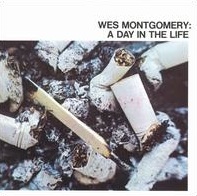
A DAY IN THE LIFE | WES MONTGOMERY
One of my favorite jazz albums that I first heard during my freshman year in college was the 1967 album A Day In The Life by Wes Montgomery. It was recorded on June 6 & 26, 1967 at the Van Gelder Studio in Englewood Cliffs, New Jersey and released on the A&M/CTI label later that year in September.
The 34:21 minute album is filled with covers of rock and pop songs selected by the guitarist who opens Side One with the title track, A Day In The Life by John Lennon and Paul McCartney, originally released on their Sgt. Pepper’s Lonely Hearts Club Band. It’s a great opener that builds from a quiet start into a cavalcade of strings by its end. Watch What Happens is from the 1964 musical romantic drama film The Umbrellas of Cherbourg written and directed by Jacques Demy, with music by Michel Legrand.
The Calvin Lewis and Andrew Wright #1 tune When a Man Loves a Woman is the third addition to the side and first recorded by Percy Sledge in 1966. California Nights is a song written by Marvin Hamlisch and Howard Liebling and recorded by Lesley Gore in 1967. The final song is Angel and is the only composition contributed by Montgomery.
Side Two is opened by another Lennon/McCartney song, Eleanor Rigby. One premise is that the inspiration for the title is the actress Eleanor Bron who starred in the Beatles movie Help!. Rigby came from the name of a store in Bristol, Rigby & Evens Ltd. Next up is Willow Weep For Me, that once again accounts the inspiration for the song is that Ann Ronnell, while at Radcliffe College, had been struck by the loveliness of the willow trees on campus, and this observation became the subject of an intricate song.
Windy, another No. 1 tune recorded by The Association, and was composed by Ruthann Friedman. Trust In Me was composed by Milton Ager, Jean Shwartz and Ned Wever and was made popular in 1937 by Mildred Bailey. Closing out the session is The Joker, a song by Leslie Bricusse and Anthony Newley, and is taken from the 1964 musical The Roar of the Greasepaint – The Smell of the Crowd. It’s a lament of a person, seen by the outside world as a jester and a comedian especially when they fail.
The recording session was produced by Creed Taylor, was arranged and conducted by Don Sebesky, the engineer was Rudy Van Gelder and the principal photography was performed by Pete Turner.
The guitarist did little more than play the melody using his distinctive octaves. A Day in the Life is a collaboration of guitar and strings. For these ears it was a pleasurable listening experience.

More Posts: choice,classic,collectible,collector,guitar,history,instrumental,jazz,music
Requisites
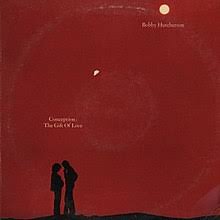
CONCEPTION: THE GIFT OF LOVE | BOBBY HUTCHERSON
Conception: The Gift of Love is a post bop album by vibraphonist Bobby Hutcherson. The album was recorded over a two day period on March 15 & 16, 1979 at A&R Recording Studios in New York City and at the Van Gelder Studio in Englewood Cliffs, New Jersey. The 37 minute, 52 second album was produced and arranged by Cedar Walton and released on the Columbia Records label.
Vibraphonist Bobby Hutcherson’s quintet includes pianist George Cables, bassist James Leary, drummer Eddie Marshall and percussionists Bill Summers and Kenneth Nash. He brings a stellar horn section to the session with flutist Hubert Laws, trumpeters Jon Faddis, Danny Moore, Anthony Tooley, Joseph B. Wilder, tenor trombonists Robert Alexander, John Gale, Urbie Green, bassoon and bass clarinetist Romeo Pinque, alto saxophone Lenny Hambro, and tenor saxophonists Daniel Trimboli and Frank Wess.
The seven originals were composed by the band members. Side One opens with the leader’s composition No Siree Bob (7:00), followed by Clockwise by Cedar Walton (6:39), and closes with James Leary’s Remember to Smile (5:38). Side Two commences with Dark Side, Light Side by George Cables (4:06), then another Leary composition Hold My Hand (3:58), Eddie Marshall’s Dreamin’ (6:07) and closes with a second Cable composition titled Quiet Fire (4:24).
Though some critics have claimed this album to be one of his lesser releases with nothing memorable occuring, there are some who state it is a masterpiece of lyrical, straight ahead jazz that is melodically beautiful. I found it to be an enjoyable escape and leave it to you to discover for yourself.
More Posts: choice,classic,collectible,collector,history,instrumental,jazz,music,vibraphone
Requisites
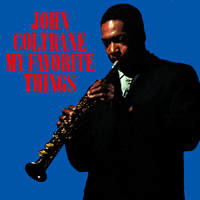
My Favorite Things ~ John Coltrane
My Favorite Things was the seventh studio album by jazz musician John Coltrane, recorded on October 21, 24, 26, 1960. Released in 1961 on Atlantic Records, it was the first album to feature him playing soprano saxophone, a gift from Miles Davis while they were on tour in Europe. An edited version of the title track became a hit single that gained popularity in 1961 via radio airplay, thus helping the record become a major commercial success. In 1998, the album received the Grammy Hall of Fame award. Fifty-eight years after its release, in 2018 the album attained gold record status, having sold 500,000 copies.
The title track is a modal rendition of the Rodgers and Hammerstein song My Favorite Things from The Sound of Music. The melody is heard numerous times throughout, but instead of playing solos over the written chord changes, both Tyner and Coltrane take extended solos over vamps of the two tonic chords, E minor and E major played in waltz time. This use of modal jazz is evident throughout the album.
The album consists of four songs with Cole Porter’s Ev’rytime We Say Goodbye following the title track on Side 1, then two from the brothers Gershwin, George and Ira, with Summertime and But Not For Me on Side 2. The length of the album is a mere 40:25 but is well worth the listen and a valued addition to any music library that one desires to build.
In the documentary The World According to John Coltrane, narrator Ed Wheeler remarks on the impact that this song’s popularity had on Coltrane’s career: The recording was a hit and became Coltrane’s most requested tune, and a bridge to his broad public acceptance.
The band features John Coltrane playing soprano saxophone on Side 1 and tenor on Side 2, McCoy Tyner on piano, Steve Davis on the double bass, and rounding out the quartet is drummer Elvin Jones.
The production team was Nesuhi Ertegün ~ producer, Tom Dowd, Phil Iehle ~ engineers, Lee Friedlander ~ photography, Loring Eutemey ~ cover design and Bill Coss wrote the liner notes.
More Posts: choice,classic,collectible,collector,history,instrumental,jazz,music,saxophone
Requisites
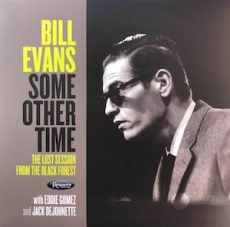
Some Other Time: The Lost Session From The Black Forest ~ Bill Evans | By Eddie Carter
This morning’s album is a studio release by one of my favorite pianists, Bill Evans, Some Other Time – The Lost Session From The Black Forest (Resonance Records HLP-9019). It was initially released on Record Store Day, April 16, 2016. Bill always had a wonderful approach to his playing, and it’s effectively demonstrated in this wonderful two-record collection of originals and standards. The pianist and his trio of Eddie Gomez on bass and Jack DeJohnette on drums had just concluded a successful engagement at the 1968 Montreux Jazz Festival a few days earlier before recording this album. My copy is the 2020 U.S. Record Store Day, Limited Edition Stereo reissue (Resonance Records HLP-2019B).
Side One opens with a lighthearted rendition of You Go To My Head by J. Fred Coots and Haven Gillespie. Bill leads the charge through the catchy, finger-popping melody and the song’s first interpretation. Eddie is up next with an especially appealing reading preceding Bill’s theme reprise and ending. Very Early by Bill Evans begins with a subdued piano introduction before the pace picks up for the theme. Evans takes the lead and expresses his thoughts in a beautiful example of his artistry. Gomez holds his own in a tender presentation ahead of the pianist’s return for the song’s conclusion.
Leslie Bricusse and Anthony Newley created the popular song, What Kind of Fool Am I? Bill and Eddie are the featured performers in this rendition. Evans introduces the tune and then shares a tasteful, articulate melody with Gomez. The opening solo by Bill is elegantly presented, and then Eddie takes a short, luxurious walk towards the theme’s restatement and climax. Evans and Gomez return for I’ll Remember April by Don Raye, Gene DePaul, and Patricia Johnston. This charming song is sheer poetry in Bill’s and Eddie’s hands as they state the theme. Both musicians shine in two brilliant performances culminating in a soft summation.
My Funny Valentine by Richard Rodgers and Lorenz Hart begins with a touchingly tender melody. Bill opens with a beautiful solo that envelops the listener. Eddie makes a profound impression on the following interpretation with Jack’s gentle brushwork keeping perfect time into the soothing reprise and ending. Side Two starts with Baubles, Bangles and Beads by George Forrest and Robert Wright. It’s another showcase for piano and bass, and their duet puts a fresh set of clothes on this old favorite with a collective theme. Bill has the first spot and gives a wonderful reading, and then Eddie struts through the following statement into the out-chorus.
The beat moves upward slightly for Turn Out The Stars by Bill Evans, a gorgeous tune that opens with a sweet introduction ahead of the threesome’s appealing melody. Bill has the song’s only reading and turns in an impressive improvisation ahead of the exit. It Could Happen To You by Jimmy Van Heusen is an old warhorse from the forties that the partnership of Evans and Gomez begins with a beautifully mellow opening chorus. Bill has the first spot and gives an opening performance characterized by poetic sensibility. Eddie takes over and is right at home in the closer preceding the duo taking it out softly.
In a Sentimental Mood is one of Duke Ellington’s best-known and recorded tunes. The trio makes their entrance together for the tender melody, stepping aside for Bill’s gorgeous opening statement. Eddie follows him like a warm evening breeze for a brief walk before the trio reconvenes for the theme’s restatement. These Foolish Things by Jack Strachey and Holt Marvell is a haunting song perfectly suited for Bill and Eddie’s playing. The duo doesn’t disappoint from the start of the delicately gentle melody into the pianist’s exquisitely beautiful opening solo. Gomez answers Evans with soothing bass lines leading to a quiet climax.
The trio closes the first record with the title tune, Some Other Time, by Leonard Bernstein, Betty Comden, and Adolph Green. The group’s interaction applies an equal amount of warmth and tenderness to the opening chorus. The pace picks up slightly for Bill’s breathtakingly beautiful interpretation ahead of an ending of perfect tranquility. You’re Gonna Hear From Me is the creation of spouses André and Dory Previn. It opens Side Three with a marvelous midtempo melody by the trio, leading to a delightful interpretation by the leader of Eddie and Jack’s solid foundation until the song’s conclusion.
Walkin’ Up is a lively little tune by Bill Evans that gets underway with a quirky theme and affords everyone a solo opportunity. The pianist opens with a short statement, then gives way to Eddie, who does the largest amount of walking in this song. Jack shares a small bit of inspired brushwork with Bill before the theme’s reprise ends as it begins. The trio takes on a second rendition of Baubles, Bangles and Beads that opens with a friendly, harmonious theme. Bill dips into his bag of goodies to deliver a carefree first solo, and then Eddie responds with a comforting interpretation before the trio returns for the close.
It’s All Right With Me by Cole Porter made its first appearance in the 1953 musical Can-Can and has been recorded numerous times. The setting for this incomplete take is a solo showcase for Bill to provide a charming interpretation culminating in a gorgeous finale. The listener is treated to a second rendition of What Kind of Fool Am I? Evans introduces the song in a short solo introduction that blossoms into the ensemble’s lively opening chorus. The pianist gets the solo spotlight again and swings easily to the rhythm section’s groundwork before Evans brings back the theme and a tranquil climax.
Side Four starts with a song by Burton Lane and Ralph Freed from the 1941 musical film Babes on Broadway, How About You? The trio’s melody takes off at a brisk pace, and Bill leads the way in a splendid interpretation. Eddie’s bass lines are equally effective in the second reading while Jack’s brushwork holds everything together until the trio’s finale. On Green Dolphin Street by Bronislaw Kaper and Ned Washington has a bouncing beat from the start of the melody. Gomez kicks off the solos and his bass flows vibrantly, leading to a fascinating statement by the leader into the theme’s reprise.
Wonder Why by Nicholas Brodszky and Sammy Cahn is a tune that still sounds fresh because it hasn’t been over-recorded. It comes from the 1951 film Rich, Young and Pretty. The trio’s pretty melody gives way to Eddie walking his bass with Jack’s brushwork tagging along in the first solo. Bill takes over to make a short comment ahead of the closing chorus. Lover Man (Oh, Where Can You Be) by Jimmy Davis, Roger Ramirez, and James Sherman is a solo showcase by Evans beginning with a deeply affecting melody. He follows with a poignantly beautiful statement that’s sure to linger in the listener’s memory after the song’s touching ending.
The final stop on our nostalgic trip is an alternate take of You’re Gonna Hear From Me. Bill begins with a brief introduction that segues into the trio’s lighthearted melody. Bill has the song’s only interpretation and shines with an imaginative flair over Eddie and Jack’s breezy support into the melody’s reprise and close. Andreas Brunner-Schwer and Mathias Brunner-Schwer produced Some Other Time – The Lost Session From The Black Forest. Hans Georg Brunner-Schwer and Joachim Ernst Berendt were the recording engineers. Zev Feldman was the reissue producer, and Kevin Gray of Cohearent Audio mastered the album.
The two-record set was pressed on 180 grams of audiophile vinyl at Record Technology Incorporated and is dead silent until the music starts. The album’s sound quality is spectacular with an astonishing soundstage that transports the musicians to your listening room in stunning fidelity. Also included is an eight-page booklet of interviews, liner notes and photos, and the front and rear covers, though not laminated, are extremely sturdy. Some Other Time – The Lost Session From The Black Forest is the only studio recording of this trio, and that’s a pity because Eddie and Jack make a terrific rhythm section behind the leader.
It’s possible that both pressings are sold out, so it might be difficult to acquire a copy. However, if you’re a Bill Evans fan, your diligence will be rewarded with a wonderful album of upbeat and relaxing jazz that can be enjoyed anytime. Make a note not to miss this one the next time you’re record shopping because as the title suggests, Bill Evans, Eddie Gomez, and Jack DeJohnette are sure to take you to Some Other Time!
~ I’ll Remember April, In a Sentimental Mood, It’s All Right With Me, It Could Happen To You, Lover Man (Oh, Where Can You Be?), My Funny Valentine, On Green Dolphin Street, These Foolish Things, You Go To My Head – Source: JazzStandards.com
~ Baubles, Bangles, and Beads, Wonder Why, You’re Gonna Hear From Me, How About You? What Kind of Fool Am I? – Source: Wikipedia.org
© 2024 by Edward Thomas Carter
More Posts: choice,classic,collectible,collector,history,instrumental,jazz,music,piano
Requisites
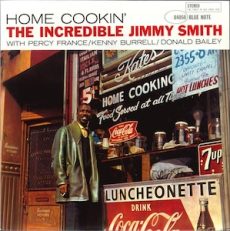
Home Cookin’ ~ Jimmy Smith | By Eddie Carter
I’d had a really long week and wanted to hear some organ jazz when I came across a title I always enjoyed but hadn’t listened to in a while. Jimmy Smith provides the recipe for seven courses of hard bop and soul-jazz with a side of the blues in Home Cookin’ (Blue Note BLP 4050/BST 84050). It’s a delicious quartet meal of pure organ bliss taken from three different sessions that hit the stores in 1961. Jimmy is joined by Percy France (tracks: A1, A4, B1, B2) on tenor sax, Kenny Burrell on guitar, and Donald Bailey on drums. My copy is the 1992 Toshiba EMI Japanese Stereo reissue sharing the original catalog number.
Side One opens with See See Rider by Gertrude “Ma” Rainey and Lena Arant. Jimmy and the trio introduce the theme at a slow tempo. Kenny has the first spot and swings lightly to the leader’s fat bass lines and Donald’s subtle brushwork. Percy follows with a down-home reading, and then Jimmy is equally elegant in a short solo ahead of the song’s finale. Sugar Hill by Kenny Burrell is dedicated to an area of Harlem and picks up the pace significantly as the composer leads Smith and Bailey through the melody. Kenny gets things going with a lively lead solo, and then Jimmy comes in for a spirited statement that moves along nicely. Burrell adds a few more comments preceding the reprise and slow fadeout.
I Got A Woman by Ray Charles would become a big hit for Jimmy McGriff a year later. Smith and company offer a change of pace from that swinger with a medium groove featuring Jimmy in the solo spotlight. The organist’s soulful presentation is a danceable treat until the threesome reprises the ending theme into a slow dissolve. Messin’ Around by Jimmy Smith brings back France to the foursome for the medium melody. Burrell is up first again with a sparkling statement. France puts a lot of heart and emotion into the following reading, then Smith’s short solo leads back to the quartet’s theme restatement and fade out.
Side Two begins with an introduction to a lovely lady named Gracie by Jimmy Smith. The quartet’s leisurely theme sets the tone for Percy’s contagious opening statement. Kenny skillfully constructs the second solo, and then Jimmy delivers one of his smoothest readings preceding the out-chorus. Come On Baby by Kenny Burrell is a solid blues that grabs the listener from the start of Smith’s melody and informal, easy opening interpretation. France steps up next with an excellent example of his superb tone quality. Burrell enters the picture next for a brief presentation before Jimmy adds a few last thoughts until the slow fade into nothingness.
Jimmy’s Motoring Along is the album’s closing number and the final trio track. The beat shifts upward for the melody. Kenny gets his message across in the lead solo, and Jimmy is a joy to listen to in the closer. Donald keeps the excitement in the beat going until the theme’s closing chorus and the trio’s slow exit. Alfred Lion produced Home Cookin’, and Rudy Van Gelder was the man behind the dials. The sound quality is good but not great, and the reason is the same issue I had with Hootin’ ‘n Tootin’ and Open House. The microphone placement for Jimmy’s organ has a level of distortion that is particularly noticeable on every track but not as bad on Come On Baby.
The front and rear covers are both laminated, and the record is incredibly quiet until the music starts. That aside, the good news is I enjoyed the music, particularly Percy France who I was unaware of, but pleasantly surprised with his playing because he reminded me of Stanley Turrentine. Burrell and Bailey are as solid a rhythm section as anyone could have, and they’ve collaborated with Jimmy on four other albums: Back At The Chicken Shack, Houseparty, Midnight Special, and The Sermon. If you’re a fan of hard bop, soul-jazz, or Jimmy Smith, I hope you will check out Home Cookin’ on your next record shop visit. It’s a tasty musical meal I’m sure you won’t regret adding to your library!
~ Back At The Chicken Shack (Blue Note BLP 4117/BST 84117), Hootin’ ‘n Tootin’ (Blue Note BLP 4094/BST 84094), Houseparty (Blue Note BLP 4002/BST 84002), Midnight Special (Blue Note BLP 4078/BST 84078), Open House (Blue Note BLP 4269/BST 84269), The Sermon (Blue Note BLP 4011/BST 84011) – Source: Discogs.com
~ See See Rider – Source: Wikipedia.org © 2024 by Edward Thomas Carter
More Posts: choice,classic,collectible,collector,history,instrumental,jazz,music,organ