

Requisites
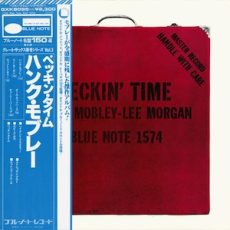
Peckin’ Time ~ Hank Mobley and Lee Morgan | By Eddie Carter
This morning’s record from the library is a perfect description of the term “two heads are better than one.” During the fifties and sixties, tenor saxophonist Hank Mobley and trumpeter Lee Morgan collaborated on several jazz albums. Peckin’ Time (Blue Note BLP 1574/BST 81574) is a 1959 release and one of their earliest dates together. Hank composed four of the five tunes on this album. They are joined by a fabulous rhythm section: Wynton Kelly on piano, Paul Chambers on bass, and Charlie Persip on drums. My copy is the 1978 King Record Company Japanese Mono reissue (Blue Note BLP 1574 – GXK 8095).
Side One takes off with the quintet’s brisk melody to High and Flighty. Hank starts right out of the gate quickly. Lee gets into a robust reading next, and then Wynton gives an enthusiastic statement. Charlie shares the closing solo with both horns in a vigorous conversation until the ensemble’s lively climax. The album’s only standard, Speak Low by Kurt Weill and Ogden Nash comes to life with the rhythm section’s Latin introduction to Lee beginning the theme and Hank completing the melody. Mobley opens with a warm tone in a delicate statement. Wynton enters next with a fine flow of ideas, then Lee eases into the finale before the theme’s restatement and finish.
Peckin’ Time is a catchy original beginning in a medium groove for the quintet’s melody. Wynton breaks the ice with a joyous and carefree solo. Hank approaches the following reading with confidence; then, Lee cooks in the third statement. Paul takes a short walk toward the front line’s final exchange into the closing chorus. Stretchin’ Out raises the temperature to begin Side Two with the ensemble’s fleet theme. Morgan takes flight first with a festive solo. Kelly fuels the second statement with energy, and then Mobley heats things up further before exchanging a few riffs with Persip. The drummer has a short workout until Morgan and Mobley add a few last thoughts to the ending.
Git Go Blues begins with the trio’s introduction leading to the quintet’s easygoing theme, giving way to Hank’s cheery opening statement. Lee continues the good feelings in the following solo. Wynton follows them both with a relaxing performance. Paul adds a concise comment next; then Hank ties it all together until the quintet takes it out after the theme reprise. Alfred Lion produced Peckin’ Time, and Rudy Van Gelder recorded the session. The album’s sound quality is excellent with a superb soundstage in the highs, midrange, and low end that’s sure to stand out on any good mid-fi or high-end audio system.
Hank Mobley and Lee Morgan always worked well together, and they consistently complimented each other’s playing. Lee appeared on seven additional Blue Note LPs with Mobley. Hank appeared on three records with Morgan. If you’re a fan of either musician and in the mood for excellent hard-bop jazz, I highly recommend and offer for your consideration, Peckin’ Time by Hank Mobley and Lee Morgan, the next time you’re out record shopping. It’s an enjoyable and entertaining album that’s sure to please any jazz lover and demonstrates why “two heads are better than one” fits this duo perfectly!
A Caddy For Daddy (Blue Note BLP 4230/BST 84230), A Slice of The Top (Blue Note LT-995), Charisma (Blue Note BST 84312), Cornbread (Blue Note BLP 4222/BST 84222), Dippin’ (Blue Note BLP 4209/BST 84209), Hank Mobley Sextet (Blue Note BLP 1540/BST 81540), No Room For Squares (Blue Note BLP 4149/BST 84149), Straight No Filter (Blue Note BST 84435), The Rajah (Blue Note BST 84426), Third Season (Blue Note LT-1081) – Source: Discogs.com
~ Speak Low – Source: JazzStandards.com © 2024 by Edward Thomas Carter
More Posts: choice,classic,collectible,collector,history,instrumental,jazz,music,saxophone,trumpet
Requisites
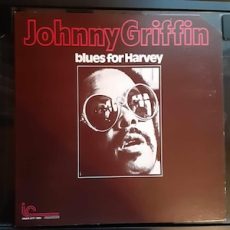
Blues For Harvey ~ Johnny Griffin | By Eddie Carter
It’s been a while since I listened to one of my favorite tenor saxophonists, Johnny Griffin, so I chose an album that became the inspiration for this morning’s discussion. Blues For Harvey (SteepleChase Records SCS-1004) is an excellent 1973 live date, and Johnny’s working with a stellar supporting cast: Kenny Drew on piano, Mads Vinding on bass, and Ed Thigpen on drums. My copy is the 1976 U.S. Stereo reissue (Inner City IC 2004). Johnny began his career in the forties playing the alto sax. He changed to tenor after joining Lionel Hampton’s Orchestra, and he’s played with Art Blakey, Eddie “Lockjaw” Davis, Kenny Clarke-Francy Boland Big Band and Thelonious Monk, to name a few.
The quartet begins the set with a trip to That Party Upstairs, the first of four by Johnny Griffin. The ensemble’s melody begins at an easy swing before stepping aside for Johnny’s lengthy opening statement. Kenny takes an interesting turn next; then Mads finishes with a carefree stroll ahead of the foursome’s theme restatement and close. Alone Again is a pretty ballad that Kenny introduces gently segueing into Johnny’s delicately tasteful theme and opening chorus. The pianist follows with an elegantly stylish interpretation; then, Mads makes a few intimate remarks preceding Griff’s return for a touching theme reprise and finale.
Side Two starts with Soft and Furry. Griff and Mads open with a dialogue over Ed’s soft supplement into the quartet’s haunting theme. Johnny opens the solos with an exceptionally rich tone. Kenny takes an exquisite performance next, and then Mads gives a tender interpretation before the tenor and bass reappear to lead the foursome to a beautiful climax. Blues For Harvey is dedicated to the Montmartre bartender, Harvey Sand. Griff sets the tone in the introduction and the quartet’s melody. Johnny takes the lead in an incredibly fleet interpretation. Kenny adds a bit of fire and drive in the second reading, and Ed has a vigorous exchange with the leader, leading to the ensemble’s brisk conclusion.
Rhythm-A-Ning by Thelonious Monk starts with the foursome’s quirky theme before Johnny takes flight with a speedy interpretation that seamlessly switches to The Theme before the song ends with Griff’s introduction of the quartet. Johnny Griffin and Nils Winther produced Blues For Harvey, and Nils also did double duty behind the dials of the recording. The album’s sound quality is good for a seventies live date, placing the listener in the Montmartre audience, and the quartet’s performance is enjoyable throughout. If you’re a fan of Griff’s playing or in the mood for hard bop, I offer for your consideration, Blues For Harvey by Johnny Griffin. It’s a little-known release in his extensive discography deserving of greater recognition and worthy of checking out for a spot in your library!
© 2024 by Edward Thomas CarterMore Posts: choice,classic,collectible,collector,history,instrumental,jazz,music,saxophone
Requisites
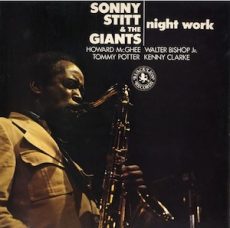
Night Work ~ Sonny Stitt And The Giants | By Eddie Carter
As a teenager growing up in the late sixties and early seventies, I was exposed to and enjoyed many different jazz saxophonists, thanks to my Mom and my uncles Ben, Bob, Emmanuel, and Mr. Leo Mintz. Sonny Stitt has always been one of my favorites. He enters this morning’s spotlight with Night Work (Black Lion Records BLP 30154) by Sonny Stitt and The Giants. It was initially recorded in 1967 but not released until 1974. Sonny Stitt is featured on alto sax (A1, A2, B1, B4), and the other giants are Howard McGhee (tracks: A1, A2, B3, B4) on trumpet, Walter Bishop Jr. on piano, Tommy Potter on bass, and Kenny Clarke on drums. My copy is the U.S. Stereo release (Black Lion BL-307).
The opener, Night Work by Howard McGhee, is an upbeat invitation to sit back, relax and ride the rhythm of the ensemble’s swift melody into Sonny’s opening solo. Howard has the next spot and delivers the goods with considerable agility, followed by Walter’s impeccably delivered reading. Howard and Sonny join forces to exchange a few ideas together before Kenny joins their conversation, leading to the reprise and ending. Matter Horns by the team of Eiger and Jungfrau slows the pace to mid-tempo for Stitt’s easygoing theme and relaxing opening statement. Howard comes in next with a pleasantly flowing solo. Walter continues the bluesy groove in the third reading. Tommy and Kenny add a great deal of pleasure to the next two interpretations ahead of the quintet, trading a few riffs together before the climax.
The second side starts with a gorgeous quartet rendition of Loverman by Jimmy Davis, Roger Ramirez, and Jimmy Sherman. It is a beautiful jazz standard that Sonny and the rhythm section begin with their exquisite melody. Sonny captures the standard’s delicacy and tenderness in the song’s lone interpretation preceding the foursome’s elegant conclusion. Both horns take a break for the rhythm section’s lovely version of Satin Doll by Duke Ellington, Billy Strayhorn, and Johnny Mercer. Walter shows a great deal of respect to Duke as he leads the trio through the introduction and melody. He continues making a personal impression on the song’s solo while Tommy and Kenny provide the support ahead of the theme’s restatement and close.
Howard steps into the spotlight with the rhythm section for Don’t Blame Me by Jimmy McHugh and Dorothy Fields. The trumpeter’s piercing tone penetrates the introduction before settling down for a pretty melody. Howard has an exceptionally fine spot as the song’s only soloist, complemented by the trio’s accompaniment culminating in a tender finale. Hello by Howard McGhee brings the album to a close and this song will remind listeners of Milt Jackson’s Bags’ Groove. McGhee’s muted trumpet shares the duties with Stitt during the melody. McGhee steps up first with an excellent muted solo. Bishop gets something cooking in the second statement, and then Stitt takes the spotlight next. Clarke gets the last word in an exchange with both horns ahead of the theme’s reprise and ending.
Alan Bates produced Night Work, and Helmuth Kolbe was behind the dials of the recording. The album’s sound quality is quite good with a solid soundstage that transports the listener to the studio as the musicians are playing. Sonny Stitt was one of the best jazz saxophonists, with a career lasting nearly four decades and a recorded discography of over one hundred albums. He was also proficient on the tenor sax and baritone sax. This is one of his best records, in my opinion, and if you are in the mood for a great sax album, I invite you to check out Night Work by Sonny Stitt and The Giants on your next record-shopping trip. If you’re looking to start a collection of his music, it’s worth seeking out for your library and a title I’m sure you’ll enjoy!
~ Don’t Blame Me, Loverman, Satin Doll – Source: JazzStandards.com © 2024 by Edward Thomas Carter
More Posts: choice,classic,collectible,collector,history,instrumental,jazz,music,saxophone
Requisites
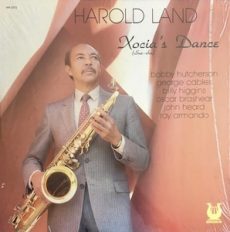
Xocia’s Dance (Sue-sha’s Dance) ~ Harold Land | By Eddie Carter
Harold Land takes the stage for this morning’s discussion with an excellent hard bop album, Xocia’s Dance (Sue-sha’s Dance) (Muse Records MR 5272). He was one of the best West Coast tenor saxophonists during the fifties and sixties. His resume includes playing with the Clifford Brown/Max Roach Quintet, The Curtis Counce Group, The Gerald Wilson Orchestra, and The Timeless All-Stars. Xocia’s Dance reunites Harold with Bobby Hutcherson, who co-led a quintet with him thirteen years earlier. He is joined on this date by Oscar Brashear on flugelhorn (track: B2) and trumpet (A1 to A3), Bobby Hutcherson (A2, A3, B2) on vibes, George Cables on piano, John Heard on bass, Billy Higgins on drums, and Ray Armando (B1) on percussion. My copy is the original 1982 U.S. Stereo release.
Side One opens with Dark Mood, an original by Harold Land that is introduced by the trio ahead of the quintet’s lively theme. Harold gets things started, and then Oscar follows with a clearly inspired performance. George approaches the third reading with driving enthusiasm; then, all three soloists share a moment before the closing chorus and vibrant ending. Daisy Forever is a pretty tune by Oscar Brashear that Bobby gets started ahead of the group’s lovely melody. Brashear leads the way with a solo of seductive warmth; then, Land shows great care in the following reading. Hutcherson enters for the first time and delivers a beautiful interpretation. Cables provides the final gentle verses leading to the group’s closing chorus and slow dissolve.
Xocia’s Dance (Sue-sha’s Dance) comes from the pen of Harold Land, Jr., and the pace moves upward to a lively beat. The trio’s introduction heads toward the ensemble’s medium theme. Harold Sr. has the first solo and gets into a remarkable groove. Oscar answers him with a tasty reading as sweet as honey, and then George provides an exclamation point into the theme’s restatement and close. Side Two opens with Ah, I See, a beautiful tune by Charles Tolliver that starts with Harold’s and Bobby’s tranquil yet haunting theme. Land picks up the pace for a sweetly melodic opening statement, then gives way to Hutcherson’s delightful interpretation. Cables comes in softly and with feeling next before Harold returns for a restrained ending.
The album ends with a romantic postscript by Harold Land. To Lydia, With Love is a touching tribute to his wife and the mood is delicately expressed in the introduction and theme. Harold begins the opening solo lovingly, succeeded by Bobby’s equally thoughtful reading. Oscar’s flugelhorn delights with a beautiful statement. George conveys the feeling of everlasting love in a short anecdote ahead of the ensemble’s closing chorus and fadeout. Esmond Edwards produced Xocia’s Dance, and Jim Mooney was the recording engineer. The album’s sound quality is good, except for a bit of harshness during the piano solo on Ah, I See. The music, however, is terrific and quite capable of brightening anyone’s mood after a long day or week.
In addition to Xocia’s Dance, Harold Land recorded fourteen albums as a leader and appeared in some of the best jazz albums as a sideman. He co-led groups with Billy Higgins, Blue Mitchell, and Red Mitchell. Land later became a professor at the University of California and joined the UCLA Jazz Studies. He passed away on July 27, 2001, from a stroke at age seventy-two but is still remembered as a brilliant improviser and one of the best to play the tenor sax. If you’re a fan of West Coast jazz, I invite you to check out Xocia’s Dance (Sue-sha’s Dance) by Harold Land on your next record shopping trip. It’s a hidden gem in his discography and a personally satisfying album that I can happily recommend for a spot in your library!
~ Harold Land – Source: Wikipedia.org © 2024 by Edward Thomas Carter
More Posts: choice,classic,collectible,collector,history,instrumental,jazz,music,saxophone
Requisites
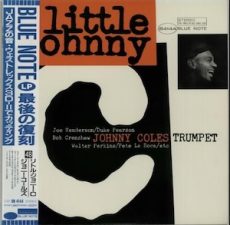
Little Johnny C ~ Johnny Coles | By Eddie CarterIt happened like this: after listening to Bass on Top, my memories of my mom led me to another of her favorite jazz albums. Little Johnny C (Blue Note BLP 4144/BST 84144) by Johnny Coles is the trumpeter’s second release as a leader and his only Blue Note session. It was recorded in 1963 and released the following year. Johnny’s joined on this hard bop date by Leo Wright on alto sax (tracks: A1 to A3, B2, B3) and flute (B1), Joe Henderson on tenor sax, Duke Pearson on piano, Bob Cranshaw on bass, Walter Perkins (A1 to A3), and Pete La Roca (B1 to B3) on drums. My copy is the 1990 Toshiba EMI Japanese Stereo reissue sharing the original catalog number.
Little Johnny C is the first of five tunes by Duke Pearson. It kicks off Side One at a fast tempo with Duke’s brisk introduction to the front line’s lively theme. Leo comes out cooking first; then Johnny steps swiftly into the second statement. Joe wails in the following solo; then Duke shows his impressive skills into the group’s climax. Hobo Joe by Joe Henderson is a Latin-flavored blues that opens with the trio’s introduction, ahead of the sextet’s easy going melody. Coles begins this pleasant trip; then, Pearson picks up the next part of the journey. Wright continues the leisurely caravan, and Henderson concludes the trek in a fine finale ahead of the theme’s return and the trio’s fadeout.
Jano picks up the beat to end the first side with the ensemble’s medium melody. Leo sets the scene in the opening solo. Johnny takes over for a lengthy reading; then Joe builds the third statement exquisitely. Duke provides the closing remarks before the group returns to take the song out. My Secret Passion is a pretty ballad taken at a medium bounce, with Johnny leading the sextet in the melody and Pete La Roca taking over on drums. Coles opens the solos with a warm tone. Henderson displays delicacy and sensitivity in the following reading. Wright comes in next on the flute and gives a heartwarming statement. Pearson’s soulful interpretation brings us back to the reprise and ending.
Heavy Legs delivers an upbeat invitation to relax and enjoy the sextet’s ride through the opening chorus. Johnny is concise and to the point in the first reading. Joe follows with an equally enjoyable solo; then Leo steps in next for a rousing interpretation. Duke brings the solos to a happy conclusion ahead of the sextet’s theme restatement, slowly dissolving into nothingness. So Sweet My Little Girl is Pearson’s tribute to his then seven-year-old daughter, Cynthia. Johnny starts the melody softly with the saxes in the background. It sets the scene for the pianist’s tender performance as the song’s only soloist, leading to the front line’s return for a gentle climax.
Alfred Lion produced Little Johnny C and Rudy Van Gelder was the man behind the dials of the recording. The album sounds amazing, with a stellar soundstage that’s so good you’ll think you’re in the studio with the musicians as they are playing. Toshiba EMI did an excellent job with this reissue and the record is also very quiet until the music starts. Johnny only recorded five albums as a leader but has an extensive discography as a sideman. If you’re a hard bop fan and unfamiliar with Johnny Coles, I invite you to look out for Little Johnny C on your next record shop visit. It’s simply a great jazz album that I’m sure would make a perfect addition to any library and become a favorite on your turntable! © 2024 by Edward Thomas Carter
More Posts: choice,classic,collectible,collector,history,instrumental,jazz,music,trumpet