

Requisites
The Chase ~ Gene Ammons & Dexter Gordon | By Eddie Carter
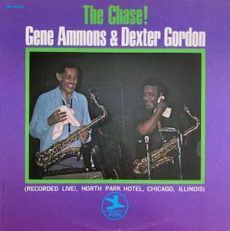
Throughout the chronicles of jazz, there have been many great tenor sax duos who have recorded some legendary battle albums that are among some of the greatest records ever made. Gene Ammons and Sonny Stitt, Arnett Cobb and Buddy Tate, Al Cohn and Zoot Sims, Dexter Gordon and Wardell Gray, Coleman Hawkins and Don Byas, Illinois Jacquet and Lester Young to name a few. This morning’s choice from the library is an exciting live date by Gene Ammons (A1, B1, B2) and Dexter Gordon (A1, A2, B1). The Chase (Prestige PRST 10010) was recorded live at the North Park Hotel before an enthusiastic audience on the afternoon and evening of July 26, 1970, during Gordon’s cross-country tour. The quintet is anchored by Jodie Christian (A1, B1), John Young (A2, B2) on piano, Rufus Reid (A1, B1), Cleveland Eaton (A2, B2) on bass, Wilbur Campbell (A1, B1), Steve McCall (A2, B2) on drums, and Vi Redd (B1) on vocals. My copy used in this report is the original 1971 Stereo album.
Side One opens with the title tune, The Chase is Dexter Gordon’s uptempo tribute to the great tenor duels beginning with a high-spirited, energetic theme. Dexter has the lead solo and produces an exceptionally high level of creativity including his famous big top circus quotes. Gene delivers an aggressive workout on the next reading, then Jodie swings strongly on a brief statement. Wilbur gets the final word in a vigorous conversation with both horns into the lively finale. Polka Dots and Moonbeams by Jimmy Van Heusen and Johnny Burke is a quartet tune with Young, Eaton, McCall, and Dexter as the solitary horn. The quartet starts with a slow-paced, sensuous melody by Gordon, who picks up the pace slightly on the subtly stated first solo. Young follows with a luxuriously, lovely statement, then Dexter delivers a few more rhythmically relaxing verses into the elegant ending and appreciative approval of the audience.
Lonesome Lover Blues is a mid tempo reworking of Blowing The Blues Away by Billy Eckstine and George Valentine. Both Gene and Dexter decided to do a new vocal version utilizing the talents of Vi Redd who was in the audience during their set. Vi gives the crowd and listener an imaginative improvised vocal with Christian, Reid, and Campbell returning to the stage. Gordon and Ammons exchange a few choruses before Dexter takes an extended interpretation. Gene gets busy on the next performance and Jodie lays down a soulful groove preceding both horns returning for the finale. The Happy Blues by Art Farmer debuted on Hi Fidelity Jam Session (1956), and Gene is the lone horn backed by Young, Eaton, and McCall. John opens with a swinging solo segueing into Gene’s invigorating opening chorus and first statement. Cleveland takes a short reading before the quartet’s vivacious finale and the crowd’s ovation.
The Chase was produced by Joe Segal, founder of The Jazz Showcase and one of the best places to hear jazz in Chicago. The man behind the dials is Leon Kelert who has worked on blues and jazz albums for Blackbird, Delmark Records, and G.H.B. Records. The sound quality on the album is quite good with the instruments providing an impressive treble, midrange, and bass soundstage that transports the listener to the audience as each performance is happening. Dexter Gordon is at his peak, and Gene Ammons is in exquisite form throughout. The stellar musicianship of their bandmates makes The Chase a splendid choice to add to your jazz library and well worth the listening time, once you do!
~ Hi Fidelity Jam Session (Prestige PRLP 7039/PRST 7654) – Source: Discogs.com ~ Polka Dots and Moonbeams – Source: JazzStandards.com © 2022 by Edward Thomas Carter
*The remastered cd added two bonus tracks not on the original album ~ Wee Dot & Ballad Medley

More Posts: choice,classic,collectible,collector,history,instrumental,jazz,music,saxophone

Requisites
No Blues ~ The Horace Parlan Trio | By Eddie CarterThere’s nothing I enjoy more than listening to a piano trio album and that’s what prompted this morning’s discussion. The Horace Parlan Trio steps into the spotlight with their 1976 album, No Blues (SteepleChase Records SCS-1056). Horace was born in Pittsburgh, Pennsylvania, and was stricken with polio as a child, partially paralyzing his right hand. As a result, he developed a left-hand chord-voicing style and an ability to play with the right hand effectively. Parlan was discovered by Charles Mingus and spent two years with his Jazz Workshop. Over his lengthy career, he recorded with some of the elite musicians in jazz as a leader and sideman. On this date, Horace is joined by a burning rhythm section, Niels-Henning Ørsted Pedersen on double bass, and Tony Inzalaco on drums. The copy used in this report is a friend’s original Danish Stereo release.
Side One gets underway with the trio’s mid~tempo theme on Miles Davis’ No Blues. Horace swings blissfully into the opening solo with flawless execution. Niels-Henning bounces into the second statement with efficient ease, and Tony executes some nifty drumming in a conversation with the piano ahead of the threesome’s reprise and exit. My Foolish Heart by Victor Young and Ned Washington is one of the prettiest jazz standards in The Great American Songbook. Parlan has the solo showcase to himself and applies an equal amount of warmth and tenderness with Pederson and Inzalaco gracefully moving in the background towards a gentle ending. The tempo moves up rapidly for Richard Rodgers and Lorenz Hart’s Have You Met Miss Jones? Tony takes flight first on a brief intro, then Horace kicks off the melody swiftly. Parlan and Inzalaco make it a brightly swinging affair with two energetic readings before the close.
A Theme For Ahmad is Horace’s very moving tribute to Ahmad Jamal. As the song’s only soloist, he gives an elegant performance that’s quite beautiful with Niels-Henning and Tony adding their subtle support into a gorgeous finale. Side Two starts with one of the best-known tunes by Randy Weston, Hi-Fly. Parlan begins with a very pretty introduction segueing into the threesome’s laid-back and tasty opening chorus. Horace takes the lead and swings easily with sprightly notes, then Tony adds a short soulful statement ahead of the ending theme. Up next is a beautiful song by Austin Wells, West of Eden. The rhythm has a bouncing beat and tropical flavor that the ensemble portrays on the melody. Parlan has the only solo spotlight again and gives a delightful interpretation preceding the group’s slow disappearance into nothingness.
The pace picks up for the album’s closer, Holy Land by Cedar Walton. The trio gets into a good groove from the outset of the melody. Horace gives a vivid impression with a fleet lead reading, then Niels-Henning keeps things moving with a joyful excursion into the trio’s reprise and exit. No Blues was produced by Nils Winther and the recording engineer was Freddy Hansson. The sound quality is crystal-clear with superb fidelity that’s audiophile class and the interaction between the trio is exceptional. If you’re a fan of jazz piano or are just discovering Horace’s music for the first time, I invite you to audition No Blues by The Horace Parlan Trio for a spot in your library. It’s an album of beautiful music that’s sure to please your ears with each listen!
~ Darn That Dream, My Foolish Heart, Have You Met Miss Jones? – Source: JazzStandards.com ~ Hi-Fly – Source: Wikipedia.org © 2021 by Edward Thomas Carter
More Posts: choice,classic,collectible,collector,history,instrumental,jazz,music,piano
Requisites
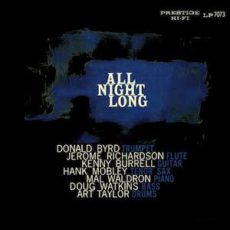
All Night Long ~ The Prestige All-Stars | By Eddie CarterThis morning’s choice from the library is a recent acquisition I’ve been hunting for since it was reissued as part of The Prestige Mono Series. It’s a swinging Fifties jam session that was originally released in 1957 by The Prestige All-Stars. All Night Long (Prestige PRLP 7073/PRST 7289) brings together a first-class ensemble, Donald Byrd on trumpet, Hank Mobley on tenor sax, Jerome Richardson (tracks: A1, B1 to B3) on flute, and (track: A1) on tenor sax, Mal Waldron on piano, Kenny Burrell on guitar, Doug Watkins on bass, and Art Taylor on drums. My copy used in this report is the 2012 Analogue Productions Mono audiophile reissue (APRJ 7073 – PRLP 7073).
Side One opens with Kenny Burrell’s All Night Long occupying the entire side. Art kicks off the song with an infectious beat. Kenny starts the opening solo with exquisite execution. Jerome’s flute flows with a happy feeling on the first of two statements. Hank takes us on a carefree joyride in the next reading, then Donald speaks his peace with a stellar presentation. Jerome resurfaces on tenor for a sparkling performance, and Mal gives a soulful effort on the next interpretation. Art follows with a brief exchange with the principal soloists before the group takes the song out. Side Two starts with the first of two tunes by Hank Mobley, Boo-Lu. Richardson sets the mood of this happy groove on the melody and opening chorus. Burrell, Byrd, Mobley, and Waldron follow with four short solos ahead of the reprise and close.
Flickers by Mal Waldron suggests a homage to the movies. It begins with the ensemble’s collective mid~tempo theme. Jerome is up first and shines with a light-hearted warmth. Donald and Hank follow with one easygoing reading each, then trade a few feisty riffs. Kenny turns in a tasty performance next and Mal applies blues-rooted energy to the finale leading to the closing chorus and Doug’s slow fade into oblivion. Mobley’s Li’l Hankie comes at you at medium speed with the ensemble in unison on the melody. Hank leads off the solos with a marvelous interpretation. Donald delves into the second reading on muted trumpet mining a vein of musical riches. Kenny tells a short story that makes every note count on the third statement. Jerome lights a fuse of creative inspiration on the next performance, followed by a stimulating conversation between the front line, Waldron, and Richardson ahead of the ending theme.
Bob Weinstock supervised the original album and the man behind the dials was Rudy Van Gelder. Kevin Gray did the remastering from the analog tapes. The record has a flat-edge and deep groove on the label like the original release, and the album cover has a high gloss. This reissue was pressed on 200-gram audiophile vinyl by Quality Record Pressings. The soundstage is outstanding, transporting the musicians to your listening room and the record is silent until the music starts. Burrell, Byrd, Watkins, and Taylor also appear on the companion album, All Day Long, recorded just a few days after this date. If you’re a Hard-Bop fan and are looking for an album with superb musicianship, I can’t think of a better choice to introduce you to The Prestige All-Stars than All Night Long! It’s a gorgeous recording that’s highly recommended and well worth adding to your library!
~ All Day Long (Prestige PRLP 7081/PRST 7277) – Source: Discogs.com © 2022 by Edward Thomas Carter
More Posts: bass,choice,classic,collectible,collector,drums,flute,guitar,history,instrumental,jazz,music,piano,saxophone,trumpet
Requisites
In ‘n Out ~ Joe Henderson | By Eddie Carter
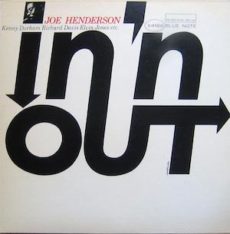
This morning’s choice from the library is a 1964 album by tenor saxophonist Joe Henderson. I’ve been a fan of his for years and first heard him live at The 1992 Atlanta Jazz Festival. His performance that night was brilliant and a stellar highlight that blew everyone away in attendance. In ‘n Out (Blue Note BLP 4166/BST 84166) is his third release and finds him leading a first-class quintet, Kenny Dorham on trumpet, McCoy Tyner on piano, Richard Davis on bass, and Elvin Jones on drums. My copy used in this report is the 1983 Pathé Marconi-EMI French Stereo reissue sharing the original catalog number.
Side One gets underway with the first of three tunes from Henderson’s pen, In ‘n Out swings from the start of the quintet’s brisk melody. Joe takes off first with a ferocious opening statement. McCoy makes his mark in rapid succession on the second solo. Kenny is up next with a vigorous performance, then Joe returns for a few more aggressive notes ahead of the ensemble’s ending theme. Henderson’s Punjab slows the pace to medium tempo for the ensemble’s bluesy opening chorus. Joe begins the first solo at a comfortable and friendly pace, then Kenny follows with a leisurely stroll on the second reading. McCoy steps in next with an easy-flowing interpretation. Joe adds a delightfully laid-back finale into the quintet’s carefree summation.
Joe’s Serenity opens Side Two at mid-tempo with the ensemble sustaining a mellow timbre on the opening chorus. Kenny takes the first spot and gives a relaxing interpretation. Joe continues grooving on a spirited reading that’s an ear-pleaser. McCoy draws us into the next solo with pure pleasure on the keys, and Richard makes an articulate statement on the closer before the group’s reprise and climax. Dorham tells a Short Story on the first of two originals by the trumpeter. The rhythm section sets the basis for swinging on the introduction segueing into the ensemble’s collective melody. Dorham, Henderson, and Tyner make the first three solos come alive with plenty of positive energy, and Elvin has an amazing exchange with the front line preceding the closing chorus.
The quintet closes with a trip to Brown’s Town. Henderson is heard on the opening and closing melody only, Dorham, Tyner, and Davis are the featured soloists. Kenny paints an enchanting portrait on the opening statement, then McCoy possesses a great amount of warmth and joy on the second solo. Richard sparkles on the finale with some strong walking into the ensemble’s tender climax. Joe Henderson released four other albums for Blue Note during the decade, Page One (1963), Our Thing (1964), Inner Urge, and Mode For Joe (1966). He also appeared as a sideman on many of the landmark LPs for the label. His career lasted over forty years recording for CTI Records, Elektra Musician, Fantasy, Milestone, Red Records, and Verve Records.
He was a consummate composer and one of the most respected musicians in jazz, performing in concerts and festivals around the world. I was lucky enough to see him live twice, the second time was a 1994 performance at Spivey Hall. After a long battle with emphysema, Joe passed away from heart failure at age sixty-four on June 30, 2001. In ‘n Out was produced by Alfred Lion and Pathé Marconi-EMI did a superb job remastering the original tapes of Rudy Van Gelder. The vinyl is quiet with an impressive soundstage placing the musicians in your listening room. Kenny, McCoy, and Richard are heard on the left, and Joe and Elvin are heard on the right. If you enjoy the tenor sax, I invite you to treat yourself to In ‘n Out by Joe Henderson. It’s a wonderful album that gets better with repeated listening!
~ Page One (Blue Note BLP 4140/BST 84140); Our Thing (Blue Note BLP 4152/BST 84152); Inner Urge (Blue Note BLP 4189/BST 84189), and Mode For Joe (Blue Note BLP 4227/BST 84227) – Source: Discogs.com © 2022 by Edward Thomas Carter
More Posts: choice,classic,collectible,collector,history,instrumental,jazz,music,saxophone
Requisites
Johnny Griffin Sextet | By Eddie Carter
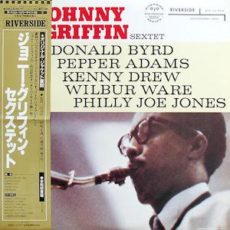
This morning’s discussion is the 1958 album, Johnny Griffin Sextet (Riverside RLP 12-264). Griffin began his career in the forties, playing the alto sax until joining Lionel Hampton’s Orchestra after graduating high school. Hampton urged him to play the tenor sax, and he did in the band until 1947. Johnny also played with Art Blakey, The Kenny Clarke-Francy Boland Big Band, Eddie “Lockjaw” Davis, and Thelonious Monk.
He made three albums for Blue Note and recorded for a variety of labels as a leader and sideman. Griff was nicknamed The Little Giant for his diminutive size but possessed a robust sound that produced riveting solos effortlessly. Donald Byrd on trumpet, Pepper Adams on baritone sax, Kenny Drew on piano, Wilbur Ware on bass, and Philly Joe Jones on drums complete the sextet. My copy used in this report is the 1974 Japanese Mono reissue (Riverside SMJ 6285) by Victor Musical Industries.
Side One opens with Stix’ Trix by Wilbur Campbell. A lively introduction by Philly precedes the ensemble’s feisty opening chorus. Kenny takes the first solo and gives a vigorously spirited performance. Pepper states his case on the second reading, then Donald follows in fine form on the next statement. Philly picks up the baton with some exciting brushwork, and Johnny gives a vivacious finale into the sextet’s reprise and conclusion.
What’s New? by Bob Haggart and Johnny Burke begins with a thoughtfully tender introduction and gentle melody by Griff. The saxophonist’s opening solo is beautifully constructed and poignant. Byrd and Adams split the next chorus with two pensive performances. Drew executes an elegant touch on the next interpretation, then Griffin returns for a few more intimate thoughts before ending with a sultry, seductive exit.
The first side ends with Dizzy Gillespie’s tribute to Woody Herman, Woody ‘n’ You. It starts with a lively conversation between Johnny and Philly. The rhythm section joins them for a cheerfully spirited theme, then Wilbur kicks off the solos with a rousing unaccompanied reading. Kenny delivers a dynamic performance on the next statement. Griff is up next with an interpretation that swings soulfully, and Philly generates an electrical charge ahead of the ensemble’s vigorous closing chorus.
Johnny G.G. by John Hines opens Side Two at a laid-back tempo for the sextet’s melody. Drew is up first with a smoothly flowing solo, then Griff carries the easygoing mood to a delightfully satisfying close. Byrd approaches the third reading with thoughtful construction and fluid lines. Adams delivers the next statement free and easy. Ware has a wonderful thing going into the closing chorus after sharing a final thought with Griff.
The finale is Catharsis, an upbeat swinger by Johnny Griffin that begins with a brisk collective theme and allows everyone solo space. Pepper takes off with rapturous enthusiasm on the opening statement. Donald creates an exuberant reading next. Kenny follows with a solo that’s like the cherry and cream on top of a succulent, tasty sundae. Johnny and Wilbur share the spotlight again on the next interpretation, then Philly has a short exchange with the front line leading to the closing chorus.
Johnny Griffin Sextet was originally recorded by Jack Higgins at Reeves Sound Studios, and the remastering by Victor Musical Industries has a spectacular soundstage. If you’re in the mood for a superb blowing session, I invite you to audition Johnny Griffin Sextet for a spot in your library. It’s forty-two minutes of some of the best Hard-Bop you’ll hear on a turntable and an enjoyable album I highly recommend!
~ A Blowing Session (Blue Note BLP 1559), Introducing Johnny Griffin (Blue Note BLP 1533/BST 81533), The Congregation (Blue Note BLP 1580) – Source: Discogs.com ~ Woody ‘n’ You, What’s New? – Source: JazzStandards.com © 2022 by Edward Thomas Carter
More Posts: choice,classic,collectible,collector,history,instrumental,jazz,music,saxophone