

Requisites
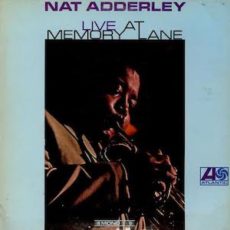
Live at Memory Lane ~ Nat Adderley | By Eddie Carter
This morning’s choice from the library is one of my favorite records that always takes me back to my childhood each time it’s on the turntable. Live at Memory Lane (Atlantic 1474/SD 1474) by Nat Adderley is a 1966 release recorded on Halloween night before an enthusiastic audience. Nat is featured on trumpet exclusively with a stellar supporting cast including his brother Cannonball’s rhythm section. Joe Henderson (tracks: A2 to B3) on tenor sax, Joe Zawinul on piano, Victor Gaskin on bass, and Roy McCurdy on drums complete the ensemble. I was thirteen when I first heard it at Record Rendezvous in Cleveland, Ohio and it still delivers all treats and no tricks. My copy used in this report is the original US Mono album.
Side One starts with On My Journey Now, an original by Nat Adderley endowed with the spirit of a sanctified church song. The leader kicks off the melody with a lively energy advancing to an uplifting opening statement. Zawinul follows with an extremely funky performance that’s sure to get your foot stomping to the rhythm section’s contagious beat preceding Nat leading the congregation out. Adderley’s second composition, Fun, is exactly that. It first appeared on Mercy, Mercy, Mercy (1967) with the trio anchoring both brothers. The group heats up the opening chorus, then Joe steps up first to cook with a fiery passion. Nat speaks with bright and brassy enthusiasm next. Zawinul follows with a feisty attack on the closer before the ensemble’s theme comes to a standstill.
Good Old Summertime by George Evans and Ren Shields is a pretty song from Tin Pan Alley. Nat begins the mid tempo melody on mute accompanied by the trio, then continues floating like a cloud over a picturesque landscape with a discretely rich tone. Henderson is equally enchanting on the second statement, and Joe unfolds a simply gorgeous interpretation ahead of Nat’s tender muted climax. Side Two opens with the first of two from Joe Zawinul’s pen, Lavender Woman. Nat begins with a brief introduction, then picks up the pace for the ensemble’s theme. Henderson takes the lead and swings adventurously. Adderley comes after him and perks up our ears on the second solo. Zawinul soars to great heights on an imaginatively conceived and executed finale into the theme’s return.
Painted Desert is simply breathtaking in its lyrical beauty and the ensemble opens with a gorgeous theme. Henderson is in the spotlight first and delivers an exquisitely beautiful reading. Adderley takes the reins next for an emotionally charged interpretation. Zawinul approaches the finish line with a degree of sensitivity that segues into a vivacious presentation, then the quintet reassembles for a final word. Theme by Nat Adderley and Joe Zawinul brings the set and album to an upbeat close. The group takes off on the opening chorus and Henderson, Adderley, and Gaskin (in his only solo) each take a turn to cook. Nat adds the exclamation mark by acknowledging his bandmates and thanking the audience during the closing chorus.
Nesuhi Ertegun supervised Live at Memory Lane and Wally Heider was the recording engineer for the ensemble’s performance. The sound quality is excellent for a fifty-five-year-old release surrounding your sweet spot with great music that’s a fantastic listen. This was Nat’s first live album leading his own group and I wish he’d recorded more as a leader. The quintet swings like crazy with superb musicianship that makes the listener feel he or she is part of the audience enjoying the music. If you’re a fan of live jazz, just becoming acquainted with the music of Nat Adderley, or only know of his work with Cannonball, I invite you to check out Live at Memory Lane on your next viny hunt. It’s a thoroughly enjoyable album deserving of reaching a wider audience!
~ Mercy, Mercy, Mercy (Capitol Records T 2663/ST 2663) – Source: Discogs.com ~ In The Good Old Summertime – Source: Wikipedia.org © 2022 by Edward Thomas Carter

More Posts: choice,classic,collectible,collector,history,instrumental,jazz,music,trumpet
Requisites
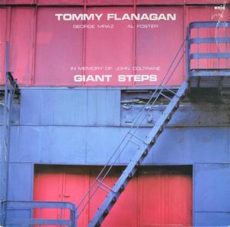
Giant Steps (In Memory of John Coltrane) ~ Tommy Flanagan | By Eddie Carter
This morning’s choice from the library was recommended to me years ago because of my love of piano trios. I finally acquired a copy and am pleased to submit it for your approval. Giant Steps (Enja Records 4022) is a terrific 1982 album that’s a loving tribute to John Coltrane by pianist Tommy Flanagan. The tenor saxophonist composed all the tunes on this date and five of them appeared on his album Giant Steps (1960). Here, he’s working with an outstanding rhythm section, George Mraz on bass and Al Foster on drums. My copy used in this report is the original German Stereo release.
Side One opens with Mr. P.C., John’s tribute to bassist Paul Chambers who alongside Flanagan first recorded it with him. After the trio swings in unison on the melody, Tommy constructs the first solo vigorously. George gives an inspired statement next, then Al shares the spotlight with the leader on an energetic exchange into the reprise.
Central Park West is the first of two pretty ballads on the album and was first heard on Coltrane’s Sound (1964). Flanagan starts the song tenderly, then the rhythm section joins him to complete the melody. The pianist handles the opening chorus with great sensitivity and delicacy. Next up is Mraz who provides a brief thoughtful expression, then the pianist reappears for a concise comment preceding a gentle ending.
Syeeda’s Song Flute is Coltrane’s original written for his then ten-year-old daughter and returns the ensemble to an upbeat mood with a collective happy theme. Tommy captures the sheer joy of this tune in the opening statement. George responds with a cheerfully carefree interpretation that bounces along into Al’s zesty brushwork on the third performance. The pianist makes a few final points ahead of the ensemble’s culmination.
Side Two gets underway with Coltrane’s song about his Cousin Mary. The group is in perfect harmony on the melody. Flanagan starts it off with a vivaciously spirited solo that’s sure to have the listener tapping their toes to this irresistible beat. Mraz makes an indelible impression next, and Foster dazzles in an exchange with the leader ahead of the trio’s sprightly climax. Naima is John’s gorgeous tribute to his first wife and the trio opens with a heartfelt melody. Tommy paints a beautiful portrait as soft as an affectionate embrace on the song’s only solo with George and Al supplying the subtle support into an enchanting ending.
Giant Steps completes the album in high spirits from the start of the trio’s brisk theme. Flanagan leads off with an exhilarating reading, then Mraz greets the next solo enthusiastically. Foster and Flanagan share a lively exchange ahead of the closing chorus and finish.
Giant Steps was produced by Horst Weber and Matthias Winckelmann, and the album’s recording engineer was David Baker. The sound quality is excellent with superb fidelity across the highs, midrange, and low end that transports the trio to your listening room vividly. Tommy Flanagan was one of the most admired pianists in jazz and it might be easier for me to tell you who he didn’t play with because his discography is so extensive. Flanagan recorded forty albums as a leader, appeared on over two hundred more as a sideman and his career lasted over fifty years. He passed away on November 16, 2001, at the age of seventy-one. If you’re a fan of jazz piano, piano trios, or are new to the music of Tommy Flanagan, I invite you to seek out Giant Steps on your next vinyl hunt. It’s an exceptional album that’s worth checking out for a spot in your library!
~ Coltrane’s Sound (Atlantic 1419/SD 1419), Giant Steps (Atlantic 1311/SD 1311) – Source: Discogs.com ~ Giant Steps, Naima – Source: JazzStandards.com © 2022 by Edward Thomas Carter
More Posts: choice,classic,collectible,collector,history,instrumental,jazz,music,piano
Requisites
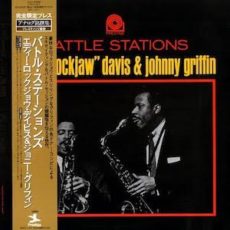
Battle Stations ~ Eddie “Lockjaw” Davis & Johnny Griffin | By Eddie Carter
It happened like this; that same night after I listened to The Happy Blues, I decided to turn up the heat with my next selection. That’s what prompted this morning’s choice from the library by tenor saxophonists, Eddie “Lockjaw” Davis and Johnny Griffin. Battle Stations (Prestige PRLP 7282/PRST 7282), hit the stores in 1963 and both horns are anchored by a smokin’ rhythm section, Norman Simmons on piano, Vic Sproles on bass, and Ben Riley on drums. My copy used in this report is the 1993 Japanese Mono reissue (Prestige VIJJ-30008 – PRLP 7282) by Victor Musical Industries.
Side One takes off at a fast clip on What’s Happening by Fletcher Henderson. The quintet speeds through the melody collectively, then Eddie erupts into an energetic opening statement. Norman steps up next with a spirited performance, then Johnny wails for a bit on the third reading. Both saxes move with considerable agility on a vigorous exchange into the quintet’s speedy ending. Abundance by Norman Connors slows the group’s pace just a few notches with a soulful melody in unison. “Lockjaw” goes first and gives a charming performance. Connors takes the reins next for an easy, flowing solo and Griff extends the mood on the finale with a satisfying statement succeeded by the ensemble’s reprise and climax.
If I Had You by Jimmy Campbell, Reginald Connelly and Ted Shapiro is up next. “Lockjaw” leads the rhythm section at a relaxing tempo on the melody and exhibits a simple beauty in the opening chorus. Norman is simply enchanting on the second reading. Johnny adds a delightful depth of emotion to the closing solo complemented by Vic and Ben’s supplement. Johnny Griffin’s 63rd Street Theme begins Side Two at mid tempo with a Latin flavor established by the rhythm section’s introduction and ensemble’s opening chorus. Davis approaches the lead solo with unhurried pacing and inspired lines. Connors packs plenty of feeling into the second presentation, then Griff is very smooth on the closing statement preceding the finale.
Pull My Coat by Richard Evans is a blues that comes to life with a brief bass introduction by Vic preceding the ensemble’s collective theme. Eddie opens anchored by just bass and drums, segueing into a splendid performance with full rhythm. Norman moves leisurely into the second solo with some down-home cooking. Johnny serves some succulent soul food on the closer. The quintet ends the set with a fun original by Babs Gonzales and James Moody, Hey Jim! Connors and the rhythm section opens with a happy introduction that grows into the ensemble’s unison theme. “Lockjaw” gives the first solo some swinging excitement, then Connors rises to the occasion on the second solo. Griffin follows with a perfectly executed statement, then both horns share a final exchange ahead of the group’s exit.
Battle Stations was produced by Esmond Edwards and Rudy Van Gelder was the man behind the dials of the original album. Victor Musical Industries has done a very good job with the remastering of this reissue. The album has an exquisite soundstage through the treble, midrange, and bass that’s excellent. Griff and “Lockjaw” were brilliant when working together and they’ve recorded several great studio and live albums. If you’re in the mood for some swinging Hard-Bop and are a fan of Eddie “Lockjaw” Davis and Johnny Griffin, I invite you to audition Battle Stations for a spot in your jazz library. It’s forty-two minutes of great music from one of the great tenor sax partnerships that’s sure to become one of your favorites!
~ If I Had You – Source: JazzStandards.com © 2022 by Edward Thomas Carter
More Posts: choice,classic,collectible,collector,history,instrumental,jazz,music,saxophone
Requisites
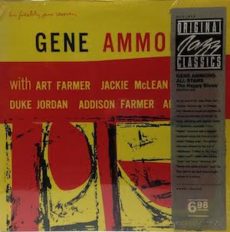
The Happy Blues ~ Gene Ammons | By Eddie Carter
A few nights ago, I was in the mood to hear something bluesy while reading and that’s what prompted this morning’s discussion. I looked through the library and came across one of my favorite albums by tenor saxophonist Gene Ammons. It was originally released as Hi-Fidelity Jam Session (1956) but was reissued a few years later as The Happy Blues (Prestige PR 7039). Ammons is supported on this date by an all-star sextet, Art Farmer on trumpet, Jackie McLean on alto sax, Duke Jordan on piano, Addison Farmer (Art’s twin brother) on bass, Arthur Taylor on drums, and Candido on conga. My copy used in this report is the 1982 US Original Jazz Classics Mono reissue (Prestige OJC-013 – P-7039).
Side One starts with a perfect song for the weekend, The Happy Blues by Art Farmer. Duke opens with a friendly introduction preceding the ensemble’s strut through the melody collectively. Jackie sets the stage with a carefree walk on the opening solo. Art continues making some beautiful music on the second statement, followed by Gene’s stellar contribution aided by Farmer and McLean. Duke provides a good deal of inspiration next, then all three horns engage in a three-way conversation ahead of the ending. The Great Lie by Cab Calloway and Andy Gibson takes the beat to a lively pace on the septet’s swinging melody. Art takes the lead this time and delivers a brisk performance. Jackie and Gene set off some fireworks on the next two solos, then Jordan swings into view on a short statement and Candido takes an impressive reading before the close.
Side Two opens with a show tune from the musical revue, The Little Show (1929) by Paul James and Kay Swift, Can’t We Be Friends? Duke and the rhythm section begin the introduction, then Gene takes the first of two relaxing strolls on the opening chorus and first solo. Art delivers an impeccable laid-back muted performance next. Jackie comes in next with a cleverly executed statement. Duke drives the next interpretation with considerable warmth, then Gene returns for some tuneful blowing. Addison adds a concise comment during the out-chorus. The septet closes with a ferocious trip to Jackie McLean’s Madhouse, flying out of the gate on the fiery theme. The front line chases each other at breathtaking speed on the first of two exchanges. Jackie, Art, Gene, and Duke take one chorus each, then the horns end this vigorous exercise in quick succession ahead of a robust climax.
The Happy Blues was supervised by Bob Weinstock, and Rudy Van Gelder was the man behind the dials. This Prestige Original Jazz Classics reissue has quiet vinyl without any clicks or pops, and an excellent soundstage placing your sweet spot with the musicians surrounding you in your listening room. The Happy Blues is one of the superb albums in Gene Ammons’ extensive discography. If you’re a fan of Hard-Bop, I hope you’ll seek it out on your next vinyl hunt. It’s forty minutes of great music and performances that I not only recommend but is sure to be a welcome addition in your library and on your turntable!
~ Hi-Fidelity Jam Session (Prestige PRLP 7039) – Source: Discogs.com ~ Can’t We Be Friends? – Source: Wikipedia.org © 2022 by Edward Thomas Carter
More Posts: choice,classic,collectible,collector,history,instrumental,jazz,music,saxophone
Requisites
Red Garland at The Prelude | By Eddie Carter
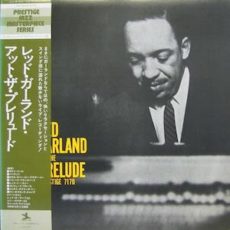
This morning’s discussion is by one of my favorite pianists. Red Garland at The Prelude (Prestige PRLP 7170) is the first of three live albums, plus a fourth containing two live tracks documenting a single night’s performance by The Red Garland Trio. The other LPs are Lil’ Darlin’ (1959), Red Garland Live! (1965), and Satin Doll (1971). Red is supported on this date by Jimmy Rowser on bass, and Charles “Specs” Wright on drums. My copy used in this report is the 1978 Prestige Jazz Masterpieces Series Japanese Mono reissue (Prestige SMJ-6581). The album gets underway with Satin Doll by Duke Ellington, Johnny Mercer, and Billy Strayhorn. The trio opens with an irresistible toe-tapping beat on the melody. Red is up first and picks up the pace with a lively opening solo, then engages in a cheery conversation with “Specs” ahead of the group’s vibrant ending.
The crowd has only a moment to catch its breath before the ensemble jumps into a vigorous rendition of Perdido by Juan Tizol, Ervin Drake, and Hans Lengsfelder. In Spanish, the title means lost, but Juan’s tune is named for the New Orleans street. Garland takes charge from the opening chorus and chews up even more terrain on the first solo. Wright has a short statement and reappears during the climax. The group turns to a popular song from the 1942 film Iceland next, There Will Never Be Another You by Harry Warren and Mack Gordon. The trio takes us to a happy place on the melody and everyone gets a solo opportunity. The pianist takes off first, providing scintillating energy on the opening statement. Jimmy comes in next and walks his bass with authority, and “Specs” has the final word in an effervescent exchange with Red preceding the trio’s exit.
popular standard, Bye Bye Blackbird by Ray Henderson and Mort Dixon brings the first side to a close with a marvelous rendition by the trio. Garland was a member of the Miles Davis Quintet when he recorded it on Round About Midnight (1956). The trio is magical on the melody, and Red begins with a thrilling interpretation inspired by the rhythm section’s backing. Rowser follows with a short statement that’s joyous and carefree before Red returns to take the song out. Side Two starts at a speedy pace with Let Me See by Count Basie, Harry “Sweets” Edison, and Jon Hendricks. Red flies out of the gate rapidly on the song’s theme, then continues swinging hard on an energized opening solo. Jimmy soars into the next presentation swiftly, and “Specs” shares a second heated discussion with Red leading to the threesome’s quick finish.
Prelude Blues is the pianist’s contribution to the set and slows things down for him to have the solo spotlight to himself. Garland delivers a reading as succulent as soul food with Rowser and Wright adding the tasty ingredients to make this delicious meal complete. Just Squeeze Me by Duke Ellington and Lee Gaines brings the beat back to midtempo and the group swings easily on the melody. Red gets the most solo space and does the tune justice with a statement of sheer delight. Jimmy is heard briefly during the closing chorus. This set ends with a vivacious rendition of Count Basie’s theme, One O’Clock Jump. Red and “Specs” bring the song to life with a short introduction, then the pianist attacks the only solo with an intense groove while Rowser and Wright maintain the aggressive beat until the climax and the trio’s short signoff.
Red Garland at The Prelude was originally recorded by Rudy Van Gelder, and Victor Musical Industries has done a superb job mastering the original tapes. The album has a marvelous soundstage with a great definition from each instrument that transports your listening room to the club as the trio is on stage. Now that I have this record in my library, I’ll be on the hunt for the other three to complete the entire night’s performance. If you’re a fan of Red Garland, I invite you to audition Red Garland at The Prelude for a spot in your library. If you love jazz, this is an album you should treat yourself to!
~ Lil’ Darlin’ (Status Records ST 8314), Red Garland Live! (Prestige New Jazz NJLP 8326), Round About Midnight (Columbia CL 949/CS 8649), Satin Doll (Prestige P-7859) – Source: Discogs.com
~ Bye Bye Blackbird, Just Squeeze Me, One O’Clock Jump, Perdido, Satin Doll, There’ll Never Be Another You – Source: JazzStandards.com © 2022 by Edward Thomas Carter
More Posts: choice,classic,collectible,collector,history,instrumental,jazz,music,piano