

Requisites
Whistle Stop ~ Kenny Dorham | By Eddie Carter
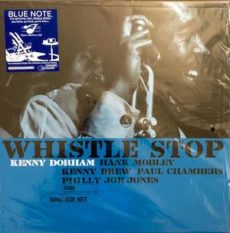
One of the biggest pleasures I get from listening to and discussing records from my library each week is I’m able to revisit favorite albums and artists to share my thoughts with my readers. If you’re a fan of Hard-Bop, this morning’s subject of discussion is one of the best by trumpet player, Kenny Dorham. Whistle Stop (Blue Note BLP 4063/BST 84063) was recorded and released in 1961 with a stellar supporting cast: Hank Mobley on tenor sax, Kenny Drew on piano, Paul Chambers on bass, and Philly Joe Jones on drums. Kenny was born in Fairfield, Texas; he played and recorded with many great jazz musicians during his lifetime. He was also a member of the orchestras of Billy Eckstine, Dizzy Gillespie, Mercer Ellington, and The Jazz Messengers. Dorham composed all seven tunes on Whistle Stop and my copy used in this report is the 2017 Music Matters Stereo audiophile reissue (MMBST-84063).
Side One starts with ‘Philly’ Twist, a driving blues that’s off to the races from the opening notes of Philly’s brief introduction into the quintet’s brisk melody. Kenny opens with a vigorously agile reading, then Hank wails convincingly on the second solo. Kenny sinks his teeth into the third performance vigorously. Paul is especially impressive on a concise statement ahead of Philly’s dazzling velocity and propulsive timing on the song’s finale. Buffalo is good soul-food cooking at midtempo with a carefree theme in unison. Mobley starts the soloing with four mellow verses. Dorham responds with a leisurely ride punctuated by the rhythm section’s groundwork. Drew keeps the laid-back feeling going with an infectiously swinging interpretation that’ll have the listener snapping their fingers and tapping their toes. Chambers wraps up everything with a short stroll anchored by only Jones into the reprise and exit.
Sunset closes the first side with the trio’s tastefully elegant introduction to one of the album’s loveliest tunes. Kenny on muted trumpet and Hank lead the quintet through a pretty mid tempo melody. Dorham remains on the mute for the opening statement, cooking easily. Hank strolls into the second performance with jaunty confidence. Kenny dips into a well of positive energy on the next reading. Paul adds the closing word with a feisty finale leading to a soft fade. Whistle Stop starts Side Two with the ensemble’s brisk melody. Mobley ignites the opening chorus with a fiery passion, then Dorham provides an electrically charged reading. Drew steps up next for a zesty performance of creative energy. Philly shares a moment with the front line in an exchange on the closing statement, before executing a lively finale preceding the climax.
Sunrise In Mexico has a soulful personality that comes alive as the day begins on the quintet’s theme. Dorham starts with a solid groove on the first interpretation. Hank demonstrates a lesson in musicality on the second reading. Kenny is as cool as the other side of the pillow on the next solo, and Paul swings softly on an effective closing statement ahead of the reprise and gentle dissolve. Windmill is an energized swinger right out of the gate beginning with a blazing melody. Dorham begins the lead solo with an aggressive fierceness, then Mobley makes searing heat on the second statement. Drew adds an abundant amount of high voltage to the third performance. Chambers walks with a happy bounce on an abbreviated reading. Jones breaks loose briefly on the finale with vivacious brushwork leading to the quintet’s high-spirited ending.
The album closes with Dorham’s Epitaph, a short, beautiful ensemble tune Kenny wrote for his passing. It illustrates his ability as a ballad composer and opens with a very gentle opening chorus by the leader complemented by the sentimental support by Hank and the rhythm section. An expanded version of this song was also written for a large orchestra and renamed Fairy Tale. Kenny Dorham continued recording excellent albums throughout the sixties that were easily the equivalent of those released by Miles Davis, Freddie Hubbard, and Lee Morgan, but sadly never received the recognition that might have catapulted him to stardom. He passed away at age forty-eight from kidney disease on December 5, 1972.
The mastering by Kevin Gray of Cohearent Sound and audio engineer Steve Hoffman is phenomenal and improves on the original recording by Rudy Van Gelder with a crystal-clear sound that’s demonstration class placing you in the studio alongside the musicians. Each of the MMJ reissues receives a great deal of care with attention to detail including high-definition gatefold photos, superb packaging of the covers, and 180-gram audiophile vinyl for the music. If you’re looking for a Hard-Bop album that’ll excite your ears, I invite you to audition Whistle Stop by Kenny Dorham. It’s a delightfully rewarding album by one of the best trumpet players in jazz that merits multiple listens and is worth adding to any jazz library!
© 2021 by Edward Thomas Carter
More Posts: choice,classic,collectible,collector,history,instrumental,jazz,music,trumpet
Requisites
Good Gravy ~ Teddy Edwards Quartet | By Eddie Carter
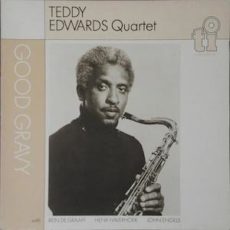
I’ve been a fan of Teddy Edwards for many years, and he’s become one of my favorite tenor saxophonists. This morning’s choice from the library is a recent acquisition taking us to The Bimhuis Concert Hall in Amsterdam for a live performance to enjoy some Good Gravy (Timeless SJP 139) by The Teddy Edwards Quartet. Teddy was born in Jackson, Mississippi, and began playing the alto sax and clarinet at an early age, before taking up the tenor sax. He first played with trombonist Ernie Fields, and his first recording was a 1947 date with Dexter Gordon. Teddy also played and recorded with some of the greatest musicians in jazz, resulting in an extensive discography as a leader and sideman. The supporting cast is a marvelous Dutch trio, Rein De Graaff on piano, Henk Haverhoek on bass, and John Engels on drums. My copy used in this report is the 1984 Netherlands Stereo album.
Lady Be Good aka Oh, Lady Be Good by George and Ira Gershwin is from the Broadway musical of the same name. The trio opens Side One with a pleasant introduction, segueing into a collective bluesy theme that swings soulfully. Teddy takes the first spot at an easy speed then turns the tempo up for some down-home country cooking. Rein heightens the excitement on the second reading with cat-like precision. Teddy makes a few final comments before the group’s closing theme and enthusiastic ovation from the crowd. Oleo by Sonny Rollins begins with a brief dialogue between the tenor sax and piano, then accelerates quickly into the ensemble’s melody. Edwards takes flight first with an aggressive lead solo. De Graaff dispenses an elevated level of energy next, and Engels shares a vigorous exchange with Edwards before having a moment in the spotlight.
Georgia aka Georgia on My Mind is a classic standard by Hoagy Carmichael and Stuart Gorrell. It became the official state song after Ray Charles’ indelible rendition. A brief trio introduction opens the way for Teddy’s delicately gentle melody. He then delivers a beautiful opening solo that’s warm, full-toned, and sensuous. Rein speaks softly and reflectively on the next statement, then Teddy restates the melody with a touch of romantic lyricism into the smartly executed ending. Good Gravy, a mid tempo blues by Edwards was first heard on his 1961 album, and the ensemble starts the opening chorus leisurely. Edwards kicks off the first interpretation cheerfully. De Graaff steps into the second statement with a relaxing reading. Haverhoek makes a profound impression on his first solo ahead of the reprise, introductions of the group, and a few humorous announcements by Edwards.
Good Gravy was produced by Timeless Records founder, Wim Wigt, and recorded by Henk Elzinga. I was extremely impressed with the sound quality of this live recording. It has an exquisite soundstage that’s clear as fine crystal, and this record is silent until the music starts. You’re not just listening to the musicians playing, you’re in the Bimhuis audience watching the quartet’s performance, and they swing on all the cuts. If you’re a fan of Teddy Edwards, I invite you to check out Good Gravy on your next hunt for vinyl treasure. It’s an enjoyable live session that knocks it out of the park and deserves to be better known!
~ Good Gravy (Contemporary Records M 3592/S 7592); The Foremost! (Onyx #201) – Source: Discogs.com >~ Oh, Lady Be Good, Oleo, Georgia on My Mind – Source: JazzStandards.com © 2021 by Edward Thomas Carter

More Posts: choice,classic,collectible,collector,history,instrumental,jazz,music,saxophone
Requisites
The Wes Montgomery Trio | By Eddie Carter
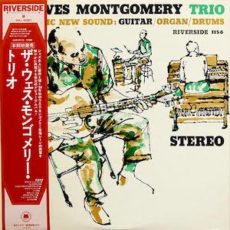
“It wouldn’t be easy,” I thought to myself. Other reviewers have been crafty, cunning, and just as resourceful when writing about Wes Montgomery. “What could I say, that hasn’t already been said about one of the true innovators on the guitar?” Staring at the blank page and flashing pointer on the computer screen, I anxiously awaited an answer that never came. I took one of my favorite albums down from the shelf to listen to after writing a review, placed the record on the turntable, and began to listen. The Wes Montgomery Trio (Riverside RLP 12-310/RLP 1156) was recorded and released during that magical year of 1959 shortly after he relocated from Indianapolis, Indiana to New York City. The other members of his trio are Melvin Rhyme on guitar and Paul Parker on drums. My copy used in this report is the 1975 Riverside Original Recording Series Japanese Stereo reissue (SMJ-6080) by Victor Musical Industries, Inc.
Side One opens with one of the greatest jazz standards ever recorded, ‘Round Midnight by Thelonious Monk, Cootie Williams, and Bernie Hanighen. The trio begins with an elegantly tender introduction by Wes that flows softly into a graceful theme with Melvin and Paul trailing him ever so gently. Montgomery is the only soloist and gives a mesmerizing interpretation with the delicacy of fine porcelain figurines preceding the ensemble’s heartwarming finale. Yesterdays by Jerome Kern and Otto Harbach was an instant hit after the Broadway musical, Roberta (1933), and remains an enduring standard to this day. The trio starts with a beautifully constructed, bluesy melody. The guitarist takes the reins again for the song’s only interpretation and unfolds an infectious performance that’ll have the listener snapping their fingers and tapping their toes.
The End of a Love Affair is from the pen of Edward C. Redding and was written in 1950. It’s a marvelous song that hasn’t been over-recorded. Wes would revisit it a few years later on Goin’ Out of My Head (1966) backed by The Oliver Nelson Orchestra. The group’s rendition is uptempo with Wes in front on the melody, then making use of his octaves and chords for an effervescent first solo. Melvin dances over the pedals on the next reading leading to the exit. Benny Golson wrote Whisper Not in 1956 while he was with The Dizzy Gillespie Big Band. It’s one of his most recorded compositions and the trio starts with a warm and mellow theme. Wes starts the soloing at a low glow and Melvin adds a modest comment before the close. Ecorah by Horace Silver is also taken at midtempo, and one can’t help but marvel at the trio’s collective improvisation during the first and final choruses.
The inspiration for Satin Doll by Duke Ellington, Billy Strayhorn, and Johnny Mercer comes from a famous black stripper who used the song’s title as her stage name. The trio pays homage to the standard with a happy theme and closing chorus that’s sure to put a smile on your face with its catchy beat. Melvin shows off a wonderful articulation on the first reading, followed by Wes who keeps things swinging with some relaxed cooking on the closer. Missle Blues, the first of two tunes by Montgomery, is named after the Indianapolis club he played in. This mid-tempo original begins with a compelling swing that the ensemble states proficiently in the melody. Melvin and Wes are the featured soloists and the organist opens with a velvety smooth interpretation. Wes strolls into the closing performance at a casual flow punctuated by Paul’s brushwork.
Too Late Now by Burton Lane and Alan Jay Lerner is a very lovely standard beginning with a collective, wistful opening chorus. Montgomery refreshes this chestnut with a breathtaking lead solo tinged with melancholy. Melvin expresses a remorseful answer to the guitarist ahead of the trio’s elegant closing thoughts culminating with a delicate climax. Wes’ Jingles ends the album allowing each member solo space beginning with Rhyme who cruises happily on the melody and first solo. Wes gets into a swinging groove on the second statement, and Paul has a quick exchange with Melvin and Wes leading to the reprise and finale. Jack Higgins engineered the original recording and Victor’s remastering of the tapes is nearly perfect. The sound quality is excellent, but on Jingles, both the guitar and organ are miked too strongly and there’s a bit of harshness on both solos and the out-chorus.
In fairness to Victor, I think this miking error may have happened during the original recording. That issue aside, the rest of the album’s sound is superb and worth auditioning for a spot in your jazz library. Wes Montgomery influenced countless guitarists with his creativity, innovation, and outstanding technique. Many have paid homage to him with original songs and tribute albums and whether working with big bands, small groups, or strings, his playing showed he could converse musically in any setting. He passed away from a heart attack on June 15, 1968. If you’re a fan of Wes Montgomery and enjoy jazz guitar, The Wes Montgomery Trio is a great album for any enthusiast and perfect for listening any time of the day or night!
~ Dizzy Gillespie and His Orchestra (Fanfare N 46 146); Goin’ Out of My Head (Verve Records V-8642/V6-8642) – Source: Discogs.com ~ Dizzy Gillespie and His Orchestra – Source: JazzDisco.org ~ ‘Round Midnight, Yesterdays, The End of a Love Affair, Whisper Not, Satin Doll, Too Late Now – Source: JazzStandards.com ~ Wes Montgomery – Source: Wikipedia.org © 2021 by Edward Thomas Carter
More Posts: choice,classic,collectible,collector,guitar,history,instrumental,jazz,music
Requisites
Anniversary ~ Stan Getz | By Eddie Carter
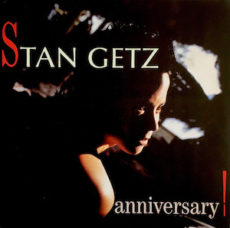
There’s nothing I enjoy more than watching jazz music performed live. Since the pandemic, the next best thing is being transported to a particular location when listening to an album on the turntable. This morning’s album was recorded on July 6, 1987, at one of the best European jazz venues, Café Montmartre, and is titled Anniversary (The EmArcy Jazz Series 838 769-1) by Stan Getz. Stan had turned sixty earlier in the year, and he was celebrating year forty-four of his illustrious career. His sound on the tenor sax was warm, lyrical, and immediately identifiable and his resume of great musicians and vocalists he’s played and recorded with reads like the Encyclopedia Britannica of jazz. Getz played many times at Montmartre, and on this album, he’s joined by Kenny Barron on piano, Rufus Reid on bass, and Victor Lewis on drums. The copy used in this report is a friend’s Phonogram France Stereo pressing by Polygram Classics.
Side One opens with an original tune by Johnny Mandel, El Cahon. The song’s title is an anagram for tenor man, Al Cohn, one of The Four Brothers in Woody Herman’s Thundering Herd. Stan starts with a brief solo introduction before moving the tempo upward for the first reading. Kenny offers some light-hearted entertainment on the next statement. Rufus plays just as imaginatively on the third solo and Victor shares the finale with Stan before the closing chorus. I Can’t Get Started by Ira Gershwin and Vernon Duke is a timeless evergreen from The Great American Songbook. Getz begins the song, not at the beginning, but the bridge with a haunting introduction and melody. He also performed the song this way in concert during the late eighties. The melody moves upward for Getz’s opening solo before ending with notes of voluptuous warmth. Drew embodies the spirit of the song on the closing chorus with a compelling performance complementing the gentle response of Reid and Lewis.
Side Two starts with a second staple in the Songbook, Stella By Starlight by Ned Washington, and Victor Young. The ensemble begins at a livelier tempo with Stan asserting his skill with a bright, lively, and cheerful melody and lead solo. Kenny comes in next for an exciting and intriguing reading. Rufus provides the next exquisite statement with an improvised bass line that’s undeniably attractive. Stan adds a few vigorous closing remarks ahead of the ending and the crowd’s approval. The closer is Stan’s Blues by Gigi Gryce allowing everyone a solo opportunity. The leader sets the tone with a relaxed attitude on the opening chorus. Reid is up first with a delightful reading that starts slowly but builds to a soulful climax. Getz blows with authority on the second statement. Drew compliments him with an air of assurance on the third reading, and Lewis gives a concise comment. Getz takes the ensemble into the finale, receiving an enthusiastic ovation from the Montmartre audience.
Anniversary was produced by Ib Skovgaard for broadcast on Denmark Radio and the man behind the dials is engineer, Johnnie Hjerting. The result of their efforts is a beautiful recording with a stunning soundstage. The record is silent until the music starts, and the listener is transported to the Café Montmartre audience to enjoy Stan Getz at his best. Two years after Anniversary was released, Getz passed away on June 6, 1991, at age sixty-four. Sadly, there was only one pressing of the LP and it may be hard to find (I know because I’m still looking for a copy). But should you come across it on your next vinyl search, it’s the perfect music to chill to after a long day or week or to enjoy during or after a romantic dinner with that special someone. If you’re a fan of Cool or Modal Jazz, Anniversary by Stan Getz is sure to please newcomers to his music as well as seasoned fans and is highly recommended for your library!
~ I Can’t Get Started, Stella By Starlight – Source: Discogs.com © 2021 by Edward Thomas Carter
More Posts: choice,classic,collectible,collector,history,instrumental,jazz,music,saxophone
Requisites
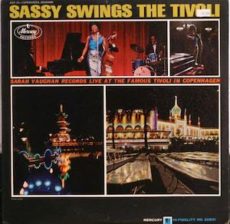
Sassy Swings The Tivoli ~ Sarah Vaughan | By Eddie Carter
On the stage stands a beautiful woman who’s about to give a memorable performance before a capacity crowd in The Tivoli Theatre. The concert will be praised by the Danish press as one of the highlights of her career. Behind her sit three elegantly dressed gentlemen who’ll match her improvisational techniques, incredible range, and sophisticated style with their musical artistry. Together, they are a perfectly melded ensemble who are up to the task of enchanting the audience. Her name is Sarah Vaughan, and the gentlemen are Kirk Stuart on piano, Charles Williams on bass, and George Hughes on drums who collectively make up The Kirk Stuart Trio. This morning’s choice from the library is Sassy Swings The Tivoli (Mercury Records MG-20831/SR-60831). Quincy Jones was the musical director during the group’s four-day engagement at the Copenhagen hall. He supervised each recording and worked with Sarah on the song selections. My copy used in this report is the 1963 Mono deep groove album.
Side One starts with Won’t You Come Home Bill Bailey? It was written by Hughie Cannon and originally titled Bill Bailey, Won’t You Please Come Home? Cannon wrote the song after his friend Willard “Bill” Bailey discussed his marriage to his wife Sarah during an evening out together. Sassy serves up two exhilarating vocals that swing on the opening and closing melodies. Kirk comes in next for an energetic interpretation illustrating the trio’s remarkable interplay. The quartet slows the pace to a ballad tempo for Misty by Erroll Garner who wrote it with Johnny Burke adding the lyrics a year later. Sarah opens with a seductively stunning showpiece that spills out her emotions with sincere feeling. Stuart shares the spotlight adding a humorous note when he takes over on the bridge with a light touch during his vocal statement. Sarah, Kirk, Charles, and George have a little fun on the finale and these musical pranksters will bring a smile to your face and may even make you laugh a little by the song’s end.
Sassy and the trio offer an uptempo version of the Cole Porter classic, What Is This Thing Called Love? It was first heard in the musical, Wake Up and Dream (1929). Here she makes the lyrics come alive with a jubilant performance including a short, scintillating scat that’s mesmerizing. Amidst a thunderous ovation from the audience, Stuart begins a brief solo introduction developing into an elegantly beautiful rendition of Lover Man by Jimmy Davis, Roger Ramirez, and Jimmy Sherman. The dreamlike softness that Sarah brings to this standard is incredibly tender, soft, and delicately supplemented by the trio’s soothing support. Sometimes I’m Happy by Vincent Youmans and Irving Caesar is a perfect song for jazz vocal improvisation. Sassy and the trio grandly illustrate this at a rapidly brisk tempo. The quartet invites the audience to sit back and enjoy an uptempo free-wheeling scat performance of aggressive rhythmic heat with an agile ending.
Side Two starts with I Feel Pretty by Leonard Bernstein and Stephen Sondheim. This song premiered in the Broadway musical, West Side Story (1957) and was later reprised in the 1961 film. The melody receives a delightfully spring-like interpretation by Sassy who sings the first chorus at midtempo, then picks up the pace for the second verse with a rocking groove and the rhythm section providing the sprightly support behind her. She returns to the original tempo taking the trio through the reprise into a sudden stop followed by the audience’s ovation. Up next is the jazz standard Tenderly by Walter Gross and Jack Lawrence. This ageless classic is presented at a slow tempo with Sassy displaying a deep and strong romantic affection for the lyrics through her voluptuously gorgeous vocals. She even interjects her sense of humor on the word “breeze”. Her three bandmates return the favor by matching the simplicity and exquisite softness with an intimate finesse preceding a lush climax.
Sassy’s Blues is a midtempo original by Sarah and Quincy Jones that the quartet has some fun with beginning with a cheerful introduction that’ll have the listener tapping their feet along to the contagious beat. She takes over for the opening chorus and song’s only statement utilizing her skills to maximum effect with a series of scat verses including maintaining a single note for twenty seconds. She ultimately achieves an easy-going, happy sound on both that’s performed impressively before the ensemble wraps it up. Polka Dots and Moonbeams by Jimmy Van Heusen and Johnny Burke is one of jazz’s most recorded standards. Sassy first recorded this tune on her album Swingin’ Easy (1957). The quartet begins at a very slow tempo, but her delivery is strikingly beautiful with each verse a remarkable commentary of warmth, intimacy, and elegance sustained by the delicate understructure of the rhythm section’s foundation.
The quartet closes with a speedy version of I Cried For You by Gus Arnheim, Abe Lyman, and Arthur Freed. This standard has been a favorite for jazz vocalists for years and is perfect for Sarah to sing one final outstanding number. Sassy lets loose every bit of her energy with a rendition I’m sure brought down the house judging by the audience’s reaction at the song’s finale. The Danish recording engineer and producer, Birger Svan was behind the dials with Quincy supervising the recording of each show. The sound quality of my copy is excellent revealing a smooth soundstage with sparkling highs, crisp midrange, and deep, tight bass. Sassy Swings The Tivoli is a marvelous live album showing Sarah in her prime with The Kirk Stuart Trio backing her beautifully. If you’re a fan of jazz vocals, I happily submit for your consideration, Sassy Swings The Tivoli by Sarah Vaughan. It’s a classic that’ll always be in style, and a must have for your library!
~ Birger Svan, Swingin’ Easy (EmArcy Jazz–Mercury MG-36109) – Source: Discogs.com ~ I Cried For You, Lover Man, Misty, Polka Dots, and Moonbeams, Sometimes I’m Happy, Tenderly, What Is This Thing Called Love? – Source: JazzStandards.com ~ I Feel Pretty, Won’t You Come Home Bill Bailey? – Source: Wikipedia.org © 2021 by Edward Thomas Carter
More Posts: choice,classic,collectible,collector,history,instrumental,jazz,music