

Requisites
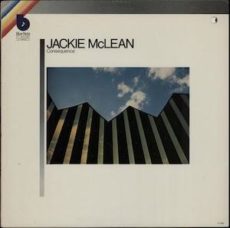
Consequence, as defined in the Merriam-Webster Dictionary, is “something that happens as a result of a particular action or set of conditions”. In effect, that’s a perfect way to describe this morning’s choice from the library, Consequence (Blue Note Classic LT-994). Alto saxophonist Jackie McLean’s two previous releases, One Step Beyond and Destination Out expressed an abstract style toward progressive jazz and both were still selling well. I think this is why Alfred Lion didn’t release the album after it was recorded. However, this 1965 date pairs McLean with one of his favorite collaborators, Lee Morgan on trumpet. The rhythm section is equally stellar, Harold Mabern on piano, Herbie Lewis on bass, and Billy Higgins on drums. My copy used in this report is the original 1979 Stereo LP.
Bluesanova, the first of two tunes by Morgan starts Side One with a dazzling theme led by the front line. Lee takes off first on an enthusiastic rhythmic flight succeeded by Jackie who wails with exciting freshness. Harold weaves a happy spell on the closing performance, then the front line makes one final comment each before the ensemble dissolving into nothingness. Consequence, also by McLean is a speed demon from the outset of the brisk opening chorus. The leader opens the soloing like a meteorite streaking across the sky. Morgan raises the temperature to the searing heat of a tropical summer on the second reading. Mabern delivers a ferocious statement next, then Higgins has a rapid-fire exchange with Lee and Jackie into an abrupt climax.
My Old Flame by Sam Coslow and Arthur Johnston made its debut in the 1934 film, Belle of The Nineties. The lyrics of this beautiful ballad describe a woman recalling a former lover with reflective affection, and the group presents a passionately tender interpretation. Jackie takes the first step with a touching opening statement. Harold and Lee turn in two beautifully expressed readings before Jackie appears again for a delicately elegant ending. A festive mood gets Side Two underway with McLean’s Tolypso, a danceable mid~tempo tune providing the ideal setting for a graciously inviting lead presentation by the altoist. Morgan adds some hot and spicy sauce to this festive occasion and Mabern sizzles with an effervescent spontaneity before the trio leads the partygoers into a fadeout.
Slumber is by Lee Morgan and during the melody, I thought I’d heard it before and was experiencing déjà vu. It turns out I did recognize it because it was recorded two years later on The Procrastinator (1978) as Soft Touch. After the ensemble’s unhurried melody, Lee opens the first solo expressing an enjoyable, relaxed mood. Jackie’s alto swings brightly next and Harold captivates on the closing reading. McLean’s Vernestune was originally recorded as The Three Minors in 1962 for an album that was shelved until its release in Japan, Jackie McLean Quintet (1977). It begins with a speedy main theme in unison. McLean provides plenty of fireworks on the first solo, then Morgan answers with a quick attack. Mabern blazes brightly on the closing presentation with a ferocious determination that doesn’t stop until the upbeat exit.
McLean and Morgan were a perfect match together and Alfred Lion utilized their talents whenever he could. Jackie performed on Lee’s LP’s: Leeway (1961), Cornbread (1967), Charisma (1969), The Sixth Sense (1970), Tom Cat (1980), and Infinity (1981). Lee returned the favor on Jackie’s album Jacknife (1975). The sound of the original recording by Rudy Van Gelder is quite good without a bit of harshness from top to bottom. I did an A-B listening comparison between Consequence and Record Five of The Complete Blue Note 1964-66 Jackie McLean Sessions (1993), which duplicates the LP song sequence. The sound of the Mosaic album is exceptional with a significant improvement in the highs, midrange, and bass. If you like jazz or are a fan of Jackie McLean, Consequence is a solid straight-ahead session with an extraordinary supporting cast that you can’t listen to without tapping your feet. Together, they create thirty-six minutes of enjoyable listening worthy of occupying a spot in any Hard-Bop or Post-Bop library!
Charisma (Blue Note BST 84312), Destination Out (Blue Note BLP 4165/BST 84165), Infinity (Blue Note Classic LT-1091), Jacknife (The Blue Note Reissue Series BN-LA457-H2), Leeway (Blue Note BLP 4034/BST 84034), One Step Beyond (Blue Note BLP 4137/BST 84137), The Complete Blue Note 1964-66 Jackie McLean Sessions (Mosaic Records MQ6-150), Jackie McLean Quintet (Blue Note LNJ-80118), The Procrastinator (Blue Note Classic Jazz Series BN-LA582-J2), Tom Cat (Blue Note Classic LT 1058) – Source: Discogs.com
~ My Old Flame – Source: JazzStandards.com ~ Belle of The Nineties – Source: Wikipedia.org ~ Bluesanova – https://www.youtube.com/watch?v=pBEDJ1Ke5l0 ~ Consequence – https://www.youtube.com/watch?v=-YKe7O6KDxM © 2021 by Edward Thomas Carter
More Posts: choice,classic,collectible,collector,history,instrumental,jazz,music,saxophone
Requisites
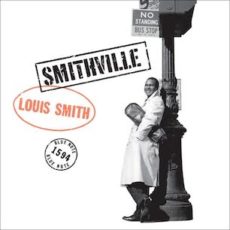
Louis Smith steps into the spotlight for this morning’s discussion with his second 1958 record for Blue Note following Here Comes Louis Smith. Born in Memphis, Tennessee, he began playing the trumpet as a teenager and his first recording was Swingin’ by Kenny Burrell, a 1980 Japanese album combining three sessions in 1956, 1958, and 1959. Smith took a job as a music director of Booker T. Washington High School in Atlanta, Georgia rather than becoming a full-time musician. After leaving school, he became the Director of the Jazz Ensemble at the University of Michigan and a teacher in Ann Arbor. Louis was also an excellent composer. On Smithville (Blue Note BLP 1594), he’s working with an elite quartet, Charlie Rouse on tenor sax, Sonny Clark on piano, Paul Chambers on bass, and Art Taylor on drums. The LP used in this report is a friend’s copy of the 2010 Music Matters Jazz 45-rpm Mono reissue (MMBLP-1594).
Record One starts with us arriving at Smithville, a slow-tempo blues by Louis inhabiting the first side. Everyone takes it easy from the introduction by Paul and Louis into a laid-back ensemble opening chorus. Charlie opens with a casualness and relaxed attitude on the lead solo. Louis takes over for a mellow, very personal presentation, then Sonny wraps up the song with a delightful showcase that’s handsomely constructed. Wetu, also by Smith occupies Side Two, commencing with the tempo way up and the quintet playing like the wind on the melody. Rouse takes off first with exhilarating speed. Smith also travels fast on the next interpretation. Taylor sets up a ferocious beat for Clark’s fingers to fly fiercely over the keys in an incandescent performance, and Chambers is especially productive on the final spot ahead of the ending theme.
Record Two begins with Embraceable You by George and Ira Gershwin. Louis is the main horn here and approaches the melody and opening statement with a softer voice, summoning affectionate warmth from his trumpet. Sonny shows his sentimental side on a hauntingly beautiful interpretation before Louis and Charlie connect on a pleasantly sweet reprise and climax. There Will Never Be Another You by Harry Warren and Mack Gordon was first heard in the 1942 film, Iceland. It opens with a brief introduction by Clark preceding an invigorating theme. Rouse opens the lead solo swinging immensely, then takes the next chorus one octave higher. Smith unwinds a lively series of scintillating choruses. Clark responds to both horns with enthusiastic virtuosity. Chambers steps into the spotlight last with strong, bass lines soaring back to the soft conclusion.
The finale is Later, a quick original by the leader flying at a speedy clip. Louis meets the challenge with a skyrocketing first solo. Charlie comes next with an adrenaline-charged reading. Sonny follows with a high-voltage power supply. Art brings the song home with some dynamic drumming into the quintet’s cooking reprise and sudden stop ending. If you’ve read any of the other MMJ reissues I’ve discussed, you already know the quality and care that goes into each title is well-known among audiophiles and jazz lovers. For those who haven’t heard them before, they’re mastered from the original analog tapes and pressed on 180-gram audiophile vinyl at RTI (Record Technology Incorporated) in Camarillo, California. Inside the gatefold are extremely beautiful photos from the session by Francis Woolf that could be proudly displayed on your listening room wall.
After listening to both records, I pulled out my 1991 Toshiba-EMI Limited Japanese 33 1/3 Mono reissue to compare the sound with the MMJ LP. The Toshiba reissue has an exceptional soundstage throughout the highs, midrange, and low end. The instruments come to life through your speakers as if you’re at Mr. Van Gelder’s home alongside the musicians during the recording. However, the sound quality of the MMJ Mono reissue is significantly elevated with superb mastering that’s very detailed making an already great-sounding album, that much better. I listened intently to both reissues becoming completely engrossed in the music and while my system isn’t high-end, it still made an enduring impression, and I could hear the difference.
It would be another thirty-seven years before Louis Smith returned to the studio to record an album as a leader. In 2006, Louis suffered a stroke ending his professional career, but he continued to enjoy live jazz in the Detroit-Ann Arbor area until his passing on August 20, 2016, at age eighty-five. To me, Smithville is a shining example of first-rate, no-frills Hard-Bop capturing the driving energy of the musicians at their best. On your next search for vinyl treasure, I invite you to take a trip to Smithville. There you will find an outstanding session of amazing music by Louis Smith that’s highly recommended for your library!
~Here Comes Louis Smith (Blue Note BLP 1584), Smithville (Blue Note BLP 1594-BN 1594), Swingin’ (Blue Note GXF 3070) – Source: Discogs.com ~Embraceable You, There Will Never Be Another You – Source: JazzStandards.com ~Booker Little, Louis Smith – Source: Wikipedia.org © 2021 by Edward Thomas Carter

More Posts: choice,classic,collectible,collector,history,instrumental,jazz,music
Requisites
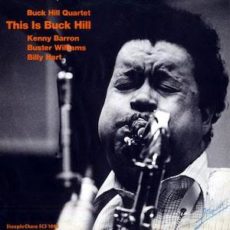
This Is Buck Hill ~ Buck Hill Quartet | By Eddie CarterMy first choice from the library for April is by one of the hidden stars of jazz. His name was Roger Wendell Hill, but everyone would know him by his nickname Buck. Hill began his professional career as a musician in 1943 while working as a Washington D.C. mailman. Buck first worked with Charlie Byrd in the late fifties, later appearing on albums by Shirley Horn, Alan Houser, and Shirley Scott. He also performed with Miles Davis, Dizzy Gillespie, Max Roach, and Sonny Stitt but didn’t record as a leader until the late seventies. Buck also played the clarinet and soprano sax, but the tenor sax was his primary instrument. This Is Buck Hill (SteepleChase Records SCS 1095) is a 1978 release offering all the excitement and energy of an after-hours jam session. He’s working with an outstanding rhythm section, Kenny Barron on piano, Buster Williams on bass, and Billy Hart on drums. My copy used in this report is the 1978 US Stereo album.
Side One starts with Tokudo, an original by Buster Williams that the bassist would record again a year later on his album, Heartbeat. This tune begins at a brisk tempo for the melody, and everyone is afforded a solo opportunity. Buck delivers the goods with aggressive momentum on the first presentation. Kenny shifts into high gear on the next reading. Buster dips into a soulful groove on the third statement, and Billy gives a dazzling performance before the out-chorus. Yesterdays by Jerome Kern and Otto Harbach is one of the most recorded jazz and pop compositions since its creation in 1933. The group swings at a medium tempo on the main theme. Hill gradually builds the excitement on the first statement to a sensational climax. Barron offers a beautiful sentiment in the next reading. Williams swings to a groovy beat preceding a luscious ending.
A blistering introduction by Billy begins Oleo by Sonny Rollins. The foursome gets things underway with a very quick melody. Buck takes off like the Road Runner for a high-octane fast ride including three unaccompanied verses of white heat. Kenny powers the next interpretation with energetic exertion, then Billy has a final furious exchange with Buck culminating into a brilliant climax.
Side Two begins with the first of three selections by the leader. I’m Aquarius is a beautiful ballad that originally appeared in a suite on trumpet player Alan Houser’s 1973 album, No Samba. It opens elegantly with a cascading flow of tenderness from Barron segueing gently into the melody with Hill directing the ensemble softly. The tenor remains tastefully restrained on the opening statement. Kenny closes with a delicate sensitivity leading to a sultry coda.
S.M.Y. is a lively original possessing an irresistible beat exuding happiness from the first notes of the opening chorus. The saxophonist starts the ball rolling with some vigorous blowing. Kenny digs in for some good rocking jazz next, then Buck supplies an abundant supply of high-voltage current into the theme’s reprise. The album closes with Two Chord Molly, an uptempo tune allowing everyone except Hart to contribute lengthy readings. The trio lays down a swinging line on the introduction with Hill providing vast amounts of energy to the festive melody. Barron delivers an enthusiastically rigorous lead solo. Buster gets down to business next with an intense workout. Buck accelerates on the closer producing electrically charged notes. During Hill’s statement, you can hear someone commenting (I’m sure positively) on his performance.
The man behind the controls is Elvin Campbell, whose work can be heard on many jazz albums. This record is well recorded, and the highs, midrange, and bottom end are all very detailed with an excellent soundstage and crystal-clear clarity. Buck recorded three more albums for SteepleChase, Scope (1979), Easy To Love (1982), and Impressions (1983). Hill passed away at age ninety on March 20, 2017. You’d never suspect this was the quartet’s first recording together because the music is excellent, and their interaction is seamless. Buck also meets the challenge of writing good compositions with strong performances inspired by Kenny Barron, Buster Williams, and Billy Hart. On your next vinyl hunt, I’ll hope you’ll consider This Is Buck Hill for a spot in your library. He was a veteran jazzman who certainly deserves a place alongside the greatest to ever blow the tenor saxophone! ~ Easy To Love (SteepleChase SCS-1160), Heartbeat (Muse Records MR 5171), Impressions (SteepleChase SCS 1173), No Samba (Straight Ahead ARS 001), Scope (SteepleChase SCS 1123) – Source: Discogs.com ~ Oleo, Yesterdays – Source: JazzStandards.com ~ Alan Houser, No Samba – Source: Album liner notes by J.R. Taylor ~ Roger Wendell Hill, Tokudo, Heartbeat, Scope, Easy To Love, Impressions, Elvin Campbell – Source: AllMusic.com, Wikipedia.org © 2021 by Edward Thomas Carter
More Posts: choice,classic,collectible,collector,history,instrumental,jazz,music,saxophone
Requisites
Bebop ~ Milt Jackson | By Eddie Carter
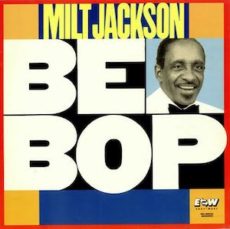
This morning’s discussion is by one of my favorite masters of the vibraphone, Milt Jackson. I was introduced to his music during a performance by The 1972 Newport Jazz All-Stars at Radio City Music Hall. Bebop (East-West – 7 90991-1) celebrates the forties jazz style characterized by a fast tempo, rapid chord changes, instrumental improvisation, and virtuosity that was created by Dizzy Gillespie, Charlie Parker, Bud Powell, and other musicians. On this date, Bags is sharing the spotlight with an outstanding sextet, Jon Faddis on trumpet, J.J. Johnson on trombone, Jimmy Heath on tenor sax, Cedar Walton on piano, John Clayton on bass, and Mickey Roker on drums. My copy used in this report is the 1988 US Full Digital Stereo album.
Side One kicks off with the 1951 jazz standard, Au Privave by Charlie Parker. The trio starts with a nimble introduction coming before the septet’s spirited theme. J.J. lights the first fire with a fierce heat, paving the way to Milt’s enthusiastic reading fueled by the rhythm section. Jimmy swings incisively and vividly next, then Jon travels into outer space with an abundance of high notes. Cedar drives to the finale with potent force ahead of the ensemble’s vigorous climax. Up next is Good Bait by Count Basie and Tadd Dameron. This seldom-performed 1944 tune became a hit at the height of the Bop era. Jackson leads with a friendly, light-hearted solo that’s pleasant. Johnson steps casually into a splendid reading. Heath explores some interesting avenues for the next performance. Faddis also takes things easy with a bluesy tone. Walton closes with a thoughtfully developed statement significant for its understated emotion.
Dizzy’s Woody’n You was written in 1943 and dedicated to Woody Herman. The ensemble moves back into uptempo for the theme. Milt explores the song’s roots first with an effervescent performance. J.J. heats things up next with an agile contribution, then Jimmy is as sprightly as ever on the third solo. Jon keeps things moving with an optimistic interpretation that swings hard. Cedar finishes with some exciting creativity before the septet disappears after the reprise. Now’s The Time by Charlie Parker cruises at a comfortable speed with Cedar taking the first chorus of this irresistible toe-tapper into the collective theme. Bags initiates a very impressive statement that moves smoothly. Johnson embraces the second reading like he’s speaking to an old friend, then Heath gets into an affirmative groove. Faddis opens the throttle a little further in a lively performance, and Walton puts the icing on the closer leading up to the climax.
Side Two starts with Ornithology by Charlie Parker and Benny Bailey. The septet begins with a happy, swinging beat on the unison theme statement. Milt gets things off the ground first, afterward, Jon wails with astounding conviction. Jimmy follows with a very relaxing performance, then J.J. strides confidently into the next reading. Cedar follows with some solid grooving, and John does some tuneful walking on his first solo opportunity preceding the theme’s reentry. One of Dizzy’s most enduring hits from 1944, Groovin’ High keeps the group at an easy tempo with Bags in front of the ensemble on the collective melody. Walton takes the lead this time and turns in some fine work. Jackson is equally easygoing on the second statement. Faddis uses the mute for an informal discussion, then Heath turns in a stirring presentation. Johnson is up next to give a muted trombone reading, and Clayton responds with a brief articulate, and charming finale before the closing chorus.
Birks’ Works was composed by Dizzy in 1951 and the title refers to his middle name. This jazz standard was the title tune for his 1957 Big Band album. John and Bags lead the septet on a bluesy opening chorus. Cedar solos first, taking things relatively easy. J.J. comes in next with a bright and breezy statement. Jimmy makes a positive impression on the third reading. Jon follows, strolling leisurely into the next solo, and Milt makes his points with admirable zest ahead of the out-chorus. Salt Peanuts, written in 1942 by Gillespie and Kenny Clarke begins with a brief introduction by Roker, segueing into a brisk melody. Heath takes flight first swiftly like a cheetah chasing its prey, then Johnson takes over for a speedy sprint. Jackson’s fingers work furiously on the vibes next. Faddis lets his ideas unfold intensely on the following solo, and Walton gets the last of the “salt peanuts” on a freewheeling finale before the ensemble’s reprise and coda.
“Bags” (Milt’s nickname) and his bandmates complement one another marvelously and these cats know how to swing throughout this collection of old favorites. The LP is a full digital recording by engineer Bobby Warner with stunning sound quality surrounding your sweet spot. Bebop is a stellar tribute to the music that remains as fresh today as when first performed in the forties. It’s also a pleasure to hear these great improvisers in a resolute form on an album that’s a high note in his plentiful discography. If you’re a fan of Milt Jackson as a leader or sideman and enjoy Hard-Bop, you won’t regret picking Bebop up on your next vinyl hunt and it’s sure to become an essential album in your library! ~ Birks’ Works (Verve Records MG V-8222) – Source: Discogs.com ~ Good Bait, Woody’n You, Groovin’ High – Source: JazzStandards.com ~ Au Privave, Bebop, Birks’ Works, Now’s The Time, Ornithology, Salt Peanuts – Source: Wikipedia.org © 2021 by Edward Thomas Carter
More Posts: choice,classic,collectible,collector,history,instrumental,jazz,music,vibraphone
Requisites
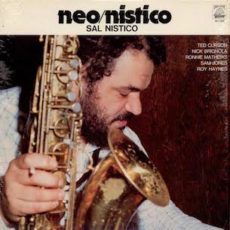
Neo/Nistico ~ Sal Nistico | By Eddie Carter
This morning’s choice from the library is another recent acquisition that introduced me to tenor saxophonist, Sal Nistico. Salvatore was born on April 2, 1938, in Syracuse, New York, and began playing the alto sax, before switching to tenor in 1956. He also played baritone sax for a few years. Sal was a member of Count Basie’s and Woody Herman’s bands and also played with Nat Adderley, Chet Baker, Don Ellis, Curtis Fuller, Dusko Goykovich, Johnny Griffin, The Jazz Brothers Band, Buddy Rich, and Stan Tracey to name a few. Neo/Nistico (Bee Hive Records BH 7006) finds him leading a world-class sextet, Ted Curson on flugelhorn (tracks: A1, B3), trumpet (tracks: B1, B2), Nick Brignola (tracks: A1, B2) on baritone sax, Ronnie Matthews on piano, Sam Jones on bass, and Roy Haynes on drums. My copy used in this report is the original 1978 Mono release.
Side One takes off with Anthropology by Dizzy Gillespie and Charlie Parker set at a blistering pace with both saxes backed by Roy presenting the melody. Nick applies searing heat to the opening statement, then Ted gives a high-energy reading that ascends to an exciting climax. Sal sizzles like a firecracker about to explode on the third solo, and Ronnie stirs it all together in an exhilarating statement preceding the front-line’s exchange and ensemble’s abrupt close. The beat slows down for You Don’t Know What Love Is by Gene de Paul and Don Raye. The quartet opens with a sensuous theme. Nistico begins the first reading with a delicately elegant conversation. Matthews begins the second statement with a soothing, almost seductive quality that’s beautifully tender. Nistico swings briefly on a robust return culminating in a gorgeous ending.
The quartet continues with a brisk workout of Be My Love by Nicholas Brodsky and Sammy Cahn. It was written in 1949 for Mario Lanza who sang it in the 1950 film, The Toast of New Orleans. The trio makes a feisty introduction to Sal’s lively theme and enthusiastic lead solo. Ronnie follows with a jubilant reading, then Sam cuts into the next statement like a hot knife through butter. Roy engages in a satisfying exchange with Sal that doesn’t stop swinging until the upbeat ending. Blues For K.D. is a Nistico original written to honor trumpeter Kenny Dorham that charges out of the gate on a vigorous melody. The leader is up first and delivers a torrid solo, then Curson ignites a mighty fire with his trumpet. Matthews keeps the flame burning next, and Haynes does some heavy cooking on the closer amid an interchange of ideas with all three soloists.
Sal’s Bambu is a festive tune he composed while playing around on the piano in Europe. It’s a danceable mix of Afro-Calypso and Latin that’s highly rhythmic, infectious, and fun. The solo order is Brignola, Curson, Matthews, Haynes, and all four soloists invite us to party with them until an abrupt halt. Fee-Fi-Fo-Fum by Wayne Shorter was first recorded by its composer on Speak No Evil (1966). The quintet starts with a stroll on the opening chorus at a leisurely tempo. Nistico starts the first solo conveying a light mood that’s joyously carefree and happy. Curson begins the next reading with an easy-going attitude, building steadily into an enjoyable groove. Matthews adds a great finishing touch with a briskly efficient finale cooking over a mild flame from Jones and Haynes ahead of the quintet’s closing chorus.
Neo/Nistico was produced by Joe Neumann, founder of Bee Hive Records, and engineered by Fred Norsworthy. I was very impressed with the record’s sound quality. It has an excellent soundstage with crystal-clear highs, a sharp midrange, and solid bass. Sal’s career as a musician lasted nearly three decades, and he spent a lot of time performing in Europe. He passed away on March 3, 1991, at age fifty-three. If you’re a fan of the tenor sax, Post-Bop, or are just discovering him as I have, I offer for your consideration, Neo/Nistico by Sal Nistico, an album of six performances that sparkle and swing from start to finish. I’m very happy I found it and have it in my library. After one audition, I’m sure you’ll feel the same!
~ Speak No Evil (Blue Note BLP 4194/BST 84194) – Source: Discogs.com ~ Anthropology, You Don’t Know What Love Is, Be My Love – Source: Wikipedia.org © 2021 by Edward Thomas Carter
More Posts: choice,classic,collectible,collector,history,instrumental,jazz,music,saxophone