

Daily Dose Of Jazz…
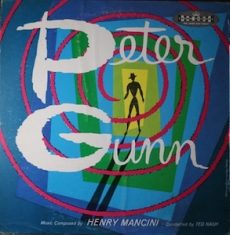
Theodore Malcolm Nash Sr. was born on October 31, 1922 in the Boston suburb of Somerville, Massachusetts. His goal was to become a classical flutist until he began playing saxophone in his early teens. He started playing professionally when he went on the road with a succession of dance bands. In 1944, he became tenor saxophonist for the Les Brown big band.
The late 1940s had him married and settling in Los Angeles, California where he became an active session musician in the Hollywood movie and television studios. In 1956, he recorded with Paul Weston’s orchestra the album Day by Day, with vocals by his former colleague and close friend, Doris Day.
He was the featured soloist on The Music from Peter Gunn soundtrack, performing the alto saxophone solo on the theme and on the second bridge of Dreamsville. Through the 1950s and 1960s, he worked as a sideman for June Christy, Nat King Cole, Bing Crosby, Billy Eckstine, Ella Fitzgerald, Frank Sinatra, and Nancy Wilson. During the 1970s, he worked with Judy Collins and Quincy Jones.
Retiring in the 1980s, saxophonist, flutist and clarinetist Ted Nash Sr. died on May 12, 2011.

More Posts: clarinet,flute,history,instrumental,jazz,music,saxophone
Daily Dose Of Jazz…
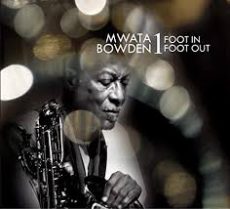
Mwata Bowden was born on October 11, 1947 in Memphis, Tennessee. He is part of a group known as 8 Bold Souls and frequently engages in collaborations with Tatsu Aoki. He helped establish the Miyumi Project which was a blend of music with different ethnic backgrounds, highlighting contributions from Japanese taiko drumming in the framework of jazz music.
As part of his regular repertoire, Bowden plays a range of saxophones and clarinets, including the E-flat clarinet, B-flat clarinet, bass clarinet, contra-alto clarinet, and contrabass clarinet, as well as flute, zamada, and didgeridoo.
As an instructor in improvisational jazz at the University of Chicago teaches young aspiring musicians in the Chicago area. Saxophonist, clarinetist and flutist Mwata Bowden, who is a part of the Association for the Advancement of Creative Musicians, continues to perform.
More Posts: bandleader,clarinet,didgeridoo,flute,history,instrumental,jazz,music,saxophone,zamada
Daily Dose Of Jazz…
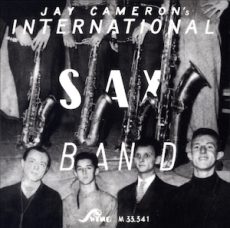
Jay Cameron was born in New York City on September 14, 1928. He began as an alto saxophonist but later recorded with bass clarinet, B-flat clarinet, and baritone saxophone. His career began in the early 1940s in Hollywood, California with Isaac M. Carpenter’s band, with whom he played until 1947.
Moving to Europe near the end of the decade he played with Rex Stewart, Bill Coleman, Roy Haynes and Henri Renaud in France and Italy. By the early 1950s Cameron was gigging around Belgium, Germany, and Scandinavia. Returning to Paris, France in 1955 he played steadily with a band that included Bobby Jaspar, Barney Wilen and Jean-Louis Chautemps.
Back in the United States in the mid-Fifties Jay played in the bands of Woody Herman, Chet Baker, Dizzy Gillespie, Maynard Ferguson, Freddie Hubbard, Candido Camero, Bill Barron, André Hodeir, Hal McKusick, and Les and Larry Elgart. In 1960 he played with Slide Hampton, also led the International Sax Band and the Third Herdsmen, and late in the decade, he toured with Paul Winter.
Bass and B-flat clarinetist and baritone saxophonist Jay Cameron died in San Diego, California on March 20, 2001.

More Posts: bandleader,clarinet,history,instrumental,jazz,music,saxophone
Daily Dose Of Jazz…
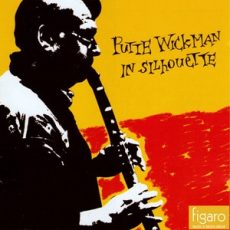
Putte Wickman was born Hans Olof Wickman on September 10, 1924 in Falun, Sweden and grew up in Borlänge, Sweden where his parents hoped he would become a lawyer. He nagged them to allow him to go to high school in Stockholm, Sweden and when he arrived in the capital he still did not know what jazz was and probably the only 15 year-old who did not.
Not having access to a piano in Stockholm, he was given a clarinet by his mother as a Christmas present. As it turned out, he started to hang out with the worst elements in the class, those with jazz records. Wickman considered himself self-taught, having never taken classes on the instrument.
Artie Shaw and Benny Goodman were the role models for the young Wickman, who, in 1944 had turned to music full-time. He was taken on as band leader at Stockholm’s Nalen. He led a band at Nalen for eleven years, and during the 1960s he ran the big band at Gröna Lund and at Puttes, the club he co-owned, at Hornstull in Stockholm.
In 1994, Wickman received the Illis Quorum gold medal, today the highest award that can be conferred upon a private Swedish citizen by the government of Sweden.
Clarinetist Putte Wickman, who was a member of the Royal Swedish Academy of Music and active as a musician until shortly before his passing, died on February 14, 2006.
More Posts: bandleader,clarinet,history,instrumental,jazz,music
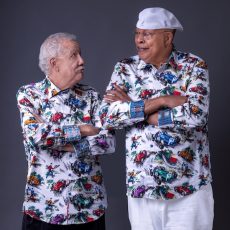
PAQUITO D’RIVERA & CHUCHO VALDÉS
D’Rivera and Valdés: Together Again!
These rare benefit concerts features Cuban jazz legends, clarinetist, saxophonist, author, composer and arranger Paquito D’Rivera and pianist, composer, and arranger Chucho Valdés first met in 1962. Both child prodigies and sons of musical families, the two worked together in Havana’s Musical Theatre Orchestra and in the Cuban Orchestra of Modern Music.
More Posts: adventure,arranger,bandleader,clarinet,composer,genius,history,instrumental,jazz,music,piano,preserving,saxophone,travel