

Daily Dose Of Jazz…
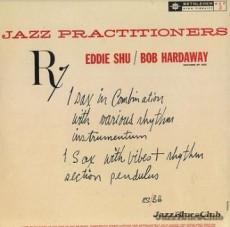
Eddie Shu was born on August 18, 1918 in New York City. He learned violin and guitar as a child before picking up saxophone as a teenager. His first professional gigs were as a harmonica-playing ventriloquist. He played in military bands while serving in the Army from 1942 to 1945.
Following his discharge he played with Tadd Dameron in 1947, George Shearing, Johnny Bothwell, Buddy Rich, Les Elgart and Lionel Hampton from 1949–1950. He would play with Charlie Barnet, Chubby Jackson and Gene Krupa through the end of the decade.
In the 1960s Shu moved to Florida, playing locally as well as clarinet with Louis Armstrong’s All-Stars, as well as Hampton and Krupa again. He would freelance around New York City, the Virgin Islands and Florida. Though he only did a few sessions as a leader in 1949, 1954 and 1955, he also recorded frequently with Gene Krupa.
Though he never gained much fame, Eddie Shu, a multi-talented swing and jazz saxophonist, a valued sideman skilled on reeds and brass instruments, passed away on July 4, 1986 in Tampa, Florida.
Daily Dose Of Jazz…
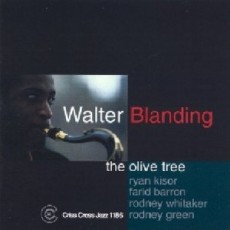
Walter Blanding Jr. was born on August 14, 1971 in Cleveland, Ohio to a musical family and began playing the saxophone at age six. In 1981, he moved with his family to New York City, and by age 16, he was performing regularly with his parents at the Village Gate.
Blanding attended LaGuardia High School for Music & Art and continued his studies at the New School for Social Research. Living in Israel for 4 years he had a major impact on the music scene, inviting great artists such as Louis Hayes, Eric Reed and others to perform. He also taught in several Israeli schools and toured the country with his ensemble.
Walter’s first recording, Tough Young Tenors, was acclaimed as one of the best jazz albums of 1991. He has performed or recorded with numerous musicians, such as Cab Calloway, the Wynton Marsalis Septet, Marcus Roberts, Illinois Jacquet, Eric Reed and Roy Hargrove among others. His last release, The Olive Tree, features fellow members of the Jazz at Lincoln Center Orchestra.
Clarinetist, tenor and soprano saxophonist Walter Blanding Jr. has taught at the Shanghai branch of Jazz At Lincoln Center, and continues to record as a sideman with a variety of musicians and perform as a member of the Jazz at Lincoln Center Orchestra.
Daily Dose Of Jazz…
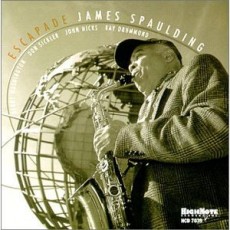
James Spaulding was born July 30, 1937 in Indianapolis, Indiana and started playing bugle while in grade school. He later learned to play trumpet and saxophone and flute. While in high school he studied clarinet and made his professional debut around his hometown in a rhythm and blues band.
After a three-year enlistment in the Army he settled to Chicago in 1957 leading his own groups. It was during this period he joined the Sun Ra Arkestra, making several recordings and remaining through 1959, while furthering his studies of flute at the Chicago Cosmopolitan School of Music. Spaulding subsequently freelanced as a studio musician and occasionally led his own groups before returning to Indianapolis in 1961.
Relocating to New York City in 1963, he recorded extensively for Blue Note Records as a sideman, and led several sessions as a leader for Storyville, Muse, 32 and High Note. He was also a member of the World Saxophone Quartet and recorded with Grant Green, Freddie Hubbard, Bobby Hutcherson, Lee Morgan, David Murray, Duke Pearson, Sam Rivers, Pharoah Sanders, Wayne Shorter, Stanley Turrentine, Larry Young and others.
As an educator he taught flute as an adjunct professor at Livingston College in New Jersey. Alto saxophonist James Spaulding continues to perform and record.
Daily Dose Of Jazz…
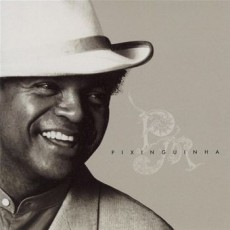
Paulo Moura was born on July 15, 1932 in Sao Jose do Rio Preto, Brazil. His father, a maestro of a marching band, encouraged his son to train as a tailor but Paulo instead studied in the National Music School and performed with the Brazilian Symphonic Orchestra.
He was the first black artist to become first clarinetist in the Municipal Theatre Orchestra. He appeared at Bossa Nova night at Carnegie Hall in 1962 with Sergio Mendes and both were featured on Cannonball Adderley’s 1962 album, Cannonball’s Bossa Nova.
From 1997 to 1999, Paulo was on the State Council of Culture in Rio de Janiero, a Councillor of the Federal Council of Music, and President of the Museum Foundation of Image and Sound. In 2000, Moura became the first Brazilian instrumentalist to win the Latin Grammy.
He won the Sharp Award for the most popular instrumentalist of the year in 1992. His CD “Paulo Moura e Os Oito Batutas” was listed by Barnes & Noble as one of the top 10 recommendations of the year for 1998. Clarinetist and saxophonist Paulo Moura passed away of lymphoma on July 12, 2010 just three days before his 78th birthday.
Daily Dose Of Jazz…
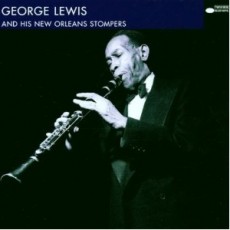
George Lewis was born Joseph Louis Francois Zenon on July 13, 1900 in the French Quarter of New Orleans, Louisiana. Learning to play the clarinet he started his professional career by age 17, working with Buddy Petit and Chris Kelly regularly as well as the trombonist Kid Ory and other leaders.
It wasn’t until 1942 that George would gain recognition outside the city, when a group of New Orleans jazz enthusiasts, including jazz historian Bill Russell, went to record the older trumpeter Bunk Johnson who chose him as his clarinetist. Lewis was soon asked to make his first recordings as a leader for Russell’s American Music Records.
While working as a stevedore in 1944 a serious accident almost ended his music career however, while convalescing at home he improvised a blues that would become his signature “Burgundy Street Blues”. Lewis returned to play with Bunk Johnson until 1946, eventually taking leadership of the band after Bunk’s retirement.
Starting in 1949 Lewis had regular broadcasts from Bourbon Street on WDSU, was featured in Look Magazine in 1950 giving him international fame, began touring nationally and eventually to Europe and Japan. George Lewis, who achieved fame later in his life and who influenced the like of Louis Armstrong, played clarinet regularly at Preservation Hall from its opening in 1961 until shortly before his death on December 31, 1968.
More Posts: clarinet