

DE ANDRÉ: I SAW NINA FLY
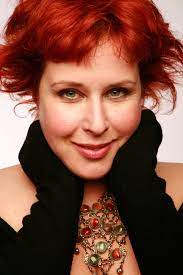
If there was still a need to say or sing something that has not yet been said or sung, here is a tribute to the music and words of one of the greatest poets of the 20th century, Fabrizio de Andre’. The four musicians, important exponents of the Italian jazz and world scene, meet to interpret with emotion and refinement some of the most beautiful songs by Fabrizio de Andrè, from the best known ones (bocca di rosa, the song of marinella, song of lost love, creuza de ma, a judge) to those left a little more in the shadows (prayer in January, khorakhanè, I saw nina fly), using different and only apparently distant languages such as jazz.
Raffaela Siniscalchi • Vocals
Gabriele Coen • Clarinet
Stefano Saletti • Buzuki oud – Guitar
Mario Rivera • Bass
More Posts: adventure,clarinet,club,genius,guitar,jazz,music,preserving,restaurant,travel,vocal

Daily Dose Of Jazz…
Jimmy Strong was born August 29, 1906 in Chicago, Illinois. As a teenage clarinetist he performed in Lottie Hightower’s Nighthawks. Around 1925, he did a national tour with a traveling revue and stayed in California for a time, freelancing with several groups.
Returning to Chicago he joined Carroll Dickerson’s orchestra, where he worked with Louis Armstrong, appearing on Armstrong’s Hot Fives recordings. In 1928, he also worked briefly with Clifford King. The 1930s saw him playing with Cassino Simpson, Zinky Cohn, and Jimmie Noone, as well as his own bands.
Around 1940 relocating to Jersey City, New Jersey he performed with local bands until his death. Clarinetist and tenor saxophonist Jimmy Strong transitioned in April 1977.

More Posts: clarinet,history,instrumental,jazz,music,saxophone
Daily Dose Of Jazz…
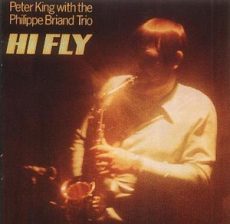
Peter John King was born on August 11, 1940 in Kingston upon Thames, Surrey, England. He took up the clarinet and saxophone as a teenager, entirely self-taught. His first public appearances were in 1957, playing alto in a trad jazz group at the Swan Public House in a group organized by trumpeter Alan Rosewell. After the performance he chose to be a professional musician. He came under the strong musical influence of Charlie Parker developing a bebop style inspired by Parker.
In 1959, at the age of 19, he was booked by Ronnie Scott to perform at the opening of Scott’s club in Gerrard Street, London, England. In the same year, he received the Melody Maker New Star award. He worked with Johnny Dankworth’s orchestra from 1960 to 1961, and went on to work with the big bands of Maynard Ferguson, Tubby Hayes, Harry South, and Stan Tracey, the Brussels Big Band, and the Ray Charles band on a European tour.
He played in small groups with musicians such as Philly Joe Jones, Zoot Sims, Al Cohn, Red Rodney, Hampton Hawes, Nat Adderley, Al Haig, John Burch, Bill Watrous, and Dick Morrissey, Tony Kinsey, Bill Le Sage, Jimmy Witherspoon, Joe Williams, Jon Hendricks, and Anita O’Day. His musical curiosity led him to associate with freer idioms in John Stevens’ ‘Freebop’ group in the 1980s. He appeared on the soundtrack of the 1969 film The Italian Job. He was a member of the Charlie Watts Tentet.
From the early 1990s, his style matured and flourished as an improviser and a composer. He found ways to combine jazz and classical techniques without diluting either and he recorded the results on his albums Tamburello, Lush Life and Janus with the Lyric String Quartet.
He won the BBC ‘Musician of the Year’ award, appeared in the documentary film, No One But Me, discussing jazz vocalist Annie Ross and appeared in the movies Blue Ice and The Talented Mr. Ripley. His autobiography Flying High was widely praised for its candour and honesty about his musical career and personal life, his international associations in the jazz world, and the many years in which he battled addiction. Saxophonist, clarinetist and composer Peter King transitioned on August 23, 2020 in Putney, South London, England at 80.
Daily Dose Of Jazz…
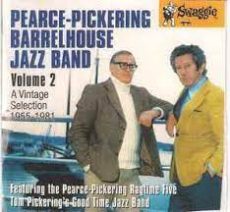
Thomas Mansergh Pickering was born on August 8. 1921 in Burra, South Australia, Australia. When the family moved to Australia’s island state of Tasmania from Burra in the mid-l930s and settled in the house next door to where Ian Pearce lived, the stage was set for the beginning of what was to become a significant part of Tasmania’s jazz history.
In his mid teens, he and Ian discovered British dance bands and over timethey embraced Benny Goodman, Louis Armstrong and the Swing Era musicians. Pee Wee Russell and Bud Freeman came later. At sixteen Tom received his first clarinet, doubling on saxophone and with his brother Cedri on drums, friend Ian playing cornet, pianist Rex Withers-Green, they gave birth to The Barrelhouse Four. He started playing in local bands and the four hit at local jam sessions. With the oncoming of WWII in 1939 they went their separate ways, reuniting in 1946 to record their first commercial pressing.
Pickering played traditional jazz in various parts of Australia during the late 30s and 40s. He continued working throughout succeeding decades, continuing his preference for older styles but also playing effective tenor saxophone in mainstream settings. His playing and recording career continued apace into the 80s, and his contribution to the musical life of his country has been rewarded with a number of honours.
Pickering went on to form his Good Time Jazz Band, which found success until the rising popularity of rock music led to the band’s eventual break up. A trio followed untilhe and Ian put together the Pearce- Pickering Ragtime Five. They had two very long and successful runs at the Tattersall’s Bar and Bistro, and then at Wrest Point Casino.
Ill-health led to Tom’s eventual retirement from music and the end of his playing career. Having qualified as a librarian in 1948, he would go on to work in the State Library of Tasmania, then became Parliamentary Librarian in 1974. He was made a member of the Order of Australia (AM), won the Australian Jazz Convention Composition Competition twice, and received the Satchmo Award.
Clarinetist Tom Pickering transitioned in Hobart, Tasmania on October 26, 2001.
More Posts: bandleader,clarinet,history,instrumental,jazz,music,saxophone
Daily Dose Of Jazz…
Edward L. Wilkerson Jr. was born in Terre Haute, Indiana on July 27, 1953. Over the course of his career he has associated himself with medium-to large-scale projects and has been a major presence in Chicago, Illinois’s Association for the Advancement of Creative Musicians (AACM), teaching and serving a term as president.
The AACM collective has been a nurturing force for Wilkerson and has informed much of his work. He was an original member of the Ethnic Heritage Ensemble formed by percussionist Kahil El’Zabar and remained with the group from 1976 until 1997. Though he recorded on three albums with the group he was becoming more involved in leading his own projects. His most ambitious project, Shadow Vignettes, was initiated in 1979 with 25 musicians and incorporated dance, poetry, and visual arts. The ensemble’s influences include the big band work of Muhal Richard Abrams, Duke Ellington, Count Basie and Sun Ra.
Wilkerson’s best-documented octet as a leader is 8 Bold Souls, a series of concerts that led Wilkerson to establish the group as a working band. They have released four albums, 8 Bold Souls, Sideshow, Ant Farm, and Last Option. Their music is influenced by the small groups of Duke Ellington and Jimmie Lunceford, but leaves room for adventurous experimentation.
In addition to his work with the preceding groups he has played with the AACM Big Band, Roscoe Mitchell, Douglas Ewart, the Temptations, Chico Freeman, the late Geri Allen, the Lyric Opera of Chicago, Muhal Richard Abrams, Aretha Franklin, and George Lewis.
Wilkerson has received grants from the Illinois Arts Council, the National Endowment for the Arts, Meet the Composer, and the Community Arts Assistance Program, and has been cited in numerous music polls.
Saxophonist, clarinetist, pianist, composer, arranger and educator Ed Wilkerson Jr., who has recorded 14 albums and two soundtracks, continues to teach composition at the AACM School of Music and explore the realms of jazz from his base in Chicago.

More Posts: arranger,bandleader,clarinet,composer,educator,history,instrumental,jazz,music,saxophone