

Daily Dose Of Jazz…
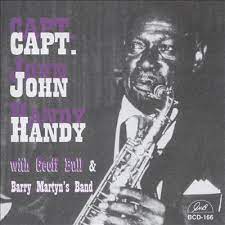
Captain John Handy was born on June 24, 1900 in Pass Christian, Mississippi. His father, John Handy Sr., had a family band that included two of his brothers, Sylvester and Julius. Although he also played guitar, mandolin, and drums at an early age, he chose reeds to develop his professional musical career, beginning with clarinet and then migrating to saxophone.
He moved to New Orleans, Louisiana in 1915 and during the 1920s played clarinet working with Kid Rena and Punch Miller. He switched to alto saxophone in 1928. From the early 1930s he led the Louisiana Shakers with his brother Sylvester, and toured throughout the South. In the latter 1930s Handy worked with Charles Creath in St. Louis, Missouri.
Captain John returned to New Orleans in the 1940s, where he performed with the Young Tuxedo Brass Band. Handy was interviewed several times for the Hogan Jazz Archive at Tulane University in New Orleans in the late 1950s and early Sixties. During the 1960s, he played with Kid Sheik Cola and the Preservation Hall Jazz Band and recorded for GHB, RCA, and Jazz Crusade.
Alto saxophonist Captain John Handy, who was part of the New Orleans jazz revival, transitioned in New York on January 12, 1971 at the age of 70.

More Posts: bandleader,clarinet,history,instrumental,jazz,music,saxophone
Daily Dose Of Jazz…
Prince Robinson was born in Portsmouth, Virginia on June 7, 1902. He learned to play clarinet as a teenager and after playing locally in Virginia, he moved to New York City, New York in 1923. Once settled Robinson quickly found work both performing and recording, with the Blue Rhythm Orchestra, June Clark, Duke Ellington, Billy Fowler, the Gulf Coast Seven, Fletcher Henderson, Lionel Howard, Clara Smith, and Elmer Snowden. He went on to tour South America with Leon Abbey’s group in 1927, and the following year became a member of McKinney’s Cotton Pickers.
The Thirties saw Prince working with Lil Armstrong, Willie Bryant, Blanche Calloway, Roy Eldridge, and Teddy Wilson accompanying Billie Holiday. His career continued in the 1940s, including work with Louis Armstrong, Lucky Millinder, and Benny Morton. In 1945 he joined Claude Hopkins’s band, remaining until 1952. Later in the decade he worked with Fletcher Henderson again and with Red Allen and Freddie Washington, in addition to leading his own ensemble in 1953.
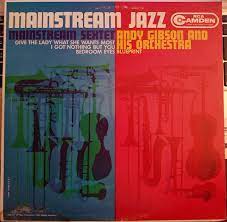
His last recording was Mainstream Jazz by Andy Gibson and His Orchestra in 1959. He played a tenor saxophone solo on the theme Blueprint. Tenor saxophonist and clarinetist Prince Robinson transitioned on July 23, 1960 in New York City.
More Posts: bandleader,clarinet,history,instrumental,jazz,music,saxophone

Daily Dose Of Jazz…
Ted Lewis was born Theodore Leopold Friedman on June 6, 1890 in Circleville, Ohio. His first instrument was the piccolo, however, he also learned to play the C-melody saxophone but was known principally as a clarinetist throughout his long career.
He was one of the first Northern musicians to imitate the style of New Orleans jazz musicians who came to New York in the 1910s. He first recorded in 1917 with Earl Fuller’s Jazz Band, a band attempting to copy the sound of the Original Dixieland Jass Band.
His earliest clarinet recordings were not very good but as his career gained momentum he refined his style under the influence of the first New Orleans clarinetists Larry Shields, Alcide Nunez, and Achille Baquet who relocated to New York.
By 1919, Lewis was leading his own band, and had a recording contract with Columbia Records. At the start of the Roaring Twenties, he was being promoted as one of the leading lights of the mainstream form of jazz popular at the time. He hired musicians Benny Goodman, Jimmy Dorsey, Frank Teschemacher, and Don Murray to play clarinet in his band. Over the years he hired trumpeter Muggsy Spanier and trombonist George Brunies as he led his band to be second only to the Paul Whiteman band in popularity.
One of his most memorable songs, Me and My Shadow, had usher Eddie Chester mimicking his movements during his act. He then hired four Black shadows, the most famous being Charles “Snowball” Whittier, making Lewis one of the first prominent white entertainers to showcase Black performers, albeit in stereotypical ways, to be onstage, on film, and eventually on network television.
Remaining successful through the Great Depression, Ted adopted a battered top hat for sentimental, hard-luck tunes. He kept his band together through the 1950s and continued to make appearances in Las Vegas, Nevada and on the popular television shows of the decade. He would go on to perform in the early talkie films by Universal Studios and Columbia Pictures.
Clarinetist, bandleader, and singer Ted Lewis, transitioned in his sleep from lung failure on August 25, 1971 in New York City. He was 81. His memorabilia resides in The Ted Lewis Museum, created by his wife Adah, located across the street from where he was born in Circleville.
More Posts: bandleader,clarinet,history,instrumental,jazz,music,vocal
Daily Dose Of Jazz…
Skeets Herfut was born Arthur Relsmond Herfut on May 28, 1911 in Cincinnati, Ohio and raised in Denver, Colorado. While attending the University of Colorado he played in different bands. By 1934 he was performing with Smith Ballew, and through the decade with Jimmy and Tommy Dorsey, and Ray Noble.
After moving to California, Herfut worked with Alvino Rey, then served in the Army from 1944 to 1945. After the war, he flourished as a studio musician in Hollywood, California and led his own band. Between 1946 and 1947 he performed with Benny Goodman and Earle Spencer.
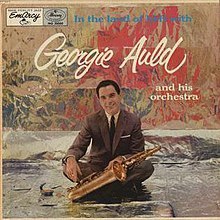
Into the 1960s Skeets’ studio sessions were with Billy May, Louis Armstrong, Georgie Auld, Jack Teagarden, Stan Kenton and again with Goodman. By the end of the 1960s he joined the Ray Conniff orchestra for several tours of Japan and Germany as well as recording sessions during the 1970s.
Herfurt bacme a member of Lawrence Welk’s orchestra and weekly television show from 1979 to 1982, performing on lead alto saxophone. During his career he recorded with Glen Gray, Ray Anthony, Joe “Fingers” Carr, Frankie Carle, Larry Clinton, Bob Eberly, Helen O’Connell, The Four Freshmen, Bob Keene and Pete Rugolo.
Saxophonist and clarinetist Skeets Herfut, who appeared as a saxophonist in the 1956 film The Nightmare, playing clarinet on the soundtrack, and performed on the soundtrack to the 1974 film The Fortune, transitioned in New Orleans, Louisiana at the age of 80 on April 17, 1992.

More Posts: clarinet,history,instrumental,jazz,music,saxophone