

Daily Dose Of Jazz…
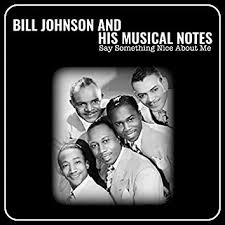
William Luther Johnson was born on September 30, 1912 in Jacksonville, Florida and studied piano as a child and began playing the alto saxophone at the age of 16. After working with lesser-known bands he studied in conservatories in Wisconsin and Illinois before attending Marquette University.
While in Milwaukee, Wisconsin he played with Jabbo Smith and others. He worked with Baron Lee and Tiny Bradshaw, and in 1936 joined Erskine Hawkins, with whom he performed into the early 1940s, recording with him from 1939 to 1942. He composed Tuxedo Junction with Hawkins and appeared with the band in the short film Deviled Hams in 1937.
Around mid-1946 he recorded under Bill Johnson and Orchestra, with several of the members becoming the Musical Notes. Bill Johnson and the Musical Notes recorded for Harlem, RCA, King, Regal, Tru-Blue.He recorded for Ronnex as the Bill Johnson Quartet, and the Bill Johnson Quintet for Baton. Over the years, there were many personnel changes, but Bill and Gus Gordon were on all the recordings.
In the Fifties failing health caused the breakup of the group, although he re-formed it on a couple of occasions. Alto saxophonist, clarinetist, and arranger Bill Johnson, who was diagnosed with lung cancer in 1957, transitioned on July 5, 1960 at 47 years old in New York City.

More Posts: arranger,bandleader,clarinet,history,instrumental,jazz,music,saxophone
Daily Dose Of Jazz…
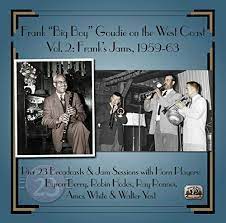
Frank “Big Boy” Goudie was born on September 13, 1899 in Youngsville, Louisiana, 150 miles west of New Orleans, Louisiana in the area of the state known as Cajun country, where he lived until the age of eight. His family then moved to New Orleans, where he began playing cornet, and became proficient enough to find work with local bands such as Papa Celestin’s Original Tuxedo Band and the Magnolia Band, two of the top New Orleans bands at that time. He began studying clarinet and tenor saxophone, which would eventually become his primary instruments.
Arriving in New Orleans around 1907 meant Frank had a front-row seat to the blossoming of early jazz with King Oliver, Kid Ory, Johnny Dodds, Freddie Keppard, Jimmie Noone and a host of others, were in their prime and working at many venues throughout the city.
With the 1918 closure of Storyville and the early 1920s, New Orleans experienced a diaspora of musicians, one of whom was Goudie. In 1921 he joined a band accompanying a traveling minstrel show, and for the next four years he performed in Louisiana, Texas, New Mexico and California. He joined another traveling group, Frank Matthews and the Louisiana High Browns, ending up in Tampico, Mexico in 1925.
That same year he sailed to France, making Paris his home base for the next 14 years. Work was plentiful for expat Black musicians in Paris prior to World War II. He would go on to work with bands led by Benny Peyton, Louis Mitchell, Sam Wooding, Noble Sissle, Freddy Johnson, Bill Coleman, and Willie Lewis during the Thirties. He worked at “Bricktop’s,” owned and operated by Ada “Bricktop” Smith, who was a supporter of American jazz musicians. Frank played often and recorded with Django Reinhardt.
While living in Europe, Goudie carried a wicker suitcase full of upholstery tools with which to augment his income – a trade he learned as a young man in New Orleans. He left Paris in late 1939, moving to South America, where he worked in Brazil and Argentina with guitarist Oscar Aleman, and fronted his own groups.
In 1946, Frank moved back to Paris, playing there with Arthur Briggs, Harry Cooper, and Bill Coleman. In 1951, he moved to Berlin, led his own band and recorded there in 1952 and 1953 and in Yugoslavia in 1955.
Returning to the States in 1957 to run his uncle’s business in San Francisco, California, his presence became known to the close-knit Bay Area jazz community. It didn’t take long before he again was in demand and playing with trumpeter Marty Marsala, pianists Earl Hines, Bill Erickson and Burt Bales, trombonist Bob Mielke and other local groups.
Trumpeter, alto and tenor saxophonist and clarinetist Frank Goudie, who as a young man, his great height earned him the nickname “Tree,” and he became known as “Big Boy” during his years in Paris, transitioned from cancer at age 64, in San Francisco on January 9, 1964.
More Posts: bandleader,clarinet,history,instrumental,jazz,music,saxophone,trumpet
Daily Dose Of Jazz…
Joseph Copeland Garland was born on August 15, 1903 in Norfolk, Virginia and studied music at Shaw University and the Aeolian Conservatory. He started by playing classical music but joined a jazz band, Graham Jackson’s Seminole Syncopators, in 1924, where he first recorded.
He had a long run of associations as a sideman on saxophone and clarinet from 1925 to the end of the decade with Elmer Snowden, Joe Steele, Henri Saparo, Leon Abbey Charlie Skeete and Jelly Roll Morton. By the 1930s he was playing and arranging with Bobby Neal and the Mills Blue Rhythm Band from 1932 to 1936. When Lucky Millinder replaced him, he joined Edgar Hayes in 1937, then Don Redman the following year, and Louis Armstrong from 1939 to 1942.
In the 1940s, he played with Claude Hopkins and others, and then returned to Armstrong’s band mid decade for two years. Following this he played with Herbie Fields, Hopkins again, and Earl Hines. In the 1950s, he went into semi-retirement.
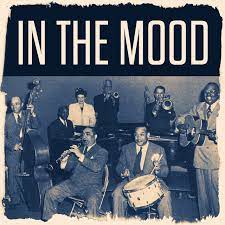
Garland wrote a number of well-known swing jazz hits, including Serenade To A Savage and Leap Frog. He is credited as the composer with lyricist Andy Razaf for In the Mood which became a Glenn Miller hit. Saxophonist, composer, and arranger Joe Garland transitioned on April 21, 1977 in Teaneck, New Jersey.

More Posts: arranger,clarinet,composer,history,instrumental,jazz,music,saxophone
Daily Dose Of Jazz…
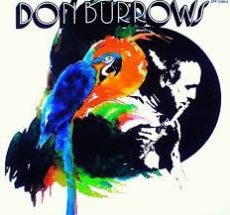
Donald Vernon Burrows was born on August 8, 1928 Marrickville, New South Wales, Australia and attended Bondi Public School. In 1937, visiting flutist and teacher Victor McMahon inspired him to start learning the flute, beginning on a B-flat flute. By 1940 he was captain of the Metropolitan Schools Flute Band and studying at the Sydney Conservatorium of Music.[2]
In 1942, Burrows had begun playing clarinet and appeared on The Youth Show, a Macquarie Radio show. In 1944 he was invited to play and record with George Trevare’s Australians. He became well-known in Sydney jazz circles and was performing in dance halls, nightclubs and radio bands.
During the 1960s and 1970s, Burrows had many engagements in Australia and the United States, including six years performing at the Wentworth Hotel in Sydney. In 1972, he was invited to perform at the Montreux Jazz Festival[4] and later the Newport Jazz Festival.
He received his first gold record in 1973 for his record Just the Beginning, instigating the first jazz studies program in the southern hemisphere, at the New South Wales Conservatorium of Music. He was appointed a Member of the Order of the British Empire (MBE) and appointed Chair of Jazz Studies at the conservatorium.
Though he mostly performed to classical music audiences through tours with Musica Viva and the Australian Broadcasting Corporation concert series, he had an extensive recording career with his groups and performed on albums by others. He also worked with Frank Sinatra, Dizzy Gillespie, Nat King Cole, Oscar Peterson, Tony Bennett, Stéphane Grappelli, Cleo Laine, and the Sydney Symphony Orchestra.
His arthritis from age 38, though making it somewhat difficult to play, never stopped him. In later years he had Alzheimer’s disease and lived in a nursing home in northern Sydney. Saxophonist, flutist and clarinetist Don Burrows transitioned on 12 March 12, 2020, aged 91.
More Posts: bandleader,clarinet,flute,history,instrumental,jazz,music,saxophone
Daily Dose Of Jazz…
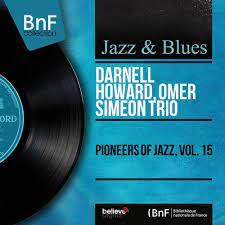
Darnell Howard was born on July 25, 1895 in Chicago, Illinois and began playing violin at age seven, picking up clarinet and saxophone later in his youth. He began playing professionally with John H. Wickcliffe’s Ginger Orchestra from 1913 to 1916.
Moving to New York City in 1917, Darnell played and recorded as a violinist with W. C. Handy, then headed back to Chicago, where he led his own band, played with Charlie Elgar before joining James P. Johnson’s Plantation Days Band, which toured London, England in 1923. The following year he toured Europe again as a member of the Singing Syncopators that also played in Shanghai later in the decade.
His Chicago years saw him playing with Carroll Dickerson, King Oliver, and Erskine Tate, Jerome Carrington, Dave Peyton and Earl Hines. He led a quartet in 1928, but his jazz violin is featured on the Hines band’s February, 1933 recording of the Earl Hines/Jimmy Mundy swing composition Cavernism.
In the late 1930s, Howard was freelancing into the Forties and playing with Fletcher Henderson and Coleman Hawkins, and putting together another band in Chicago from 1943 to 1945. He would go on to play with Kid Ory in California for part of 1945, then returned to Chicago and back again in 1948 with Muggsy Spanier until 1953. His only recordings as a leader were done while he worked with Bob Scobey in 1950, amounting to only four sides.
Through the 1950s he played with Jimmy Archey, rejoined Earl Hines to play Dixieland in San Francisco, California and recorded with Don Ewell on his 1956–1957 albums. Sometime after 1962 Darnell suffered a prolonged illness and after recuperating he played with Elmer Snowden, Burt Bales, and his own groups. His final tour in 1966, was in Europe as a member of the New Orleans All-Stars, then he fell ill again. Clarinetist, violinist and alto saxophonist Darnell Howard transitioned on September 2, 1966 in San Francisco.

More Posts: bandleader,clarinet,history,instrumental,jazz,music,saxophone,violin