


Daily Dose Of Jazz…
William T. Lewis, born Willie Meria Tawlton Lewis on June 10, 1905 in Cleburne, Texas. Growing up in Dallas, Texas and played in variety shows as a teen. He attended the New England Conservatory of Music, then played in Will Marion Cook’s orchestra. When Cook’s band was taken over by Sam Wooding, he traveled with him on his tours of Europe, South America, and North Africa, remaining until Wooding disbanded the orchestra in 1931.
Following this he put together his own band, Willie Lewis and His Entertainers. They featured some of Wooding’s old players and played to great success in Europe. Among those who played in his band were Herman Chittison, Benny Carter, Bill Coleman, Garnet Clark, Bobby Martin, and June Cole. His Entertainers recorded for French label Disques Swing.
In 1941 Willie disbanded the Entertainers and returned to New York City. He played sparsely after this but found some work as an actor, but took up bartending as his fortunes declined.
Clarinetist and bandleader Willie Lewis passed away on January 13, 1971 in New York City, at age 65.

More Posts: bandleader,clarinet,history,instrumental,music

Daily Dose Of Jazz…
John W. Russell was born on June 4, 1909 in Charlotte, North Carolina but was raised in New York City. He began on violin at age nine, later picking up saxophone and clarinet. He played in both capacities with Jimmy Campbell in 1926, then worked at the Strand Danceland under Earle Howard.
While continuing to play violin in live settings, there are no known recordings of him as a violinist. In the early 1930s after working with Harry White, he replaced Chu Berry in Benny Carter’s ensemble in 1933-34, then joined up with Willie Bryant in 1935-36. Johnny toured with Bobby Martin’s orchestra in Europe in 1938, and played with this group on the soundtrack to the 1938 Erich von Stroheim film, L’alibi; it is for his solos in this recording that he is best known.
Following this Russell remained in Europe to play with Willie Lewis from 1939 to 1941. Upon his return to the U.S. he played with Garvin Bushell briefly before being drafted. He played in military bands, including Russell Wooding’s, during World War II, then played following the war with Cecil Scott in 1945 and Eddie Cornelius.
Tenor saxophonist, clarinetist, and violinist Johnny Russell, who stopped playing full-time later in the 1940s, but occasionally did club dates later in his life, passed away on July 26, 1991 in New York City.
More Posts: clarinet,history,instrumental,jazz,music,saxophone,violin
Daily Dose Of Jazz…
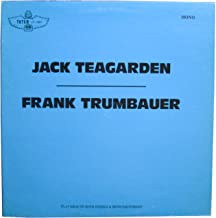
Orie Frank Trumbauer was born on May 30, 1901 in Carbondale, Illinois, Trumbauer grew up in St Louis, Missouri, the son of a musical mother who directed saxophone and theater orchestras. His first important professional engagements were with the Edgar Benson and Ray Miller bands, shortly followed by the Mound City Blue Blowers, a local group that became nationally famous through their recordings on Brunswick.
Trumbauer recruited Bix Beiderbecke for Jean Goldkette’s Victor Recording Orchestra, of which he became musical director. After leaving Goldkette, he and Beiderbecke worked briefly in Adrian Rollini’s short lived New Yorkers band, then joined Paul Whiteman in 1927. In 1927, he signed a contract with OKeh and released a 78 recording of Singin’ the Blues. Originally recorded and released by the Original Dixieland Jass Band in 1920, the Okeh recording became a smash hit. Fletcher Henderson and His Orchestra would record it in 1931 in the Trumbauer-Beiderbecke version.
He played with Whiteman for eight of the following nine years. Frank had a separate contract with OKeh from 1927 through 1930, where he recorded some of the most legendary small group jazz recordings of the era with Brunswick, Columbia, and Victor.
Leading The Three T’s, featuring the Teagarden brothers in 1936, two years later he and Mannie Klein co-led a band. In 1940 he left music to use his pilot skills to join the Civil Aeronautics Authority. Frank became a test pilot during World War II he was a test pilot with North American Aviation, and trained military crews in the operation of the B-25 Mitchell bomber. He continued to work for the CAA after the war, and also played in the NBC Orchestra. After 1947, although he continued to play and record, he earned most of his income in aviation.
Saxophonist, bassoonist, clarinetist and composer Frank Trumbauer, who was the influence for Lester Young, passed away of a sudden heart attack on June 11, 1956 in Kansas City, Missouri, age 55.

More Posts: alto saxophone,bassoon,C-melody saxophone,clarinet,history,instrumental,jazz,music
Daily Dose Of Jazz…
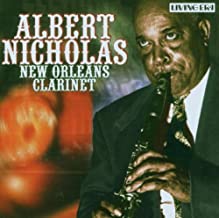
Albert Nicholas was born on May 27, 1900 in New Orleans, Louisiana and his primary instrument was the clarinet, which he studied with Lorenzo Tio in his hometown of New Orleans. Late in the 1910s he played with Buddy Petit, King Oliver, and Manuel Perez.
Spending three years in the Merchant Marines, he then joined Oliver in Chicago, Illinois from 1925 to 1927. After time in East Asia and Egypt, he returned to New York City in 1928 and played with Luis Russell until 1933. During this time in the city Albert played with Red Allen, Charlie Holmes, and J. C. Higginbotham. He would later play with Chick Webb, and Louis Armstrong with Russell and Jelly Roll Morton.
The Dixieland jazz revival of the late 1940s reinvigorated his career, playing with Art Hodes, Bunk Johnson, and Kid Ory. Nicholas had a regular gig with Ralph Sutton in 1948. In 1953 he moved to France and except for recording sessions in the U.S. in 1959-60, he remained there for the rest of his life.
Clarinetist Albert Nicholas, who was active from his teen years until his death, passed away on September 3, 1973 in Base, Switzerland.
More Posts: clarinet,history,intrumental,jazz,music

Daily Dose Of Jazz…
Julian Clifton Matlock was born on April 27, 1907 in Paducah, Kentucky and raised in Nashville from the age of ten. He began playing clarinet when he was 12.
From 1929 to 1934, Matlock replaced Benny Goodman in the Ben Pollack band doing arrangements and performing on clarinet. He was one of the main arrangers for Bob Crosby’s band and joined Crosby’s group in 1935 as clarinettist, playing with both the main Crosby band and the smaller Bobcats group. However, he was often seconded to write full-time for the orchestra and the Bobcats. He stayed with Crosby until the band broke up in 1942.
After the dissolution of Crosby’s group, Matty worked in Los Angeles, California playing for recordings made by a variety of Dixieland groups. In 1955, he appeared in the film Pete Kelly’s Blues, playing clarinet for a band that is seen in a scene in a Kansas City speakeasy in 1927. He would go on to play with Bing Crosby, Ella Fitzgerald, Ray Heindorf, Ben Pollack and Beverly Jenkins.
Dixieland clarinettist, saxophonist and arranger Matty Matlock, who recorded three albums as a leader, passed away on June 14, 1978 in Los Angeles, California.
More Posts: arranger,bandleader,clarinet,history,instrumental,jazz,music,saxophone