

Daily Dose Of Jazz…
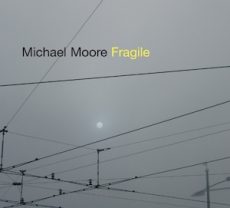
Michael Moore was born December 4, 1954 and raised in Eureka, California. He studied music at Humboldt State and in 1977 graduated from the New England Conservatory of Music, where he studied with Jaki Byard and Gunther Schuller, and was a classmate of Marty Ehrlich. He played in a variety of musical contexts, especially those in support of theatre and dance groups.
By 1982 he was a regular member of Misha Mengelberg’s Instant Composers Pool and had moved to Amsterdam. He was also a member of Georg Gräwe’s Grubenklang Orchester. Michael is one-third of the Clusone Trio with cellist Ernst Reijseger and drummer Han Bennink. Originally meant only to play a single date at a festival in Clusone, Italy, the trio toured irregularly for several years and recorded six albums, including one of freely-interpreted Irving Berlin compositions.
His debut recording as a leader was in 1992 but it was with 1994’s Chicoutimi that he began to earn recognition as a composer. The drummerless trio on this album had Fred Herschon piano, and bassist Mark Helias was inspired by the duo recordings of Lee Konitz and Gil Evans.
He put together a jazz quintet in 2005 and the album Osiris. In 2013, he performed with InstanPool, a group of international musicians making improved music and occasionally playing a composition.
Saxophonist and clarinetist Michael Moore, who has recorded twenty-two albums as a leader, continues his journey in performing and recording.

More Posts: bandleader,clarinet,history,instrumental,jazz,music,saxophone
Daily Dose Of Jazz…
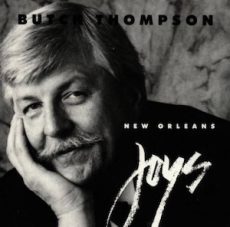
Richard Enos “Butch” Thompson was born on November 28, 1943 in St. Croix, Minnesota, began playing piano at the early age of three, and began taking lessons at age six. At Stillwater Area High School, he played clarinet in the band and in 1962 he joined the Hall Brothers New Orleans Jazz Band in Minneapolis, Minnesota and remained with them for twenty years.
>From 1974 to 1986, he was a regular and the original pianist on the radio show A Prairie Home Companion. From its inception in the 1960s he led the Butch Thompson Trio.
The 1970s saw Thompson’s recordings gaining popularity in Europe and he toured the continent extensively during the decade and into the 1980s, both as a solo artist and as a band leader or member.
He wrote for jazz publications and produced a radio show, Jazz Originals, for KBEM-FM in Minneapolis. Pianist and clarinetist Butch Thompson, best known for his ragtime and stride performances, died on August 14, 2022.

More Posts: bandleader,clarinet,history,instrumental,jazz,music,piano
Daily Dose Of Jazz…
Michel Portal was born on November 27, 1935 in Bayonne, France into a musical family and home filled with several instruments growing up. His interest in jazz began after hearing it on the radio after World War II. He studied clarinet at the Conservatoire de Paris and conducting with Pierre Dervaux.
Gaining experience in light music with the bandleaders Henri Rossotti and with Perez Prado in Spain in 1958, Michel performed with drummer Benny Bennett, Raymond Fonsèque, Aimé Barelli and for many years, the singer Claude Nougaro.
Portal co-founded the free improvisation group New Phonic Art. During 1969, he played on a recording of Karlheinz Stockhausen’s Aus den sieben Tagen.
He began scoring music for films in the 1980s. He won the César Award for Best Music Written for a Film three times. Playing both jazz and classical music and is considered to be “one of the architects of modern European jazz.
Composer, saxophonist, and clarinetist Michel Portal continues to perform and record.

More Posts: bandleader,clarinet,composer,history,instrumental,jazz,music,saxophone
Daily Dose Of Jazz…
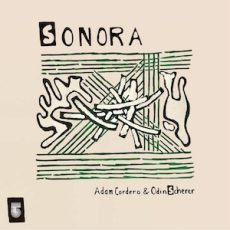
Adam Cordero was born on November 18, 1999 and grew up in Roslyn Heights, New York. He became captivated by the sounds of nature which he has incorporated in his compositions. Attending the New School for Jazz and Contemporary Music he graduated with a Bachelor of Fine Arts
Adam holds a BFA degree with high honors from The New School for Jazz and Contemporary Music. He is also an adjunct professor at the New School and teaches privately.
Cordero teaches his own studio of students privately and is an adjunct faculty member at The New School for Jazz & Contemporary Music. He has played the established jazz venues in New York City, and has toured internationally to Switzerland and South Korea.
His quintet, Arcadia, strives to unite people in the common cause of protecting the environment. Cordero is a leading founder of the music venue Julian’s NYC and the music label, Tidebloom Records.
Saxophonist, composer, educator, and multi-instrumentalist Adam Cordero, who also plays clarinet, bass clarinet, and flute, continues to perform, tour and record.
More Posts: bandleader,bassoon,clarinet,flute,saxophone
Daily Dose Of Jazz…
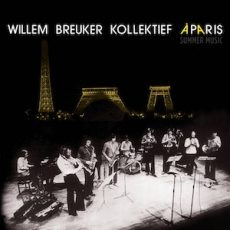
Willem Breuker was born on November 4, 1944 in Amsterdam, Netherlands. During the mid-1960s, he played with percussionist Han Bennink and pianist Misha Mengelberg. He co-founded the Instant Composers Pool (ICP) with which he regularly performed until 1973. He was a member of the Globe Unity Orchestra and the Gunter Hampel Group.
In 1974 Willem led the 10-piece Willem Breuker Kollektief, which performed jazz in a theatrical and often unconventional manner, drawing elements from theater and vaudeville. They toured Western Europe, Russia, Australia, India, China, Japan, the United States, and Canada. In 1974, he founded the record label BV Haast. Beginning in 1977, he organized the annual Klap op de Vuurpijl (Top It All) festival in Amsterdam.
Haast Music Publishers, which he also operated, published his scores. In 1997, he produced with Carrie de Swaan Componist Kurt Weill, a 48-hour, 12-part radio documentary on the life of Kurt Weill. In 1999, BV Haast published the book Willem Breuker Kollektief: Celebrating 25 Years on the Road, which includes two albums.
Bandleader, composer, arranger, saxophonist, and clarinetist Willem Breuker, who was knighted with the Order of the Netherlands Lion, died from lung cancer on July 23, 2010 in Amsterdam.
More Posts: arranger,bandleader,clarinet,composer,history,instrumental,jazz,music,saxophone