

Requisites
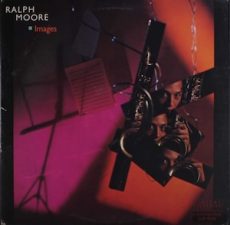
Images ~ Ralph Moore | By Eddie Carter
Ralph Moore enters this morning’s spotlight with Images (Landmark Records LLP-1520). He was born in Brixton in South London, England, and took up the trumpet and various instruments at the age of fourteen before deciding on the tenor saxophone. In the early 1970s, he relocated to Santa Maria, California, and later to Boston, Massachusetts, where he began performing locally while studying at Berklee College of Music. Unfortunately, his studies were interrupted by a home invasion that left him seriously injured and unable to complete his degree. Joining him on this date are Terence Blanchard on trumpet (tracks: A1, A3, B1, B3), Benny Green on piano, Peter Washington on bass, Kenny Washington on drums, and Victor See-Yuen on congas (A3). My copy of the album is the 1988 U.S. stereo release.
Side One commences with an energetic trip on the Freeway by Ralph Moore. From the rhythm section’s introduction, the quintet swings with an invigorating theme. Ralph has the first solo spot and swiftly navigates the trio’s interplay to a satisfying conclusion. Terence follows with an energetic interpretation, then Benny dives into a jubilant performance, culminating in the exuberant closing chorus and climax. The mood shifts to a slower tempo for a beautiful quartet rendition of Enigma by J.J. Johnson. Moore exudes grace and politeness in the opening melody, then proceeds with a richly detailed and tender presentation. Green’s short solo is filled with melodious sweetness, like the taste of a well-aged vintage wine before the close.
The trio’s infectious Latin-influenced introduction begins with Episode From a Village Dance by Donald Brown. The quintet’s danceable theme gets things off to a good start. Ralph leads the way with a happy groove. Terence steps up to give a jaunty reading, then Benny adds to the festive mood in the closing interpretation, ahead of the ensemble’s theme reprise and climax. The quintet takes the beat upward to begin the second side with This I Dig of You by Hank Mobley. The rhythm section’s introduction sets up the ensemble’s rhythmic attack in the melody. Blanchard opens the door with a spirited solo, then Moore brings the heat in the second reading. Green soars ahead next, and the front line mixes it up with Washington preceding the quintet’s closing chorus and exit.
Ralph Moore’s Blues For John is his upbeat tribute to John Coltrane. A spirited two-instrument dialogue between Moore and Washington segues into the quartet’s brisk melody. Benny rolls out the opening statement effortlessly, then the leader soars through the following interpretation with terrific momentum. Peter takes his first solo of the date and delivers an inspired reading, leading to a short theme restatement and abrupt stop. The quintet returns to begin Punjab by Joe Henderson with a bluesy introduction and melody. Peter goes for a leisurely stroll in the opening statement. Ralph follows with a delightful interpretation, then Terence steps for a well-crafted solo that’s marvelously executed. Benny has the last word, then hands it over to the ensemble, who close the song as they began.
Elmo Hope’s One Second, Please, raises the intensity one final time for the trio’s introduction, leading to the quartet’s rapid melody. Ralph launches into the opening statement with electrifying energy. Benny succeeds him with a series of exhilarating ideas that flow seamlessly. Ralph and Kenny add a vigorous footnote before the ensemble wraps up the song. Orrin Keepnews produced Images, with Rudy Van Gelder as the recording engineer. George Horn mastered this release, utilizing a Mitsubishi X-80 digital tape recorder, which enabled direct recording and mastering from two-track digital tape. The album’s sound quality is splendid, with a crystal-clear soundstage that not only allows each instrument to shine but also makes it feel as though the musicians are playing right in front of you.
Ralph Moore is a tenor saxophonist whose music, deeply influenced by John Coltrane, is both personal and easily recognizable. His professional journey began with a 1979 tour of Scandinavia. After moving to New York City a year later, he collaborated with numerous musicians, including as a member of Kevin Eubanks’ band on “The Tonight Show.” “Images” is Moore’s fourth album as a leader, and despite his relatively small discography as both a leader and sideman, each album reveals his energetic and vibrant style. For fans of the tenor saxophone, I invite you to consider “Images” by Ralph Moore for a spot in your library on your next record hunt. It’s a terrific album that showcases Moore’s growing mastery and passion for hard bop, and it should not be missed!
© 2025 by Edward Thomas Carter

More Posts: choice,classic,collectible,collector,history,instrumental,jazz,music,saxophone
On The Bookshelf
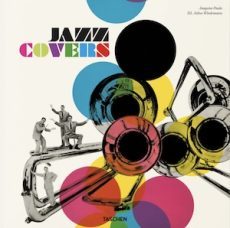
JAZZ COVERS | JOAQUIN PAULO
This striking collection of jazz record covers shows the designs that defined a sound. Containing covers from the 1940s to the early 1990s, each reproduction is accompanied with essential background information. Spanning photographic and illustrative works, these album artworks match music and design in a remarkable history of jazz.
Part design history, part trip down musical memory lane, this anthology of jazz album artwork is above all a treasure trove of creative and cultural inspiration. Spanning half a century, it assembles the most daring and dynamic jazz cover designs that helped make and shape not only a musical genre but also a particular way of experiencing life.
From the 1940s through to the decline of LP production in the early 1990s, each chosen cover design is distinct in the way it complements the energy of the album’s music with its own visual rhythms of frame, line, text, and form. To satisfy even the most demanding of music geeks, each record cover is accompanied by a fact sheet listing performer and album name, art director, photographer, illustrator, year, label, and more.
The AuthorJoaquim Paulo is a consultant for major labels and directs a number of radio stations in Portugal. He started collecting vinyl at the age of 15, and flew to London, Paris, New York, and São Paulo to enrich his collection of over 25,000 LPs. He lives and works in Lisbon and dedicates his free time to recovering old and rare recordings.
The Editor
Julius Wiedemann studied graphic design and marketing and was an art editor for newspapers and design magazines in Tokyo before joining TASCHEN in 2001. His titles include the Illustration Now! and Record Covers series, as well as the infographics collection and books about advertising and visual culture.
Jazz Covers
Taschen: Hardcover, 11.5 x 11.5 in., 9.21 lb, 552 pages
ISBN 978-3-8365-8525-5
Edition: Multilingual (English, French, German)

Requisites
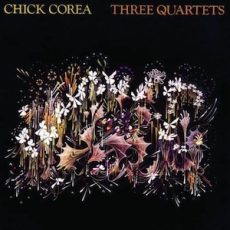
Three Quartets ~ Chick Corea | By Eddie Carter
Chick Corea embarks on a captivating exploration of jazz through the lens of Baroque, Classical, Impressionist, and Romantic traditions in Three Quartets (Warner Bros. BSK 3552). He began learning the piano at the age of four and later took up the drums by the age of eight. Corea also became proficient with other keyboards and the vibraphone. His professional career began when he performed with Mongo Santamaria in 1962. Over the years, he contributed to several landmark jazz albums and collaborated with numerous artists. He also formed several groundbreaking groups, including Circle, the Chick Corea Akoustic and Elektric Bands, Five Peace Band, Origin, The New Trio, and Return to Forever. These ensembles cemented his reputation as one of jazz’s most innovative, revered, and versatile musicians.
The pianist is joined by an ensemble of highly skilled musicians: Michael Brecker on tenor sax, Eddie Gómez on double bass, and Steve Gadd on drums. Corea not only composed but also arranged all the songs, and my copy of the album is the 1981 U.S. Stereo release. Side One gets underway with the trio’s effervescent introduction to Quartet No. 1, setting the stage for an adventurous melody powered by the foursome’s rock-inspired rhythm. Michael’s entrance amplifies the energy aggressively in the opening statement. Eddie has the spotlight next and takes an invigorating stroll, then Chick’s closing interpretation comes vibrantly alive, leaving the listener’s ears sizzling, ahead of the song’s closing moments.
Quartet No. 3 takes matters a step further in terms of character and expression. The ensemble’s introduction is slow and deliberate, gradually building momentum as the melody unfolds. Brecker opens with a bold statement that explores the edges of avant-garde jazz and post-bop. Gómez comes in for a brief interlude, then Corea delivers one of his most inventive solos. Gómez shines once more in an excellent reading before Brecker guides the quartet into the out-chorus. Quartet No. 2 (Part 1) is a ballad that’s dedicated to Duke Ellington, beginning with a lengthy piano introduction, which develops into Michael’s tender theme. Eddie starts things off with a graceful solo, then Chick makes a polite point next. Michael wraps things up with a sweet-toned delivery in the lead-up to the tranquil climax.
The closer, Quartet No. 2 (Part II), dedicated to John Coltrane, welcomes us to Gadd’s crisp introduction, which segues into the group’s upbeat theme. Corea launches into the opening statement with swift and electrifying lines. Gómez steps in next with a nimble reading. Brecker follows with a fiery performance, before Gadd steps in for a brief workout. Corea returns for a short solo, leading to a thrilling finish. Chick also wore the producer’s hat on this date, and Bernie Kirsh was behind the recording dials, as well as handling the mixing. The album possesses a superb soundstage, with no harshness in the highs, midrange, or low end, allowing the quartet to come through your speakers with a clarity that will make you feel like they are in your listening room.
Expressing what “Three Quartets” means to me is no easy task. I first encountered the album at the Record Theatre in Norwood while living in Cincinnati, Ohio. It played a crucial role in helping me navigate through a profoundly difficult period in my life. Each time I revisit it, I discover something new and extraordinary in its depths. Chick Corea received an impressive seventy-two Grammy Award nominations, and he won the award twenty-seven times. He was also honored as a Down Beat Hall of Famer and a NEA Jazz Master. On his seventy-fifth birthday, he performed alongside more than twenty groups at the Blue Note Jazz Club in Greenwich Village. Corea passed away at seventy-nine in Tampa, Florida, on February 9, 2021, due to a rare form of cancer.
If you’re a long-time fan of Chick Corea or just starting to explore the incredible body of work in his catalog, “Three Quartets” should be considered the next time you’re visiting your favorite record shop. It’s a rewarding and thought-provoking listening experience, showcasing the pianist’s exceptional artistry and the collective brilliance of his Ensemble!
© 2025 by Edward Thomas Carter
Post Script: The album video below has eight tracks, four which were recorded during the original session and were added for the cd release.
More Posts: choice,classic,collectible,collector,history,instrumental,jazz,music,piano
On The Bookshelf
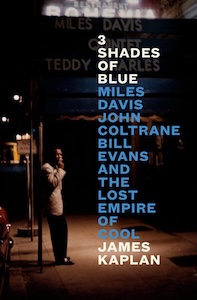
3 SHADES OF BLUE | JAMES KAPLAN
Miles Davis, John Coltrane, Bill Evans And The Lost Empire Of Cool
1959 saw Miles Davis, John Coltrane, Bill Evans and the other members of Miles’s sextet come together to record the best selling jazz album of all time: Kind of Blue. That year, America’s great indigenous art form, jazz, reached the height of its power and popularity. Black geniuses, so legendary that they go by one name – Mingus, Monk, Rollins, Ornette, Blakey, Cannonball, Brubeck and Miles. They changed the music landscape and introduced a new sound. Kind of Blue is widely considered the most iconic jazz album of all time and certainly the bestselling.
3 Shades of Blue follows the paths of Miles, Coltrane and Evans to the mountaintop of 1959 and their roads on from there. It’s a book about music and business, race and heroin, and an astonishing meditation on creativity and the strange hothouses that can produce its full flowering. But above all this is the story of three very different men – their struggles, their choices, their inspiration. The tapestry of their lives is, in James Kaplan’s hands, an American Odyssey.
Requisites
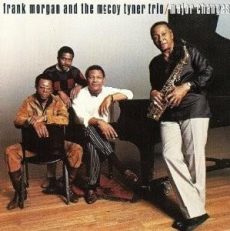
Major Changes ~ Frank Morgan and The McCoy Tyner Trio | By Eddie Carter 6.15.25
During the five years I lived in Cincinnati, Ohio, Everybody’s Records was a favorite shop I regularly visited. It was there that I heard Major Changes (Contemporary Records C-14039) by Frank Morgan and the McCoy Tyner Trio spinning on the turntable. As I listened, memories of when I first became a jazz fan came rushing back, and I picked it up immediately. Frank was born in Minneapolis, Minnesota, and began playing the guitar at a young age. His father introduced him to Charlie Parker, who inspired him to play the clarinet at age seven. Morgan later graduated to the soprano sax, then the alto sax, which became his primary instrument. Rounding out the ensemble are McCoy Tyner on piano, Avery Sharpe on bass, and Louis Hayes on drums. My copy of the album is the 1988 U.S. stereo release.
The quartet kicks off the first side with Changes by McCoy Tyner. The pianist’s brisk introduction sets the tone for their feisty melody. McCoy takes the first bite of this jazzy apple with a high-spirited solo. Frank follows with a vigorous statement, then Avery’s vivacious interpretation guides the group back to the theme’s reprise and fadeout. Irving Berlin’s How Deep Is The Ocean starts on a deceptively slow note, with the alto sax and piano sharing a private conversation ahead of the foursome’s sprightly theme. Tyner leads the charge with a swinging opening statement. Morgan builds on this momentum with a feisty reading. Sharpe rounds out the solos with a brief presentation leading to the out-chorus and exit.
Emily is a lovely composition by Johnny Mandel and Johnny Mercer. Frank begins delicately expressing each note of the melody with heartfelt sensitivity. McCoy’s opening solo is delivered with tenderness and warmth. Frank concludes with a gentle presentation, leading to a serene and graceful finish. Search For Peace by McCoy Tyner begins with Hayes’s introduction, leading into the quartet’s theme, which moves at a bright and brisk clip. The pianist starts the opening solo with remarkable precision and vibrant enthusiasm. Sharpe and Hayes share a brief interlude, then Morgan effortlessly glides over the rhythm section, perfectly attuned to Hayes’s flawless timing, until the closing chorus fades into nothingness.
McCoy Tyner announces Frank’s Back with a smooth lead-in, segueing into the opening ensemble at medium-tempo to begin the second side. Frank sets a stellar example for the group in the first solo. McCoy follows with a charismatic interpretation, then Frank and Louis share an exchange of notes, leading back to the reprise and conclusion. Oscar Hammerstein II and Jerome Kern’s All The Things You Are opens with the saxophonist’s soothing introduction ahead of the group’s mellow theme. Morgan’s opening statement starts strong and doesn’t let go until Tyner takes his turn. The pianist launches into a taut second reading that holds the listener’s attention until Morgan returns briefly, leading to the theme’s reprise and a graceful exit.
Theme From Love Story by Francis Lai and Carl Sigman comes from the 1970 romantic drama. The rhythm section’s introduction is simultaneously delicate and inviting, leading Frank to explore the intricately beautiful melody. McCoy captures the song’s essence with lively exuberance in the opening statement. Frank then weaves a tapestryof grace and elegance before the theme resurfaces, and the quartet fades into a poignant stillness. Richard Bock produced Major Changes. Ed Rak was the engineer behind the direct-to-digital recording, and George Horn mastered this release. The album boasts a superb soundstage that envelops the listener’s sweet spot, as if they’re seated in the studio alongside the musicians.
Frank Morgan battled heroin addiction for much of his life, mirroring the path of Charlie Parker. This struggle led him to spend a significant portion of his adult years in and out of prison. However, by the mid-1980s, he managed to overcome his dependency, remaining clean for the final two decades of his life, though he continued taking methadone daily. Morgan recorded twenty-one albums as a leader and contributed to twelve more as a sideman. Despite suffering a stroke in 1998, he made a remarkable recovery and continued to perform and record music during the last nine years of his life. Toward the end of his career, Morgan successfully completed his first European tour. He passed away from complications of colorectal cancer on December 14, 2007, just nine days before his seventy-fourth birthday.
The album’s title reflects the significant shifts in Morgan’s life and music, while highlighting the extraordinary chemistry between the musicians. Whether you're a seasoned jazz aficionado or a newcomer to Morgan’s music, Major Changes by Frank Morgan and the McCoy Tyner Trio is a treasure trove of captivating tracks and stunning solos. It also serves as a delightful showcase of his talent, and I wholeheartedly recommend checking it outthe next time you’re out record-shopping!
~ All The Things You Are – Source: JazzStandards.com
~ Theme From “Love Story” – Source: Wikipedia.org
© 2025 by Edward Thomas Carter
More Posts: choice,classic,collectible,collector,history,instrumental,jazz,music,piano,saxophone