

Requisites
Barry Harris At The Jazz Workshop | By Eddie Carter
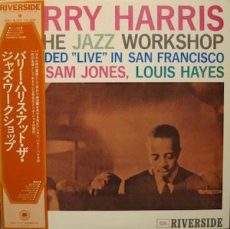
This morning’s subject is one of my favorite albums from the library. Barry Harris at The Jazz Workshop (Riverside RLP 326/RLP 1177) is a 1960 live date capturing the pianist in performance with two-thirds of Cannonball Adderley Quintet’s rhythm section, Sam Jones on bass, and Louis Hayes on drums. It was his debut on the label and his second release as a leader. My copy is the 1976 Riverside Original Recording Series Japanese Stereo reissue (SMJ-6123) by Victor Musical Industries. The album opener, Is You Is or Is You Ain’t My Baby by Louis Jordan and Billy Austin, begins with the trio cruising comfortably in the melody. Barry swings easily into the opening solo; then Sam enhances the appeal of the song’s lyrics in a splendid performance before Barry reappears to end the song softly.
Up next is Curtain Call, the first of three tunes by Barry Harris. After the trio states the theme, the pianist takes off for a speedy ride in the opening statement. Louis comes in next to have a short conversation with Harris leading to the closing chorus. The ensemble infuses Star Eyes by Gene de Paul and Don Raye with an infectious Latin-flavored melody and ending theme. In between them, Barry illustrates his melodic ideas efficiently while Sam and Louis collaborate tastefully in support. Charlie Parker’s Moose The Mooche begins with the trio’s easy-going theme. Harris sets the mood with a cheerful opening solo. Jones takes over for some leisurely walking, and Hayes puts his best foot forward in an exchange with Harris preceding the song’s climax.
Side Two gets underway with Lolita, a pretty song by Barry Harris with a toe-tapping tempo that gives the pianist the spotlight for the song’s only solo. Barry offers a smartly paced performance with exquisite accompaniment by Sam and Louis preceding a gorgeous finale. Morning Coffee, the leader’s third original, is what many of us drink to begin our day. Hayes introduces this tune, segueing into the ensemble’s lively melody. Harris kicks off the solos with an enjoyable romp; Sam contributes to the fun in the second reading. Louis sparkles in an exchange with Harris ahead of the exit. Don’t Blame Me by Jimmy McHugh and Dorothy Fields is a ballad highlight for Barry, who gives a sensuously beautiful performance supplemented by the gentle accompaniment of Sam and Louis, leading to a gorgeous ending.
Woody ‘n’ You by Dizzy Gillespie takes off briskly from the trio’s melody. Harris gets busy immediately on the opening statement; next, Jones takes an enthusiastic walk with the bass. Hayes gets the last word and heightens the group’s energy in a vigorous exchange with Harris before the conclusion and appreciative applause from the club crowd.
Orrin Keepnews produced Barry Harris at The Jazz Workshop, and Wally Heider was the recording engineer. Victor Musical Industries has done an excellent job remastering this reissue. The sound quality is gorgeous, transporting the listener to the club among the audience. If you’re a fan of Barry Harris or enjoy a good jazz trio, I highly recommend checking out Barry Harris at The Jazz Workshop the next time you’re out vinyl shopping. It’s a superb concert recording by one of the best pianists in jazz and is worthy of a spot in your library!
~ Don’t Blame Me, Star Eyes, Woody ‘n’ You – Source: Discogs.com ~ Is You Is or Is You Ain’t My Baby, Moose The Mooche – Source: Wikipedia.org © 2023 by Edward Thomas Carter

More Posts: bass,choice,classic,collectible,collector,history,instrumental,jazz,music

Requisites
This Time The Drum’s On Me ~ Stan Levey | By Eddie Carter
Stan Levey, one of the great Bebop drummers, enters the spotlight with his second album as a leader, This Time The Drum’s On Me (Bethlehem BCP-37). Stan was born in Philadelphia, Pennsylvania, and started playing with Dizzy Gillespie at age sixteen. He left for New York City, where he worked with Gillespie, Charlie Parker, and Oscar Pettiford. Levey also spent some time with the Stan Kenton Orchestra before moving to the West Coast and becoming an essential contributor to West Coast Jazz with Howard Rumsey, Don Joham, and The Lighthouse All-Stars. Here, he’s accompanied by Conte Condoli on trumpet, Frank Rosolino on trombone, Dexter Gordon on tenor sax, Lou Levy on piano, and Leroy Vinnegar on bass. The copy in this report is a friend’s original 1956 US Mono deep groove release.
Diggin’ For Diz, by George Handy, sets the album in motion with a danceable beat for the sextet’s collective melody featuring a few comments by the front line. Conte swings into the opening solo with a joyful improvisation that builds to an effective climax. Dexter follows with a marvelous statement that cooks convincingly, then Frank follows with a captivating performance. Stan shares the subsequent interpretation with all three horns, and Lou closes with a concise reading into the theme’s restatement and close. Thelonious Monk’s hauntingly beautiful Ruby, My Dear, is a feature for Condoli. He leads the ensemble in a thoughtfully tender melody, then gives an elegant first solo. Before the group’s gentle ending, Levy compliments him with a short, delicately attractive reading.
Tune Up, by Miles Davis, brings the sextet back to a vibrant beat, and the ensemble begins the melody briskly before Dexter starts the solos with some spirited blowing. Conte comes behind him for a quick and agile interpretation; then Frank sparkles on an energetic reading. Lou takes the listener on a swift joyride, followed by Leroy’s scintillating walk. Stan shares a short conversation with Dexter preceding the closing chorus. The first side ends with La Chaloupée by Jacques Offenbach from the 1881 French opera, The Tales of Hoffman. The front line starts the melody collectively at a medium groove, giving way to Frank, Dexter, Conte, Stan, and Lou, who all excel in five utterly charming presentations ahead of the ending theme.
Side Two starts with the sextet’s upbeat rendition of Day In, Day Out by Rube Bloom and Johnny Mercer. Conte leads the ensemble’s theme, then Gordon launches into a scintillating opening statement. Condoli is next to give a vigorous interpretation; then Rosolino delivers a vitalized performance. Levy has the last word and reveals his keyboard artistry with energy to spare, leading to the group’s reprise and climax. Dexter Gordon’s Stanley The Steamer is a bluesy tribute to Stan Levey. Lou brings the song to life with a brief introduction segueing into the sextet’s easygoing theme. Dexter delivers an inspired improvisation as the song’s only soloist to the rhythm section’s infectious accompaniment before the ensemble’s conclusion.
The title tune, This Time The Drum’s On Me, was initially titled Max is Making Wax, Oscar Pettiford’s tribute to drummer Max Roach. The sextet puts the accelerator to the floor at a breakneck pace from the opening chorus to the final note. Gordon ignites the opening statement with blazing heat, then Condoli shines like a bright beacon on the second solo. Rosolino takes over to give a speedy presentation; next, Lou moves into the next spot aggressively. Stan wraps up things nicely in a high-powered workout ahead of the enthusiastic ending. It’s unknown who produced the album, but Val Valentin was the man behind the dials of the recording. The sound quality is excellent, with a clean and crisp soundstage that’s a delicious treat for any jazz fan!
Stan Levey recorded three albums for Bethlehem as a leader but appeared on many more as a sideman with some of the best jazz musicians. Levey retired from music altogether in 1973 and became a professional photographer. He died at age seventy-nine on April 19, 2005. If you’re a fan of Bop like me, I invite you to check out This Time The Drum’s on Me on your next vinyl hunt. It’s a perfect introduction to drummer Stan Levey and an excellent release worthy of a spot in any jazz library and repeated listening on the turntable!
~ Stan Levey Plays The Compositions of Cooper, Holman, and Giuffre (Bethlehem BCP 1017), Grand Stan (Bethlehem BCP-71) – Source: Discogs.com ~ Day In, Day Out, Tune Up – Source: Wikipedia.org © 2023 by Edward Thomas Carter
More Posts: choice,classic,collectible,collector,drums,history,instrumental,jazz,music
Requisites
1957 ~ Red Rodney | By Eddie Carter
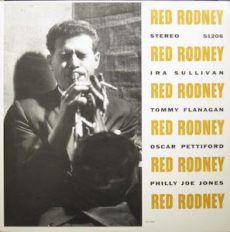
Red Rodney enters the spotlight to begin this morning’s discussion with 1957 (Signal S 1206), his second release as a leader. He was born in Philadelphia, Pennsylvania, and began playing the trumpet professionally at age fifteen, appearing in some of the best big bands during the Forties. Red later began playing Bebop after hearing Dizzy Gillespie and Charlie Parker. He played with Gillespie, Woody Herman, Gene Krupa, Ira Sullivan, and Claude Thornhill and was part of Parker’s quintet for two years. Ira Sullivan on tenor sax (A1 to A3, B2, B3) and trumpet (B1), Tommy Flanagan on piano, Oscar Pettiford on bass, ‘Philly’ Joe Jones (A1 to A3), and Elvin Jones (B1 to B3) on drums complete the ensemble. My copy is the 1997 Classic Records Stereo audiophile reissue sharing the original catalog number.
Star Eyes by Gene de Paul and Don Raye opens the album with Red taking the lead at a relaxing tempo in the melody and opening chorus. Ira gets his teeth into the second statement and swings comfortably, then Tommy strolls into the next reading with intuitive ease. Oscar has the last say and glows in a delightful performance before the quintet reassembles for the closing chorus and climax. Up next is a beautiful rendition of You Better Go Now by Robert Graham and Bickley Reichner. The rhythm section provides the perfect backdrop for Rodney’s elegantly tender opening chorus and lead solo. Sullivan follows with a sensuously warm statement, then Flanagan and Pettiford turn in two touching interpretations leading to a graceful ending.
The first side finale, Stella By Starlight by Victor Young and Ned Washington, begins with a brief introduction by Philly, leading to the quintet’s lively melody. Ira kicks off the solos with a spirited opening statement. Red makes his mark next with an aggressive interpretation. Tommy delivers the third reading with evident enjoyment, and Philly shines in a short solo ahead of the song’s conclusion. Side Two starts with Red Arrow, the first of two tunes by Red Rodney. Sullivan is featured on trumpet, and Elvin Jones takes over on drums. Rodney and Sullivan begin the melody briskly; then, Red opens with a vigorous first solo. Flanagan provides a brief break; then Ira gives a quick, pulse-raising reading. After Flanagan’s second break, the two trumpets share an invigorating exchange before a speedy closing chorus.
Red’s Box 2000 is a blues that Oscar introduces before the front line delivers the medium-tempo melody in unison. Ira launches into a well-constructed opening statement, and Red excels on the second interpretation; then Tommy and Oscar share a swinging conversation, and Jones engages in a short exchange with both horns ahead of the theme reprise and exit. The finale is Oscar Pettiford’s Ubas, dedicated to conga player Sabu Martinez. This song is festive from the opening chorus, and Sullivan kicks off the solos with a happy lead solo, and Rodney responds with a joyful spirit in the second statement. Flanagan has a jubilant moment next, and Elvin provides a bit of propulsive energy in the finale preceding the theme’s return and close.
Jules Colomby, the founder of Signal Records, supervised the initial session of 1957, and Rudy Van Gelder was the recording engineer. Bernie Grundman remastered this reissue, and the record was pressed on 180 grams of audiophile vinyl. The sound quality is superb, with a breathtaking soundstage that transports the musicians to the sweet spot in your listening room with stunning fidelity. Despite his struggles with drug addiction, Red recorded twenty-four albums as a leader and appeared on twelve releases as a sideman over a five-decade career. He died from lung cancer at age sixty-six on May 27, 1994. If you’ve not heard Red Rodney before and are a fan of jazz trumpet, I invite you to check out 1957 or its two reissues, Fiery (1973) and The Red Arrow (1972), on your next vinyl shopping trip. It’s an excellent album that’s a welcome introduction to his music and an addition to any jazz lover’s library!
~ Fiery (Savoy Records MG 12148), The Red Arrow (Onyx Records ORI 204) – Source: Discogs.com ~ Star Eyes, Stella By Starlight – Source: JazzStandards.com © 2023 by Edward Thomas Carter
More Posts: choice,classic,collectible,collector,history,instrumental,jazz,music,trumpet
Requisites
Miles In Berlin ~ Miles Davis | By Eddie Carter
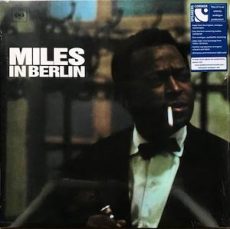
This morning’s album is a recent addition to the library by Miles Davis. Miles in Berlin (CBS SBPG 62976/S 62967) captures the trumpeter and his quintet of Wayne Shorter on tenor sax, Herbie Hancock on piano, Ron Carter on bass, and Tony Williams on drums in concert before an enthusiastic audience at the Berliner Jazztage ’64. It was initially released in Germany in 1965, and my copy is the 2017 Speakers Corner European Mono audiophile reissue (CBS 62976). The set opens with Milestones by Miles Davis. The quintet establishes the melody quickly; then, Miles takes off with a swift opening solo. Wayne follows in rapid succession with a spirited reading, and Herbie closes with a speedy resolution leading to the ensemble’s finale and the audience’s approval.
Autumn Leaves by Joseph Kosma, Jacques Prévert, and Johnny Mercer starts with a muted introduction and a delicately gentle melody by Miles and the trio. The leader’s opening statement tells a touching story. Shorter builds the next solo efficiently, then Hancock follows with a charming presentation. Carter has the final word with a concise comment before the quintet regroups for the finale. Side Two soars into the stratosphere with Herbie and Ron introducing Miles’ So What, ahead of the quintet’s Theme. Miles takes the lead and gives a spirited performance. Wayne launches into the following interpretation with enthusiastic vitality, then Herbie proceeds joyously into the closing chorus before the ensemble takes the song out.
The quintet sets Richard Carpenter’s Walkin’ in motion with a rapid-fire opening chorus. The lead solo by Miles bursts with energetic passion. Williams propels the second statement with vigorous brushwork; Shorter enters next with an electrically charged interpretation. Hancock states his case effectively in the finale ahead of the reprise and climax. Miles’ Theme gives Ron the spotlight in a concise reading before the trumpeter returns, and the set ends to thunderous applause. Rudy Wolpert produced the album, and S.F.B. (Sender Freies Berlin) Radio recorded the concert. Speakers Corner has beautifully remastered the original analog tapes. This excellent recording has an impressive soundstage that places the listener’s sweet spot in the audience.
The record is pressed on 180-gram audiophile vinyl and is quiet until the music starts. This was the second quintet’s debut live album, and it set the stage for what would come in their following six studio releases. If you’re a fan of Miles Davis and enjoy his early live recordings or his bandmates’ music, I submit for your consideration Miles in Berlin on your next vinyl shopping trip. It highlights his group in a terrific live performance and should become a welcome addition to your jazz library!
~ E.S.P. (Columbia CL 2350/CS 9150), Filles De Kilimanjaro (Columbia CS 9750), Miles in The Sky (Columbia CS 9628), Miles Smiles (Columbia CL 2601/CS 9401), Nefertiti (Columbia CL 2794/CS 9594), Sorcerer (Columbia CL 2732/CS 9532) – Source: Discogs.com ~ Autumn Leaves – Source: JazzStandards.com © 2023 by Edward Thomas Carter
More Posts: choice,classic,collectible,collector,history,instrumental,jazz,music,trumpet
Requisites
Overseas ~ Tommy Flanagan Trio | By Eddie Carter
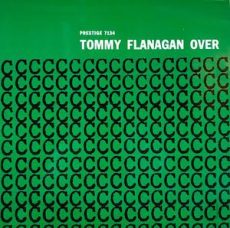
Tommy Flanagan steps into the spotlight of this morning’s discussion with Overseas (Prestige PRLP 7134/PRST 7632), recorded during his 1957 tour with J.J. Johnson and released the following year. The pianist works with Wilbur Little on bass and Elvin Jones on drums on this album. My copy is the 2012 Analogue Productions US Mono audiophile reissue sharing the original catalog number. The album starts quickly with Relaxing at Camarillo by Charlie Parker. It was named for Bird’s six-month stay at Camarillo State Hospital, where he recuperated from drug addiction. Tommy takes off on the opening solo briskly. Wilbur’s bass walks lively on the next reading, then Elvin caps off the closing presentation, exchanging exquisite brushwork with Tommy ahead of the theme reprise and climax.
Chelsea Bridge by Billy Strayhorn is one of his best-loved compositions. Flanagan is the single soloist, and the pianist gives a gorgeous interpretation emphasizing his light touch. Eclypso, Flanagan’s first of six originals, has a Caribbean-flavored rhythm on the melody and closing chorus. Tommy offers a cheerfully bright mood in the opening solo, and Elvin shares an exuberant exchange with Flanagan before the song fades gracefully. Tommy’s tune Beat’s Up featuring him and Jones in two spirited interpretations with short interludes by Little that spices things up nicely. Skål Brothers is a concise midtempo blues by Flanagan, who cruises leisurely on the opening chorus and ending theme anchored by the relaxing foundation Wilbur and Elvin provide.
Little Rock opens Side Two with a delightful statement by Little. Flanagan and Jones join him; the pianist serves up some down-home cooking on a delicious performance. Wilbur delivers a tasty reading which walks firmly into the finale by Elvin, who adds a scrumptious dessert on the drums. Flanagan’s Verdandi brings the trio back to uptempo with an electrifying opening solo by Tommy and a fiery showcase for Elvin, who gives a virtuoso demonstration before the trio’s finale. Delarna is dedicated to the province in central Sweden, known for its breathtaking landscape. The trio opens with a beautiful melody that starts at a slow tempo but moves upward for Flanagan’s execution of a solo of extraordinary beauty into a gentle climax.
Willow Weep For Me comes from the pen of Ann Ronell, who also composed the lyrics. The jazz standard opens with a quiet demeanor collectively followed by a passionate performance by Tommy, and Wilbur takes us toward the album’s climax with a profoundly affecting presentation. Overseas began his forty-five-year career as one of the most respected and revered jazz musicians. The recording engineer was Gösta Wilholm, and Kevin Gray remastered the album. The sound quality of this Mono reissue is demonstration class with a superb soundstage that places the trio in your listening room with stunning definition. For anyone who’s a fan of this remarkable pianist, I invite you to treat yourself to Overseas by The Tommy Flanagan Trio on your next vinyl search. It’s a forty-minute trip that requires no luggage, passports, or plane tickets, just a turntable, stereo system, and your favorite drink to enjoy while you listen!
~ Chelsea Bridge, Relaxing At Camarillo, Willow Weep For Me – Source: JazzStandards.com ~ Tommy Flanagan – Source: Wikipedia.org © 2023 by Edward Thomas Carter
More Posts: choice,classic,collectible,collector,history,instrumental,jazz,music,piano