

Requisites
Donald Byrd at The Half Note Café, Volume 2 | By Eddie Carter
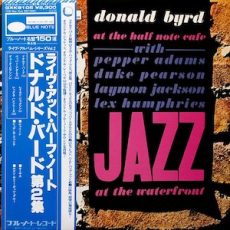
I enjoyed listening to the first set of Donald Byrd at The Half Note Café so much that I decided to hear the second set as well, which inspired this morning’s discussion. So, as the quintet makes their way back to the stage, let’s all sit back in our seats to enjoy Donald Byrd at The Half Note Café, Volume 2 (Blue Note BLP 4061/BST 84061). Donald Byrd is on trumpet, Pepper Adams is on baritone sax, Duke Pearson is on piano, Laymon Jackson is on bass, and Lex Humphries is on the drums. My copy is the King Record Company Japanese Stereo reissue (Blue Note BST 84061 – GYK-8105).
The rhythm section lays the foundation to begin Jeannine by Duke Pearson with their introduction ahead of the front line’s opening chorus. Donald lights the first solo like a shining beacon. Pepper succeeds him with a briskly exciting performance; then Duke keeps your foot tapping with swinging precision ahead of the ensemble’s closing chorus and trio ending softly. The leader then introduces the group’s theme, Pure D. Funk, before leading the trio through the bluesy theme. Pepper is up first with a relaxing interpretation. Duke has a very fine spot next, and then Donald is as smooth as Tennessee Whiskey preceding the group’s reprise and climax.
Side Two starts with Lex’s percussive introduction to the quintet’s medium melody of Donald’s second tune, Kimyas. Pepper swings easily in an impressive opening statement. Donald follows with another equally blissful gem. Duke completes the solos at a leisurely pace anchored by Laymon and Lex until the quintet’s ending theme. When Sonny Gets Blue by Marvin Fisher and Jack Segal opens with the front line delivering a very pretty opening chorus. Duke gets the song’s only solo and delivers a wonderful expression of incredible beauty and solace, leading to the quintet’s theme restatement. Donald ends the evening by thanking the crowd for being a receptive audience.
Alfred Lion produced this live date, and Rudy Van Gelder was the recording engineer. The sound quality possesses a top-notch soundstage that truly makes you feel like you’re right there in the Half Note Café audience. King Record Company has beautifully remastered the original mono tapes, enhancing the experience. If you’re new to the music of Donald Byrd or only know of his later ’70s jazz-funk releases, I invite you to check out Donald Byrd at The Half Note Café, Volume 2, on your next record hunt. Like its companion, Volume 1, the musicians are wonderful. The music has stood the test of time and both albums are excellent documents of a live jazz performance the listener can revisit anytime!

More Posts: choice,classic,collectible,collector,history,instrumental,jazz,music,trumpet
Requisites
Donald Byrd at The Half Note Café, Volume 1 | By Eddie Carter
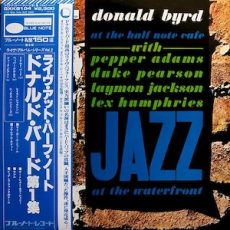
I was still in the mood to hear another trumpet album after listening to Harry “Sweets” Edison when my search led me to another of my Mom’s favorite records. Donald Byrd and Pepper Adams were two musicians she enjoyed listening to and this morning’s record from the library brings them together in a great live date. Donald Byrd at The Half Note Café, Volume 1 (Blue Note BLP 4060/BST 84060) captures the trumpeter’s quintet featuring Pepper Adams (tracks: A1, A2, B2, B3) on baritone sax, Duke Pearson on piano, Laymon Jackson on bass and Lex Humphries on drums in performance at one of New York’s best jazz clubs. This album holds a special place in my heart because it reminds me of the music my Mom and I used to enjoy together during Sunday dinner. My copy is the 1978 King Record Company Japanese Stereo reissue (Blue Note BST 84060 – GXK-8104).
Ruth Mason is our Mistress of Ceremonies for the evening and starts the set with the musician’s introductions. The quintet then launches into the upbeat melody of My Girl Shirl by Duke Pearson. Donald kicks off the solos with an invigorating statement; then Pepper succeeds him with a joyfully spirited solo. Duke emerges next for a brisk presentation, and the front line cooks with Lex ahead of the close. Donald introduces the next tune, his own Soulful Kiddy, a blues that slows the beat down for the ensemble’s marching melody. Pepper serves up some down-home cooking in the opening solo. Donald comes into the second reading with carefree enthusiasm; then Duke eases into the spotlight last, leading to the theme’s restatement and climax.
Side Two opens with Donald’s introduction to A Portrait of Jennie by J. Russel Robinson and Gordon Burdge. The quartet showcase begins with the trumpeter’s romantically warm introduction to the melody. He continues mining a rich vein of sentimentality in the first solo. Duke takes over to deliver a very pretty reading until Donald’s return to add a few more comments into the reprise and close. Cecile by Donald Byrd brings the quintet back for a medium blues that commences with the trio’s introduction to the front line, taking the lead in the melody. Pepper takes off first, cruising at a comfortable pace. Donald gets to work next with an impressive interpretation, and then Duke completes the infectious beat in the finale ahead of the quintet’s closing moments.
The set climaxes with the group’s theme, Pure D. Funk. Donald has the showcase to himself in a concise theme and the song’s only solo into the ensemble’s conclusion. Alfred Lion produced Donald Byrd at The Half Note Café, Volume 1, and Rudy Van Gelder was behind the dials. The reissue has an excellent soundstage transporting the listener to the club audience with excellent fidelity. The unique sound of this album, with its stellar rhythm section and the great chemistry between Donald Byrd and Pepper Adams, is sure to captivate any jazz enthusiast. I invite you to pick up Donald Byrd at The Half Note Café, Volume 1, on your next record shopping trip. It’s a delightful live album that is sure to enjoy repeated plays on the turntable!
Postscript: For those who are unaware, Ruth Mason was a singer and WOV on-air personality who would become Mrs. Alfred Lion. She is also the lovely young woman who appears on the cover of Moods by The Three Sounds.
~ Moods (Blue Note BLP 4044/BST 84044) – Source: Discogs.com © 2024 by Edward Thomas Carter
More Posts: choice,classic,collectible,collector,history,instrumental,jazz,music,trumpet
Requisites
Patented By Edison ~ The Harry “Sweets” Edison Quintet | By Eddie Carter
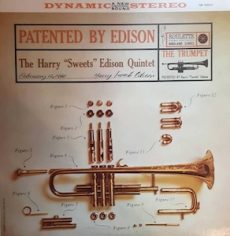
Harry “Sweets” Edison was one of the most sought-after musicians in jazz. This morning’s album from the library is a little-known 1960 release titled Patented By Edison (Roulette R-52041/SR-52041) by The Harry “Sweets” Edison Quintet. He was one of the most talented trumpeters of the Swing and hard bop eras, performing with some of the great jazz orchestras. “Sweets” got his nickname from Lester Young and eventually settled on the West Coast to become a successful arranger, composer and musician. On his eleventh date, he assembled a stellar group: Jimmy Forrest (tracks: A1 to A3, A6, B5, B6) on tenor sax, Tommy Flanagan on piano, Tommy Potter on bass, and Elvin Jones on drums. My copy is the 1967 U.S. Stereo reissue.
The album opens with Witchcraft by Cy Coleman and Carolyn Leigh. The rhythm section introduces the tune before the ensemble starts the easy-flowing melody. “Sweets” is on muted trumpet and glides through the song’s only solo with meticulous execution ahead of the reprise and soft ending. Blues Skies by Irving Berlin begins with Jimmy’s brief introduction, setting the tone for the leader taking charge of the beautifully articulated muted theme and a fine solo spot ahead of the saxophonist leading the ensemble out. Confessin’ That I Love You by Doc Daugherty, Ellis Reynolds and Al Nieburg begins with a pleasant presentation by the quintet. “Sweets” shows off his sentimental side in a performance of innocence and loveliness before the close.
Ain’t Misbehavin’ by Harry Brooks, “Fats” Waller, and Andy Razaf was introduced in the 1929 all-black musical revue Hot Chocolates. It became a huge hit among musicians and vocalists. It is a quartet showcase for “Sweets” doing the honors using the mute for the song’s opening chorus and a delightful solo that concludes softly. The first of three creations from Edison’s pen is up next. Candied Sweets is the album’s second quartet presentation beginning with Flanagan’s introduction. “Sweets” unfolds an attractive muted melody anchored by the trio’s gentle groundwork into his opening statement. The pianist complements the leader in a short, relaxing interpretation, leading to his return for the theme’s restatement and a slow dissolve.
The first side closes with They Can’t Take That Away From Me by George, and Ira Gershwin opens with the mute removed for “Sweets” to lead the quintet through the theme. “Sweets” ignites the first solo with an impeccable display of his playing. Flanagan follows him with a short, sparkling statement leading back to the closing chorus and climax. Side Two starts with the mute back on for the album’s third quartet performance, Tea For Two by Vincent Youmans and Irving Caesar. A catchy tune, with the foursome laying down a gorgeous mid-tempo beat for the theme. “Sweets” blends comfortably with the rhythm section’s accompaniment in the song’s only spotlight displaying a marvelous tone into the theme’s reprise and fadeout.
Up next is There Is No Greater Love by Isham Jones and Marty Symes. This gorgeous standard receives a gorgeous treatment beginning with Flanagan’s introduction to a thoughtfully tender melody by “Sweets.” The leader continues with a soft touch of elegance in the first interpretation. Flanagan also adds a dreamlike softness in a short solo preceding the theme’s restatement and climax. Harry Edison’s Twenty–Forty picks up the pace in a swinging quartet showcase. “Sweets” gets things off to a good start during the muted melody and then makes quick work in the opening statement. Potter gets his first opportunity to solo, and he moves sprightly along off the drive of the rhythm section into the ending theme and close.
It’s Easy To Remember (So Hart To Forget) comes from the pen of Richard Rodgers and Lorenz Hart. The rhythm section’s gentle introduction sets the mood for “Sweets,” who handles the muted melody and song’s only solo with so much emotion and sensitivity that it’ll bring tears to your eyes. We’re invited to join the quintet for some Sweetcakes by Harry Edison next. Jimmy is featured in the opening and closing choruses but does not solo. The melody begins with a bluesy beat that might get some fingers popping and toes tapping along. “Sweets” starts the solos with a delightful interpretation that flows with smooth efficiency. Flanagan comes in next to make a concise comment, which wraps everything up nicely ahead of the reprise of the theme.
The album’s final track is Angel Eyes by Matt Dennis and Earl K. Brent. Jimmy introduces the standard alongside the rhythm section before “Sweets” removes the mute to deliver the intimately personal melody. He has the showcase to himself in a beautiful and deeply moving statement that’s romantic and touching into a gorgeous ending. Teddy Reig produced Patented By Edison, and the recording engineer is unknown. However, the album’s sound quality is very good, possessing an excellent soundstage that brings the musicians to the sweet spot in your listening room with stunning fidelity. If you’re a fan of the trumpet, Harry “Sweets” Edison, or enjoy the sound of swing, I offer for your consideration and highly recommend Patented By Edison by The Harry “Sweets” Edison Quintet. It’s an underrated, excellent album by one of jazz’s best trumpet players and shouldn’t be missed on your next record hunt!
~ Ain’t Misbehavin’, Angel Eyes, Blue Skies, Confessin’ That I Love You, It’s Easy To Remember (So Hard To Forget), Tea For Two, There Is No Greater Love, They Can’t Take That Away From Me – Source: JazzStandards.com ~ Witchcraft – Source: Wikipedia.org © 2024 by Edward Thomas Carter
More Posts: choice,classic,collectible,collector,history,instrumental,jazz,music,trumpet
Requisites
The Trio ~ The Oscar Peterson Trio | By Eddie Carter
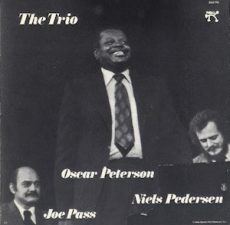
This morning’s record from the library is a live album featuring three jazz giants. The Trio (Pablo Records 2310 701) is aptly named because it captures Oscar Peterson on piano, Joe Pass on guitar, and Niels-Henning Ørsted Pedersen on bass in performance during three nights at the Chicago jazz club, London House. What makes this album unique is the exceptional chemistry between each musician. Oscar Peterson’s virtuosic piano playing, Joe Pass’s innovative guitar techniques, and Niels-Henning Ørsted Pedersen’s melodic bass lines all shine through in this album. My copy is the 1973 U.S. Stereo release.
Side One starts with the first of two tunes by Oscar Peterson. Blues Etude begins at a brisk clip, with Joe and Niels-Henning firing on all cylinders before Oscar joins them for the melody. Oscar reveals his broad range in the song’s only solo, enhanced by Joe and Niels-Henning’s accompaniment. Chicago Blues is a delicious dish of soul food beginning with a lengthy piano introduction ahead of the trio’s slow-paced melody. Oscar opens with a tasty invitation for everyone to come to the table. Joe takes charge with a delicious second course next. Oscar adds another scrumptious dish to the meal, and then Niels-Henning provides the final course with a succulent solo preceding a luscious ending.
Side Two opens with Easy Listening Blues by Nadine Robinson. The trio gets things started with a polite melody. Oscar begins the song’s only solo with a warm caress of the keys, creating a beautiful musical landscape. Meanwhile, Joe and Niels-Henning tail him closely until the theme’s restatement and conclusion. Come Sunday is a beautiful jazz standard by Duke Ellington that becomes the sole showcase of Joe Pass. The guitarist approaches the theme and song’s only solo with a simple directness, resulting in a wonderful expression of incredible beauty culminating with a tender ending and appreciative applause from the audience.
Secret Love by Sammy Fain and Paul Francis Webster is a lively tune that will have you tapping your toes from the trio’s opening ensemble. Oscar is up first with a happy groove that makes a lasting impression on the listener. Joe steps up next and gives a splendid statement; then Oscar adds a few final comments ahead of the theme’s reprise and the audience’s approval. Norman Granz produced The Trio, and it’s unknown who supervised the live recording. However, the album’s sound quality is excellent with a soundstage that transports the listener to the London House audience as the trio is performing.
If you’re discovering the music of Oscar Peterson and are in the mood for a live album where you become part of the live audience at the London House. I invite you to check out The Trio by The Oscar Peterson Trio the next time you visit your favorite record store. It’s a fantastic album that captures three of the most renowned musicians at the top of their game. The Trio is a title highly recommended for a spot in your library, as it not only showcases the individual brilliance of each musician but also their exceptional chemistry, making it a must-have for any jazz enthusiast!
~ Come Sunday – Source: JazzStandards.com
~ Secret Love – Source: Wikipedia.org
© 2024 by Edward Thomas Carter
More Posts: bass,choice,classic,collectible,collector,guitar,history,instrumental,jazz,music,piano
Requisites
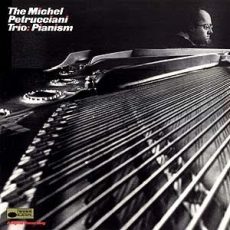
Pianism ~ The Michel Petrucciani Trio | By Eddie Carter
This morning’s record from the library is an overlooked gem by French pianist Michel Petrucciani. Pianism (Blue Note BT-85124) is his twelfth release as a leader, and it marks his debut with the prestigious label. Recorded just days before his twenty-third birthday, the album captures the trio’s energy they exhibited during a six-week, thirty-two concert tour from Munich to Martinique. Michel Petrucciani, on the Steinway grand piano, is joined by bandmates Palle Danielsson on bass and Eliot Zigmund on drums. Petrucciani composed four of the album’s tunes, and my copy is the 1986 U.S. Stereo release.
Side One of Pianism opens with The Prayer, a poignant tune that chronicles Michel’s and his sweetheart Eugenia’s transition from a lively house with friends to a single home owned by Eliot Zigmund that they lovingly maintained. The track commences with a mesmerizing solo introduction that seamlessly evolves into the trio’s comforting theme. Michel crafts a tapestry of hauntingly sensitive and lyrical notes. Palle follows with a delicately tender interpretation before they reunite to conclude the song softly. Our Tune, a composition that holds a special place in Michel’s heart, picks up the tempo for the threesome’s upbeat melody. He reveals his love and affection for Eugenia in the first solo. Palle takes over for an assertive interpretation. Eliot shares the finale with the pianist until the agile reprise dissolves.
Face’s Face is dedicated to the couple’s pure-blooded Afghan hound. The pianist’s introduction is playful, leading to the trio’s aggressive theme. Michel sets the tone with a brisk performance. Palle fuels the second reading with a dazzling display; then, Michel and Eliot exchange riffs preceding the theme’s restatement and close. The first of two standards, Night and Day by Cole Porter, gets Side Two underway with a breathtaking introduction by Michel that grows into the ensemble’s lively melody. Michel takes off like a rocket shooting skyward on the opening statement. Palle keeps things moving in the second presentation. Eliot gives his drums a vigorous workout before the spotlight returns to Michel for the climax.
Here’s That Rainy Day by Jimmy Van Heusen and Johnny Burke opens with a gorgeous introduction by Michel. Palle and Eliot join him for a relaxed, easy-going theme. Michel starts the proceedings with a beautifully tender interpretation. Palle comes in next for a very pretty performance while Eliot cushions the gentle groove for Michel’s return to take the song out softly. The album’s final track is a catchy tune titled Regina. It’s named for the Brazilian singer, Elis Regina and the trio’s introduction sets the scene for an infectious, danceable melody. Michel opens the solos with a sincerely beautiful performance. Palle feeds off his energy with a compelling reading that flows to the pianist’s return for a few last thoughts preceding the theme’s restatement and fade out.
Mike Berniker produced Pianism, and Mike Moran was the recording engineer of this digital release. The album’s sound quality is outstanding, with a stunning soundstage that really shines on a quality audio system with excellent fidelity. The record is also quiet until the music begins. Despite suffering from a genetic spinal disease that caused brittle bones and resulted in his inability to grow tall, Michel Petrucciani was one of the most accomplished pianists in jazz. He performed live over one hundred times twice in two years despite being in constant pain, a testament to his passion and dedication to his craft. In addition to recording twenty-five albums as a leader, Petrucciani also recorded with Steve Grossman, Charles Lloyd, Joe Lovano, and The Manhattan Project.
He was interviewed regularly and appeared on television quite a few times. Michel died from a pulmonary infection on January 6, 1999, shortly after his thirty-sixth birthday. But his music continues to inspire and captivate jazz fans and is an absolute joy to listen to. If you’re in the mood for a musical journey, I wholeheartedly recommend exploring Pianism by The Michel Petrucciani Trio on your next record shopping trip. It’s not just a terrific addition to your jazz library but also a perfect gateway to his discography that can be enjoyed endlessly!
~ Here’s That Rainy Day, Night and Day – Source: JazzStandards.com
© 2024 by Edward Thomas Carter
More Posts: choice,classic,collectible,collector,history,instrumental,jazz,music,piano