

Requisites
Happy Frame of Mind ~ Horace Parlan | By Eddie Carter
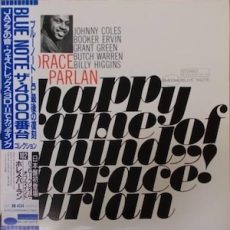
Horace Parlan has always been one of my favorite pianists, and this morning’s record from the library is a 1963 recording session that remained shelved until 1976. Happy Frame of Mind (Blue Note BST 84134) is a sextet date that was initially released as a two-record set by Booker Ervin. It finally hit the stores a decade later with its original cover and catalog number. The supporting cast is a stellar one: Johnny Coles on trumpet, Booker Ervin on tenor sax, Grant Green on guitar, Butch Warren on bass, and Billy Higgins on drums. My copy is the 1991 Toshiba EMI Japanese Stereo reissue sharing the original catalog number.
Side One opens with Home Is Africa by Ronnie Boykins. Butch and Billy get things started ahead of the ensemble’s haunting melody. Johnny is up first with a relaxing reading; then Booker gives a gorgeous solo. Grant makes an effective contribution next. Horace gives the song’s most inventive improvisation before the sextet’s closing chorus ends as it begins. A Tune For Richard by Booker Ervin gets busy with Billy’s lively introduction to the ensemble’s brisk melody. Johnny leads the charge, then Booker takes flight next. Grant delivers the third message effectively, and Horace ends with a spirited interpretation preceding the theme’s restatement and close.
Back From The Gig by Horace Parlan is the pianist’s reference to returning home from a particularly difficult gig, and the sextet begins with an easygoing melody. Horace’s opening solo flows with feeling, then Grant builds a perfect melodic line in the following reading. Booker follows with a statement that’s warm and heartfelt, and Butch takes over for a tender finale leading back to the climax. Dexi by Johnny Coles begins Side Two at a brisk clip with a quick melody into Johnny’s opening solo that sets the table. Booker is given considerable space for an impressive statement next. Horace follows with a soulful interpretation, and Grant takes a quick turn, preceding the quick reprise and fadeout.
Kucheza Blues by Randy Weston maintains an upbeat pace with the trio’s introduction to the front line’s jaunty theme. Horace leads the way with a refreshing solo. Booker follows, fueling the second statement with enthusiastic choruses. Johnny sinks his teeth into the third reading, and Butch walks swiftly toward the closing chorus and fade out. Horace’s Happy Frame of Mind is a happy rocker that the sextet has fun in the melody. Grant takes the lead and beautifully executes the first solo. Horace follows with a thoroughly enjoyable reading. Booker improvises freely in the third spot; then Johnny shares the finale with Billy before the sextet returns to take it out.
Alfred Lion produced the initial session, and Rudy Van Gelder was the recording engineer. The reissue’s sound quality is superb, with a vivid soundstage that brings the musicians to your listening room with excellent fidelity. Happy Frame of Mind is an overlooked jewel in Horace Parlan’s discography. If you’re a fan of Horace Parlan and don’t own the two-record set, Back From The Gig, I invite you to seek out Happy Frame of Mind on your next record shopping trip. It’s a wonderful album with a stellar supporting cast that I hope more jazz fans will discover!
~ Back From The Gig (The Blue Note Reissue Series BN-LA488-H2) – Source: Discogs.com © 2024 by Edward Thomas Carter
More Posts: choice,classic,collectible,collector,history,instrumental,jazz,music,piano
Requisites
Seven Steps To Heaven ~ Miles Davis | By Eddie Carter
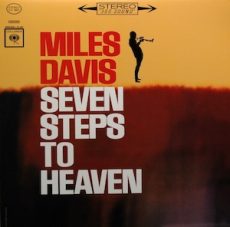
This morning’s album from the library is a hidden gem in Miles Davis’s extensive discography. In 1962, his quintet was undergoing a significant transition. Hank Mobley departed to pursue a solo career, and the musical trio of Kelly, Chambers, and Cobb would soon become one of the most celebrated in jazz. Seven Steps To Heaven (Columbia CL 2051/CS 8851) is a product of two sessions by the trumpeter at Columbia’s New York and Los Angeles studios. His supporting cast includes George Coleman (tracks: A2, B1, B3) on tenor sax, Victor Feldman (A1, A3, B2), Herbie Hancock (A2, B1, B3) on piano, Ron Carter on bass, Frank Butler (A1, A3, B2), and Anthony Williams (A2, B1, B3) on drums. My copy is the original 1963 U.S. Stereo release.
Side One starts with Basin Street Blues by Spencer Williams. The first of three quartet performances opens with the foursome expressing the song’s softer emotions in the melody, featuring Miles using a mute. He sustains the gentle mood in the first solo before picking up the pace for a delightful conclusion. Victor gets into something good in a delightful reading ahead of the quartet, easing back into the theme. Seven Steps To Heaven by Miles Davis and Victor Feldman is off to the races from the rhythm section’s introduction to the quintet’s quick melody. Miles kicks off the solos, wailing, and then George swings vigorously into the second statement. Herbie takes an exhilarating turn next, preceding the reprise and close.
I Fall In Love Too Easily by Jule Styne and Sammy Cahn first appeared in the 1945 musical comedy Anchors Aweigh. Miles is back on the muted trumpet for the quartet’s tenderness and warmth during the melody. The leader’s opening statement is reflective yet quite beautiful. Victor expresses great care and thoughtfulness in the second solo until Miles returns to deliver a gorgeous climax. So Near, So Far by Tony Crombie and Benny Green kicks off the second side with the quintet’s medium theme. Miles gets things started on the open horn. George picks up the baton and really shines in the following presentation. Herbie has the final word and delivers a terrific performance into the ensemble regrouping for the closing chorus.
Baby, Won’t You Please Come Home by Charles Warfield and Clarence Williams is a blues song from 1919 that brings Miles back on the muted trumpet. Victor opens with a solo introduction ahead of the quartet’s touching melody. The trumpeter opens with a delicately tender interpretation; then Victor brings the solos to a close into the foursome’s thoughtfully graceful ending. Victor Feldman’s Joshua turns the temperature up one final time. Miles’s fingers snap the quintet to attention for the song’s lively theme. Miles steps up first in the spotlight with an enthusiastic performance. George takes over to deliver long, flowing lines that are equally satisfying. Herbie wraps things up with a festive finale that hits a perfect groove into the quintet’s reprise and completion.
Teo Macero produced Seven Steps To Heaven, although it’s unknown who recorded both sessions. It doesn’t matter, however, because this is a terrific recording with a crisp, detailed soundstage that sparkles. It is the first time George, Herbie, Ron, and Tony have recorded with Miles. George wouldn’t make another studio album with Miles, but appears on three live albums with this group, ‘Four’ & More, Miles Davis In Europe and My Funny Valentine. Hancock, Carter, and Williams formed the nucleus of Miles’s second great quintet and would remain with him for the next five years.
Victor turned down Miles’s invitation to join his quintet because he was a successful West Coast session musician, so he and Frank remained in California. If you’re in the mood for an excellent album of ballads and uptempo tunes and are a fan of Miles Davis from the early sixties, I highly recommend checking out Seven Steps To Heaven. It’s a stellar album that not only gives a glimpse into what was to come from The Second Great Miles Davis Quintet but also stands on its own as a title worthy of any jazz lover’s library. You’ll find it a rewarding addition to your collection, and I’m confident it will bring you hours of musical enjoyment.
~ ‘Four’ & More (Columbia CL 2453/CS 9253), Miles Davis In Europe (Columbia CL 2183/CS 8983), My Funny Valentine (Columbia CL 2306/CS 9106) – Source: Discogs.com ~ Baby, Won’t You Please Come Home, Basin Street Blues, I Fall In Love Too Easily – Source: JazzStandards.com © 2024 by Edward Thomas Carter
More Posts: choice,classic,collectible,collector,history,instrumental,jazz,music,trumpet
Requisites
Cannonball Enroute ~ Julian “Cannonball” Adderley | By Eddie Carter
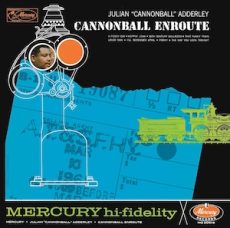
The weather outside was frightful because it was raining hard here in Atlanta. After the sun returned, it became a perfect time to hear the smooth alto sax of Julian “Cannonball” Adderley. He enters this morning’s spotlight with a 1961 album, Cannonball Enroute (Mercury Records MG 20616), backed by his quintet of Nat Adderley on cornet, Junior Mance on piano, Sam Jones on bass, and Jimmy Cobb on drums. My copy is the original U.S. Mono release. A Foggy Day by George and Ira Gershwin opens the album. The quintet starts at a medium beat, setting the stage for Cannonball’s lead solo. Nat picks up the pace in a muted reading until his brother returns to lead the ensemble out.
Hoppin’ John by Nat Adderley takes off with Junior’s speedy introduction ahead of the ensemble’s quick melody. Cannonball ignites the opening solo with a furious charge. Nat responds with plenty to say next. Junior follows with a rapid reading, and Jimmy shares the finale with the front line before the quintet makes a quick exit. 18th Century Ballroom by Nat Adderley and Ray Bryant begins with the ensemble’s pretty melody. Nat opens with a solo that’s quite compelling. Cannonball follows with a superb, articulate statement, then Junior gets the last word in an excellent reading leading back to the closing chorus and finale.
The group takes a trip aboard That Funky Train by Nat Adderley next. Sam and Jimmy get the train rolling with their introduction to the group’s theme. Sam has the first solo and walks with conviction. Junior is next with a very down-home presentation. Nat brings up the rear with a muted finale ahead of the reprise, and the rhythm section slowly dissolves into nothingness. Lover Man (Oh, Where Can You Be) by Jimmy Davis, Roger Ramirez and Jimmy Sherman starts Side Two with a solo showcase for Cannonball. The ensemble begins the introduction before the altoist steps in to deliver a tender melody and the song’s only statement until the group wraps it up.
I’ll Remember April by Don Raye, Gene De Paul, and Pat Johnson begins briskly with Jimmy’s introduction ahead of the quintet’s theme. Cannonball gets things going with a swift opening statement. Nat follows with a heated reading; then Junior takes over for a sparkling solo preceding the group’s return for the close. Porky by Cannonball and Nat Adderley is a fun tune that begins with the front line’s collective melody in a medium setting. Nat swings comfortably into the first interpretation; then Sam takes a relaxing turn in the following reading. Cannonball completes the solos with an attractive piece before the closing chorus ends with a Dixieland flavor.
The Way You Look Tonight by Dorothy Kern and Jerome Kern starts with Junior’s introduction to the quintet’s speedy melody. Cannonball surges into the lead solo like a whirlwind, and then Nat makes a blistering statement. Junior steps up next with an accelerated performance, and Jimmy engages in a brief exchange with both horns into the theme’s restatement and climax. It’s unknown who produced the session or who the recording engineer was, but the album’s sound quality is excellent with a clear soundstage.
Cannonball Enroute was Adderley’s fifth Mercury release and his third with this group. The quintet worked well as a cohesive unit but lasted only two years. He would return in 1959 with a new quintet after a brief time with Miles Davis that would become his most successful. If you’re a new or seasoned fan of Julian “Cannonball” Adderley and are in the mood for a wonderful hard bop album, I offer for your consideration, Cannonball Enroute on your next record shopping trip. It’s a great, if overlooked, album in his large discography that’s worth every penny for a spot in your library!
~ Cannonball’s Sharpshooters (Mercury Records MG 20531/SR 60208), Sophisticated Swing (EmArcy MG 36110) – Source: Discogs.com
~ A Foggy Day, I’ll Remember April, Lover Man (Oh, Where Can You Be), The Way You Look Tonight – Source: JazzStandards.com
© 2024 by Edward Thomas Carter
More Posts: choice,classic,collectible,collector,history,instrumental,jazz,music,saxophone
Requisites
The Griffith Park Collection ~ Stanley Clarke, Chick Corea, Joe Henderson, Freddie Hubbard, Lenny White | By Eddie Carter
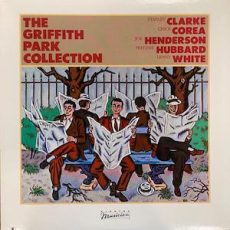
This morning’s record from the library unveils a unique jazz collaboration. The Griffith Park Collection (Elektra Musician E1-60025) is the second of two studio albums recorded over four days with an all-star ensemble: Freddie Hubbard on flugelhorn (tracks: A3, B3) and trumpet (A1, A2, B1), Joe Henderson on tenor sax (A1 to A3, B1, B3), Chick Corea on piano, Stanley Clarke on upright bass, and Lenny White on drums. Their first record was Echoes of An Era, an album of jazz standards with Chaka Khan. This was a rare reunion for Corea, Clarke, and White, who had not played together since they were members of Return to Forever. My copy is the 1982 U.S. Stereo release.
The opener is L’s Bop by Lenny White. The quintet’s lively theme takes off at a brisk pace, leading to Joe’s swinging opening solo. Freddie maintains the vigorous intensity in the second reading; then Chick skillfully navigates the third statement into a short exchange with Lenny until the theme’s reprise and fade out. The pace slows down slightly for Why Wait by Stanley Clarke, a medium-tempo blues that opens with the ensemble’s theme. Joe gets this grooving affair going in the first solo. Freddie answers him with an exceptional performance; then Chick provides the exclamation point preceding the group’s return for the closing chorus and exit.
October Ballade by Chick Corea begins with the pianist’s soothing introduction ahead of Freddie’s tender melody. Joe has the first solo and builds each chorus gently with deep emotion until Chick takes over for a brief, lovely interpretation. The quintet wraps up things with a poignantly touching reprise and finale. Side Two gets underway with Happy Times by Freddie Hubbard, a cheerful tune that the group takes to heart in the theme. Joe greets the opening statement joyfully, and then Freddie comes in for a bright and bubbly solo. Chick adds to the festive atmosphere in the second interpretation. Lenny delivers a finale that is quite enjoyable before the close.
Remember, by Steve Swallow is a beautiful waltz that opens with the trio’s thoughtfully polite introduction and theme. Chick carefully cultivates the lead solo with delicate notes. Stanley’s reply is an affectionately warm interpretation as Lenny’s drums softly compliment him until the ensemble’s theme restatement. Guernica by Lenny White is a musical portrait of Pablo Picasso’s Spanish Civil War painting. It is a haunting song and the album’s most adventurous tune with a melancholy theme. Joe begins the opening solo with an airy, nostalgic tone. Freddie emerges next with a breathtaking reading; then Chick delivers an enthusiastic statement preceding the group’s return for the climax.
Lenny White produced The Griffith Park Collection and Bernie Kirsh was the recording engineer. The album’s sound quality is good, with a softer soundstage in the highs, midrange, and bass. At just under forty minutes, it is a hidden gem that flows with a beat and does not disappoint. If you are in the mood for an excellent album with remarkable chemistry and exceptional performances. In that case, I invite you to check out The Griffith Park Collection by Stanley Clarke, Chick Corea, Joe Henderson, Freddie Hubbard, and Lenny White on your next record shopping trip. It is a wonderful album that I highly recommend for your library, and I am sure it will reward your purchase for years to come!
~ Echoes of An Era (Elektra E1-60021) – Source: Discogs.com © 2024 by Edward Thomas Carter
More Posts: bass,choice,classic,collectible,collector,drums,history,instrumental,jazz,music,piano,saxophone,trumpet
Requisites
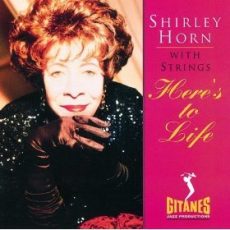
The very first time I heard Shirley Horn sings and play piano was in the 1970s at the Bohemian Caverns in Washington, D.C. and I fell in love with her voice and style. By then she had recorded five albums and when I was on the radio she became a part of my regular playlist. Here’s To Life is a studio album recorded in September 1991 by the vocalist, and released in 1992. The album was arranged by Johnny Mandel who composed three of the songs on the album. He also received a Grammy Award for Best Instrumental Arrangement Accompanying Vocals on this album. It’s a quiet album of ballads that once again showcases Shirley’s talent. Johnny Mandel arranged and conducted the recording session for the Verve label.
The album opens with the title track with Here’s To Life which became her signature song. The music was written by Artie Butler and the poignant lyrics were written by Phyllis Molinary. The lyric, known world-wide as one of her finest works and the song is considered a modern day jazz standard. She followed with a medley of Come A Little Closer/Wild Is the Wind. The former song is about New Yorkers, the city and the cell phone that disputes a couple’s marriage. The song is paired with Wild Is The Wind which was written as the theme song for the 1959 film of the same name and recorded by Johnny Mathis. It was nominated for an Oscar for Best Song.
How Am I to Know? by Jack King and Dorothy Parker takes the third slot on the album. A Time for Love was written for the 1966 film An American Dream. The Begman/ Mandel tune, Where Do You Start tells the story of a couple breaking up and undecided about what belongs to whom. The next song You’re Nearer is a Lorenz Hart/Richard Rodgers composition for the Broadway musical Too Many Girls. Our next entry in Return to Paradise was written for the 1953 film of the same name by Dimitri Tiomkin and Ned Washington. Isn’t It A Pity was composed by the Gershwins for the unsuccessful 1933 musical Pardon My English, however, the song became a part of the Great American Songbook.
Quietly There is taken from the noir film Harper that starred Paul Newman as a detective. If You Love Me is an English adaptation of the popular French song “Hymne à l’amour of Hymn To Love. The album closes with Summer is the first English version of the Italian standard Estate. She ordered English lyrics after hearing Joao Gilberto’s version, which spread the song to worldwide fame.
Shirley Horn sings and plays piano and is joined by bassist Charles Ables and dummer Steve Williams as her core trio. She invited trumpeter Wynton Marsalis – to play on A Time For Love and Quietly There. Richard Todd plays the French horn on the title track. Reminding me of how precious life is and how much we should live and love, this has become my favorite album by this vocalist. I hope you enjoy it just as much as I.
More Posts: choice,classic,collectible,collector,history,instrumental,jazz,music,vocal