

Requisites
Johnny Griffin Sextet | By Eddie Carter
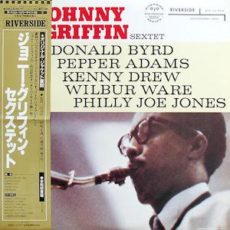
This morning’s discussion is the 1958 album, Johnny Griffin Sextet (Riverside RLP 12-264). Griffin began his career in the forties, playing the alto sax until joining Lionel Hampton’s Orchestra after graduating high school. Hampton urged him to play the tenor sax, and he did in the band until 1947. Johnny also played with Art Blakey, The Kenny Clarke-Francy Boland Big Band, Eddie “Lockjaw” Davis, and Thelonious Monk.
He made three albums for Blue Note and recorded for a variety of labels as a leader and sideman. Griff was nicknamed The Little Giant for his diminutive size but possessed a robust sound that produced riveting solos effortlessly. Donald Byrd on trumpet, Pepper Adams on baritone sax, Kenny Drew on piano, Wilbur Ware on bass, and Philly Joe Jones on drums complete the sextet. My copy used in this report is the 1974 Japanese Mono reissue (Riverside SMJ 6285) by Victor Musical Industries.
Side One opens with Stix’ Trix by Wilbur Campbell. A lively introduction by Philly precedes the ensemble’s feisty opening chorus. Kenny takes the first solo and gives a vigorously spirited performance. Pepper states his case on the second reading, then Donald follows in fine form on the next statement. Philly picks up the baton with some exciting brushwork, and Johnny gives a vivacious finale into the sextet’s reprise and conclusion.
What’s New? by Bob Haggart and Johnny Burke begins with a thoughtfully tender introduction and gentle melody by Griff. The saxophonist’s opening solo is beautifully constructed and poignant. Byrd and Adams split the next chorus with two pensive performances. Drew executes an elegant touch on the next interpretation, then Griffin returns for a few more intimate thoughts before ending with a sultry, seductive exit.
The first side ends with Dizzy Gillespie’s tribute to Woody Herman, Woody ‘n’ You. It starts with a lively conversation between Johnny and Philly. The rhythm section joins them for a cheerfully spirited theme, then Wilbur kicks off the solos with a rousing unaccompanied reading. Kenny delivers a dynamic performance on the next statement. Griff is up next with an interpretation that swings soulfully, and Philly generates an electrical charge ahead of the ensemble’s vigorous closing chorus.
Johnny G.G. by John Hines opens Side Two at a laid-back tempo for the sextet’s melody. Drew is up first with a smoothly flowing solo, then Griff carries the easygoing mood to a delightfully satisfying close. Byrd approaches the third reading with thoughtful construction and fluid lines. Adams delivers the next statement free and easy. Ware has a wonderful thing going into the closing chorus after sharing a final thought with Griff.
The finale is Catharsis, an upbeat swinger by Johnny Griffin that begins with a brisk collective theme and allows everyone solo space. Pepper takes off with rapturous enthusiasm on the opening statement. Donald creates an exuberant reading next. Kenny follows with a solo that’s like the cherry and cream on top of a succulent, tasty sundae. Johnny and Wilbur share the spotlight again on the next interpretation, then Philly has a short exchange with the front line leading to the closing chorus.
Johnny Griffin Sextet was originally recorded by Jack Higgins at Reeves Sound Studios, and the remastering by Victor Musical Industries has a spectacular soundstage. If you’re in the mood for a superb blowing session, I invite you to audition Johnny Griffin Sextet for a spot in your library. It’s forty-two minutes of some of the best Hard-Bop you’ll hear on a turntable and an enjoyable album I highly recommend!
~ A Blowing Session (Blue Note BLP 1559), Introducing Johnny Griffin (Blue Note BLP 1533/BST 81533), The Congregation (Blue Note BLP 1580) – Source: Discogs.com ~ Woody ‘n’ You, What’s New? – Source: JazzStandards.com © 2022 by Edward Thomas Carter

More Posts: choice,classic,collectible,collector,history,instrumental,jazz,music,saxophone
Requisites
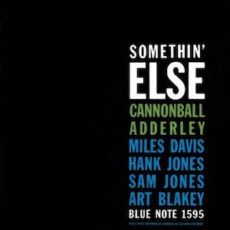
Somethin’ Else ~ Cannonball Adderley | By Eddie Carter
Cannonball Adderley steps into the spotlight for this morning’s discussion with a 1958 album that has not only stood the test of time but is truly, Somethin’ Else (Blue Note BLP 1595/BST 81595). It was Cannonball’s only Blue Note release and the alto saxophonist is backed by four exceptional musicians, Miles Davis on trumpet, Hank Jones on piano, Sam Jones on bass, and Art Blakey on drums. My copy used in this report is the 2005 Classic Records Mono Audiophile reissue sharing the original catalog number.
Side One opens with Autumn Leaves by Joseph Kosma, Jacques Prevert, and Johnny Mercer. The trio introduces the song, then Miles’ muted trumpet delivers a gorgeous melody. Cannonball takes the lead with an affectionate opening solo. Miles follows with a warm, lyrical interpretation, and Hank gives a beautifully elegant closing statement ahead of an exquisite finale. Love For Sale by Cole Porter first appeared in his musical, The New Yorkers (1930). Hank opens with a deceptively gentle introduction that segues into a gorgeous, muted melody by Miles. Cannonball takes over for the song’s only solo and articulates his thoughts with precise execution. Miles returns for the closing chorus and the rhythm section fades out gracefully.
Side Two starts with the ensemble exploring the blues on Somethin’ Else by Miles Davis. The front line establishes an easy groove on the opening chorus. Miles is up first and builds an infectious solo that’ll get some fingers snapping and toes tapping. Cannonball takes flight next with a cheerfully, carefree performance, then Hank sparkles on a short statement. Sam and Art work wonderfully together complementing the soloists. The front line has a final exchange before a slow dissolve into nothingness.
One For Daddy-O by Nat Adderley is a slow blues tribute to the legendary Chicago jazz announcer, Holmes “Daddy-O” Daylie! The trio strolls into a laid-back introduction before both horns take over to deliver the melody. Cannonball takes the lead this time and swings easily on the first solo. Miles dispenses some cool jazz on the second statement. Hank makes a brief comment on the next reading before the principal soloists deliver one final comment each ahead of the ending and Miles speaking to Alfred Lion. Dancing In The Dark by Arthur Schwartz and Howard Dietz is from the musical revue, The Band Wagon (1931). Cannonball has the spotlight to himself and opens with a delicately pretty melody. As the song’s only soloist, he delivers a sensuously tender interpretation and the trio’s subtle support fits comfortably like a glove into their tender ending.
Somethin’ Else was originally produced by Alfred Lion and engineered by Rudy Van Gelder. This Classic Records reissue was remastered by Bernie Grundman and utilizes Quiex SV-P 200-gram premium vinyl. The record is silent until the music starts, and the sound quality is superb with a breathtaking soundstage that comes alive. The only complaint I have with this album is a manufacturing problem on Side Two. One For Daddy-O begins a few seconds into Hank Jones’ introduction, rather than the beginning of the song. Despite this issue, the music is outstanding with an incredible lineup that delivers the goods on every track. If you’re a jazz fan and are looking for a soothing album to enjoy anytime, I submit for your consideration, Somethin’ Else by Cannonball Adderley. The musicians are as good as it gets, and together they make magic that you’ll treasure with every listen
~ Autumn Leaves, Love For Sale, Dancing In The Dark – Source: JazzStandards.com © 2021 by Edward Thomas Carter
More Posts: choice,classic,collectible,collector,history,instrumental,jazz,music,saxophone
Requisites
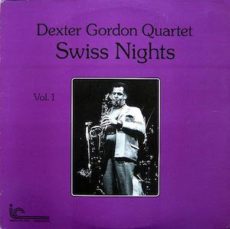
Swiss Nights, Vol. 1 ~ Dexter Gordon Quartet | By Eddie Carter
The Dexter Gordon Quartet steps into the spotlight for this morning’s discussion with Swiss Nights, Vol. 1 (SteepleChase SCS-1050), the first of three albums recorded live at The Zürich Jazz Festival ’75. Dexter’s joined on stage by an all-star rhythm section, Kenny Drew on piano, Niels-Henning Ørsted Pedersen on bass, and Alex Riel on drums. My copy used in this report is the 1976 US Stereo release (Inner City Records IC 2050).
Side One starts with Gordon introducing the first number, an uptempo rendition of Tenor Madness by Sonny Rollins. The quartet launches the melody briskly, and Dexter gets things off to a rousing start on the lead solo. Kenny maintains the momentum on a swiftly paced performance next. Niels-Henning lays down a rocking beat on the third reading. Alex sizzles in a brief exchange with the leader ahead of the ending and the audience’s ovation.
Wave by Antônio Carlos Jobim is one of his most beautiful compositions. Jobim first recorded it as the title tune of his 1967 album. After Dex’s introduction, the rhythm section gently sets the mood for this bossa nova. Gordon shines brightly on the melody and cooks with conviction on the opening statement. Drew is up next with a delightfully creative interpretation, then Pedersen delivers a melodic, rich-toned reading. Gordon returns for a few final comments into the closing chorus.
Side Two begins with Dexter quoting a few of the lyrics to announce You’ve Changed by Bill Carey and Carl Fischer. This is a poignant story beautifully told by the quartet with a delicately gentle melody. Dexter makes the opening solo his own with a glowingly tender performance. Kenny responds with an emotionally touching reading, then the leader returns for an especially moving closing statement that’s very nice.
The set ends with Days of Wine and Roses by Henry Mancini and Johnny Mercer. This old favorite is the title song from the 1962 film and the ensemble opens with an infectious opening chorus. Gordon is up first expressing pleasure on the first statement. Drew swings easily on the following interpretation, then Pedersen takes great delight on the next reading. Dexter reappears briefly preceding the quartet’s closing theme and exit. Swiss Nights, Vol. 1 was produced by Nils Winther. The recording and mixing engineer is Helmuth Kolbe. The album transports the listener to the festival with a solid soundstage that doesn’t disappoint and captures The Dexter Gordon Quartet in fine form. Now that I have Swiss Nights, Vol. 1 in my library, I’ll certainly be seeking out the two remaining volumes in this series. If you’re a fan of Dexter Gordon and love live jazz, this is one I highly recommend!
~ Swiss Nights, Vol. 2 (SteepleChase Records SCS-1090), Swiss Nights, Vol. 3 (SteepleChase Records SCS-1110), Wave (A&M records SP-3002) – Source: Discogs.com
~ Days of Wine and Roses, Wave – Source: JazzStandards.com
~ You’ve Changed – Source: Wikipedia.org
© 2021 by Edward Thomas Carter
More Posts: choice,classic,collectible,collector,history,instrumental,jazz,music,saxophone
Requisites
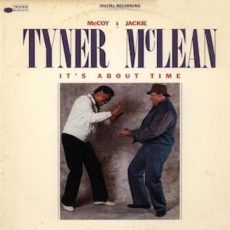
It’s About Time ~ McCoy Tyner and Jackie McLean | By Eddie Carter
This morning’s discussion brings two jazz giants together for their only collaborative album. It’s About Time (Blue Note BT 85102) is a 1985 release by pianist McCoy Tyner and alto saxophonist Jackie McLean (tracks: A1 to A3, B1) that rekindles a sixties Hard-Bop or Post-Bop date and is one of the best kept secrets in both musician’s discographies. The supporting cast is a stellar one, Jon Faddis (tracks: A1, B1) on trumpet, Ron Carter (tracks: A1, B1, B2) on acoustic bass, Marcus Miller (tracks: A2, A3, B3) on electric bass, Al Foster on drums, and Steve Thornton (tracks: A2, A3, B3) on percussion. My copy used in this report is the 1985 US Stereo Full Digital Recording.
Side One opens with the first of five tunes from Tyner’s pen, Spur of The Moment begins with a lively opening chorus in unison. Jon opens the opening solo with tremendous fire and spirit, followed by Jackie who produces some commanding choruses on the second performance. McCoy cooks confidently on the finale with inexhaustible energy into the climax. You Taught My Heart To Sing is a beautiful ballad that’s a showcase for McLean who gives the melody and first solo a warm and moving treatment. Tyner is up next with a delicately gentle reading shadowed by Miller, Foster, and Thornton who anchor both soloists with gorgeous groundwork preceding McLean’s return for the reprise and Tyner’s quiet ending.
It’s About Time begins with a tropical flavor in its blood on a delightfully, feisty midtempo theme led by Jackie who also leads the solos this time with an effective groove, then McCoy follows with a perfectly crafted closing statement. Marcus and Steve provide the spicy compliment that keeps our fingers popping and toes tapping into the group’s soft fadeout. Side Two opens with Hip Toe, a mid~tempo swinger that starts with the front-line and Tyner cruising comfortably into the infectious opening chorus. McLean is up first and comes out swinging on a peppy reading. Faddis answers him with a sharp, zesty statement that builds to a satisfying conclusion. Tyner provides the exclamation point on an extremely happy closing solo before the theme’s return and disappearance.
No Flowers Please by Ron Carter is a trio performance of tranquil beauty that the bassist introduces thoughtfully. McCoy takes the first solo and paints an intimate portrait. Ron closes with a polite, considerate reading executed with fingertip delicacy leading to a tender climax. Travelin’ invites us to take a mid~tempo trip without leaving the comfort of our sweet spot. Miller is the highlight here and demonstrates some stellar bass playing on the opening solo after Tyner’s opening chorus propelled by the rhythm section and Thornton’s percussion. Tyner makes a very personal statement on the closing reading with a grand delivery that brings us safely home after this six-song journey into a gentle culmination.
It’s About Time was produced by Jeffrey Weber and was digitally recorded by Ron Saint German. The sound quality is superb with an outstanding soundstage and excellent stereo separation matching the exceptional interaction between the musicians. The music also flows smoothly and is reminiscent of a classic Blue Note recording of the late fifties or early sixties. If you’re a fan of McCoy Tyner and Jackie McLean, I invite you to audition It’s About Time at your earliest opportunity. It’s an album of wonderful jazz music deserving further investigation for a spot in your library!
© 2021 by Edward Thomas Carter
More Posts: choice,classic,collectible,collector,history,instrumental,jazz,music,piano,saxophone
Requisites
Down Town ~ Guido Manusardi Trio | By Eddie Carter
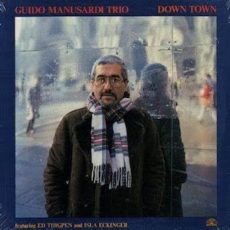
This morning’s choice from the library is Down Town (Soul Note SN 1131) by The Guido Manusardi Trio. It was released in 1986 and the album’s title comes from the restaurant in the Galleria where Manusardi plays solo piano. He’s one of the incomparable musicians whose records are consistently outstanding. Guido also played and recorded with Don Byas, Roy Eldridge, Art Farmer, Dexter Gordon, Red Mitchell, and many others over a nearly five-decade career. He’s joined here by the Swiss jazz bassist, Isla Eckinger whose catchy grooves flow smoothly whether at fast, medium, or slow tempos. The drummer is Ed Thigpen who needs no introduction to anyone owning albums by Ella Fitzgerald, Oscar Peterson, Bud Powell, Dinah Washington, and others. Thigpen could swing straight ahead with a strong, but not heavy touch on the drums and his rock-solid beat is the foundation sustaining the happy, relaxed mood of this date. I was introduced to his music on this album, and my copy used in this report is the original Italian Stereo pressing.
Downtown, the first of four tunes by the pianist starts Side One in good spirits with the trio’s mellow melody. The pace picks up on the opening chorus with the most solo space devoted to Manusardi who delivers an efficient statement. Eckinger displays his rhythmic virtuosity on the closing reading with a charming, melodic performance. Thigpen holds the song together with subtle support ahead of the finale. Guido’s very pretty ballad, Alexandra, is a stunning centerpiece for him on the song’s only solo. His presentation is elegantly graceful and tender thanks to the intimately gorgeous groundwork of his bandmates. The first side finale is the pianist’s Fairway. It’s ablaze from the pulse-quickening introduction by Thigpen into the trio’s vigorous theme. Guido dances brightly on the keys with an energetic opening statement. Isla follows with an expediently paced, uptempo reading that fuels Ed to raise the energy level higher with a brisk attack on the drums ending with a very satisfying closing chorus.
Side Two opens with the 1935 standard, My Romance by Richard Rodgers and Lorenz Hart. The ensemble introduces the melody at a medium tempo, and Manusardi permits his fingers full sway on the joyously happy lead solo. Eckinger fascinates endlessly on the next reading with incisively expressive lines, and Thigpen exchanges lively brushwork with the leader on the closer before the trio’s exit. Dino’s Mood, Manusardi’s second ballad allows the pianist another opportunity to weave a magic mist of great sensitivity as the song’s lone soloist with a soft-spoken spirit. Isla and Ed shadow Guido as he plays delicately, culminating into a tender climax. The album ends with The Meaning of The Blues by Bobby Troup and Leah Worth. It was composed in 1957 and Manusardi’s lone interpretation is delivered to perfection. He entices the listener with a performance of exquisite beauty and melancholy poetry into the ensemble’s gentle ending.
The solos throughout Down Town are enticing by the exceptional energy, interaction, and technical skill of Manusardi, Eckinger, and Thigpen. The album is also superbly recorded by engineer Giancarlo Barigozzi with an open and airy soundstage, stunning sound, and incredible definition of each instrument. If you’re unfamiliar with pianist Guido Manusardi and enjoy a solid jazz trio of piano, bass, and drums, I invite you to audition Down Town by The Guido Manusardi Trio. Your diligence in seeking the album out for your library will be rewarded with nearly thirty-seven minutes of outstanding jazz that still sounds as fresh as it did over three decades ago on a stellar album that’s highly recommended!
~ My Romance, The Meaning of The Blues – Source: JazzStandards.com © 2021 by Edward Thomas Carter
More Posts: choice,classic,collectible,collector,history,instrumental,jazz,music,piano