

Requisites
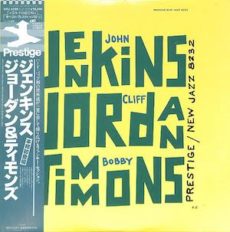
John Jenkins, Cliff Jordan, Bobby Timmons | By Eddie Carter
I begin this morning’s discussion with the 1960 collaborative album, Jenkins, Jordan, and Timmons (New Jazz NJLP 8232) by John Jenkins, Clifford Jordan, and Bobby Timmons. Joining them on this date are Wilbur Ware on bass and Dannie Richmond on drums. My copy used in this report is the 1981 Japanese Mono reissue by Victor Musical Industries (New Jazz SMJ-6299). John Jenkins’ approach to Hard-Bop and standards on the alto sax was distinctively tasteful. His solos always showed respect and affection for the tunes he played, and he could bring imaginatively unique lines even to well-worn standards. His other album as a leader is the self-titled release, John Jenkins (1957). Clifford Jordan’s interpretations on the tenor sax were the perfect characterization of his sound, sometimes growling, sometimes purring, but always with a formidable technique and a passionately assertive tone. Here, Jordan is in great form with another horn to joust with.
Pianist Bobby Timmons was one of the most talented yet neglected figures in the annals of Jazz. He composed two songs that are etched in the minds of many Jazz fans, Dat Dere, a mainstay in the early days of The Cannonball Adderley Quintet and Moanin’ that became a huge hit for The Jazz Messengers. Timmons appeared on the landmark album, Art Blakey and The Jazz Messengers (1958). On this date, he approaches each tune with a melodic and rhapsodic touch that’s irresistible. Wilbur Ware was an extraordinary soloist on the bowed bass; he possessed a beautiful sound that could be fat, resonant, and fluid without any loss of body on any of the songs he played. Dannie Richmond is best known for his many albums with Charles Mingus, he’s a very pleasant surprise on this record with an energetic liveliness in his playing. He also recorded with many jazz greats including George Adams, Pepper Adams, Chet Baker, Ted Curson, Booker Ervin, Duke Jordan, Herbie Nichols, Horace Parlan, and Don Pullen.
Clifford Jordan’s Cliff’s Edge starts Side One at midtempo with both saxes flexing their muscles in unison on the opening chorus. Cliff is up first with a very satisfying opening solo at an easy, unhurried pace. John continues the conversation with a pleasant zest on the second performance. Bobby tells his story last with a charming interpretation that comes across effectively anchored by Wilbur and Dannie’s support into the quintet’s ending. Up next is the 1946 jazz standard Tenderly by Walter Gross and Jack Lawrence. Timmons opens the song with a soothing introduction, then Jordan steps up first for a deeply compassionate melody and an opening statement exhibiting sensitive delicacy. Timmons comes in next, gently caressing each note of an exceptionally tasteful interpretation. Ware deftly captures the song’s subtle mood on a gorgeously warm solo, followed by Jenkins who concludes the readings and the song with a beautifully tender interpretation.
The first of two tunes from Jenkins’ pen, Princess begins with a collective mid-tempo groove. John starts the opening solo with an articulate tone dispensing absolute joy. Cliff takes the listener for a comfortable joyride on the next statement. Bobby is consistently inventive on the closing performance preceding the quintet’s exit. Side Two starts with Soft Talk by Julian Priester, an energized swinger from the start of the ensemble’s electrically charged theme. Jenkins speaks first to start this scintillating conversation with an aggressive fierceness. Jordan continues the dialogue, making every note count with high voltage power. Jenkins and Jordan soar to great heights in an invigorating exchange over the next few verses. Timmons adds his voice to the discussion next on a heated reading, then Ware walks briskly on an abbreviated statement. Richmond has the last word with energetic drumming in an exciting conversation between both saxes into the reprise and abrupt climax.
Jenkins’ Blue Jay is a laid-back midtempo blues that begins with an unaccompanied lively introduction by Ware, segueing into the quintet’s collective theme. John starts the soloing with an easy-going opening statement. Clifford responds with a marvelous interpretation. Bobby cruises into the third reading with a strong beat and Wilbur steps last into the spotlight for a concise comment that flows effortlessly to the ensemble’s closing chorus and finale. The remastering of Rudy Van Gelder’s original recording has been superbly recreated by Victor Musical Industries with all five instruments full of body, presence, and a vibrant soundstage. If you enjoy good Hard-Bop and are a fan of John Jenkins, Cliff Jordan, and Bobby Timmons, I offer for your consideration, Jenkins, Jordan, and Timmons. An excellent album that in my opinion, no library should be without!
~ Art Blakey and The Jazz Messengers (Blue Note BLP 4003/BST 84003), John Jenkins (Blue Note BLP 1573), Them Dirty Blues (Riverside RLP 12-322/RLP 1170) – Source: Discogs.com ~ Tenderly – Source: JazzStandards.com © 2021 by Edward Thomas Carter
More Posts: choice,classic,collectible,collector,history,instrumental,jazz,music,piano,saxophone
Requisites
View Post
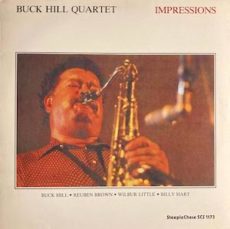
Impressions ~ Buck Hill Quartet | By Eddie Carter
The Buck Hill Quartet steps into the spotlight for this morning’s discussion with the second of two live albums from The North Sea Jazz Festival. Impressions (SteepleChase Records SCS 1173) is a 1983 release that was recorded on July 11 & 12 during the quartet’s 1981 performance. The remainder of their concert appears on Easy To Love (1982). The tenor saxophonist is working again with Reuben Brown on piano, Wilbur Little on bass, and Billy Hart on drums. Buck began his professional career in 1943 while working as a mailman in Washington D.C. He’s collaborated with Charlie Byrd, Miles Davis, Dizzy Gillespie, Shirley Horn, Alan Houser, Max Roach, Shirley Scott, and Sonny Stitt, and was also proficient on the clarinet and soprano sax. My copy used in this report is the 1983 Netherlands Stereo album sharing the Danish catalog number.
Side One begins with the jazz standard, Alone Together by Arthur Schwartz, and Howard Dietz. It was written in 1932 and began life as a show tune in the Broadway musical, Flying Colors. The quartet takes off with a brisk workout on the melody. Buck swings swiftly into the opening statement. Reuben speaks his peace next vigorously. Billy has a brief conversation with both soloists, then generates some heat on the closer into the reprise and exit. Hill makes a few announcements anchored by just the piano, then the group travels to Penn Station, a medium-paced blues by Reuben Brown. The ensemble comes into the station leisurely on the melody. Brown starts the soloing with a comfortable groove. Hill emanates a funky, down-home feeling on the second statement. Little sparkles on the third reading with a thoroughly relaxed performance into piano and tenor sharing an exchange before the closing chorus.
Side Two gets underway with Yesterdays by Jerome Kern and Otto Harbach. The trio makes a brief introduction, then Buck begins the opening chorus at midtempo. He turns the temperature up with a scintillating reading of concentrated heat. Reuben starts the next statement at a slow pace, then proceeds to an aggressive workout. Wilbur wraps up the solos with a concise comment ahead of the ensemble’s climax. John Coltrane’s Impressions ends the set on an uptempo note with the foursome swinging from the opening notes of the high-spirited melody. Buck and Reuben are the featured soloists and Brown energetically prances through the first solo with authority. Hill delivers the final word with an intense interpretation of astonishing voracity and electrically charged passion leading to the quartet’s exit and crowd’s ovation.
Impressions was produced by Nils Winther and Ronald Prent was the recording engineer on this album and its companion, Easy To Love. The sound is stunning throughout the album and the record is quiet until the music starts. Buck Hill was a tremendous talent on the tenor sax that could swing hard in an uptempo setting but could also show his tender side with a gorgeous tone on a ballad or standard. A tribute mural of him playing his sax in his mailman uniform by artist Joe Pagac resides at 1925 14th Street, NW in Washington, D.C. He passed away at age ninety on March 20, 2017. If you’re just discovering the music of Buck Hill and enjoy the tenor sax, I invite you to check out Impressions by The Buck Hill Quartet. It’s an album that’s sure to make you smile and if you’re already a fan should make a welcome addition to your jazz library!
>~ Easy To Love (SteepleChase Records SCS-1160) – Source: Discogs.com
~ Alone Together, Yesterdays – Source: JazzStandards.com
~ Impressions – Source: Wikipedia.org
© 2021 by Edward Thomas Carter
More Posts: choice,classic,collectible,collector,history,instrumental,jazz,music,saxophone
Requisites
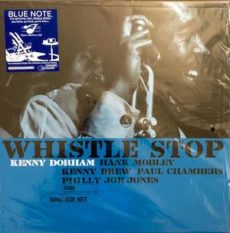
Whistle Stop ~ Kenny Dorham | By Eddie Carter
One of the biggest pleasures I get from listening to and discussing records from my library each week is I’m able to revisit favorite albums and artists to share my thoughts with my readers. If you’re a fan of Hard-Bop, this morning’s subject of discussion is one of the best by trumpet player, Kenny Dorham. Whistle Stop (Blue Note BLP 4063/BST 84063) was recorded and released in 1961 with a stellar supporting cast: Hank Mobley on tenor sax, Kenny Drew on piano, Paul Chambers on bass, and Philly Joe Jones on drums. Kenny was born in Fairfield, Texas; he played and recorded with many great jazz musicians during his lifetime. He was also a member of the orchestras of Billy Eckstine, Dizzy Gillespie, Mercer Ellington, and The Jazz Messengers. Dorham composed all seven tunes on Whistle Stop and my copy used in this report is the 2017 Music Matters Stereo audiophile reissue (MMBST-84063).
Side One starts with ‘Philly’ Twist, a driving blues that’s off to the races from the opening notes of Philly’s brief introduction into the quintet’s brisk melody. Kenny opens with a vigorously agile reading, then Hank wails convincingly on the second solo. Kenny sinks his teeth into the third performance vigorously. Paul is especially impressive on a concise statement ahead of Philly’s dazzling velocity and propulsive timing on the song’s finale. Buffalo is good soul-food cooking at midtempo with a carefree theme in unison. Mobley starts the soloing with four mellow verses. Dorham responds with a leisurely ride punctuated by the rhythm section’s groundwork. Drew keeps the laid-back feeling going with an infectiously swinging interpretation that’ll have the listener snapping their fingers and tapping their toes. Chambers wraps up everything with a short stroll anchored by only Jones into the reprise and exit.
Sunset closes the first side with the trio’s tastefully elegant introduction to one of the album’s loveliest tunes. Kenny on muted trumpet and Hank lead the quintet through a pretty mid tempo melody. Dorham remains on the mute for the opening statement, cooking easily. Hank strolls into the second performance with jaunty confidence. Kenny dips into a well of positive energy on the next reading. Paul adds the closing word with a feisty finale leading to a soft fade. Whistle Stop starts Side Two with the ensemble’s brisk melody. Mobley ignites the opening chorus with a fiery passion, then Dorham provides an electrically charged reading. Drew steps up next for a zesty performance of creative energy. Philly shares a moment with the front line in an exchange on the closing statement, before executing a lively finale preceding the climax.
Sunrise In Mexico has a soulful personality that comes alive as the day begins on the quintet’s theme. Dorham starts with a solid groove on the first interpretation. Hank demonstrates a lesson in musicality on the second reading. Kenny is as cool as the other side of the pillow on the next solo, and Paul swings softly on an effective closing statement ahead of the reprise and gentle dissolve. Windmill is an energized swinger right out of the gate beginning with a blazing melody. Dorham begins the lead solo with an aggressive fierceness, then Mobley makes searing heat on the second statement. Drew adds an abundant amount of high voltage to the third performance. Chambers walks with a happy bounce on an abbreviated reading. Jones breaks loose briefly on the finale with vivacious brushwork leading to the quintet’s high-spirited ending.
The album closes with Dorham’s Epitaph, a short, beautiful ensemble tune Kenny wrote for his passing. It illustrates his ability as a ballad composer and opens with a very gentle opening chorus by the leader complemented by the sentimental support by Hank and the rhythm section. An expanded version of this song was also written for a large orchestra and renamed Fairy Tale. Kenny Dorham continued recording excellent albums throughout the sixties that were easily the equivalent of those released by Miles Davis, Freddie Hubbard, and Lee Morgan, but sadly never received the recognition that might have catapulted him to stardom. He passed away at age forty-eight from kidney disease on December 5, 1972.
The mastering by Kevin Gray of Cohearent Sound and audio engineer Steve Hoffman is phenomenal and improves on the original recording by Rudy Van Gelder with a crystal-clear sound that’s demonstration class placing you in the studio alongside the musicians. Each of the MMJ reissues receives a great deal of care with attention to detail including high-definition gatefold photos, superb packaging of the covers, and 180-gram audiophile vinyl for the music. If you’re looking for a Hard-Bop album that’ll excite your ears, I invite you to audition Whistle Stop by Kenny Dorham. It’s a delightfully rewarding album by one of the best trumpet players in jazz that merits multiple listens and is worth adding to any jazz library!
© 2021 by Edward Thomas Carter
More Posts: choice,classic,collectible,collector,history,instrumental,jazz,music,trumpet
Requisites
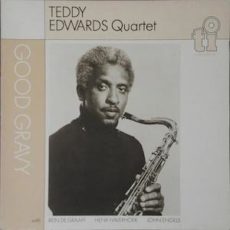
Good Gravy ~ Teddy Edwards Quartet | By Eddie Carter
I’ve been a fan of Teddy Edwards for many years, and he’s become one of my favorite tenor saxophonists. This morning’s choice from the library is a recent acquisition taking us to The Bimhuis Concert Hall in Amsterdam for a live performance to enjoy some Good Gravy (Timeless SJP 139) by The Teddy Edwards Quartet. Teddy was born in Jackson, Mississippi, and began playing the alto sax and clarinet at an early age, before taking up the tenor sax. He first played with trombonist Ernie Fields, and his first recording was a 1947 date with Dexter Gordon. Teddy also played and recorded with some of the greatest musicians in jazz, resulting in an extensive discography as a leader and sideman. The supporting cast is a marvelous Dutch trio, Rein De Graaff on piano, Henk Haverhoek on bass, and John Engels on drums. My copy used in this report is the 1984 Netherlands Stereo album.
Lady Be Good aka Oh, Lady Be Good by George and Ira Gershwin is from the Broadway musical of the same name. The trio opens Side One with a pleasant introduction, segueing into a collective bluesy theme that swings soulfully. Teddy takes the first spot at an easy speed then turns the tempo up for some down-home country cooking. Rein heightens the excitement on the second reading with cat-like precision. Teddy makes a few final comments before the group’s closing theme and enthusiastic ovation from the crowd. Oleo by Sonny Rollins begins with a brief dialogue between the tenor sax and piano, then accelerates quickly into the ensemble’s melody. Edwards takes flight first with an aggressive lead solo. De Graaff dispenses an elevated level of energy next, and Engels shares a vigorous exchange with Edwards before having a moment in the spotlight.
Georgia aka Georgia on My Mind is a classic standard by Hoagy Carmichael and Stuart Gorrell. It became the official state song after Ray Charles’ indelible rendition. A brief trio introduction opens the way for Teddy’s delicately gentle melody. He then delivers a beautiful opening solo that’s warm, full-toned, and sensuous. Rein speaks softly and reflectively on the next statement, then Teddy restates the melody with a touch of romantic lyricism into the smartly executed ending. Good Gravy, a mid tempo blues by Edwards was first heard on his 1961 album, and the ensemble starts the opening chorus leisurely. Edwards kicks off the first interpretation cheerfully. De Graaff steps into the second statement with a relaxing reading. Haverhoek makes a profound impression on his first solo ahead of the reprise, introductions of the group, and a few humorous announcements by Edwards.
Good Gravy was produced by Timeless Records founder, Wim Wigt, and recorded by Henk Elzinga. I was extremely impressed with the sound quality of this live recording. It has an exquisite soundstage that’s clear as fine crystal, and this record is silent until the music starts. You’re not just listening to the musicians playing, you’re in the Bimhuis audience watching the quartet’s performance, and they swing on all the cuts. If you’re a fan of Teddy Edwards, I invite you to check out Good Gravy on your next hunt for vinyl treasure. It’s an enjoyable live session that knocks it out of the park and deserves to be better known!
~ Good Gravy (Contemporary Records M 3592/S 7592); The Foremost! (Onyx #201) – Source: Discogs.com >~ Oh, Lady Be Good, Oleo, Georgia on My Mind – Source: JazzStandards.com © 2021 by Edward Thomas Carter
More Posts: choice,classic,collectible,collector,history,instrumental,jazz,music,saxophone
Requisites
The Wes Montgomery Trio | By Eddie Carter
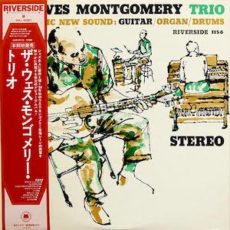
“It wouldn’t be easy,” I thought to myself. Other reviewers have been crafty, cunning, and just as resourceful when writing about Wes Montgomery. “What could I say, that hasn’t already been said about one of the true innovators on the guitar?” Staring at the blank page and flashing pointer on the computer screen, I anxiously awaited an answer that never came. I took one of my favorite albums down from the shelf to listen to after writing a review, placed the record on the turntable, and began to listen. The Wes Montgomery Trio (Riverside RLP 12-310/RLP 1156) was recorded and released during that magical year of 1959 shortly after he relocated from Indianapolis, Indiana to New York City. The other members of his trio are Melvin Rhyme on guitar and Paul Parker on drums. My copy used in this report is the 1975 Riverside Original Recording Series Japanese Stereo reissue (SMJ-6080) by Victor Musical Industries, Inc.
Side One opens with one of the greatest jazz standards ever recorded, ‘Round Midnight by Thelonious Monk, Cootie Williams, and Bernie Hanighen. The trio begins with an elegantly tender introduction by Wes that flows softly into a graceful theme with Melvin and Paul trailing him ever so gently. Montgomery is the only soloist and gives a mesmerizing interpretation with the delicacy of fine porcelain figurines preceding the ensemble’s heartwarming finale. Yesterdays by Jerome Kern and Otto Harbach was an instant hit after the Broadway musical, Roberta (1933), and remains an enduring standard to this day. The trio starts with a beautifully constructed, bluesy melody. The guitarist takes the reins again for the song’s only interpretation and unfolds an infectious performance that’ll have the listener snapping their fingers and tapping their toes.
The End of a Love Affair is from the pen of Edward C. Redding and was written in 1950. It’s a marvelous song that hasn’t been over-recorded. Wes would revisit it a few years later on Goin’ Out of My Head (1966) backed by The Oliver Nelson Orchestra. The group’s rendition is uptempo with Wes in front on the melody, then making use of his octaves and chords for an effervescent first solo. Melvin dances over the pedals on the next reading leading to the exit. Benny Golson wrote Whisper Not in 1956 while he was with The Dizzy Gillespie Big Band. It’s one of his most recorded compositions and the trio starts with a warm and mellow theme. Wes starts the soloing at a low glow and Melvin adds a modest comment before the close. Ecorah by Horace Silver is also taken at midtempo, and one can’t help but marvel at the trio’s collective improvisation during the first and final choruses.
The inspiration for Satin Doll by Duke Ellington, Billy Strayhorn, and Johnny Mercer comes from a famous black stripper who used the song’s title as her stage name. The trio pays homage to the standard with a happy theme and closing chorus that’s sure to put a smile on your face with its catchy beat. Melvin shows off a wonderful articulation on the first reading, followed by Wes who keeps things swinging with some relaxed cooking on the closer. Missle Blues, the first of two tunes by Montgomery, is named after the Indianapolis club he played in. This mid-tempo original begins with a compelling swing that the ensemble states proficiently in the melody. Melvin and Wes are the featured soloists and the organist opens with a velvety smooth interpretation. Wes strolls into the closing performance at a casual flow punctuated by Paul’s brushwork.
Too Late Now by Burton Lane and Alan Jay Lerner is a very lovely standard beginning with a collective, wistful opening chorus. Montgomery refreshes this chestnut with a breathtaking lead solo tinged with melancholy. Melvin expresses a remorseful answer to the guitarist ahead of the trio’s elegant closing thoughts culminating with a delicate climax. Wes’ Jingles ends the album allowing each member solo space beginning with Rhyme who cruises happily on the melody and first solo. Wes gets into a swinging groove on the second statement, and Paul has a quick exchange with Melvin and Wes leading to the reprise and finale. Jack Higgins engineered the original recording and Victor’s remastering of the tapes is nearly perfect. The sound quality is excellent, but on Jingles, both the guitar and organ are miked too strongly and there’s a bit of harshness on both solos and the out-chorus.
In fairness to Victor, I think this miking error may have happened during the original recording. That issue aside, the rest of the album’s sound is superb and worth auditioning for a spot in your jazz library. Wes Montgomery influenced countless guitarists with his creativity, innovation, and outstanding technique. Many have paid homage to him with original songs and tribute albums and whether working with big bands, small groups, or strings, his playing showed he could converse musically in any setting. He passed away from a heart attack on June 15, 1968. If you’re a fan of Wes Montgomery and enjoy jazz guitar, The Wes Montgomery Trio is a great album for any enthusiast and perfect for listening any time of the day or night!
~ Dizzy Gillespie and His Orchestra (Fanfare N 46 146); Goin’ Out of My Head (Verve Records V-8642/V6-8642) – Source: Discogs.com ~ Dizzy Gillespie and His Orchestra – Source: JazzDisco.org ~ ‘Round Midnight, Yesterdays, The End of a Love Affair, Whisper Not, Satin Doll, Too Late Now – Source: JazzStandards.com ~ Wes Montgomery – Source: Wikipedia.org © 2021 by Edward Thomas Carter
More Posts: choice,classic,collectible,collector,guitar,history,instrumental,jazz,music