

Requisites
Anniversary ~ Stan Getz | By Eddie Carter
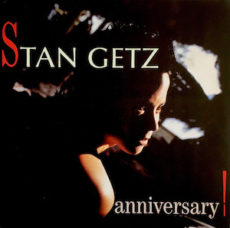
There’s nothing I enjoy more than watching jazz music performed live. Since the pandemic, the next best thing is being transported to a particular location when listening to an album on the turntable. This morning’s album was recorded on July 6, 1987, at one of the best European jazz venues, Café Montmartre, and is titled Anniversary (The EmArcy Jazz Series 838 769-1) by Stan Getz. Stan had turned sixty earlier in the year, and he was celebrating year forty-four of his illustrious career. His sound on the tenor sax was warm, lyrical, and immediately identifiable and his resume of great musicians and vocalists he’s played and recorded with reads like the Encyclopedia Britannica of jazz. Getz played many times at Montmartre, and on this album, he’s joined by Kenny Barron on piano, Rufus Reid on bass, and Victor Lewis on drums. The copy used in this report is a friend’s Phonogram France Stereo pressing by Polygram Classics.
Side One opens with an original tune by Johnny Mandel, El Cahon. The song’s title is an anagram for tenor man, Al Cohn, one of The Four Brothers in Woody Herman’s Thundering Herd. Stan starts with a brief solo introduction before moving the tempo upward for the first reading. Kenny offers some light-hearted entertainment on the next statement. Rufus plays just as imaginatively on the third solo and Victor shares the finale with Stan before the closing chorus. I Can’t Get Started by Ira Gershwin and Vernon Duke is a timeless evergreen from The Great American Songbook. Getz begins the song, not at the beginning, but the bridge with a haunting introduction and melody. He also performed the song this way in concert during the late eighties. The melody moves upward for Getz’s opening solo before ending with notes of voluptuous warmth. Drew embodies the spirit of the song on the closing chorus with a compelling performance complementing the gentle response of Reid and Lewis.
Side Two starts with a second staple in the Songbook, Stella By Starlight by Ned Washington, and Victor Young. The ensemble begins at a livelier tempo with Stan asserting his skill with a bright, lively, and cheerful melody and lead solo. Kenny comes in next for an exciting and intriguing reading. Rufus provides the next exquisite statement with an improvised bass line that’s undeniably attractive. Stan adds a few vigorous closing remarks ahead of the ending and the crowd’s approval. The closer is Stan’s Blues by Gigi Gryce allowing everyone a solo opportunity. The leader sets the tone with a relaxed attitude on the opening chorus. Reid is up first with a delightful reading that starts slowly but builds to a soulful climax. Getz blows with authority on the second statement. Drew compliments him with an air of assurance on the third reading, and Lewis gives a concise comment. Getz takes the ensemble into the finale, receiving an enthusiastic ovation from the Montmartre audience.
Anniversary was produced by Ib Skovgaard for broadcast on Denmark Radio and the man behind the dials is engineer, Johnnie Hjerting. The result of their efforts is a beautiful recording with a stunning soundstage. The record is silent until the music starts, and the listener is transported to the Café Montmartre audience to enjoy Stan Getz at his best. Two years after Anniversary was released, Getz passed away on June 6, 1991, at age sixty-four. Sadly, there was only one pressing of the LP and it may be hard to find (I know because I’m still looking for a copy). But should you come across it on your next vinyl search, it’s the perfect music to chill to after a long day or week or to enjoy during or after a romantic dinner with that special someone. If you’re a fan of Cool or Modal Jazz, Anniversary by Stan Getz is sure to please newcomers to his music as well as seasoned fans and is highly recommended for your library!
~ I Can’t Get Started, Stella By Starlight – Source: Discogs.com © 2021 by Edward Thomas Carter

More Posts: choice,classic,collectible,collector,history,instrumental,jazz,music,saxophone
Requisites
Sassy Swings The Tivoli ~ Sarah Vaughan | By Eddie Carter
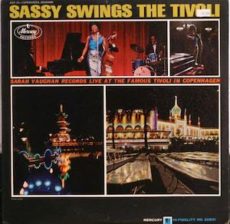
On the stage stands a beautiful woman who’s about to give a memorable performance before a capacity crowd in The Tivoli Theatre. The concert will be praised by the Danish press as one of the highlights of her career. Behind her sit three elegantly dressed gentlemen who’ll match her improvisational techniques, incredible range, and sophisticated style with their musical artistry. Together, they are a perfectly melded ensemble who are up to the task of enchanting the audience. Her name is Sarah Vaughan, and the gentlemen are Kirk Stuart on piano, Charles Williams on bass, and George Hughes on drums who collectively make up The Kirk Stuart Trio. This morning’s choice from the library is Sassy Swings The Tivoli (Mercury Records MG-20831/SR-60831). Quincy Jones was the musical director during the group’s four-day engagement at the Copenhagen hall. He supervised each recording and worked with Sarah on the song selections. My copy used in this report is the 1963 Mono deep groove album.
Side One starts with Won’t You Come Home Bill Bailey? It was written by Hughie Cannon and originally titled Bill Bailey, Won’t You Please Come Home? Cannon wrote the song after his friend Willard “Bill” Bailey discussed his marriage to his wife Sarah during an evening out together. Sassy serves up two exhilarating vocals that swing on the opening and closing melodies. Kirk comes in next for an energetic interpretation illustrating the trio’s remarkable interplay. The quartet slows the pace to a ballad tempo for Misty by Erroll Garner who wrote it with Johnny Burke adding the lyrics a year later. Sarah opens with a seductively stunning showpiece that spills out her emotions with sincere feeling. Stuart shares the spotlight adding a humorous note when he takes over on the bridge with a light touch during his vocal statement. Sarah, Kirk, Charles, and George have a little fun on the finale and these musical pranksters will bring a smile to your face and may even make you laugh a little by the song’s end.
Sassy and the trio offer an uptempo version of the Cole Porter classic, What Is This Thing Called Love? It was first heard in the musical, Wake Up and Dream (1929). Here she makes the lyrics come alive with a jubilant performance including a short, scintillating scat that’s mesmerizing. Amidst a thunderous ovation from the audience, Stuart begins a brief solo introduction developing into an elegantly beautiful rendition of Lover Man by Jimmy Davis, Roger Ramirez, and Jimmy Sherman. The dreamlike softness that Sarah brings to this standard is incredibly tender, soft, and delicately supplemented by the trio’s soothing support. Sometimes I’m Happy by Vincent Youmans and Irving Caesar is a perfect song for jazz vocal improvisation. Sassy and the trio grandly illustrate this at a rapidly brisk tempo. The quartet invites the audience to sit back and enjoy an uptempo free-wheeling scat performance of aggressive rhythmic heat with an agile ending.
Side Two starts with I Feel Pretty by Leonard Bernstein and Stephen Sondheim. This song premiered in the Broadway musical, West Side Story (1957) and was later reprised in the 1961 film. The melody receives a delightfully spring-like interpretation by Sassy who sings the first chorus at midtempo, then picks up the pace for the second verse with a rocking groove and the rhythm section providing the sprightly support behind her. She returns to the original tempo taking the trio through the reprise into a sudden stop followed by the audience’s ovation. Up next is the jazz standard Tenderly by Walter Gross and Jack Lawrence. This ageless classic is presented at a slow tempo with Sassy displaying a deep and strong romantic affection for the lyrics through her voluptuously gorgeous vocals. She even interjects her sense of humor on the word “breeze”. Her three bandmates return the favor by matching the simplicity and exquisite softness with an intimate finesse preceding a lush climax.
Sassy’s Blues is a midtempo original by Sarah and Quincy Jones that the quartet has some fun with beginning with a cheerful introduction that’ll have the listener tapping their feet along to the contagious beat. She takes over for the opening chorus and song’s only statement utilizing her skills to maximum effect with a series of scat verses including maintaining a single note for twenty seconds. She ultimately achieves an easy-going, happy sound on both that’s performed impressively before the ensemble wraps it up. Polka Dots and Moonbeams by Jimmy Van Heusen and Johnny Burke is one of jazz’s most recorded standards. Sassy first recorded this tune on her album Swingin’ Easy (1957). The quartet begins at a very slow tempo, but her delivery is strikingly beautiful with each verse a remarkable commentary of warmth, intimacy, and elegance sustained by the delicate understructure of the rhythm section’s foundation.
The quartet closes with a speedy version of I Cried For You by Gus Arnheim, Abe Lyman, and Arthur Freed. This standard has been a favorite for jazz vocalists for years and is perfect for Sarah to sing one final outstanding number. Sassy lets loose every bit of her energy with a rendition I’m sure brought down the house judging by the audience’s reaction at the song’s finale. The Danish recording engineer and producer, Birger Svan was behind the dials with Quincy supervising the recording of each show. The sound quality of my copy is excellent revealing a smooth soundstage with sparkling highs, crisp midrange, and deep, tight bass. Sassy Swings The Tivoli is a marvelous live album showing Sarah in her prime with The Kirk Stuart Trio backing her beautifully. If you’re a fan of jazz vocals, I happily submit for your consideration, Sassy Swings The Tivoli by Sarah Vaughan. It’s a classic that’ll always be in style, and a must have for your library!
~ Birger Svan, Swingin’ Easy (EmArcy Jazz–Mercury MG-36109) – Source: Discogs.com ~ I Cried For You, Lover Man, Misty, Polka Dots, and Moonbeams, Sometimes I’m Happy, Tenderly, What Is This Thing Called Love? – Source: JazzStandards.com ~ I Feel Pretty, Won’t You Come Home Bill Bailey? – Source: Wikipedia.org © 2021 by Edward Thomas Carter
More Posts: choice,classic,collectible,collector,history,instrumental,jazz,music
Requisites
My Funny Valentine ~ Miles Davis In Concert | By Eddie Carter
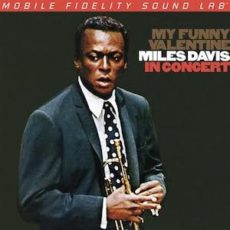
Miles Davis opens this morning’s discussion with a concert promoting a worthy cause. On February 12, 1964, his quintet of George Coleman on tenor sax, Herbie Hancock on piano, Ron Carter on bass, and Tony Williams on drums played a benefit performance for the registration of black voters at Lincoln Center’s Philharmonic Hall. The concert was sponsored by the NAACP Defense Fund, the Congress for Racial Equality, and the Student Nonviolent Coordinating Committee, resulting in two albums, ‘Four’ & More (1966) and My Funny Valentine (Columbia CL 2306/CS 9106), released in 1965. Their performance broke several records for a benefit concert with ticket prices reaching $25 and $50, resulting in Standing Room Only. It also emphasized Miles’ solidarity with these organizations and the people fighting racism in the south. My copy used in this report is the 2016 Mobile Fidelity Sound Lab Stereo audiophile reissue (MFSL 1-431).
My Funny Valentine by Richard Rodgers and Lorenz Hart opens Side One with a gentle introduction by Herbie. Davis states a delicate melody and paints an unforgettable haunting portrait on the lead solo. Miles later attributed his sound during their performance to reflecting his deeply personal reaction to President Kennedy’s death the previous November. George gives a nostalgic, reflective reading next. Herbie turns in an alluringly gentle statement. Ron and Tony provide an exquisite foundation into Miles’ profoundly moving ending. The quintet moves to mid-tempo for All of You by Cole Porter. Davis opens the melody and first solo with a deliciously inventive performance. Coleman sails into a blissfully, soulful groove. Hancock gets a momentary spotlight, and Miles concludes with a few final verses preceding a subtle finale receiving appreciative applause from the audience.
Side Two starts with Stella By Starlight by Victor Young and Ned Washington, one of the most beautiful standards in jazz. Herbie opens with a lovingly picturesque introduction. Miles, Ron, and the ensemble soar briefly on the melody, then the leader goes first, showing expressive beauty. George executes the next reading thoughtfully and Herbie follows with a touching performance. Miles ends with a tender display of romantic lyricism into a lovely climax. The lone up-tempo tune is Miles’ All Blues from Kind of Blue (1959). With a rapid snap of the leader’s fingers, Carter and Hancock start a scintillating introduction. Then comes Coleman, Williams, and Davis who starts the muted melody calmly then attacks ferociously on the opening statement with the mute off. Hancock builds the next reading into an energetic climax. Coleman takes the last solo for a brisk workout before the front line’s vigorous reprise and exit.
Miles and the trio open I Thought About You by Jimmy Van Heusen and Johnny Mercer with a graceful theme. The leader then moves to mid-tempo for a gorgeous opening statement. George responds with a stunning solo, then Herbie performs with heartfelt sincerity. Ron comes in next with a wealth of ideas, and Miles returns with warm sweet sounds on the closing chorus, ending one of his most outstanding performances. The sound quality of this MOFI reissue is superb with an extraordinary soundstage and incredible definition. If you’re a fan of jazz trumpet or only know of the fusion or contemporary albums by Miles Davis, I offer for your consideration, My Funny Valentine. It’s an hour of absolute perfection that belongs in every library and transports you back in time to enjoy a definitive performance with each listen!
~ ‘Four’ & More (Columbia CL 2453/CS 9253), Kind of Blue (Columbia CL 1355/CS 8163) – Source: Discogs.com
~ My Funny Valentine, All of You, Stella By Starlight, All Blues, I Thought About You – Source: JazzStandards.com © 2021 by Edward Thomas Carter
More Posts: choice,classic,collectible,collector,history,instrumental,jazz,music

Requisites
Yuko Mabuchi Plays Miles Davis, Volume 1 ~ Yuko Mabuchi | By Eddie Carter
Yuko Mabuchi has been making a positive statement on the jazz scene since her 2018 releases, Yuko Mabuchi Trio, Volumes 1 and 2. She steps into the spotlight this morning to give her second live performance at Cammilleri Hall before an enthusiastic crowd. Yuko Mabuchi Plays Miles Davis, Volume 1 (Yarlung Records YAR45588-171V) is a single 45-rpm audiophile album offering two jewels from Kind of Blue and two original tunes by the leader. She’s working again with trio members Del Atkins on bass and Bobby Breton on drums, plus JJ Kirkpatrick on trumpet. JJ is a member of Sophisticated Lady Jazz Quartet and my copy used in this report is the 2020 US Stereo album.
Yuko sets the groove for Side One with Miles’ All Blues, her enthusiastic notes on the introduction flowing as naturally as spoken words. JJ makes his entrance on the melody and first solo next with a gorgeous tone that fits the rhythm section like a comfortable glove. Yuko proceeds into the second statement at an easy pace that builds to a feisty finale before the quintet’s closing chorus. Blue In Green is a haunting and very beautiful song by Miles and Bill Evans. The pianist opens with a gentle introduction segueing into Kirkpatrick’s delicate opening chorus. Yuko leads off with a serenely beautiful solo, followed by an incredibly tender statement by JJ. Del offers a few intimate thoughts on the closer preceding an elegantly graceful ending.
Missing Miles, the first of two from Yuko’s pen, gets Side Two underway with an infectious introduction that moves to an easygoing bounce by her and JJ on the melody. Yuko struts comfortably into the first reading making every note count to the relaxing momentum of Del and Bobby’s accompaniment. The drummer gets a brief moment of solo space next, then JJ keeps the ingredients stirring on the closing statement culminating with Yuko’s descent into a soft climax. Sky With No Tears is a very pretty tune expressing Yuko’s feelings about the environment and caring for the planet’s health. She delivers the melody with a charming simplicity and offers a delicate and subtle opening statement. Del comes in next for a brief reading of refined taste preceding Yuko’s tenderly passionate ending.
The album was produced by Bob Attiyeh, engineered by Bob and Arian Jansen, and the mastering is by Bernie Grundman. The album sounds fantastic with a stunning soundstage that brings the listener to Cammilleri Hall as the musicians are performing. The record is silent until the music begins, making it a perfect demonstration record for any good mid-fi or high-end audio system. I was also impressed with JJ Kirkpatrick; he plays some tasty jazz here and complements the trio very well. Although there are only two tunes of Miles’ music heard here, Yuko Mabuchi breathes fresh air into both selections and she shows a maturity beyond her years as a composer. If you’re a fan of piano jazz, I invite you to audition Yuko Mabuchi Plays Miles Davis, Volume 1. It’s a live album worth investigating, and I hope will bring attention to a talented pianist who continues to exceed expectations and deserves to be heard!
~ Kind of Blue (Columbia CL 1355/CS 8163), Sophisticated Lady Jazz Quartet, Volume 1 (Yarlung Records YAR09272-004V1), Yuko Mabuchi Trio, Volume 1 (Yarlung Records YAR88157-161V), Yuko Mabuchi Trio, Volume 2 (Yarlung Records YAR71621-161V) – Source: Discogs.com ~ All Blues, Blue In Green – Source: Wikipedia.org © 2021 by Edward Thomas Carter
More Posts: choice,classic,collectible,collector,history,instrumental,jazz,music,piano
Requisites
Lee Konitz With Warne Marsh ~ Lee Konitz & Warne Marsh | By Eddie Carter
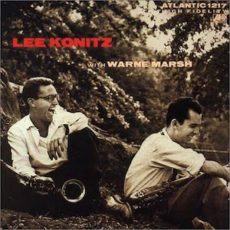
This morning’s choice from the library is an album bringing together two of the best musicians from the Cool Jazz school, Lee Konitz on alto sax and Warne Marsh on tenor sax. Lee Konitz With Warne Marsh (Atlantic 1217) was recorded and released in 1955. Ronnie Ball (track: B3), Sal Mosca (tracks: A2, A4 to B2, B4) on piano, Billy Bauer on guitar, Oscar Pettiford on bass, and Kenny Clarke on drums round out the stellar supporting cast. My copy used for this report is the 2018 Speakers Corner Mono audiophile reissue sharing the original catalog number.
Side One begins with Topsy by Edgar Battle and Eddie Durham. Oscar starts an elegant bass introduction segueing into a collective subtle theme minus both pianists. Lee opens with a relaxing informality on a lyrical, soft-spoken statement. Oscar delivers the next reading with exquisite skill and Warne excels on the final solo before both saxes take the closing chorus into a soft climax. The sextet turns the beat upward on There Will Never Be Another You by Harry Warren and Mack Gordon. It opens with a quick collective theme led by Konitz who also cooks briskly on the opening statement. Marsh follows with a passionately assertive solo, then Pettiford delivers something special on the next vigorous reading. Both horns return to share the final solo ahead of the close.
I Can’t Get Started by Vernon Duke and Ira Gershwin tells the story of a man who’s achieved great success in everything, except the affection and love of the woman he desires. Both pianists lay out on this tune also. Lee takes the lead this time with a dreamy melody and reading that’s delicately crafted. Warne approaches the next solo with tender sincerity. Oscar walks a short distance on the closer leading to a gentle exit. Donna Lee by Miles Davis is named for the daughter of bassist Curly Russell and begins with an expedient theme that’s breathtaking. Konitz opens with a very impressive reading, then Mosca takes over for an energetic interpretation. Marsh charges into the next searing statement and Clarke shares a fiery conversation with both saxes into the reprise and abrupt ending.
Side Two opens with Two Not One by Lennie Tristano that gets underway a vibrant opening chorus. Lee takes off first like a jolt of electricity traveling through the body. Warne adds some additional power on an inspired solo as steady as the rock of Gibraltar. Sal responds with an exhilarating reading shadowed closely by both saxes in the background. Kenny shares a brief statement with the principal soloists into the climax. Don’t Squawk is by Oscar Pettiford, a blues he makes his presence felt on the introduction and the melody with the rhythm section. Konitz takes the first solo for a slow stroll, then Mosca swings softly and smoothly into the next interpretation. Marsh also makes his point in a relaxed manner, followed by Pettiford who gives a slow, easy groove gently sailing over the rhythm section.
Ronnie Ball takes over the piano chair on his uptempo original, Ronnie’s Line. Lee begins with an upbeat, energetic theme, then adds exuberant vitality to the opening solo. Ronnie takes the next spot for a swiftly paced statement. Marsh swings into the next performance vigorously, and the front line energizes the closing chorus with a spirited ride ending with an attractive exit. The album ends with a little Background Music by Warne Marsh opening with a collective theme. Lee applies some serious blowing to the opening statement. Sal gives an exhilarating reading next, followed by Warne who executes the third solo with high-voltage precision. Oscar and Kenny exchange their ideas on the finale into a soft summation. Lee Konitz With Warne Marsh was produced by Nesuhi Ertegun and engineered by Tom Dowd.
Speakers Corner reissues are remastered using pure analog components only, from the master tapes through to the cutting head. The soundstage on this album is immense and absolutely stunning, drawing you in completely the moment your stylus touches the lead groove. You don’t just hear the musicians and their instruments; you almost feel their presence in your listening room. In my opinion, the album’s not only remarkable for its musicianship, but an underrated jewel of fiery and relaxed tempos by both saxophonists. If you’re a fan of Cool Jazz and in the mood for some great sax, I invite you to check out, Lee Konitz With Warne Marsh for your library. It’s a terrific album of pure bliss that’s perfect in every way!
~ Tom Dowd – Source: Discogs.com ~ Donna Lee, I Can’t Get Started, There Will Never Be Another You, Topsy – Source: JazzStandards.com © 2021 by Edward Thomas Carter
More Posts: choice,classic,collectible,collector,history,instrumental,jazz,music,saxophone