

Requisites
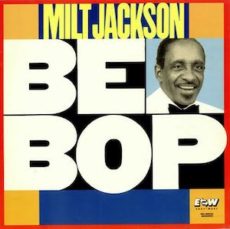
Bebop ~ Milt Jackson | By Eddie Carter
This morning’s discussion is by one of my favorite masters of the vibraphone, Milt Jackson. I was introduced to his music during a performance by The 1972 Newport Jazz All-Stars at Radio City Music Hall. Bebop (East-West – 7 90991-1) celebrates the forties jazz style characterized by a fast tempo, rapid chord changes, instrumental improvisation, and virtuosity that was created by Dizzy Gillespie, Charlie Parker, Bud Powell, and other musicians. On this date, Bags is sharing the spotlight with an outstanding sextet, Jon Faddis on trumpet, J.J. Johnson on trombone, Jimmy Heath on tenor sax, Cedar Walton on piano, John Clayton on bass, and Mickey Roker on drums. My copy used in this report is the 1988 US Full Digital Stereo album.
Side One kicks off with the 1951 jazz standard, Au Privave by Charlie Parker. The trio starts with a nimble introduction coming before the septet’s spirited theme. J.J. lights the first fire with a fierce heat, paving the way to Milt’s enthusiastic reading fueled by the rhythm section. Jimmy swings incisively and vividly next, then Jon travels into outer space with an abundance of high notes. Cedar drives to the finale with potent force ahead of the ensemble’s vigorous climax. Up next is Good Bait by Count Basie and Tadd Dameron. This seldom-performed 1944 tune became a hit at the height of the Bop era. Jackson leads with a friendly, light-hearted solo that’s pleasant. Johnson steps casually into a splendid reading. Heath explores some interesting avenues for the next performance. Faddis also takes things easy with a bluesy tone. Walton closes with a thoughtfully developed statement significant for its understated emotion.
Dizzy’s Woody’n You was written in 1943 and dedicated to Woody Herman. The ensemble moves back into uptempo for the theme. Milt explores the song’s roots first with an effervescent performance. J.J. heats things up next with an agile contribution, then Jimmy is as sprightly as ever on the third solo. Jon keeps things moving with an optimistic interpretation that swings hard. Cedar finishes with some exciting creativity before the septet disappears after the reprise. Now’s The Time by Charlie Parker cruises at a comfortable speed with Cedar taking the first chorus of this irresistible toe-tapper into the collective theme. Bags initiates a very impressive statement that moves smoothly. Johnson embraces the second reading like he’s speaking to an old friend, then Heath gets into an affirmative groove. Faddis opens the throttle a little further in a lively performance, and Walton puts the icing on the closer leading up to the climax.
Side Two starts with Ornithology by Charlie Parker and Benny Bailey. The septet begins with a happy, swinging beat on the unison theme statement. Milt gets things off the ground first, afterward, Jon wails with astounding conviction. Jimmy follows with a very relaxing performance, then J.J. strides confidently into the next reading. Cedar follows with some solid grooving, and John does some tuneful walking on his first solo opportunity preceding the theme’s reentry. One of Dizzy’s most enduring hits from 1944, Groovin’ High keeps the group at an easy tempo with Bags in front of the ensemble on the collective melody. Walton takes the lead this time and turns in some fine work. Jackson is equally easygoing on the second statement. Faddis uses the mute for an informal discussion, then Heath turns in a stirring presentation. Johnson is up next to give a muted trombone reading, and Clayton responds with a brief articulate, and charming finale before the closing chorus.
Birks’ Works was composed by Dizzy in 1951 and the title refers to his middle name. This jazz standard was the title tune for his 1957 Big Band album. John and Bags lead the septet on a bluesy opening chorus. Cedar solos first, taking things relatively easy. J.J. comes in next with a bright and breezy statement. Jimmy makes a positive impression on the third reading. Jon follows, strolling leisurely into the next solo, and Milt makes his points with admirable zest ahead of the out-chorus. Salt Peanuts, written in 1942 by Gillespie and Kenny Clarke begins with a brief introduction by Roker, segueing into a brisk melody. Heath takes flight first swiftly like a cheetah chasing its prey, then Johnson takes over for a speedy sprint. Jackson’s fingers work furiously on the vibes next. Faddis lets his ideas unfold intensely on the following solo, and Walton gets the last of the “salt peanuts” on a freewheeling finale before the ensemble’s reprise and coda.
“Bags” (Milt’s nickname) and his bandmates complement one another marvelously and these cats know how to swing throughout this collection of old favorites. The LP is a full digital recording by engineer Bobby Warner with stunning sound quality surrounding your sweet spot. Bebop is a stellar tribute to the music that remains as fresh today as when first performed in the forties. It’s also a pleasure to hear these great improvisers in a resolute form on an album that’s a high note in his plentiful discography. If you’re a fan of Milt Jackson as a leader or sideman and enjoy Hard-Bop, you won’t regret picking Bebop up on your next vinyl hunt and it’s sure to become an essential album in your library! ~ Birks’ Works (Verve Records MG V-8222) – Source: Discogs.com ~ Good Bait, Woody’n You, Groovin’ High – Source: JazzStandards.com ~ Au Privave, Bebop, Birks’ Works, Now’s The Time, Ornithology, Salt Peanuts – Source: Wikipedia.org © 2021 by Edward Thomas Carter

More Posts: choice,classic,collectible,collector,history,instrumental,jazz,music,vibraphone
Requisites
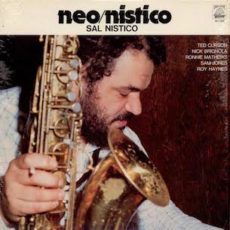
Neo/Nistico ~ Sal Nistico | By Eddie Carter
This morning’s choice from the library is another recent acquisition that introduced me to tenor saxophonist, Sal Nistico. Salvatore was born on April 2, 1938, in Syracuse, New York, and began playing the alto sax, before switching to tenor in 1956. He also played baritone sax for a few years. Sal was a member of Count Basie’s and Woody Herman’s bands and also played with Nat Adderley, Chet Baker, Don Ellis, Curtis Fuller, Dusko Goykovich, Johnny Griffin, The Jazz Brothers Band, Buddy Rich, and Stan Tracey to name a few. Neo/Nistico (Bee Hive Records BH 7006) finds him leading a world-class sextet, Ted Curson on flugelhorn (tracks: A1, B3), trumpet (tracks: B1, B2), Nick Brignola (tracks: A1, B2) on baritone sax, Ronnie Matthews on piano, Sam Jones on bass, and Roy Haynes on drums. My copy used in this report is the original 1978 Mono release.
Side One takes off with Anthropology by Dizzy Gillespie and Charlie Parker set at a blistering pace with both saxes backed by Roy presenting the melody. Nick applies searing heat to the opening statement, then Ted gives a high-energy reading that ascends to an exciting climax. Sal sizzles like a firecracker about to explode on the third solo, and Ronnie stirs it all together in an exhilarating statement preceding the front-line’s exchange and ensemble’s abrupt close. The beat slows down for You Don’t Know What Love Is by Gene de Paul and Don Raye. The quartet opens with a sensuous theme. Nistico begins the first reading with a delicately elegant conversation. Matthews begins the second statement with a soothing, almost seductive quality that’s beautifully tender. Nistico swings briefly on a robust return culminating in a gorgeous ending.
The quartet continues with a brisk workout of Be My Love by Nicholas Brodsky and Sammy Cahn. It was written in 1949 for Mario Lanza who sang it in the 1950 film, The Toast of New Orleans. The trio makes a feisty introduction to Sal’s lively theme and enthusiastic lead solo. Ronnie follows with a jubilant reading, then Sam cuts into the next statement like a hot knife through butter. Roy engages in a satisfying exchange with Sal that doesn’t stop swinging until the upbeat ending. Blues For K.D. is a Nistico original written to honor trumpeter Kenny Dorham that charges out of the gate on a vigorous melody. The leader is up first and delivers a torrid solo, then Curson ignites a mighty fire with his trumpet. Matthews keeps the flame burning next, and Haynes does some heavy cooking on the closer amid an interchange of ideas with all three soloists.
Sal’s Bambu is a festive tune he composed while playing around on the piano in Europe. It’s a danceable mix of Afro-Calypso and Latin that’s highly rhythmic, infectious, and fun. The solo order is Brignola, Curson, Matthews, Haynes, and all four soloists invite us to party with them until an abrupt halt. Fee-Fi-Fo-Fum by Wayne Shorter was first recorded by its composer on Speak No Evil (1966). The quintet starts with a stroll on the opening chorus at a leisurely tempo. Nistico starts the first solo conveying a light mood that’s joyously carefree and happy. Curson begins the next reading with an easy-going attitude, building steadily into an enjoyable groove. Matthews adds a great finishing touch with a briskly efficient finale cooking over a mild flame from Jones and Haynes ahead of the quintet’s closing chorus.
Neo/Nistico was produced by Joe Neumann, founder of Bee Hive Records, and engineered by Fred Norsworthy. I was very impressed with the record’s sound quality. It has an excellent soundstage with crystal-clear highs, a sharp midrange, and solid bass. Sal’s career as a musician lasted nearly three decades, and he spent a lot of time performing in Europe. He passed away on March 3, 1991, at age fifty-three. If you’re a fan of the tenor sax, Post-Bop, or are just discovering him as I have, I offer for your consideration, Neo/Nistico by Sal Nistico, an album of six performances that sparkle and swing from start to finish. I’m very happy I found it and have it in my library. After one audition, I’m sure you’ll feel the same!
~ Speak No Evil (Blue Note BLP 4194/BST 84194) – Source: Discogs.com ~ Anthropology, You Don’t Know What Love Is, Be My Love – Source: Wikipedia.org © 2021 by Edward Thomas Carter
More Posts: choice,classic,collectible,collector,history,instrumental,jazz,music,saxophone
Requisites
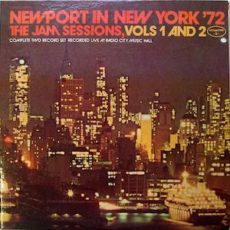
Newport In New York ’72: The Jam Sessions, Vols. 1 & 2 ~ Various Artists | By Eddie Carter
If you love music as I do, I’m sure you’ve attended several live concerts, festivals, and performances in your lifetime. I’m also certain that there’s at least one that stands out and is so special, it’s become a truly unforgettable experience and a timeless memory. For me, that date was July 3, 1972, and I remember it like it was yesterday. I got the opportunity to visit Radio City Music Hall for a thrilling summit that was the ultimate jam session and the greatest jazz concert I’d ever seen. The night only got better when the audience learned that our show was being recorded to be released and enjoyed on LP. This morning’s choice from the library is Newport In New York ’72 – The Jam Sessions, Vols. 1 & 2 (Cobblestone CST 9025–2) featuring highlights of that night’s performance alongside two tunes from the July 6 concert.
The personnel reads like an encyclopedia of jazz luminaries: Cat Anderson (tracks: A1, B1), Dizzy Gillespie (tracks: C1, D1), Jimmy Owens (tracks: A1, B1) on trumpet, Benny Green (tracks: C1, D1) on trombone, Charles McPherson (tracks: A1, B1) on alto sax, Stan Getz (tracks: C1, D1), Buddy Tate (tracks: A1, B1) on tenor sax, Milt Jackson (tracks: C1, D1) on vibes, Roland Hanna (tracks: A1, B1), Mary Lou Williams (tracks: C1, D1) on piano, Milt Buckner (tracks: A1, B1) on organ, Kenny Burrell (tracks: C1, D1) on guitar, John Blair on violin (track: C1), Percy Heath (tracks: C1, D1), Charles Mingus (tracks: A1, B1) on bass, Alan Dawson (tracks: A1, B1), Max Roach (tracks: C1, D1) on drums, Big Black (tracks: C1, D1) on congas. My copy used in this report is the original US Stereo album.
Side One kicks off with Count Basie’s 1938 classic, Jumpin’ at The Woodside, co-written with Eddie Durham and Jon Hendricks. It’s one of his band’s signature tunes and the title comes from Harlem’s old Woodside Hotel, a popular spot for jazz musicians of the era and Negro baseball teams to stay. Buckner starts with a lively introduction segueing into the melody. Buddy opens with a joyful statement, then Jimmy swings with compelling strength. Charles takes an exciting joyride on the third reading. Cat then wails into the stratosphere next. Milt ignites an energetic fuse including a few notes of the wedding march on the fifth solo. Roland swings consistently on a short statement, then Charles takes his bass for a brief brisk walk. Alan has a quick exchange with Mingus before applying the finishing touches with a concise comment into the ending theme.
Lo-Slo Bluze by Jimmy Owens gets Side Two underway with the composer showing tasteful restraint on the opening chorus and first solo. Tate personalizes the second statement with a graceful, heart-melting interpretation. Anderson raises the temperature significantly on the third reading soaring to a very high level. McPherson takes over to touch the audience with a soulfully satisfying performance, then Buckner starts the next presentation feeling at ease, then gradually builds the tension steadily to a riveting climax. Hanna turns in a superb effort on a rhythmically infectious reading and Mingus gets the final spot for a sensuously smooth improvisation leading to the ensemble’s reprise and coda.
Bags’ Groove by Milt Jackson was written in 1952 and first heard on Wizard of The Vibes that year. It starts the second record, and the title is from Milt’s nickname given to him by a Detroit bass player, referring to the bags under his eyes after one night of heavy drinking. The group brings the song to life with a collective theme at a leisurely tempo. The beat turns upward for Bennie’s opening chorus, then Stan taps into a creative vein on the second reading. Bags follows with a breathtaking presentation. John puts himself into his only interpretation with boundless energy and unbridled passion. Dizzy steps up next, opening the throttle a little further with a stunning showcase. Mary Lou handles the next performance with zestful virtuosity. Percy gives a brief impression that he’s soloing next, but steps aside for Max who provides a thunderous finale ahead of the out-chorus.
Night In Tunisia by Dizzy Gillespie and Frank Paparelli is off to the races from the first notes of the introduction by the rhythm section leading to the ensemble’s theme. Gillespie launches into an electrifying lead solo setting the tone. Burrell charges the next spot with a jolt of high-voltage energy, then Getz provides an infectious enthusiasm on the third statement. Green takes an enjoyable romp into the next presentation propelled by Big Black’s congas. Jackson is firing on all cylinders during his turn, then Williams takes charge with authority on the next solo complemented by Heath’s brilliant bass and Roach’s vigorous brushwork. Big Black adds some spicy sauce to the next reading, receiving the crowd’s approval before the closing ensemble. Roach provides the exclamation point with radiant intensity culminating a thoroughly satisfying set to a thunderous ovation from the crowd.
Both concerts were produced by Don Schlitten who co-founded Cobblestone Records with Joe Fields and later founded Xanadu Records. Fields founded the jazz labels, Muse, Onyx, and High Note. Michael DeLugg is the man behind the dials. His work offers a wealth of wonderful detail from each instrument and the energy of the crowd. It also possesses a solid soundstage placing the listener in a great seat to enjoy the musicians. There are a total of six records in this series and all are worthy of consideration for your library. If you’re a fan of live jazz, I invite you to reserve your seat for Newport In New York ’72 – The Jam Sessions, Vols. 1 and 2. I guarantee you’ll hear some truly great performances that’ll leave an indelible imprint you won’t soon forget!
~ Newport In New York ’72 – The Jam Sessions, Vols. 3 and 4 (Cobblestone CST 9026-2), Newport In New York ’72 – The Jimmy Smith Jam, Vol. 5 (Cobblestone CST 9027), Newport In New York ’72 – The Soul Sessions, Vol. 6 (Cobblestone CST 9028), Newport In New York ’72 – The Complete Six Record Set, Vols. 1–6 (Cobblestone CST 9032–6), Wizard of The Vibes (Blue Note BLP 5011) – Source: Discogs.com ~ Night In Tunisia – Source: JazzStandards.com ~ Bags’ Groove, Jumpin’ At The Woodside – Source: Wikipedia.org © 2021 by Edward Thomas Carter
More Posts: choice,classic,collectible,collector,history,instrumental,jazz,music
Requisites
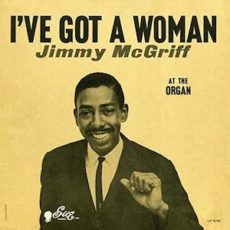
I’ve Got A Woman ~ Jimmy McGriff | By Eddie Carter
This morning’s subject of discussion to begin March is a 1962 Soul-Jazz album by organist Jimmy McGriff who steps into the spotlight with his debut, I’ve Got A Woman (Sue Records LP 1012/LPST 1012). He would make quite an impression on the jazz world in the early sixties. McGriff was twenty-six when he recorded it, and the title tune became his first of ten hits over the next three years. Accompanying him is his working trio at the time, Morris Dow on guitar and Jackie Mills on drums. The LP used in this report is a friend’s copy of the 1962 Mono deep groove release.
Side One kicks off with a rapid reworking of I’ve Got A Woman by Ray Charles. Jimmy takes flight on the song’s only solo with a vigorously spirited performance that sizzles to the rhythm section’s supplement into an enthusiastic fadeout.
On The Street Where You Live by Fredrick Loewe and Alan Jay Lerner offers a subtle change of pace from the previous cooker. It was written in 1956 and featured in the Broadway musical, My Fair Lady that year, and also in the 1964 film version. McGriff steers clear of the pitfall of imitation on the melody and song’s only statement with a quaint and very charming reading preceding the climax. Satin Doll by Duke Ellington, Johnny Mercer, and Billy Strayhorn was written in 1953. It’s one of Ellington’s most popular and recorded songs and is considered one of his best compositions in The Great American Songbook. Jimmy leads the threesome on the melody, then continues on a brief pretty solo. Morris delivers a short meaningful interlude with Jackie provides significant support into the ensemble’s climax.
Thelonious Monk is represented by the most famous of all his tunes, ‘Round Midnight was written in 1944 with Bernie Hanighen and Cootie Williams. It debuted on the album, Genius of Modern Music, Volume 1 (1952), and Miles Davis also recorded it under the title, Round About Midnight (1957). McGriff starts the song with a passionately majestic opening statement, then continues in that vein on a lead solo that’s the personification of elegance. Dow follows with a tender reading as affectionate as a loving embrace or kiss. McGriff returns for a final intimate thought culminating with a delightfully delicate finale. Jimmy’s original, All About My Girl expresses the highly elated and joyful feeling one has about that special woman in their life. The organist opens with an exhilarating statement, and Morris gives with a scintillating reading before the upbeat reprise and coda.
Side Two starts with a medium tempo blues by McGriff, M.G. Blues possessing a sassy attitude that the leader states proficiently in the opening chorus and song’s only solo. It’s a fun tune that’s full of high spirits and enhanced by the rhythm section’s groovy groundwork. Jimmy’s That’s The Way I Feel establishes a sanctified rhythm on the melody that would be perfectly at home in that setting. The trio begins the tune with an earthy, down-home flavor, then Jimmy swings hard on a short reading into the close. After Hours by Avery Parrish, Robert Bruce, and Buddy Feyne is the perfect blues for late-night listening. McGriff honors the 1946 jazz standard by reaching into the heart of the melody with a lengthy warm, affectionate performance that’s sure to bring tears to your eyes as the threesome disappears into nothingness.
Flying Home by Benny Goodman, Lionel Hampton, and Sid Robin was composed in 1939 during a cross-country flight while Hampton was a member of Goodman’s orchestra. Jimmy gives this ageless favorite a vigorously fast workout on the introduction, main theme, and opening statement. Jackie makes a brief comment in his only reading before Jimmy catapults the closing chorus into a rousing finale. McGriff gives a nod to his friend Jimmy Smith with a rocking performance of The Sermon that Smith recorded with an all-star group four-years earlier and released in 1959. McGriff gets good and funky on the lead solo at a swifter speed than the original. Dow fuels the next reading with an energized performance that cooks into McGriff’s return to express a bit more joy before the ending theme trails off into a slow fade.
On the strength of three hits, I’ve Got A Woman, All About My Girl, and M.G. Blues, Jimmy recorded six more albums for Sue Records that ultimately produced seven more hits for the label, making a convincing argument for his reputation as a Soul-Jazz organist. The date was engineered by Irving Greenbaum, and produced by label co-owners, Henry “Juggy” Murray, Jr. and Bobby Robinson. The sound quality is not up to the engineering level by Roy DuNann, Jack Higgins, and Rudy Van Gelder. However, it’s good enough to crank up the volume because the music radiates an infectious enthusiasm and is fun to listen to. If your musical appetite is craving some soul-food for your ears, I offer for your consideration, I’ve Got A Woman by Jimmy McGriff. It’s an appetizing dish of finger-popping, toe-tapping jazz organ that’s worth seeking out on your next vinyl hunt!
~ Genius of Modern Music, Volume 1 (Blue Note BLP 5002), Round About Midnight (Columbia CL 949/CS 8649), The Sermon (Blue Note BLP 4011/BST 84011) – Source: Discogs.com ~ After Hours, Flying Home, ‘Round Midnight, Satin Doll – Source: JazzStandards.com ~ On The Street Where You Live – Source: Wikipedia.org © 2021 by Edward Thomas Carter
More Posts: choice,classic,collectible,collector,history,instrumental,jazz,music,organ
Requisites
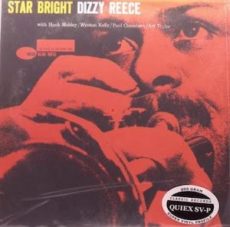
Star Bright ~ Dizzy Reece | By Eddie Carter 3.7.21
This morning’s choice from the library comes from a young man from Kingston, Jamaica. Alphonso Son Reece attended the Alpha Boys School where he began playing the baritone sax before switching to the trumpet at age fourteen. It’s also during this time where he got his nickname Dizzy, which had nothing to do with Dizzy Gillespie. He became a professional musician at sixteen and has played with some of the greatest jazz musicians in England, France, and the United States. Star Bright (Blue Note BLP 4023/BST 84023) was released in 1959 and is his third album as a leader following Progress Report (1957), and Blues In Trinity (1958). He’s backed on this date by three musicians he only knew from their records, Hank Mobley on tenor sax, Wynton Kelly on piano, and Paul Chambers on bass. Completing the quintet is Art Taylor on drums who played with Dizzy on Blues In Trinity. My copy used in this report is the 2003 Classic Records Mono audiophile reissue (BLP 4023 – BN 4023).
Side One starts at a relaxed tempo with The Rake, one of four tunes Reece composed for the 1958 British film, Nowhere To Go. The quintet opens with a laid-back stroll through the melody, and Dizzy lays down an easy-going opening solo. Hank follows with a reading so comfortable and cozy, you almost feel his warm personality coming from your speakers. Wynton glides into the closing statement gracefully with Paul and Art backing him leading to the reprise.
The pace picks up for the 1945 tune, I’ll Close My Eyes by Billy Reid and Buddy Kaye. Reid originally wrote this song as one of regret and remorse, but Kaye updated the lyrics, making the song upbeat. The trio creates the down-home atmosphere for the leader’s perfectly crafted opening chorus. Mobley begins with a stirring performance, followed by a spirited statement by Reece. Kelly achieves a wonderful groove on the next reading and Chambers walks with passionate precision on the climax.
The quintet takes a trip to Groovesville next, an impromptu blues by Dizzy beginning with the first of two statements by Wynton. The pianist opens this happy swinger with a blues-rooted energy that’s highly contagious. Dizzy takes charge next with a cheerfully buoyant interpretation, then Hank expresses his excitement on the third reading. Wynton picks up where he left off with a second clever statement preceding the front line splitting the closing chorus and the coda.
Side Two gets underway with Dizzy’s The Rebound, a medium-fast original that commences with the ensemble stating the melody collectively. Reece kicks things off with a feisty first reading, then Mobley takes the next spot, his tenor sax soaring with a soulful charm. Kelly answers enthusiastically with a high-spirited interpretation, and Chambers makes the final solo sparkle with a concise contribution before the ensemble takes the song out.
I Wished On The Moon was written in 1935 by Dorothy Parker and Ralph Rainger. It would become a big hit for Bing Crosby who recorded it that year with The Dorsey Brothers Orchestra. The group’s approach to this familiar evergreen is laid-back with Dizzy leading the trio through the carefree theme and finale with inspired interpretations by Dizzy, Hank, and Wynton who make it look so easy. Dizzy’s A Variation on Monk sets off at a brisk uptempo pace by Kelly, and the rhythm section evolves into a vigorous collective opening chorus. Mobley charges into the lead solo with an invigorating performance, then comes Reece who’s firing on all cylinders with an exhilarating statement. Kelly matches the front line’s intensity with a marvelous presentation that’s over too quickly. Taylor begins his only solo opportunity with an exchange of ideas between himself and both horns, then gives the final statement some vigorous brushwork ahead of the closing chorus.
A lot of thought and care went into the remastering of Rudy Van Gelder’s original tapes by Bernie Grundman of Bernie Grundman Mastering. The music is superbly recorded with a breathtaking soundstage and the instruments emerging from your speakers as if the musicians are playing right in front of you. The record was pressed on 200–gram Quiex SV–P Audiophile Vinyl with a flat–edge and deep groove on the label. It’s silent until the music begins. If you’re a fan of Hard-Bop from that magic year of 1959 and aren’t familiar with Dizzy Reece, I offer for your consideration, Star Bright, a stellar album that’s one of the brightest stars in his discography and one I can happily recommend for your library!
~ Blues In Trinity (BLP 4006/BST 84006), I Wished on The Moon (Decca 39857), Progress Report (Tempo Records TAP 9) – Source: Discogs.com ~ Alphonso Son Reece, I’ll Close My Eyes, I Wished on The Moon – Source: Wikipedia.org © 2021 by Edward Thomas Carter
More Posts: choice,classic,collectible,collector,history,instrumental,jazz,music,trumpet