

Requisites
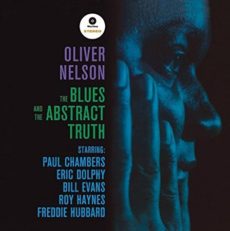
The Blues And The Abstract Blues is an album by jazz composer/arranger and saxophonist Oliver Nelson recorded in 1961 for the Impulse label. Rudy Van Gelder was the recording engineering, Chuck Stewart took the photograph and Pete Turner designed the cover.
The albums length is a mere 36 minute and 33 seconds long but remains Nelson’s most acclaimed album. It is an exploration of the mood and structure of the blues, though only some of the tracks are structured in the conventional 12-bar blues form.
All the songs are composed by Nelson Stolen Moments, Hoe-Down, Cascades, Yearnin’, Butch and Butch and Teenie’s Blues. The musicians on the session were Oliver Nelson on alto and tenor saxophone, Eric Dolphy on flute and alto saxophone, George Barrow on baritone saxophone, Freddie Hubbard on trumpet, pianist Bill Evans, bassist Paul Chambers and drummer Roy Haynes.
The most famous composition from the album, Stolen Moments, is also his most recorded and performed, both instrumental and vocal, by numerous artists such as Phil Woods, J.J. Johnson, Carmen McRae, Betty Carter, Frank Zappa, Mark Murphy, Ahmad Jamal, Booker Ervin, New York Voices, the United Future Organization and the Turtle Island Quartet, to name just a few.

More Posts: arranger,choice,classic,collectible,collector,composer,history,instrumental,jazz,music,saxophone
Daily Dose Of Jazz…
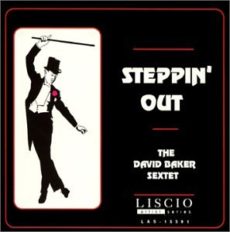
David Nathaniel Baker Jr. was born on December 21, 1931 in Indianapolis, Indiana and took up the trombone attending Crispus Attucks High School. He went on to matriculate through Indiana University, earning his Bachelor and Master degrees in Music, having studied with J. J. Johnson, János Starker, and George Russell.
His first teaching position was at Lincoln University in Jefferson, Missouri in 1955, a historic black institution, but Baker had to resign his position under threats of violence after he had eloped to Chicago, Illinois to marry white opera singer Eugenia (“Jeanne”) Marie Jones. Thriving in the Indianapolis jazz scene of the time, he was as a mentor of sorts to Indianapolis-born trumpeter Freddie Hubbard. Forced to abandon the trombone due to a jaw injury that left him unable to play, he subsequently learned to play cello.
The shift to cello largely ended his performing career but began his life as a composer and pedagogue. Among the first and most important people to begin to codify the then largely aural tradition of jazz he wrote several seminal books on jazz, including Jazz Improvisation in 1988. Baker taught in the Jazz Studies Department at Indiana University and made the school a highly regarded destination for students of jazz. His students included Michael Brecker, Randy Brecker, Peter Erskine, Jim Beard, Chris Botti, Jeff Hamilton, and Jamey Aebersold.
Baker’s compositions range from Third Stream to traditional to symphonic works. He composed some 2000 compositions, has been commissioned by over 500 individuals and ensembles, nominated for a Pulitzer and a Grammy award, honored three times by Down Beat magazine, and was the third inductee to their jazz Education Hall of Fame, as well as several other jazz awards.
Trombonist, cellist, composer and pedagogue David Baker, who performed with his second wife Lida, a flautist, since the Nineties and has more than 65 recordings, 70 books, and 400 articles to his credit, passed away on March 26, 2016, at age 84 at his Bloomington, Indiana home.


Review: Dangerus & The Freedom Fighters
Dangerus was born on March 26, 1990 in Uster, Switzerland to a Black American father and a Serbian mother, and the singer, lyricist, composer and bandleader grew up listening to rock, jazz, reggae and classical music that his father played in the house. In grammar school he sang songs in music class and sat at the feet of his father as he composed, often using melodies in his songs that his son would hum. These experiences became the foundation of his musical education and now this multi-faceted singer is adding piano to his musical arsenal.
In 2014 forming his band, The Freedom Fighters, he has brought together a multicultural and international sextet of accomplished musicians featuring Brazilian producer, arranger and keyboardist Julinho Martins, drummer Herby Casseley from Jamaica, jazz bassist Merlin Mathews of Portuguese and Canadian heritage, Chineyem Okolo, a guitarist from Nigeria and Severin Blaser, a Swiss jazz saxophonist.
Why Dangerus, is an often asked question when interviewed. The answer is quite simple. Break down his name to Danger and Us, you will understand his dis-ease. He believes his generation, like every generation before him, is in danger of inheriting a world that will not sustain them and is doing nothing to correct the situation. Poverty, oppression, hunger, genocide, the ecology and their very existence is in danger of implosion. This dynamic group of Freedom Fighters are socially and politically conscious of the destructive system that is ultimately threatening humanity. They also see themselves as one instrument of change and a danger to that very system of oppression and slavery. They are warriors of the light and music is their weapon, operating in the footsteps of Fela Kuti.
Their logo is a lion, known globally as the king of the jungle, the protector of the pride. His job, like the logo, is black and white. There is no grey area, but there are those who seek to undermine humanity for selfish gains, tending to operate in the grey between dawn and sunrise, dusk and sunset. In those cases, these warriors see themselves as guardians of their urban concrete jungle and the earth that has given them birth.
However, this is much more than a picture of a lion as it has symbolism well beyond. Look closely and one will see the lion’s teeth are his lethal weapons, represented by keyboards and guitars, the tongue is a road, implying the way of one’s journey. The nose and whiskers are two arms chained together, depicting unity, and holding the barb-wires of oppression that are his whiskers. The eyes are fire and they are the force to be unleashed upon the world through their music. The mane let’s all know they are descendants of royalty and their bearing is regal..
Never straying far from his cultural roots or the diaspora, Dangerus delivers his songs with a fervor and passion, inspired by the trials and triumphs of today’s world. If you listen closely you will hear the influences of reggae with jazz, ska, bossa nova and samba, in what can only be described as an homage to Bob Marley, Black Uhuru, Peter Tosh, Jimmy Cliff and others who spoke of love, beauty, strength, politics and freedom. Dangerus and the Freedom Fighters continue this tradition, standing on the shoulders of those musical ancestors.
It is evident that this poet is contemplative and compassionate in his search for answers about an unstable world not of his making that will be left for his generation. Those of us who have marched the decades of unrest and have witnessed the beauty of the world, this is familiar territory celebrating the joy and pain of love and life. We understand, it is their generation’s turn to shout at the consciousness of society the gravity of their situation. Highly recommended listening but only if you are ready to expand your mind and face your convictions.
carl anthony | notorious jazz / november 29, 2017
Give A Gift Of Jazz ~ Share 
#preserving genius
More Posts: bandleader,composer,history,instrumental,jazz,music,vocal
Review: Sweet Lu Olutosin ~ Meet Me At The Crossroads
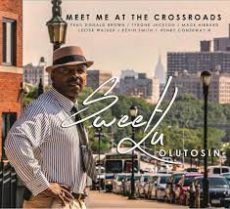
Meet Me At The Crossroads immediately conjured up the myth of Robert Johnson, who stood at that famed intersection awaiting the sale of his soul to the devil. However, experience has taught me not to merely accept the obvious and with Lutalo Olutosin this is far from that legendary tale. Upon listening, the avid jazz devotee will quickly recognize the appropriateness of the title. What is gifted here is more of a convergence than a meeting. This is not a random gathering of songs but a carefully considered compendium. If there is any convention connected to this body of work, it is that this project has touched the soul of wisdom and versatility.
History meets style that goes well beyond this vocalist’s sense of fashion, though he continually pays homage to a time when musicians dressed to kill. The style of which I speak is his choice of compositions and the myriad of genres he presents as he travels through music’s evolution during the last century.
Affectionately known by his stage moniker Sweet Lu, he dives right in with the pacesetter Still Swingin’ that says it all for the tempo but leaves something to be desired in the story as he recognizes the past and reiterates that it ain’t over yet. He immediately switches gears and drops down to an outpouring of love that would melt any heart with a soulful rendition a la Eddie Levert on Love You More Than You Ever Know. I was immediately taken with a Roy Ayers like arrangement of How They Do That telling our stories of great determination and triumph over adversity.
Walking the wooden planks laid end to end across the backwater at the edge of the swamp, Lu’s vocal version of Intimacy of the Blues takes us to a juke joint envisioned in an atmosphere of an Ernie Barnes painting or Harpo’s Place as he belts out Sister Sadie’s Blues and how she turns a head and a heart. It is evident Sadie has been around a few joints in her life and one can imagine the crowd bumping and grinding through a hot and sticky night and singing and hand-clapping to a fervor pitch in church. Skin Game eradicates the lines of color and evens the playing field for humanity’s acceptance of each other. One unlucky traveler is set on the straight and narrow because Granny said it and nobody’s word is more trusting than hers.
Dancea Swing A Nova moves easily through a dream world of a dancer who woos a young man and teaches him about life with a bossa rhythm. Lu bravely embraces the classic Lou Rawl’s tune You’ll Never Find and intuitively arranges it to make it his own, adding a little more jazz to this rhythm and blues mix. Tunji Baby is a mid-tempo groove that hurts so bad with the pain of desire but everything about her is tantalizingly sexy and exquisitely distressful but he refuses to give it up. Where I come from we call that love and happy to be in it.
If one is responsible for his craft then he must delve into the classics and for this outing Sweet Lu respectfully delves into the catalogue of tenor great Joe Henderson and retrieves Recorda Me, pens lyrics, sings and scats his way across the charts of Don’t Forget To Remember. This is just one of the six songs he composed and or penned lyrics for on this project, adding the talents of Kevin Mahogany, Al Kooper, Antonio Ciacca, along with the venerable Kenny Gamble and Leon Huff. And for those listeners who enjoy singing, he reprises two sing along tracks of Skin Game and How They Do That.
Let us not be bereft of our responsibility to acknowledge his powerhouse assemblage of musicians that reflects Atlanta’s finest with pianist Tyrone Jackson and Marty Kearns, trumpeter Lester Walker, saxophonist Mace Hibbard, bassist Kevin Smith, drummer Henry Conerway III, and legendary jazz pianist Donald Brown. Adding a little spice to the mix is vocalist Crystal Mone’t who we hear in all her splendor on How They Do That, Skin Game and You’ll Never Find. Not limiting his musicians to simply add their instrumental thoughts to the musical conversation, he collaborated with Tyrone, Antonio, Donald and also enlists the talents of Dwight Andrews to bring fresh arrangements to those borrowed songs and his original compositions.
To call Sweet Lu a griot is an understatement. He is a wise sage imparting age old lessons by deftly infusing our cultural history and family values utilizing a tapestry of blues, gospel and jazz that are pure entertainment from beginning to end. The messages are all too familiar but like that loving elder we all grew up with, he delivers them in different ways for a new generation. There is more here that meets the ear and the eye, so take a listen and your perspective on life may be altered.
carl anthony | notorious jazz | march 5, 2017
Give A Gift Of Jazz ~ Share
#preserving genius
More Posts: bandleader,composer,history,instrumental,jazz,music,vocal
Daily Dose Of Jazz…
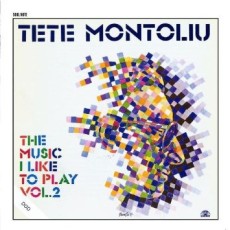
Tete Montoliu was born Vicenç Montoliu i Massana on March 28, 1933 in the Eixample district of Barcelona, Spain. Born blind, he was the only son of Vicenç Montoliu, a professional musician) and Àngela Massana, a jazz enthusiast, who encouraged her son to study piano. He first began piano lessons under Enric Mas at the private school for blind children that he attended from 1939 to 1944. By 1944, his mother arranged for Petri Palou to provide formal piano lessons.
From 1946 to 1953 Montoliu studied music at the Conservatori Superior de Música de Barcelona, where he also met jazz musicians and became familiar with the idiom in jam sessions. During the early stages of his career, Montoliu was particularly influenced by the music of pianist Art Tatum, although he soon developed a distinctive style.
He began playing professionally in Barcelona pubs where noticed by Lionel Hampton in 1956 he began touring with Hampton throughout Spain and France. After the tour Tete recorded Jazz Flamenco, setting off a prolific international career. In the 1960s, he played in various New York City concerts and established collaborations with drummer Elvin Jones and bassist Richard Davis.
The Seventies saw him traveling extensively throughout Europe, consolidating his reputation as a main referent in the hard bop movement. During the 1980s, he played numerous concerts, collaborating with Dexter Gordon, Johnny Griffin, Joe Henderson, Dizzy Gillespie, Chick Corea, Hank Jones, Roy Hargrove and Jess Davis, to name a few.
The man from Catalonia, pianist Tete Montoliu was given a public tribute by Spain in 1996 for his fifty-year career in jazz. He passed away the following year on August 24, 1997 in Barcelona. He left the jazz world an estimated catalogue of 52 albums as a leader and another 21 as a sideman with Anthony Braxton, Nuria Feliu, Dexter Gordon, Eddie Harris, Rahsaan Roland Kirk, Charlie Mariano, Jordi Sabates, Archie Shepp, Lars Gullin, Buddy Tate, and Ben Webster.

Inspire A Young Mind

More Posts: bandleader,composer,history,instrumental,jazz,music,piano