

Daily Dose Of Jazz…
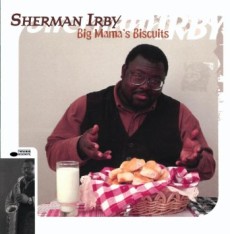
Sherman Irby was born and raised in Tuscaloosa, Alabama on March 24, 1968. He found his calling to music at age 12 and in high school he played saxophone and recorded with gospel immortal James Cleveland. Graduating from Clark Atlanta University with a B. A. in Music Education, in 1991, he joined Johnny O’Neal’s Atlanta-based quintet.
1994 saw Irby moving to New York City and immediately became a part of the jazz scene at Smalls jazz club. Catching the attention of Blue Note Records. He subsequently recorded his first two albums, Full Circle in 1996 and Big Mama’s Biscuits in 1998 on the label. He toured the U.S. and the Caribbean with the Boys Choir of Harlem in 1995, and was a member of the Jazz at Lincoln Center Orchestra from 1995 to 1997. During that tenure, he also recorded and toured with Marcus Roberts, Roy Hargrove and was part of Betty Carter’s Jazz Ahead Program.
After a four-year stint with Roy Hargrove, he focused on his own group, in addition to being a member of Elvin Jones’ ensemble and Papo Vazquez’s Pirates Troubadours. Since 2003, Irby has been the regional director for the Jazz Masters Workshop, mentoring young children, and a board member for the CubaNOLA Collective. Saxophonist and composer Sherman Irby formed Black Warrior Records and has released Black Warrior, Faith, Organ Starter and Live at the Otto Club under the new label. Post-bop alto saxophonist Sherman Irby has re-joined Jazz At Lincoln Center Orchestra with Wynton Marsalis and currently continues to perform with his quartet and his group Organomics.

Put A Dose In Your Pocket

More Posts: bandleader,composer,history,instrumental,jazz,music,saxophone
Daily Dose Of Jazz…
William Russell was born Russell William Wagner on February 26, 1905 in Canton, Missouri. He learned to play the violin and throughout his career contributed to many a performance. When he decided to become a classical music composer he changed his name, transposing first and second and dropping his last.
He was a leading figure in percussion music composition, influenced by his acquaintances John Cage and Henry Cowell. In turn, he also influenced Cage, in his emphasis of percussion. During the 1930s, predating Cage’s main work, Russell’s percussion works called for vernacular textures such as Jack Daniels bottles, suitcases, and Haitian drums, and pianos.
One notable performance of his Fugue For Eight Percussion Instruments took place in 1933 at Carnegie Hall, with the ubiquitous and influential critic-writer-performer Nicholas Slonimsky conducting. These performances took place under the auspices of the Pan-American Association of Composers, an organization that was composed of Cowell, Slonimsky Ruth Crawford Seeger, Edgard Varese and other luminaries of American ultra-modernism.
Bill was also one of the leading authorities on early New Orleans jazz, authoring articles and books, including three essays in the milestone book, Jazzmen and the voluminous 720-page Jelly Roll Morton scrapbook, Oh, Mr. Jelly. He made many recordings of historical interest, founded American Music Records, helping bring many forgotten New Orleans performers, including Bunk Johnson back to public attention and became an important force in the New Orleans jazz revival of the early 1940s.
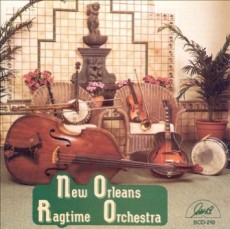
Moving to the French Quarter of New Orleans in 1956, he opened a small record shop from which he also repaired violins. Russell played violin with the New Orleans Ragtime Orchestra, co-founded and became the first curator of The Hogan Jazz Archive at Tulane University in 1958,
Russell collected a large quantity of material related to the history of New Orleans, early jazz, ragtime, blues, and gospel music, all of which he kept in his French Quarter apartment. During his lifetime he always was willing to share access to the material with serious researchers.
At his death on August 9, 1992, Bill Russell, the single most influential figure in the revival of New Orleans jazz that began in the 1940s, bequeathed his collection to the Historic New Orleans Collection, where it continues to be a valuable resource for researchers in the city that became his last home.
Jazz Is Global – Share
Daily Dose Of Jazz…
Alec Wilder was born Alexander Lafayette Chew Wilder in Rochester, New York on February 16, 1907 into a prominent family that now has a building bearing the family name. As a young boy, he traveled to New York City with his mother and stayed at the Algonquin Hotel that would later become his home for the last 40 or so years of his life. Unhappily attending several prep schools as a teenager, he hired a lawyer and essentially “divorced” himself from his family, gaining for himself some portion of the family fortune.
Wilder was largely self-taught as a composer; he studied privately with the composers Herman Inch and Edward Royce, who taught at the Eastman School of Music in the 1920s, but never registered for classes, never received his degree but eventually was awarded an honorary degree in 1973. While there, he edited a humor magazine and scored music for short films directed by James Sibley Watson.
Alec would eventually become good friends with Frank Sinatra, Peggy Lee, Tony Bennett and others in the American pop canon. He wrote hits like his most famous song “I’ll Be Around” (lyrics also), as well as “While We’re Young”, “Where Do You Go” and “Trouble Is A Man”.
Over the years Alec worked with lyricists Loonis McGlohon, William Engvick, Fran Landesman and Johnny Mercer. Not tied to popular song, Wilder composed classical pieces, operas, jazz influenced numbers for television, songs for a theme park and arranged a series of Christmas carols. He wrote the definitive book American Popular Song: The Great Innovators, 1900–1950.
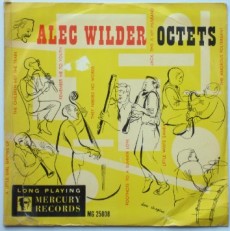
His love of puzzles led him to create his own cryptic crosswords and spend hours on jigsaw puzzles. He would compose music for twelve operas, four musicals, six films, two large ensembles, and twenty-two songs. His octet, that included Eastman classmate Mitch Miller, would record many of his compositions.
Composer Alec Wilder passed away on December 24, 1980 at age 73 in Gainesville, Florida and is buried in Avon, New York, outside his hometown of Rochester.
Dose A Day – Blues Away
More Posts: composer
Daily Dose Of Jazz…
Gary McFarland was born in Los Angeles, California on October 23, 1933. An influential composer, arranger, vibraphonist and vocalist, he made a name for himself on Verve and Impulse Records during the Sixties, making one of the more significant contributors to orchestral jazz. He attained a small following after working with Bill Evans, Gerry Mulligan, Johnny Hodges, John Lewis, Stan Getz, Bob Brookmeyer and Anita O’Day.
His debut as a leader came in 1961 with the Jazz Version of How To Succeed In Business Without Really Trying. Gary recorded for Skye, Buddah and Cobblestone Records through the 1960s into the early Seventies. As well as eighteen of his own albums as a leader and arrangements for other musicians such as Lena Horne, Steve Kuhn, Gabor Szabo, John Lewis, Shirley Scott, Zoot Sims and Gary Burton, he composed the scores to the films Eye of the Devil in 1968 and Who Killed Mary What’s ‘Er Name in 1971.
By the end of the 1960s McFarland was moving away from jazz towards an often wistful or melancholy style of instrumental pop, as well as producing the recordings of other artists on his Skye Records label, run in partnership with Szabo and Cal Tjader until its bankruptcy in 1970.
Gary McFarland and Louis Savary wrote the classic song Sack Full Of Dreams that was first released by Grady Tate in 1968. He was considering a move into writing and arranging for film and stage when on November 3, 1971 he was poisoned with methadone in a New York City bar at the tender age of 38. In tribute Bill Evans performed Gary’s Waltz in 1979, shortly before his own death.
Jazz Is Global – Share
More Posts: arranger,composer,vibraphone,vocal
Daily Dose Of Jazz…
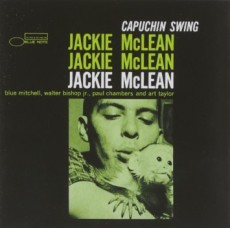
Jackie McLean was born John Lenwood McLean on May 17, 1931 in New York City. His father played the guitar in Tiny Bradshaw’s orchestra and started the young man’s musical education until he was eight when the senior John passed away. His godfather, his stepfather who owned a record store and several noted teachers continued his education. He received informal training by neighbors Thelonious Monk, Bud Powell and Charlie Parker.
In high school Jackie played in a band with Kenny Drew, Sonny Rollins and Andy Kirk Jr. By the time he was twenty he was playing alongside Rollins on Miles Davis’ Dig album and went on to record with Gene Ammons, Charles Mingus, George Wallington and to become one of Art Blakey’s Messengers, joining the group after reportedly being punched by Mingus and pulling a knife on the bassist. Fortunately for the jazz world no one was stabbed.
Throughout his early career he was addicted to heroin, which resulted in the loss of his New York City cabaret card. To make a living he undertook a large number of session dates that produced an extensive body of recorded work in the 1950s and 1960s. He recorded for Prestige, then Blue Note both as a leader and sideman. His early recordings as leader were in the hard bop school but later McLean became an exponent of modal jazz without abandoning his foundation in hard bop. His adaptation of modal jazz and free jazz innovations to his vision of hard bop made his recordings from 1962 on distinctive.
He worked with the greats of the time not limited to Donald Byrd, Sonny Clark, Lee Morgan, Ornette Coleman, Dexter Gordon, Freddie Redd, Billy Higgins, Freddie Hubbard, Grachan Moncur III, Bobby Hutcherson, Mal Waldron, Chalres Tolliver, Tony Williams, Michael Carvin, Carl Allen, Bill Hardman, Larry Wilis and Tina Brooks.
By 1967 he abandoned recording for touring and the following year started his teaching career at The Harrt School at the University of Hartford. He would establish the university’s African American Music Department that evolved into the Jackie McLean Institute of Jazz) and its Bachelor of Music degree in Jazz Studies program.
Along with his wife Dollie, they founded the Artists Collective, Inc. of Hartford, and his bands were drawn from his students including Steve Davis, his adopted son Rene and pianist Mark Berman. He received an American Jazz Masters fellowship from the National Endowment for the Arts, inducted into the DownBeat Hall of Fame, and a biography titled Sugar Free Saxophone, as well as numerous other national and international awards. McLean is the only American jazz musician to found a department of studies at a University and a community-based organization almost simultaneously and they each have existed for over three decades.
After a long illness, alto saxophonist, composer, educator and bandleader Jackie McLean passed away on March 31, 2006 in Hartford, Connecticut.
Take A Dose On The Road