

Daily Dose Of Jazz…
Carmell Jones was born in Kansas City, Kansas on July 19, 1936 and was reared by parents how were both teachers. He became interested in music and jazz, by his own admission, at the age of two. Piano lessons began at age five, gave way to the “that’s for sissy’s attitude” and trumpet started at seven.
He spent two years in the army followed by two years at the University of Kansas as a music education and trumpet major. Leaving the Midwest for the Pacific coast, he became a California studio musician in 1960 recording with such artists as Sammy Davis Jr., Bob Hope, and Nelson Riddle. During this chapter in his success story, he was being compared to Clifford Brown and Fats Navarro. Carmell developed a close association with Bud Shank as a member of his quintet. He recorded with many other notables and most importantly he recorded his first album under his own name and contract with Pacific Jazz – “The Remarkable Carmell Jones”.
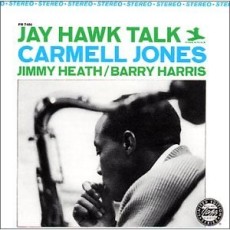
In ‘64 moving to New York he joined the Horace Silver Quintet recording three albums with Silver including “Song For My Father”. Down Beat Magazine awarded Jones the designation of “New Star Trumpeter” and signing with Prestige, he recorded what he considers his most successful personal album, “Jay Hawk Talk”, with pianist Barry Harris, tenor Jimmy Heath, drummer Roger Humphreys and bassist Teddy Smith. This album received the critics 5 Star Best Album Award.
The next year Carmell left the U.S. for Germany and spent the next fifteen years working with Milo Pavlovic, Herb Geller, Leo Wright and Eugene Cicero, the SFB Big Band and Radio Free Berlin recording 8 hours a day, composing and arranging for radio, TV and film. Upon his return to the States he devoted much of his time building new musicians from the ground up teaching music in his hometown elementary schools.
Carmell Jones, trumpeter, composer, arranger, music publisher, educator and recording artist with over sixty albums to his credit passed away in Kansas City, Kansas on November 7, 1996.

Daily Dose Of Jazz…
Uri Caine was born June 8, 1956 in Philadelphia, Pennsylvania and began playing piano at seven, studying with French jazz pianist Bernard Peiffer at 12. He later studied at the University of Pennsylvania and gained great familiarity with classical music and worked in clubs around the city.
His professional career started in 1981 and a mere four years later saw his debut with the Rochester-Gerald Veasley band recording session. During the decade he moved to New York City, appeared on a klemzer album with Mickey Katz and played with Don Byron and Dave Douglas.
Caine has recorded 16 albums and is celebrated for his eclectic and inventive interpretations of the classical repertoire. His 1997 jazz tribute to Gustav Mahler received an award from the German Mahler Society, while outraging some jury members. Caine has also reworked Bach, Beethoven, Wagner, Schumann and Mozart.
In 2001 he teamed up with drummer Zach Danziger to conceive an original project fusing live jungle and drum ‘n’ bass beats with fusion jazz called “Uri Caine Bedrock 3” and he worked with Ahmir “Questlove” Thompson of The Roots, Christian McBride, Pat Martino and Jon Swana.
Jazz pianist and composer Uri Caine has been named Composer-in-Residence of the Los Angeles Chamber Orchestra, has received a nomination for a Grammy, been named U.S. Artists Fellow, has recorded twenty-eight albums as a leader and continues to perform and tour.
Daily Dose Of Jazz…
Oliver Edward Nelson was born on June 4, 1932 in St. Louis, Missouri. His brother played sax with Cootie Williams and his sister sang and played piano. He began playing the piano when he was six, the saxophone by eleven and by age 15 he was playing in territory bands around St. Louis. In 1950 he joined Louis Jordan’s big band, playing alto saxophone and arranging.
After military service Nelson returned to Missouri to study music composition and theory at Washington and Lincoln University graduating in 1958. He married, had a son, divorced, moved to New York City, and began playing with Erskine Hawkins and Wild Bill Davis, and arranged for the ApolloTheatre. In 1959 he briefly worked the West coast with Louie Bellson’s big band and played tenor for Quincy Jones.
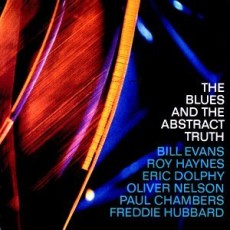
After six albums as leader between 1959 and 1961 for Prestige with Kenny Dorham, Johnny Hammond Smith, Eric Dolphy, Roy Haynes and others. Oliver’s big break came with his Impulse album The Blues and The Abstract Truth featuring his now classic standard “Stolen Moments”. Propelling him into prominence as a composer and arranger, it opened up opportunities to arrange for Cannonball Adderley, Irene Reid, Sonny Rollins, Billy Taylor, Wes Montgomery, Johnny Hodges and many others.
Moving to Los Angeles in 1967 Nelson spent a great deal of time composing for television shows like Colombo, Ironside, Bionic Woman and films like Death of a Gunfighter and Last Tango In Paris. He produced for Nancy Wilson, James Brown, the Temptations and Diana Ross.
Less well-known is the fact that Nelson composed several symphonic works, and was also deeply involved in jazz education, returning to his alma mater, Washington University, in the summer of 1969 to lead a five-week long clinic that also featured such performers as Phil Woods, Mel Lewis, Thad Jones, Sir Roland Hanna, and Ron Carter.
Oliver Nelson, saxophonist, clarinetist, pianist, arranger and composer died of a heart attack on October 28, 1975, aged 43.
Daily Dose Of Jazz…
Lennie Niehaus was born June 1, 1929 in St. Louis, Missouri. A musical family heralded a concert pianist sister and a father who was an excellent violinist who started his son on the violin at seven, then switched to the bassoon. At 13 he began learning the alto saxophone and clarinet.
Always interested in composing and writing music Lennie studied music in college and in 1946 began playing professionally with Herb Geller, Herbie Steward and Teddy Edwards in 1946. Six months later he joined Stan Kenton, then drafted in 1952 but two years late rejoined Kenton after his discharge.
Leaving Kenton in 1959, Niehaus began composing, moved back to Los Angeles and arranged for the King Sisters, Mel Torme, Dean Martin, and Carol Burnett. Three years later saw him orchestrating for film composer Jerry Fields, a relationship that yielded more than sixty TV shows and films.
He orchestrates his own pieces and never forgets his jazz roots in film, writing jazz and using jazz musicians like Marshall Royal, Bill Perkins, Pete Jolly, Mike Land, and Clint Eastwood. He was the musical director for the Charlie Parker bio-feature, Bird.
After many years of not playing his alto saxophone at all, Niehaus returned to performing, reportedly in top form. He continues to arrange, compose and play alto on the West Coast jazz scene.
Daily Dose Of Jazz…
Charles Earland was born in Philadelphia, Pennsylvania on May 24, 1941 and learned to play the saxophone in high school. By age 17 he was playing tenor with Jimmy McGriff and in 1960 started his first group. He didn’t start playing the organ until after a stint with Pat Martino, then joined Lou Donaldson’s band until 1969.
Earland led a successful group in 1970 that included Grover Washington, Jr. and he eventually started playing the soprano saxophone and synthesizer but it was his simmering organ grooves the earned him the nickname “The Mighty Burner”.
In 1978 Earland hit the disco/club scene with “Let the Music Play” written by Randy Muller from Brass Construction. The record hit the U.S. charts for 5 weeks and reached number 46 in the U.K. Singles chart. From 1988 he traveled extensively performing worldwide with one of his many career highlights being to play the Berlin Jazz Festival in 1994.
He continued to perform throughout the U.S. and abroad until his death from heart failure in Kansas City, Missouri at the age of fifty-eight on December 11, 1999. Charles Earland, The Mighty Burner, was a composer, organist, and saxophonist in the soul jazz idiom.