

Daily Dose Of Jazz…
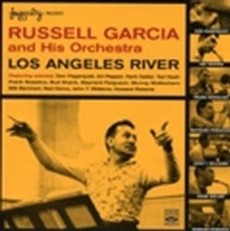
Russell Garcia was born April 12 1916 in Oakland, California but for most of his life has resided in New Zealand. The self-taught musician with only a few lessons in high school could read music from a very young age. He began his career at age five when one of his brothers bought him a $5 cornet. In school he started up a jazz band so he could play his horn and it became an outlet for his compositions and arrangements.
When Garcia was eleven the Oakland Symphony Orchestra performed his arrangement of Stardust and by high school was playing five nights a week. After a year at San Francisco State University he dropped out and went on the road with several big bands. Finding no satisfaction in his progress he went to Hollywood and studied composition, harmony, orchestration, counterpoint and form with the best teachers and took lessons on every instrument so he could write for each with a deeper awareness. During that time while still in his twenties he conducted the West Hollywood Symphony Orchestra, preparing him for things to come.
Russell’s big break came in 1939 when he took the job of composer/conductor for “This Is Our America” and impressed then director Ronald Reagan, who in turn, recommended him to NBC. From that point on worked poured in. He worked with Henry Mancini on the Glenn Miller Story, Charlie Chaplin, Universal Studios, arranged and conducted Louis Armstrong and Ella Fitzgerald’s “Porgy & Bess”, then followed up with three more albums with Armstrong.
Always the innovator Garcia left Hollywood for jazz and using experimental frameworks assembled his groundbreaking four-trombone band with famed brass players Frank Rosolino, Tommy Pederson, Maynard Ferguson and Herbie Harper and Marty Paich. He recorded over sixty albums under his own name, as well as composing for Stan Kenton’s cutting edge Neophonic Orchestra. He collaborated with Frances Faye, Anita O’Day, Mel Torme, Andy Williams, Judy Garland, Orson Welles, Julie London and Oscar Peterson.
In 1966 he walked away from his success in music to advocate world peace, a promise he made to himself after surviving World War II’s Battle of the Bulge. He continues to lecture and record around the globe and has authored what is considered the definitive textbooks on composition, “The Professional Arranger Composer Books I and II” used in universities and conservatories worldwide. Composer and arranger Russell Garcia passed away on November 19, 2011.

Daily Dose Of Jazz…
James Moody was born March 26, 1925 in Savannah, Georgia but grew up in New Jersey. He was attracted to the saxophone after hearing George Holmes Tate, Don Byas, and Count Basie. Joining the U.S. Air Force in 1943 he played in the “Negro Band” on the segregated base. Following his discharge, he began playing bebop with Dizzy Gillespie for two years. One of his colleagues was Kenny Barron, who would become an important collaborator.
He recorded his first record for Blue Note in 1948, the first in a long career playing both saxophone and flute. Relocating to Europe for three years stating he had been scarred by racism in the U.S., it was during this period that his acclaimed hit “Moody’s Mood For Love” was recorded and he added the alto to his repertoire. Returning to the States in 1952 he recorded with Prestige, played flute and sax with Pee Wee Moore and by the 60’s rejoined Dizzy.
Throughout the seventies he worked in Las Vegas show bands before returning to jazz as a leader and playing with the Lionel Hampton’s Golden Men Of Jazz. Preferring the tenor, Moody alternates with the alto and adding flute on many of his recordings.
The octogenarian continued to be a globetrotter with his quartet featuring pianist Renee Rosnes, bassist Todd Coolman and drummer Adam Nussbaum. He is a member of the Dizzy Gillespie Alumni All-Stars Big Band, often collaborating with conductor Jon Faddis, and worked alongside Jon in the WDR Big Band in Cologne, Germany. James Moody has been an institution in jazz since the 1940’s playing tenor, flute and occasionally the alto saxophone.
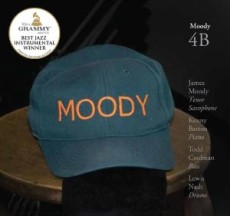
Saxophonist, flautist and composer James Moody passed away of complications from pancreatic cancer at age 85 in San Diego, California on December 9, 2010. Two months later he was posthumously awarded the Grammy Award for Best Jazz Instrumental Album for his recording “Moody 4B”, and named in his honor, the New Jersey Performing Arts Center hosts the James Moody Democracy of Jazz Festival.
Daily Dose Of Jazz…
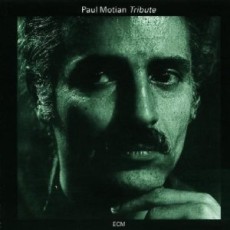
Paul Motian was born Stephen Paul Motian on March 25, 1931 in Philadelphia, Pennsylvania but was raised in Providence, Rhode Island. After playing guitar during his childhood, he started the drums at twelve, which led to his eventual touring New England with a swing band, followed by enlisting in the Navy during the Korean War.
A professional drummer since 1954, Motian came to prominence in the late 50’s in the Bill Evans band from 1959 to 1964. He briefly played with Thelonious Monk, then in the sixties played with Paul Bley, Keith Jarrett, Lennie Tristano, Warne Marsh, Joe Castro and Arlo Guthrie, Carla Bley, Charlie Haden and Don Cherry. As his career progressed Paul went on to play with many great jazz musicians.
From the seventies on Motian became an important composer and bandleader and by the early 80’s was leading a trio featuring guitarist Bill Frisell and saxophonists Joe Lovano. The trio invited occasional guest appearances from the likes of Lee Konitz, Charlie Haden, Dewey Redman, Geri Allen and others.
Paul continued to have an affinity for his first instrument, the guitar, leading the Electric Bebop Band featuring two and sometimes three electric guitars, while his other groups were absent of piano most times, working in an array of contexts. He played an important role in freeing the drummer from the strict duty of timekeeping. Drummer, percussionist and composer Paul Motian passed away on November 22, 2011 at the age of 80 in Manhattan, New York.

More Posts: bandleader,composer,drums,guitar
Daily Dose Of Jazz…
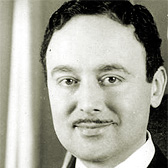
Peter DeRose was born on March 10, 1900 in New York City and as a boy exhibited a gift for music. His older sister taught him to play piano but composing was his true love and by 18 had published his first song. After high school he worked as a music store stock clerk but his successful 1920 composition “When You’re Gone, I Won’t Forget” led him to a job with Italian music publisher G. Ricordi & Company.
In 1923 he met his soon to be wife May Singhi Breen and the duet of piano and ukulele became popular entertainment on NBC’s musical radio show “Sweethearts of the Air” which ran for sixteen years. The show also offered a spotlight for DeRose to introduce many of his compositions.
Collaborating with lyricists Charles Tobias, Al Stillman, Carl Sigman and Billy Hill some of his best known works were “Somebody Loves Me”, Wagon Wheels, Rain, Lamp Is Low, On A Little Street In Singapore and Deep Purple. His songs have been performed by the likes of Bing Crosby, Paul Robeson, Ella Fitzgerald, Frank Sinatra, Johnny Mathis, Sarah Vaughan and Duke Ellington among others.
He wrote religious sheet music; composed for the 1941 Ice Capades show and ventured into Hollywood scoring music for several motion pictures. In 1970 he was inducted into the Songwriters Hall Of Fame.
The Hall of Fame composer of jazz and pop during the Tin Pan Alley era, composer Peter DeRose passed away on April 23, 1953 in his hometown of New York City.
More Posts: composer
Daily Dose Of Jazz…
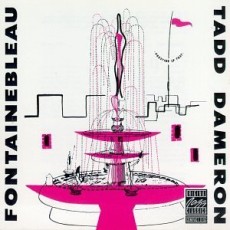
Cleveland, Ohio was the birthplace of Tadley Ewing Peake Dameron on February 21, 1917. Tadd as he was known in the jazz world became the definitive arranger/composer of the bop era writing such standards as “Good Bait,” “Our Delight,” “Hot House,” “Lady Bird,” and “If You Could See Me Now.” Not only did he write melody lines, he also wrote full arrangements. Though he never financially prospered, Dameron was an influential force from the mid-’40s till his death.
Dameron started out in the swing era touring with the Zack Whyte and Blanche Calloway bands, he wrote for Vido Musso in New York and most importantly, contributed arrangements for Harlan Leonard’s Kansas City Orchestra, some of which were recorded.
Soon he was writing charts for such bands as Jimmie Lunceford, Count Basie, Billy Eckstine, and Dizzy Gillespie (1945-1947) in addition to Sarah Vaughan. Always very modest about his own piano playing but he did gig with Babs Gonzales’ Three Bips & a Bop in 1947 and led a sextet featuring Fats Navarro at the Royal Roost during 1948-1949.
Dameron co-led a group with Davis at the 1949 Paris Jazz Festival, stayed in Europe for a few months (writing for Ted Heath), and then returned to New York. He wrote for Artie Shaw’s last orchestra that year, played and arranged R&B for Bull Moose Jackson (1951-1952) and in ‘53 led a nonet featuring Clifford Brown and Philly Joe Jones.
He also led bands that included Dexter Gordon, Sonny Rollins and Wardell Gray. Drug problems, however, started to get in the way of his music. After recording a couple of albums including 1958’s Mating Call with John Coltrane, drug addiction caused him to spend much of 1959-1961 in jail. After he was released, Dameron wrote for Sonny Stitt, Blue Mitchell, Milt Jackson, Benny Goodman, suffered several heart attacks and diagnosed with cancer from which he would eventually succumb to on March 8, 1965 in New York City.