

Daily Dose Of Jazz…
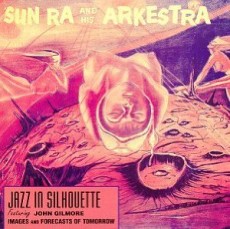
Sun Ra was born Herman Poole Blount in Birmingham, Alabama on May 22, 1914 and as a child was a skilled pianist. By twelve he was writing original songs and could sight read sheet music. With Birmingham being an important stop for touring musicians, during his childhood he was able to see famed musicians like Fletcher Henderson, Duke Ellington and Fats Waller.
By his teenage years he was producing from memory full transcriptions of big band songs he had heard and began playing semi-professional solo piano in ad hoc jazz bands. Attending Birmingham Industrial High School he took lessons the tutelage of John T. “Fess” Whatley, a demanding disciplinarian and producer of many professional musicians.
Claiming that he was of the “Angel Race” and not from Earth, but from Saturn, Sun Ra developed a complex persona of “cosmic” philosophies and lyrical poetry that made him a pioneer of “afro-futurism” as he preached awareness and peace above all. He abandoned his birth name and took on the name and persona of Sun Ra (Ra being the ancient Egyptian god of the sun).
From the mid-1950s to his death, Sun Ra led “The Arkestra”, an ensemble with an ever-changing lineup and names, asserting that the ever-changing name of his ensemble reflected the ever-changing nature of his music. His mainstream success was limited, but Sun Ra was a prolific recording artist and frequent live performer with music ranged from keyboard solos to big bands of over 30 musicians and music touching on virtually the entire history of jazz, from ragtime, swing, bebop, free improvisation, electronic and space music.
Sun Ra had several music periods during his lifetime – late 30s creating a conservatory workshop in his family home, conscientious objector during the war years, Chicago playing blues and jazz with Fletcher Henderson, Coleman Hawkins and Stuff Smith, New York Monday night gig at Slug’s Saloon and praise from Dizzy Gillespie and Thelonious Monk, and Philadelphia that would be the base of operations for the Arkestra until his death.
Sun Ra known for his “cosmic philosophy, musical compositions and performances was inducted into the Alabama Jazz Hall of Fame in 1979. The prolific Jazz composer, bandleader, piano and synthesizer player, poet and philosopher passed away on May 30, 1993, at 79.
Daily Dose Of Jazz…
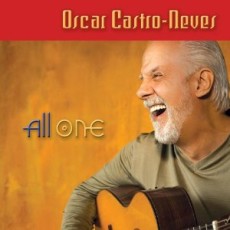
Oscar Castro-Neves was born one of triplets on May 15, 1940 in Rio de Janiero. Discovering his interest in music at an early age, by six he was playing the little viola and the cavaquinho and forming a band with his brothers. He found his musical interest in the synthesis of European classical influenced altered chords with the bittersweet samba-cancao.
He would learn from Johnny Alf who was deeply influenced by jazz, as would all musicians who chose the path to bossa nova. However it wasn’t until the 60s that it would catch on and in 1962 he was part of the historic Carnegie Hall Bossa Nova Festival.
Soon after he befriended Paul Winter and recorded his debut Oscar! on Paul’s label Living Music. That recording led to other sessions as a leader and performances with the likes of Vinicius de Moraes, Dorival Caymmi, and Quarteto em Cy. In 1966 he recorded with Tom Jobim on his Apresenta album before joining Sergio Mendes and Brazil 66 and recording Fool On The Hill. Having recorded three albums, he had already gained immediate fame blending commercially Brazilian, jazz and American pop.
As an arranger he has worked for Quincy Jones, Flora Purim, Laurindo Almeida, Joao Gilberto, played with Yo Yo Ma, Michael Jackson, Barbra Streisand, Toots Thielemans, Stevie Wonder, John Klemmer and Stan Getz and been involved in projects with Dave Grusin, Herbie Hancock and Michael Brecker.
Guitarist Oscar Castro-Neves continues to record, compose, arrange, score movies and television, perform and tour worldwide.
Daily Dose Of Jazz…
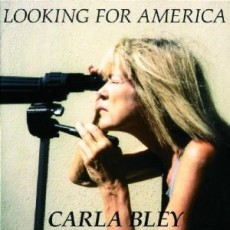
Carla Bley was born Carla Borg on May 11, 1936 is best known for her work as a jazz composer, pianist, organist and band leader in the post bop generation and free jazz movement of the 60s.
Raised in Oakland, California she was encouraged by her father, piano teacher and choirmaster, to sing and learn the piano. Giving up church to immerse herself in roller-skating at fourteen, Carla moved to New York and became a cigarette girl at Birdland. It is here that she met and married Paul Bley, who encouraged her to start composing. Her compositions would later begin to appear on recordings by George Russell and Jimmy Guiffre, with compositions being performed by Gary Burton, Art Farmer and Paul Bley.
In 1964 she was involved in organizing the Jazz Composer Guild bringing together the most innovative musicians in New York and started the JCOA record label, which released albums by Clifford Thornton, Don Cherry and Roswell Rudd, Michael Mantler and herself. With Mantler the two started the New Music Distribution Services, now defunct, that specialized in small, independent labels issuing creative improvised music.
Carla Bley has collaborated with a number of other artists, including Kurt Weill, Jack Bruce, Charlie Haden, Phil Woods, Johnny Griffin, Pink Floyd drummer Nick Mason, Blood, Sweat & Tears, Lew Soloff, Phil Woods and her current partner bassist Steve Swallow. She has continued to record frequently with her own big band and a number of smaller ensembles.
More Posts: bandleader,composer,organ,piano
Daily Dose Of Jazz…
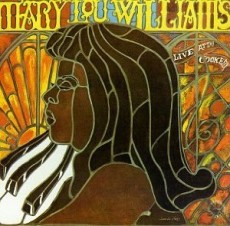
Mary Lou Williams was born Mary Elfrieda Scruggs in Atlanta, Georgia on May 8, 1910 but grew up in the East Liberty neighborhood of Pittsburgh, PA. As a very young child she taught herself to play the piano and one of her greatest influences was Lovie Austin. She had her first public performance at the age of six and went on to help support her ten half-brothers and sisters playing for parties. Mary Lou began performing publicly at the age of seven becoming admiringly known as “the little piano girl of East Liberty”.
In 1924 at age 14 she was taken on the Orpheum Circuit. The following year she played with Duke Ellington and his early small band, the Washingtonians. A year later she was jamming with McKinney’s Cotton Pickers at Harlem’s Rhythm Club and Louis Armstrong stopped in, listened to her picked her up and gave her a kiss. By 1929 she was married to John Williams and composing, arranging and playing piano for Andy Kirk’s Twelve Clouds of Joy, an association that would last until 1942.
Returning to Pittsburgh she put together a group that included Art Blakey, went on the road with Duke Ellington, moved to New York taking a job at Café Society and became closely associated with the bebop generation. She lived in Europe for two years in the fifties and upon her return took a hiatus from performing and began composing religious jazz music.
Throughout the seventies her career flourished recording both group and solo settings and commentating The History of Jazz. She toured extensively playing concerts and festivals, accepting an artist-in-residence appointment at Duke University and performed at the White House in 1978.
Mary Lou Williams was much more than a pianist. She was a composer and arranger who wrote hundreds of compositions and arrangements and recorded more than a hundred records. She wrote and arranged for Duke Ellington and Benny Goodman, and was friend, mentor and teacher to Thelonious Monk, Charlie Parker and Dizzy Gillespie.
Mary Lou Williams died of bladder cancer on May 28, 1981 in Durham, North Carolina at the age of 71. Looking back over her career at the end of her life Mary Lou Williams was known to have said, “I did it, didn’t I? Through muck and mud.”
Daily Dose Of Jazz…
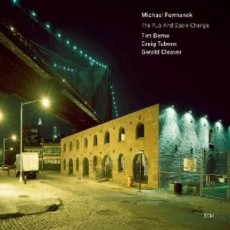
Michael Formanek was born on May 7, 1958 in San Francisco, California. The bassist and composer has had a long association with the jazz scene in New York City.
By the 1980s, Formanek was working as a sideman with Freddie Hubbard, Joe Henderson, Dave Liebman, Fred Hersch and Attila Zoller. His debut recording released as a leader at the onset of the nineties Wide Open Spaces, featured a few of the young lions at the time, saxophonist Greg Osby, violinist Mark Feldman, guitarist Wayne Krantz and drummer Jeff Hirshfield.
A series of albums followed through the decade as Formanek changed different configurations from trio to septet. Towards the end of the decade he was touring with Gerry Hemingway and recording duo and solo albums. He has worked with Dave Douglas, Marty Ehrlich, Kuumba Frank Lacy, Marvin Smith, Salvatore Bonafede, Peter Erskine, Jane Ira Bloom, Uri Caine, Lee Konitz, Kevin Mahogany and the Mingus Big Band, just to name a few.
Michael Formanek is currently the Director of the Peabody Jazz Orchestra and jazz bass instructor at the Peabody Conservatory of Music in Baltimore, Maryland.