


Daily Dose Of Jazz…
Marc Steckar was born on June 1, 1935 in Cherbourg, France. He began learning the cello from age eight, then played the trumpet. During his studies at the Paris National Conservatory, he switched to the trombone in 1953, which he studied with André Lafosse. After an interruption due to his military service in the Algerian War, he completed his training and in 1959 he received the second prize for trombone.
In the next few years he worked in the big band of Benny Bennet, in the Aimé Barelli orchestra in the Monte Carlo casinos and in Olympia where he played Marlene Dietrich and Nat King Cole, with whom he toured Europe. He played in the orchestra of Paul Mauriat accompanying Charles Aznavour, then in the big band of Daniel Janin who played behind Édith Piaf, Jacques Brel, Gilbert Bécaud and Sammy Davis Jr. in 1961.
Over the next few years he worked as a studio musician, among others for Michel Legrand , Vladimir Cosma and for various television shows, but also again at the Olympia for Roland Petit and Zizi Jeanmaire. Between 1973 and 1983, Marc accompanied Claude Nougaro with Eddy Louiss and Maurice Vander before becoming a member of Martial Solal’s big band. He recorded film music with Vander.
He went on to form Steckar TUBAPACK, and the Elephant Tuba Horde Big Band. Steckar is also on albums by François Jeanneau, Illinois Jacquet and Sonny Rhodes. Tubist Marc Stekar, who played trombone, bass trombone, euphonium, and was a composer, passed away on June 27, 2015 in Bessancourt, Val-d’Oise, France.

More Posts: bandleader,composer,euphonium,history,instrumental,jazz,music,trombone,tuba
Daily Dose Of Jazz…
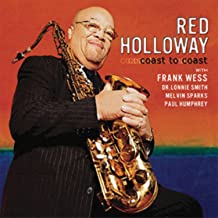
Red Holloway was born James Wesley Holloway on May 31, 1927 in Helena, Arkansas, and started playing banjo and harmonica before switching to tenor saxophone when he was 12 years old. Graduating from DuSable High School, where he had played in the school big band with Johnny Griffin and Eugene Wright, and attended the Conservatory of Music, Chicago, Illinois.
Joining the Army when he was 19, Red became bandmaster for the U.S. Fifth Army Band, and after completing his military service returned to Chicago and played with Yusef Lateef and Dexter Gordon, among others. In 1948, he joined blues vocalist Roosevelt Sykes, and later played with other rhythm & blues musicians such as Willie Dixon, Junior Parker, and Lloyd Price.
In the 1950s, he played in the Chicago area with Billie Holiday, Muddy Waters, Chuck Berry, Ben Webster, Jimmy Rushing, Arthur Prysock, Dakota Staton, Eddie “Cleanhead” Vinson, Wardell Gray, Sonny Rollins, Red Rodney, Lester Young, Joe Williams, Redd Foxx, B.B. King, Bobby Bland, and Aretha Franklin. During this period, he also toured with Sonny Stitt, Memphis Slim and Lionel Hampton. He became a member of the house band for Chance Records in 1952. He subsequently appeared on many recording sessions for the Chicago-based independents Parrot, United, States, and Vee-Jay.
From 1963 to 1966, he was in organist Brother Jack McDuff’s band, which also featured guitarist George Benson, who was then at the start of his career. In 1974, Holloway recorded The Latest Edition with John Mayall and toured Europe, Japan, Australia and New Zealand. From 1977 to 1982, he worked with Sonny Stitt, recording two albums together. Following Stitt’s death, he played and recorded with Clark Terry.
Tenor saxophonist Red Holloway passed away in Morro Bay, California, aged 84 of a stroke and kidney failure on February 25, 2012, one month after Etta James, with whom he had worked extensively.

More Posts: bandleader,composer,history,jazz,music,saxophone
Daily Dose Of Jazz…
Edward Louis Smith was born on May 20, 1931 in Memphis, Tennessee. After graduating from Tennessee State University he attended graduate school at the University of Michigan. While studying at the University of Michigan, he played with visiting musicians such as Dizzy Gillespie, Miles Davis, Thad Jones and Billy Mitchell.
He went on to play with Sonny Stitt, Count Basie, Al McKibbon, Cannonball Adderley, Percy Heath, Philly Joe Jones, Lou Donaldson, Donald Byrd, Kenny Dorham and Zoot Sims. Deciding to forgo being a full-time musician to take a job as a director of Atlanta’s Booker T. Washington High School, where he recorded two albums for Blue Note.
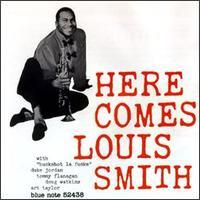
The first, Here Comes Louis Smith, originally recorded for the Boston-based Transition Records, featured Cannonball Adderley, then under contract to Mercury, played under the pseudonym Buckshot La Funke, Tommy Flanagan, Duke Jordan, Art Taylor and Doug Watkins. Replacing Donald Byrd for Horace Silver’s Live at the Newport 1958 set, and his playing was one of his best efforts and was described by one critic as monstrous.
He was a prolific composer and successful band director leaving Booker T. Washington to become director of the Jazz Ensemble at the University of Michigan and a teacher in Ann Arbor’s public school system. He would later record for the SteepleChase label.
Suffering a stroke in 2006, he enjoyed live jazz around the Detroit/Ann Arbor area, but did not return to performing. Trumpeter Louis Smith passed away on August 20, 2016 at age 85.
More Posts: band director,bandleader,composer,history,instrumental,jazz,music,tuba
Daily Dose Of Jazz…
Born May 18, 1894 in North Buxton, Ontario, Canada, Louis Stanley Hooper was raised in Ypsilanti, Michigan. He attended the Detroit Conservatory, where he played locally in dance orchestras in the 1910s. He then moved to New York City around 1920, recorded with Elmer Snowden and Bob Fuller frequently in the middle of the decade, and performed with both of them in Harlem as well as with other ensembles.
Hooper served for some time as the house pianist for Ajax Records and accompanied many blues singers on record, including Martha Copeland, Rosa Henderson, Lizzie Miles, Monette Moore, and Ethel Waters. He participated in the Blackbirds Revue of 1928.
In 1932 returning to Canada he played in Mynie Sutton’s dance band, the Canadian Ambassadors. Lou did local work solo and in ensembles for the next two decades, then was brought back into the limelight by the Montreal Vintage Music Society in 1962. He released an LP of ragtime piano tunes in 1973 entitled Lou Hooper, Piano.
As an educator he taught at the University of Prince Edward Island late in his life and appeared regularly on CBC television in Halifax. His papers, which include unpublished compositions and an autobiography, are now held at the National Library of Canada in Ottawa, Ontario. Pianist Lou Hooper passed away on September 17, 1977, Charlottetown, Prince Edward Island.
More Posts: bandleader,composer,history,instrumental,jazz,music,piano
Daily Dose Of Jazz…
Frederick Roach was born on May 11, 1931 in The Bronx, New York. He made his record debut in 1960 with saxophonist Ike Quebec on the albums Heavy Soul and It Might as Well Be Spring and played with Willis Jackson.
>From 1962-64 he recorded five albums as a leader for the Blue Note Records label. He also recorded with Donald Byrd on the album I’m Tryin’ to Get Home. His original writing, steady basslines, and highly musical fleet-fingered right hand set him apart.
1966-67 saw Freddie recording three more albums as a leader for Prestige Records, which are in a more commercial vein than his Blue Note dates. He left the music business in 1970 and became involved in theater, playwriting and film.
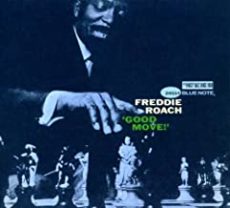
Roach was a soulful organist, certainly influenced by Jimmy Smith, but with a distinct sound and a quite original concept, which was perhaps best heard on “Good Move” for Blue Note. His Blue Note albums are critically acclaimed
Soul jazz Hammond B3 organist Freddie Roach, who moved to California for the film industry, suffered a heart attack and passed away on October 3, 1980.
More Posts: bandleader,composer,history,instrumental,jazz,music,organ