

Daily Dose Of Jazz…
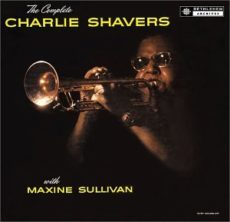
Charles James Shavers was born on August 3, 1920 in New York City and took up piano and banjo before switching to trumpet. In the mid-Thirties he performed with Tiny Bradshaw and Lucky Millinder. In 1935 he joined the trumpet section with Dizzy Gillespie and Carl “Bama” Warwick in Frankie Fairfax’s Campus Club Orchestra.
1936 saw him as a member of John Kirby’s Sextet as trumpet soloist and arranger. Only 16 at the time he gave his birth date as 1917 to avoid child labor laws, Charlie’s arrangements and solos helped make the band one of the most commercially successful and imitated of its day. In 1937, he performed with Midge Williams and her Jazz Jesters. By 1944 he began playing sessions in Raymond Scott’s CBS staff orchestra.
Leaving John Kirby’s band In 1945 he joined Tommy Dorsey’s Orchestra, with whom he toured and recorded, off and on, until Dorsey’s passing in 1956. In 1949, he sang and played the hit The Hucklebuck with Dorsey. He was a member of Dorsey’s Orchestra on numerous Stage Show telecasts for CBS, including early Elvis Presley appearances. During this time he continued to play at CBS while also appearing with the Metronome All-Stars and making a number of recordings as trumpet soloist with Billie Holiday.
From 1953 to 1954 he worked with Benny Goodman and toured Europe with Norman Granz’s popular Jazz at the Philharmonic series, where he was a crowd favorite. He formed his own band with Terry Gibbs and Louie Bellson.
Swing era trumpeter Charlie Shavers passed away from throat cancer in New York City on July 8, 1971 at the age of 50. While on his deathbed his close friend Louis Armstrong passed away, and his last request was that his trumpet mouthpiece be buried with Armstrong.

More Posts: bandleader,composer,history,instrumental,jazz,music,trumpet
Requisites
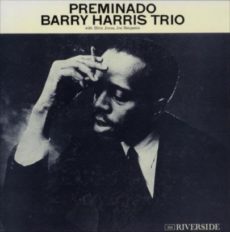
I begin this morning’s discussion with a 1961 album by The Barry Harris Trio titled Preminado (Riverside RLP 354/RLP 9354). I’ve been a fan of the pianist since hearing Barry Harris at The Jazz Workshop (1960), Listen To Barry Harris (1961), Live In Tokyo (1976), The Sidewinder (1964), and Two Trumpets (1957). My copy used in this report is the 1974 Riverside Original Recording Series Japanese Stereo reissue (Milestone SMJ-6047). Harris is joined on this date by Joe Benjamin on bass and Elvin Jones on drums.
My Heart Stood Still by Richard Rodgers and Lorenz Hart first appeared in the 1927 Broadway musical, A Connecticut Yankee. It opens the album with the trio showing tender emotions on the sentimentally nostalgic theme. Barry steps up first for a straightforward performance of poise and glamour that’s laid out beautifully. Joe strolls into the next interpretation at a relaxed tempo, then Elvin exchanges a few carefree thoughts on the song’s final reading with Barry.
The title tune is a Harris original with a march-like introduction by the pianist before the ensemble kicks up the tempo into a vibrantly spirited theme. Barry starts the soloing with a nimble statement that’s worth the price of admission. Elvin shows why he was a master timekeeper and a significant part of The John Coltrane Quartet next with infectious enthusiasm. I Should Care by Alex Stordahl, Paul Weston, and Sammy Cahn was composed in 1944 and featured in the 1945 musical, Thrill of a Romance.
Barry weaves the warmth and feeling of the lyrics into an alluring performance that’s a moment of perfect bliss. Side One ends with There’s No One But You by Austen Croom-Johnson and Redd Evans. This 1946 song was rumored to be written for the film-noir drama, Gilda, but did not appear in the film. The trio moves in a medium groove for the melody’s amorous atmosphere. Harris and Benjamin are the featured soloists dispensing affectionate love and desire on two readings.
The pianist’s One Down is an easy flowing blues that begins with an airy introduction and opening chorus. Barry turns in a charming performance on the lead solo, and Joe adds a brief comment that’s cheerfully carefree. It’s The Talk of The Town is a 1933 pop standard by Jerry Livingston, Allen J. Neiburg, and Marty Symes. The lyrics recount the breakup of a couple before their wedding and the ensuing gossip spread throughout the town in the aftermath. On the song’s only solo, Barry examines the subtlest nuances of this ballad with a quiet lament and tender lyricism that’s poignantly beautiful. Play, Carol, Play is named after Barry’s young daughter and brings the trio back to an uptempo beat. This tune opens with an effervescent introduction and melody, then Barry moves briskly on the first reading. Jones blends beautifully with Harris and Benjamin on the closing statement sharing an exuberant exchange ahead of the reprise and climax.
The finale is a popular jazz standard from The Cole Porter Songbook, What Is This Thing Called Love? It premiered in the 1929 London and Broadway musicals, Wake Up and Dream, and was also featured in the 1946 Porter biographical film, Night and Day. The trio starts the enthusiastic opening chorus briskly. Harris takes off first on this musical speedway with unbounded drive and vitality. Benjamin’s bass comes out breathing fire next, then Jones brings the solos to a rapid resolution in a brief exchange with the pianist.
Preminado was originally recorded by Ray Fowler with the mastering done by Jack Matthews. The sound quality by Victor Musical Industries is a demonstration class with a breathtaking soundstage. Every so often the jazz public is treated to a musician who’s in some way, very special. Pianist Barry Harris is just such a musician as he illustrates on this date. If you’re a fan of piano jazz, I invite you to check out Preminado by The Barry Harris Trio. It’s an album of music that’s skillfully crafted, superb musicianship that’s exemplary in every sense and one you shouldn’t miss on your next vinyl hunt!
~ Barry Harris at The Jazz Workshop (Riverside RLP 326/RLP 1177); Listen To Barry Harris (Riverside RLP 392/RLP 9392); Live In Tokyo (Xanadu 130); The Sidewinder (Blue Note BLP 4157/BST 84157); Two Trumpets (Prestige PRLP 7062) – Source: Discogs.com ~ I Should Care, It’s The Talk of The Town, My Heart Stood Still, There’s No One But You, What Is This Thing Called Love? – Source: Wikipedia.org © 2020 by Edward Thomas Carter

More Posts: bandleader,composer,history,instrumental,jazz,music,piano
Daily Dose Of Jazz…
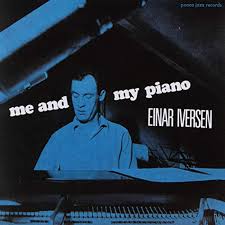
Einar Iversen was born on July 27, 1930 in Mandal Municipality, Norway and was raised in Oslo, Norway where he studied classical piano under Inge Rolf Ringnes, Artur Schnabel, and Finn Mortensen. He quickly established himself on the Oslo jazz scene in 1949 and released his first album with Rowland Greenberg’s orchestra in 1953.
In the 1950s he played with Dizzy Gillespie, Anthony Ortega, and the Modern_Jazz_Quartet”>Modern Jazz Quartet. He was a regular pianist at Metropol Jazz Club in the Sixties, where he played with Dexter Gordon, Coleman Hawkins, Johnny Griffin, Svend Asmussen, and Stuff Smith in Sweden. As a leader, Einar recorded an album in 1967 leading his own E. I. Trio, Me and My Piano, plus five more. His sideman duties had him performing with Swedish Putte Wickman, Monica Zetterlund, and Povel Ramel on tour in 1978. In Norway, he participated in a number of releases with Bjarne Nerem, Egil Johansen, Totti Bergh, Nora Brockstedt, and Ditlef Eckhoff.
Pianist and composer Einar Iverson, who became one of the most respected Norwegian jazz musicians, awarded Buddyprisen and the Knight of First Class of the Order of the St. Olavs, passed away on April 3, 2019 in Oslo, Norway at the age of 88.

More Posts: bandleader,composer,history,instrumental,jazz,music,piano
Daily Dose Of Jazz…
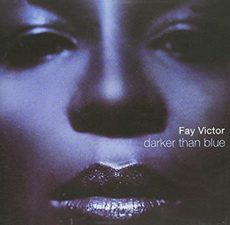
Fay Victor was born on July 26, 1965 in Brooklyn, New York City. After spending her early childhood years in New York, Zambia, and Trinidad & Tobago, her mother settled in Long Island, New York where she spent her teenage years. After her mother’s sudden death, she re-discovered music and singing, and after a three-month stint at a club in Fukui City, Japan with pianist Bertha Hope, she decided to start a career as a jazz singer.
In 1996, Fay settled in Amsterdam, The Netherlands and performed and toured through the country, as well as Spain, Germany, the UK, Sweden, Russia, and India. While living in the Netherlands, Victor branched out into blues, songwriting, and forms of improvising outside the standard jazz canon.
Returning to the States in 2003, Victor has made her home in New York City. She has worked with the likes of Randy Weston, Roswell Rudd, Anthony Braxton, Misha Mengelberg, Vijay Iyer, Tyshawn Sorey, Wadada Leo Smith, Nicole Mitchell, Marc Ribot, Martine Syms, Daniel Carter, William Parker, Darius Jones, Wolter Wierbos, Ab Baars, Joe Morris, Sam Newsome, and Reggie Nicholson.
Victor has coined the term “freesong” to describe her vocal approach. In her jazz repertoire, he has specialized in the work of Thelonious Monk, Ornette Coleman, and Herbie Nichols.
Vocalist, composer, lyricist, and educator Fay Victor, who originally sang in the traditional jazz field, has expanded her repertoire to include blues, opera, free improvising, avant-garde, modern classical music, and occasional acting, continues to perform and record.
More Posts: bandleader,composer,educator,history,instrumental,jazz,lyricist,vocal
Daily Dose Of Jazz…
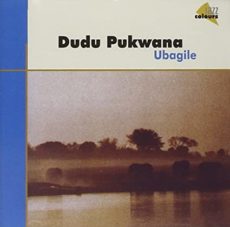
Mthutuzeli Dudu Pukwana was born on July 18, 1938 in Walmer Township, Port Elizabeth, South Africa. He grew up studying piano in his family, but in 1956 he switched to alto saxophone after meeting tenor saxophone player Nikele Miyake In 1962, Pukwana won first prize at the Johannesburg Jazz Festival with Moyake’s Jazz Giants. In his early days, he also played with Kippie Moeketsi. Chris McGregor then invited him to join the pioneering Blue Notes, a sextet, where he was the principal composer and played along with Mongezi Feza, Nikele Moyake, Johnny Dyani and Louis Moholo.
As mixed-race groups were illegal under apartheid, the Blue Notes, increasingly harassed by authorities, emigrated to Europe in 1964, playing in France and Zürich, Switzerland before settling in London, England. After they split in the late 1960s, Pukwana joined McGregor’s Brotherhood of Breath Big Band, which featured his soloing and composing. He wrote Mra, one of the best-loved tunes by the Brotherhood.
1967 saw Dudu receiving his first mention of success with the Bob Stuckey Trio in America’s DownBeat magazine, which later expanded to a quartet when Phil Lee joined on guitar. He went on to form two groups with Feza and Moholo. One was the afro rock band Assagai, the other Spear, with whom he recorded the seminal afro-jazz album In The Townships in 1973 for Virgin Records at The Manor Studio.
His fiery voice was heard in many diverse settings including recordings of Mike Heron, Centipede and Toots and the Maytals. In 1978, Pukwana founded Jika Records and formed his own band, Zila, featuring South Africans Lucky Ranku on guitar and powerful vocalist Miss Pinise Saul. In duo with John Stevens, he recorded the free session They Shoot To Kill in 1987, dedicated to Johnny Dyani. In 1990, Pukwana took part in the Nelson Mandela Tribute held at Wembley Stadium.
Alto saxophonist, pianist, and composer Dudu Pukwana, who was not known for his piano playing, passed away in London, England of liver failure on June 30, 1990, not long after the death of his longtime friend and colleague McGregor.
More Posts: bandleader,composer,history,instrumental,jazz,music,piano,saxophone