

Daily Dose Of Jazz…
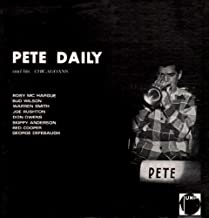
Pete Daily was born on May 5, 1911 in Portland, Indiana. He started his career in Chicago, Illinois in 1930 playing with various bands in and around the city. He was the leader of Pete Daily and his Chicagoans in the 1940s and 50s and recorded for Capitol Records as Dixie by Daily and Pete Daily’s Dixieland Band. They also recorded on the Jump and Decca labels in the 1950s.
In 1942, he moved to the West Coast and, after service in World War II, formed the Chicagoans. He played long engagements at several Hollywood night clubs in the 1950s such as Sardis, The Royal Room, and the Astors in Studio City. He continued to play during the 1970s until a stroke in 1979 forced him to retire.
During the filming of Pete Kelly’s Blues, actor Jack Webb, the cornet-playing star of the film, repeatedly went to the nightclub where Daily performed to study his mannerisms for his role in the film. The band which recorded the soundtrack appeared at Dixieland festivals supported by Pete Daily’s band.
His driving style on the cornet endeared him to generations of Dixieland Jazz enthusiasts. Cornetist and valve trombonist Pete Daily, who played swing and dixieland, passed away on August 23, 1981.

More Posts: bandleader,cornet,history,instrumental,jazz,music,valve trombone
Daily Dose Of Jazz…
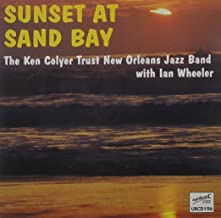
Kenneth Colyer was born on April 18, 1928 in Great Yarmouth, Norfolk, England, but grew up in Soho, London, and served as a member of his church choir. Listening to his elder brother’s jazz records which influenced him. He joined the Merchant Navy at 17, travelled around the world and heard famous jazz musicians in New Orleans, Louisiana.
In the UK, Colyer played with various bands and joined the Crane River Jazz Band in 1949 with Ben Marshall, Sonny Morris, Pat Hawes, John R. T. Davies, Julian Davies, Ron Bowden and Monty Sunshine. Rejoining the Merchant Navy, and jumping ship in Mobile, Alabama, he travelled to New Orleans, where he played with his idols in George Lewis’ band. Though offered the job of lead trumpeter on a tour, he was caught by the authorities, detained and deported.
Ken went on to join the Chris Barber Band and made their first recordings on the Storyville in 1953. Parting company the following year, then briefly joined a band in the mid-1950s with clarinetist Acker Bilk and trombonist Ed O’Donnell.
Then he put together his own band with Mac Duncan, Ian Wheeler, Johnny Bastable, Ron Ward, Colin Bowden and Ray Foxley. This band played together until the early 1960s before incorporating a new lineup.
After a bout with stomach cancer in 1972 he stopped being a bandleader but continued to work, occasionally associated with Chris Blount’s New Orleans Jazz Band. A biography, Goin’ Home, was compiled by Mike Pointon and Ray Smith. Trumpeter and cornetist Ken Colyer, who was known for skiffle interludes and devoted to New Orleans jazz, passed away on March 8, 1988.
More Posts: bandleader,cornet,history,instrumental,jazz,music,trumpet
Daily Dose Of Jazz…
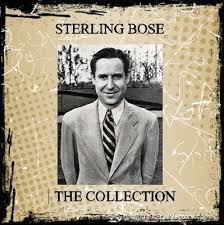
Sterling Belmont “Bozo” Bose was born on September 23, 1906 in Florence, Alabama and his style was heavily influenced by Bix Beiderbecke and changed little over the course of his life.
His early experience came with Dixieland jazz bands in his native Alabama before moving to St. Louis, Missouri in 1923. He played with the Crescent City Jazzers, the Arcadian Serenaders, and the Jean Goldkette’s Orchestra in 1927-28 after the departure of Beiderbecke. Following this he worked in the house band at radio station WGN in Chicago, Illinois before joining Ben Pollack from 1930 to 1933. He also worked with Eddie Sheasby in Chicago.
Moving to New York City in 1933, Bose had many gigs in the city during the 1930s to the mid 1940s, including time with Joe Haymes, Tommy Dorsey, Ray Noble, Benny Goodman, Lana Webster, Glenn Miller, Bob Crosby, Bobby Hackett, Bob Zurke, Jack Teagarden, Bud Freeman, George Brunies, Bobby Sherwood, Miff Mole, Art Hodes, Horace Heidt, and ending with Tiny Hill in 1946.
Following this period he did some further freelancing for the next two years in Chicago and New York, and finally moved to Florida in 1948, setting up his own bands there. Suffering from an extended period of illness in the 1950s, trumpeter and cornetist Sterling Bose, whose nickname was Bozo, eventually committed suicide in June of 1958. in St. Petersburg, Florida.

More Posts: bandleader,cornet,history,instrumental,jazz,music,trumpet

Daily Dose Of Jazz…
Ed Polcer was born February 10, 1937 in Paterson, New Jersey. He started leading jazz bands while attending Princeton University. While there studying engineering, he was headed toward a promising career as a professional baseball player. During that time, he was asked to play at the wedding of Princess Grace and Prince Rainier in Monaco, as well as a concert in Carnegie Hall. He chose music over baseball.
When cornetist Bobby Hackett recommended him to Benny Goodman, he abandoned his engineering and purchasing day jobs and joined Goodman’s small band. Other musicians in that band included John Bunch, Bucky Pizzarelli, Slam Stewart, Al Klink, Zoot Sims, George Masso, and Peter Appleyard.
While in his 20s and 30s, Ed played with Teddy Wilson, Bobby Hackett, Kenny Davern, Dick Wellstood, Gene Ramey, Sonny Greer, Joe Muranyi, Herbie Nichols and Joe Venuti. With his wife, singer and actress Judy Kurtz he managed and co-owned with Red Balaban, Eddie Condon’s Jazz Club in New York City from 1977–1985. Sharing the bandstand with him at the club were such musicians as Vic Dickenson, Herb Hall, and Connie Kay.
He was instrumental in giving several younger musicians, such as Scott Hamilton, Warren Vache, Dan Barrett, and Mark Shane a showcase of their talents. He served as musical director of several jazz festivals, including the North Carolina Jazz Festival, Colorado Springs Jazz Party, and San Diego Jazz Party. In the 1980s he served as president of the Long Island, New York-based non-profit International Art of Jazz, which promoted community and corporate involvement in jazz, presented jazz programs. He played for five U.S. Presidents, including the Congressional Ball at the White House for President Clinton in 1994, and played in Thailand with the King of Thailand, a jazz clarinetist and enthusiast.
He has been awarded the New Jersey Jazz Society lifetime achievement award, named a Jazz Legend by the San Diego Jazz Party, and honored by the Atlanta Jazz Preservation Society for unyielding commitment to the preservation of our beloved American art form of jazz. Cornetist, bandleader, festival director, club owner, and mentor Ed Polcer, who has a melodic mellow-toned sound with an unforced delivery, recorded ten albums as a leader and fourteen as a sideman, remains active.
More Posts: bandleader,cornet,history,instrumental,jazz,music
Daily Dose Of Jazz…
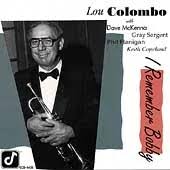
Lou Colombo was born in Brockton, Massachusetts on August 22, 1927 and started playing the trumpet when he was twelve. At seventeen he turned his attention to professional baseball and was signed with the Brooklyn Dodgers for seven years until a knee injury ended his career at 24.
Turning his attention to music Lou dove in full-time, mostly as an ensemble player and studio musician, playing and recording in the big bands of Dizzy Gillespie, Artie Shaw, Benny Goodman, Buddy Morrow, and Pérez Prado. He also worked sessions with Meredith D’Ambrosio on the 1989 recording South to a Warmer Place, George Masso on That Old Gang of Mine, 1996) and Jerry Jerome’s Something Borrowed, Something Blue.
Under his own name, Colombo recorded some albums one, including 1,990 at Concord Records, a tribute album for Bobby Hackett, one with Dave McKenna and Keith Copeland. Active on the Cape Cod jazz scene for five decades, trumpeter Lou Colombo passed away due to a traffic accident on March 3, 2012 at the age of 84.

More Posts: bandleader,cornet,flugelhorn,history,instrumental,jazz,music,trumpet