

Daily Dose Of Jazz…
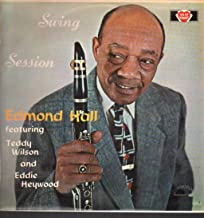
Arthur “Traps” Trappier was born on May 28, 1910 in Georgetown, South Carolina and played with Charlie Skeets and Blanche Calloway in the late 1920s. After working steadily through the 1930s, he joined Fats Waller in 1941-42 before serving in the military during World War II.
He led his own trio in various hotels in New York City in the 1950s, and played as a sideman into the 1970s. Among those he played with are Josh White, Wilbur De Paris, Edmond Hall, Sy Oliver, Hot Lips Page, Buddy Johnson, Wingy Manone, Sidney Bechet, Benny Goodman, and Red Allen.
He recorded with Waller, Hall, Conrad Janis, Punch Miller, Mutt Carey, Tony Prenti, Willie “The Lion” Smith, and Rex Stewart. Drummer Arthur Trappier passed away on May 17, 1975 in New York City.

More Posts: drums,history,instrumental,jazz,music
Daily Dose Of Jazz…
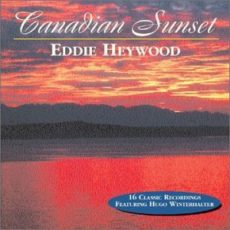
Herbert “Kat” Cowans, also spelled Cowens, was born May 24, 1904 in Texas. Working as a shoeshine boy as a child, his first professional engagement as a drummer was with the Satisfied Five, a local Texas ensemble. After moving to Wichita Falls, Texas he played in Frenchy’s New Orleans Jazz Band, then worked with Charlie Dixon. Quitting Dixon’s ensemble to finish high school while still in his teens, he went on to play in theater orchestras early in the 1920s.
Moving to New York City, Cowans played with Cleo Mitchell in the Shake Your Feet revue. Following this, he did work with the Kansas City Blackbirds, Jimmy Cooper’s Black and White Revue, and Eubie Blake in addition to leading his own band.
In the 1930s Herbert played with Fats Waller and Stuff Smith, before joining Eddie Heywood’s band for recordings behind Billie Holiday in 1941. He worked with Garvin Bushell in 1942, then played in the pit orchestra for the Broadway show The Pirate.
Cowans led a USO band in 1943, touring military bases worldwide, then led small ensembles for several decades thereafter. He also worked with Louis Metcalfe in 1963. He worked with USO again in East Asia in the 1970s, then retired to Dallas, Texas. Drummer Herbert Cowans passed away on January 23, 1993.
More Posts: bandleader,drums,history,instrumental,jazz,music
Daily Dose Of Jazz…
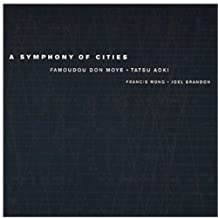
Donald Moye, Jr., known professionally as Famadou Don Moye, was born May 23, 1946 in Rochester, New York and during his youth performed in various drum and bugle corps including the Rochester Crusaders as well as church choir. He took violin lessons during this time and was exposed to jazz at an early age since his mother worked for a local social club that had a jazz club next door that hosted musicians such as Kenny Burrell and Jimmy McGriff.
He went on to study percussion at Wayne State University in Detroit, Michigan and lived in the same building as trumpeter Charles Moore, who became his mentor. He played in the groups African Cultural Ensemble, and Moore’s group, the Detroit Free Jazz. He first encountered the Association for the Advancement of Creative Musicians (AACM) due to the revolving door of musicians in and out of Moore’s residence. In early 1968, Moore’s band traveled to Europe and Moye decided to live there for the next couple of years, touring and visiting the continent as well as Northern Africa.
By 1969, the AEC had augmented into the percussion-less quartet of Roscoe Mitchell, saxophonist Joseph Jarman, trumpeter Lester Bowie and bassist Malachi Favors Maghostut. The group crossed the Atlantic Ocean and arrived in Europe to perform throughout the continent. Don at the time was rehearsing and performing in Paris, France, at the American Center for Students and Artists. When Mitchell met with Moye again at the Center, he asked Moye to join his group, which was already known as the Art Ensemble of Chicago and had issued several recordings including three releases on the European label BYG Actual.
After returning to the States in the early 1970s, he played with the Black Artists Group in St. Louis, Missouri before settling in the Chicago, Illinois area. He was also in a duo with fellow percussionist Steve McCall who later was a member of Air with Henry Threadgil while still playing with the AEC. In the mid-1980s, Moye joined The Leaders, a jazz group consisting of AEC members Bowie, Chico Freeman, Arthur Blythe, Cecil McBee, and Kirk Lightsey.
Moye has also recorded numerous solo albums as leader of his own band. Moye toured and recorded again with the AEC in the 1990s, which was dealt a blow with the 1999 death of Bowie. Other groups he led in the ’90s include the Joseph Jarman/Famoudou Don Moye Magic Triangle Band and the Sun Percussion Summit. Famadou Don Moye continues to perform and record.
More Posts: bandleader,drums,history,instrumental,jazz,music,percussion
Three Wishes
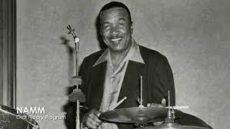
Gus Johnson was asked by Pannonica what his three wishes would be if given the opportunity he replied:
- “To be loved and liked by everyone.”
- “For everyone to live and let live. Be happy together: no prejudice or anything like that.”
- “To always have my health and strength. And, not be a millionaire, but just to have enough, you know, to live comfortably.”
*Excerpt from Three Wishes: An Intimate Look at Jazz Greats ~ Compiled and Photographed by Pannonica de Koenigswarter

More Posts: baroness,drums,history,instrumental,jazz,music,pannonica,three,wishes
Daily Dose Of Jazz…
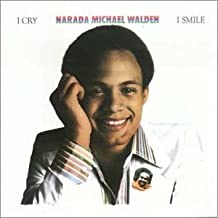
Narada Michael Walden was born on April 23, 1952 in Kalamazoo, Michigan and after graduating from college he was a member of rock bands in Miami, Florida.
Atlantic Records released his first album, Garden of Love Light, in 1977, followed by I Cry I Smile and The Awakening. The latter album charted during the 1980s including a duet with Patti Austin and appeared on the Bright Lights, Big City movie soundtrack.
Fusing jazz with R&B he built his studio in 1985 and produced music for The Temptations, Stacy Lattisaw, Aretha Franklin, Angela Bofill, Lisa Fischer, Sister Sledge, Herbie Hancock, Patti Austin, Whitney Houston, Clarence Clemons, George Benson, Kenny G, Lionel Richie, Al Jarreau, and Mariah Carey.
Walden has been nominated for eight Grammy Awards and won three including Best R&B Song for Freeway of Love; Producer of the Year, Non-Classical; and Album of the Year for The Bodyguard: Original Soundtrack Album.
Drummer, keyboardist and bassist Narada Michael Walden, who got his nickname Narada from Sri Chinmoy, is currently the drummer for Journey.
More Posts: bass,drums,history,instrumental,jazz,keyboards,music