

Daily Dose Of Jazz…
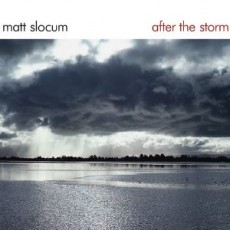
Matt Slocum was born on July 18, 1981 in New Richmond, Wisconsin. From his sophomore year in high school on he studied drums with Phil Hey, while playing in a Ska band. At the University of Southern California Thornton School of Music, Matt studied with Peter Erskine, Alan Pasqua, John Clayton and Joe LaBarbera. After graduating USC, Slocum spent three years in Pasadena but in 2007 he moved near New York City.
Since his move Slocum has toured with vocalist Sarah Gazarek for three years and has played with Shelly Berg, Seamus Blake, Alan Broadbent, Bill Cunliffe, Danny Grissett, Larry Koonse, Lage Lund, Wynton Marsalis, Linda Oh, Dayna Stephens, Gerald Wiggins, Anthony Wilson and the Dallas Symphony Orchestra, among numerous others.
Slocum’s list of influences on composing is impressive citing Billy Strayhorn, Duke Ellington, Wayne Shorter, Tom Harrell, Dave Holland, Debussy and Ravel; and drummers Roy Haynes, Elvin Jones, Max Roach, Kendrick Scott and Marcus Gilmore.
Drummer Matt Slocum is the recipient of a Meet the Composers Foundation grant, and has lead recording sessions for his debut album, Portraits and After The Rain. He continues to perform, record and tour.
More Posts: drums
BENITO GONZALEZ TRIO
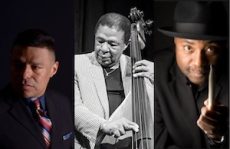
Two-time Grammy nominee Benito Gonzalez is joined by legends Buster Williams and Lenny White.
Born in Maracaibo, Venezuela, Benito Gonzalez grew up immersed in traditional Venezuelan folk music before discovering jazz through the playing of Herbie Hancock, McCoy Tyner, Chick Corea, and Keith Jarrett, an early inspiration that shaped his powerful, Afro-Latin-infused approach to the piano. Gonzalez made his way to the United States by a serendipitous route, an American cultural ambassador caught one of his trio gigs and later invited him to Washington, D.C.
He went on to play with Jackie McLean in 2003, then spent nearly seven years touring with Kenny Garrett’s quartet, earning two Grammy nominations for the recordings Seeds from the Underground and Pushing the World Away. In 2019 he joined NEA Jazz Master and Coltrane protégé Pharoah Sanders as pianist and musical director. A 2005 winner of the Great American Jazz Piano Competition and a Steinway artist since 2020, Gonzalez has shared the stage with Dave Liebman, Roy Hargrove, Christian McBride, Nicholas Payton, Al Foster, and many others.
Joining him are two of the most legendary rhythm section players in jazz history. Bassist Buster Williams has anchored some of the most important recordings and bands of the past six decades, from Herbie Hancock and Miles Davis to McCoy Tyner and Ron Carter, and remains one of the most revered bassists in the music. Drummer Lenny White, a member of the original lineup of Return to Forever and a Grammy-winning legend in his own right, brings a depth of groove and history matched by few. Together, this trio represents three generations of jazz mastery converging in one room.
The Band:
Benito Gonzalez – Piano
Buster Williams – Bass
Lenny White – Drums
Cover: $38.57
More Posts: adventure,bandleader,bass,club,drums,genius,instrumental,jazz,music,piano,preserving,travel
TYRONE JACKSON QUINTET
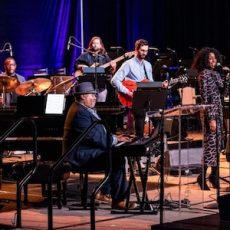
Dr. Tyrone Jackson brings his electric band to Eddie’s Attic. The quintet will explores the innovative edges of jazz and creativity. F.T.M.O. (From The Mind Of) is drawn from his critically acclaimed album From the Mind of Tyrone Jackson, where genres blur but the improvisational aspects of jazz remain central.
The Quintet:
Tyrone Kackson ~ Piano
Lavahi~vocals
Patrick Arthur ~ guitar
Joel Powell ~ bass
Robert Boone ~ drums | Grammy Winner
Cover: $23.37
More Posts: adventure,bandleader,bass,club,drums,genius,guitar,history,instrumental,jazz,music,piano,preserving,travel,vocal
Requisites
Live At Sweet Basil Art Blakey and The Jazz Messengers | By Eddie Carter
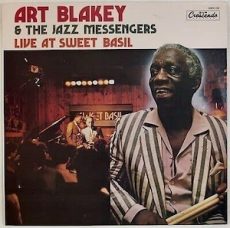
This morning’s column came about when the alarm went off, and I woke up to Jodi by Art Blakey and The Jazz Messengers on my phone. It got my day started on a jazzy note, and I went to the shelf and picked out Live at Sweet Basil (Paddle Wheel K28P 6357) to discuss. It was initially released in Japan, and the album combines two March 24, 1985, sets of the sextet’s last night at the jazz club. The lineup consists of Terence Blanchard on trumpet, Donald Harrison on alto saxophone, Jean Toussaint on tenor saxophone, Mulgrew Miller on piano, Lonnie Plaxico on bass, and Art Blakey on drums. The copy I own is the 1985 U.S. Stereo release (GNP Crescendo GNPS 2182).
Side One opens with Art’s introduction to the ensemble’s speedy melody of Jodi by Walter Davis. Jean ignites the first exhilarating interpretation. Donald responds energetically next, then Terence carves out a brilliant statement, and Mulgrew makes the most of the following reading. After the theme’s reprise, Art has the last word and gives a vigorous workout, into the close. Benny Golson’s Blues March settles into a comfortable medium tempo for Blakey’s marching introduction, leading to the ensemble’s theme. Harrison and Toussaint get things going in the first two solos, shadowed by the front line as they unfold. Blanchard goes to work next, continuing the easy beat as he explores a few musical ideas. Miller brings out his soulful charm in the next reading, and Plaxico walks leisurely toward the sextet’s closing chorus and finale.
Side Two takes off at a brisk clip with Art’s vigorous introduction to the rapid-fire theme of Mr. Babe by Donald Harrison. Terence is off and running at a furious pace. Donald continues the rapid acceleration in the second statement, then Jean keeps the momentum going with spirited choruses next. Mulgrew closes with a high-speed performance ahead of the melody’s reprise and an abrupt stop. Miller’s introduction brings Bobby Timmons’ classic Moanin’ to life, segueing into the group’s bluesy melody. The solo order is Blanchard, Harrison, Toussaint, Miller, and Plaxico, and all five members of the sextet get into a good groove that flows efficiently back into the closing chorus, a vibrant ending, and the audience’s approval.
Horst Liepolt and Shigeyuki Kawashima produced Live at Sweet Basil, and Kazunori Sugiyama was the recording engineer. Akira Makino was the mastering engineer, and Hatsuro Takanami was the remix engineer. The album was remixed and mastered at King Studios in Tokyo, Japan. The sound quality is excellent and transports the listener to a front row seat at Sweet Basil to enjoy the music. Live at Sweet Basil is an underrated treasure within the Jazz Messengers’ discography, showcasing one of the finest groups Art Blakey ever assembled. If you’re a long-time fan of hard bop or a newcomer, I encourage you to check out Live at Sweet Basil by Art Blakey and The Jazz Messengers on your next record shop visit. It’s a terrific release that I’m proud to own, and I highly recommend it for a spot in your library!
~ Moanin’ – Source: JazzStandards.com
~ Blues March – Source: Wikipedia.org
© 2026 by Edward Thomas Carter

More Posts: choice,classic,collectible,collector,drums,history,instrumental,jazz,music,piano
Daily Dose Of Jazz…
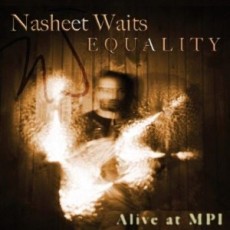
Nasheet Waits was born on June 15, 1971 in New York City, the son of legendary drummer Freddie Waits, and learned to play the drums as a child. Before pursuing a music career, he studied psychology and history at Morehouse College. Transferring to Long Island University, he graduated with a degree in music but during his matriculation, in 1970, drummer and instructor Michael Carvin, who laid a great foundation for Waits, secured him a spot in Max Roach’s M’Boom.
Waits has recorded or performed as a sideman with such talents as Fred Hersch, Antonio Hart, Joe Lovano, Jason Moran, Andrew Hill, Bunky Green, William Parker, Eddie Gomez, John Medeski, Ron Carter, Hamiett Bluiett, Steve Coleman, Bill Lee, Jackie McLean and Mark Turner among others.
Acquiring the moniker “Heavy” as a part of his jazz legacy, Nasheet has been active on the jazz scene since 1993 and delivered his first album as a leader in 2009, titled “Equality”. Waits has recorded and toured extensively in Africa, Europe, Japan, Canada, South America and the United States. Amidst all of that, Nasheet teaches private lessons to youth and adults, stressing a personal approach to the drums and music and remains dedicated to exploring his role and creative path in music.
More Posts: drums