

Requisites
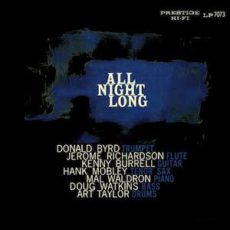
All Night Long ~ The Prestige All-Stars | By Eddie CarterThis morning’s choice from the library is a recent acquisition I’ve been hunting for since it was reissued as part of The Prestige Mono Series. It’s a swinging Fifties jam session that was originally released in 1957 by The Prestige All-Stars. All Night Long (Prestige PRLP 7073/PRST 7289) brings together a first-class ensemble, Donald Byrd on trumpet, Hank Mobley on tenor sax, Jerome Richardson (tracks: A1, B1 to B3) on flute, and (track: A1) on tenor sax, Mal Waldron on piano, Kenny Burrell on guitar, Doug Watkins on bass, and Art Taylor on drums. My copy used in this report is the 2012 Analogue Productions Mono audiophile reissue (APRJ 7073 – PRLP 7073).
Side One opens with Kenny Burrell’s All Night Long occupying the entire side. Art kicks off the song with an infectious beat. Kenny starts the opening solo with exquisite execution. Jerome’s flute flows with a happy feeling on the first of two statements. Hank takes us on a carefree joyride in the next reading, then Donald speaks his peace with a stellar presentation. Jerome resurfaces on tenor for a sparkling performance, and Mal gives a soulful effort on the next interpretation. Art follows with a brief exchange with the principal soloists before the group takes the song out. Side Two starts with the first of two tunes by Hank Mobley, Boo-Lu. Richardson sets the mood of this happy groove on the melody and opening chorus. Burrell, Byrd, Mobley, and Waldron follow with four short solos ahead of the reprise and close.
Flickers by Mal Waldron suggests a homage to the movies. It begins with the ensemble’s collective mid~tempo theme. Jerome is up first and shines with a light-hearted warmth. Donald and Hank follow with one easygoing reading each, then trade a few feisty riffs. Kenny turns in a tasty performance next and Mal applies blues-rooted energy to the finale leading to the closing chorus and Doug’s slow fade into oblivion. Mobley’s Li’l Hankie comes at you at medium speed with the ensemble in unison on the melody. Hank leads off the solos with a marvelous interpretation. Donald delves into the second reading on muted trumpet mining a vein of musical riches. Kenny tells a short story that makes every note count on the third statement. Jerome lights a fuse of creative inspiration on the next performance, followed by a stimulating conversation between the front line, Waldron, and Richardson ahead of the ending theme.
Bob Weinstock supervised the original album and the man behind the dials was Rudy Van Gelder. Kevin Gray did the remastering from the analog tapes. The record has a flat-edge and deep groove on the label like the original release, and the album cover has a high gloss. This reissue was pressed on 200-gram audiophile vinyl by Quality Record Pressings. The soundstage is outstanding, transporting the musicians to your listening room and the record is silent until the music starts. Burrell, Byrd, Watkins, and Taylor also appear on the companion album, All Day Long, recorded just a few days after this date. If you’re a Hard-Bop fan and are looking for an album with superb musicianship, I can’t think of a better choice to introduce you to The Prestige All-Stars than All Night Long! It’s a gorgeous recording that’s highly recommended and well worth adding to your library!
~ All Day Long (Prestige PRLP 7081/PRST 7277) – Source: Discogs.com © 2022 by Edward Thomas Carter

More Posts: bass,choice,classic,collectible,collector,drums,flute,guitar,history,instrumental,jazz,music,piano,saxophone,trumpet
Daily Dose Of Jazz…
Martin Drew was born on February 11, 1944 in Northampton, England and started to play the drums when he was six years old. Studying with drummer George Fierstone gave him a solid musical and technical background. He played his first professional engagement at the age of 13.
He was also a member of a trio led by Eddie Thompson. Martin was often heard playing on BBC Radio 2’s Sounds of Jazz program in the 1970s, which was introduced by Peter Clayton on Sunday evenings.
During the 1980s, Drew played simultaneously with the Ronnie Scott Quartet and with the jazz group Morrissey–Mullen, until they disbanded in 1988. He then led a quintet called Our Band with saxophonist Dick Morrissey, guitarist Jim Mullen who replaced original member Louis Stewart, pianist John Critchinson, and bassist Ron Mathewson.
Between 1997 and 2000, he led a quartet with Mornington Lockett on tenor saxophone, Gareth Williams on piano, and Laurence Cottle on electric bass. 2000 saw Martin forming the Celebrating The Jazz Couriers quintet with Mornington Lockett, playing the music of the original Jazz Couriers. They won the 2002 British Jazz Award for Best Small Group.
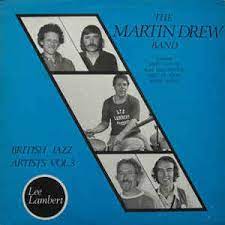
The New Couriers band reformed in 2003 with Paul Morgan on double-bass and Jim Hart on vibraphone. Lockett and Steve Melling on tenor saxophone and piano. He recorded one album in 1978 titled The Martin Drew Band, British Jazz Artists Vol. 3.
Drummer Martin Drew, who worked with over one hundred musicians from both sides of the Atlantic, transitioned following a heart attack on July 29, 2010, at the age of 66 in Harefield, Hillingdon, England.

More Posts: bandleader,drums,history,instrumental,jazz,music
Daily Dose Of Jazz…
Edward “Bruno” Carr was born on February 9, 1928 in The Bronx, New York. Growing up he lived around many different ethnic groups, including neighborhoods with German and Italian residents. Listening to the radio as a youth, he heard different styles of music while developing his ear and his memory. By the time he started playing professionally he had anarsenal of songs that he surprised band leaders he already knew and had no need for charts when they handed them to him.
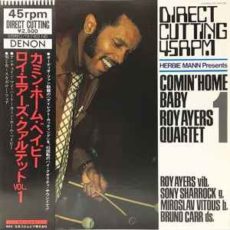
As a timbale player in Latin bands, one can hear the inflection in the way he plays his small tom-toms at times. Though not a household name, his playing with a lot of fire and conviction made him a sought after drummer among the jazz elite. Kenny Burrell, Billie Holiday, Ray Charles, John Coltrane, Charlie Parker, Michael Franks, Aretha Franklin, Monte Alexander, Stanley Turrentine, Roy Ayers, King Curtis and Harry “Sweets” Edison have all had him on their bandstand.
Here recorded several single albums, each with Aretha, Curtis Amy, Walter Davis Jr., Lou Donaldson, and Eddie “Cleanhead” Vinson, however, his largest body of work was with Herbie Mann, recording eighteen albums with the flutist from 1964 to 1970.
Drummer Bruno Carr, who was a frequent collaborator with Ray Charles, transitioned from lung cancer on October 25, 1993 in Denver Colorado at the age of 65.
More Posts: drums,history,instrumental,jazz,music
Daily Dose Of Jazz…
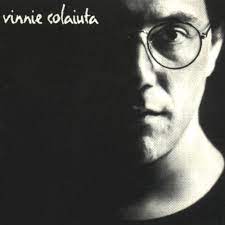
Vincent Peter Colaiuta was born on February 5, 1956 in Brownsville, Pennsylvania and was given his first drum kit when he was seven. He took to it naturally, with little instruction. By fourteen, the school band teacher gave him a book that taught him some of the basics and Buddy Rich was his favorite drummer until he heard the album Ego by Tony Williams, an event that changed his life. He started listening to organ groups, notably Jack McDuff, Jimmy McGriff and Don Patterson.
While matriculating through Berklee College of Music in Boston , Massachusetts at the time jazz fusion was on the rise, he listened to and admired Alphonse Mouzon and Billy Cobham. After leaving school, he played local gigs in Boston, joined a brief tour organized by Al Kooper, then worked in California on an album by Christopher Morris.
Returning to Boston, Colaiuta was drawn back to California by friends and took the bus from Boston to Los Angeles during the blizzard of 1978. After performing in jazz clubs, he won the audition to play drums for Frank Zappa, with whom he toured and appeared on the albums Joe’s Garage, Tinsel Town Rebellion, and Shut Up ‘n Play Yer Guitar.
In 1981, he left Zappa for the gig as a studio musician and recorded for the band Pages, Gino Vannelli, saxophonist Tom Scott, bassist Larry Klein, Joni Mitchell, touring with the latter. The late Eighties saw him as the house drummer for The Late Show Starring Joan Rivers. The band was led by Mark Hudson and was called the Party Boys and the Tramp.
By the end of the 1980s back as a studio musician he was recording albums, doing TV and film work during the day, and playing clubs at night. He worked with jazz musicians Herbie Hancock, Chick Corea, Buell Neidlinger, and the Buddy Rich Big Band. The 1990s he was with Sting, and released his debut solo album as well as two more as a leader.
He has won over fifteen Drummer of the Year awards from Modern Drummer magazine’s annual reader polls. These include ten awards in the “Best Overall” category. He was inducted into the Modern Drummer Hall of Fame in 1996 and the Classic Drummer Hall of Fame in 2014. Colaiuta has won one Grammy Award and has been nominated twice. Drummer Vinnie Colaiuta continues to perform, tour and record.
More Posts: bandleader,drums,history,instrumental,jazz,music
Daily Dose Of Jazz…
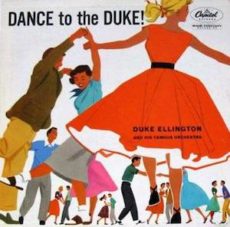
David Black, born January 23, 1928 in Philadelphia, Pennsylvania, started out as the drummer in the house band at the Philadelphia Blue Note Jazz Club where he played with the likes of Charlie Parker, Buddy DeFranco and Zoot Sims.
From 1953 to 1955 Black was a part of Duke Ellington’s Orchestra until he contracted polio, forcing him to leave the band. After recovering, he moved to the San Francisco Bay Area and partnered with Bob Scobey until the latter’s death in 1963.
Continuing to perform with Bay Area and various international jazz musicians, drummer Dave Black, most notable for his work with Duke Ellington, transitioned on December 4, 2006
More Posts: bandleader,drums,history,instrumental,jazz,music