

Daily Dose Of Jazz…
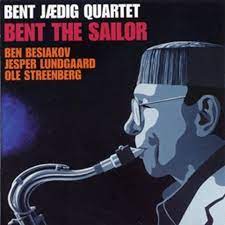
Bent Jædig, born September 28, 1935 in Copenhagen, Denmark. He first studied clarinet before playing saxophone. In the 1950s, he settled in Germany and led a band with trombonist Rudi Fuesers, later joining another band with trombonist Peter Herbolzheimer in Munich, Germany.
By the 1960s, he returned to Denmark and worked with trumpeter Allan Botschinsky and pianist Bent Axen, with whom he recorded for Denmark’s Debut label. Bent would go on to play with the Dollar Brand Quintet which included Don Cherry. As a side-man he was constantly in demand and worked with Tete Montoliu, Jimmy Woode, Philly Joe Jones/Dizzy Reece, and Louis Hjulmand.
Jædig recorded his first album as a leader in 1967 titled, Danish Jazzman, with Axen, Botschinsky, Dusko Goykovich, Niels-Henning Ørsted Pedersen and Alex Riel. He would later form a trio, played in a duo and recorded live shows in 2002 which were compiled for a release from Timeless Records.
In the Seventies and 1980s he worked with Wild Bill Davison, Art Farmer, Stan Getz, the Thad Jones Big Band, Duke Jordan, Horace Parlan, Sahib Shihab, and Ernie Wilkins Almost Big Band. He was also a member of the Erling Kroner Tentet, played in the Danish Radio Big Band, and recorded on the Miles Davis album Aura. In 1987, Jædig was a member of Pierre Dørge’s New Jungle Orchestra.
At the end of the 1990s he was performing in a quintet. Tenor saxophonist and flutist Bent Jædig transitioned on June 9, 2004. Saxophonist Charles Davis recorded the album Charles Davis Plays the Music of Bent Jædig in 2006.

More Posts: bandleader,flute,history,instrumental,jazz,music,saxophone
Daily Dose Of Jazz…
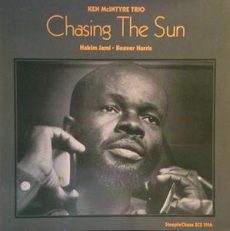
Makanda Ken McIntyre was born Kenneth Arthur McIntyreon on September 7, 1931 in Boston, Massachusetts to a father whoplayed mandolin. He started his musical life on the bugle when he was eight years old, followed by piano. In his teens he discovered the music of Charlie Parker and began playing saxophone at nineteen, then clarinet and flute two years later. Serving in the Army in 1953, for two years he played saxophone and piano in Japan.
Following his discharge Ken attended the Boston Conservatory where he studied with Gigi Gryce, Charlie Mariano, and Andy McGhee. In 1958 he received a degree in flute and composition with a master’s degree the next year in composition. He also received a doctorate (Ed.D.) in curriculum design from the University of Massachusetts Amherst in 1975.
1960 saw McIntyre recording as a leader with Eric Dolphy. The following year and for the next six he taught music in public schools. He took oboe lessons in New York before playing with Bill Dixon, Jaki Byard, and the Jazz Composer’s Orchestra. He went on to spend three years with pianist Cecil Taylor. During the 1970s he recorded with Nat Adderley and Beaver Harris and in the 1980s with Craig Harris and Charlie Haden.
In 1971, he founded the first African American Music program in the United States at the State University of New York College at Old Westbury, teaching for 24 years. He also taught at Wesleyan University, Smith College, Central State University, Fordham University, and The New School for Jazz and Contemporary Music.
In the early 1990s, while performing in Zimbabwe, a stranger handed him a piece of paper with the word “Makanda” written on it, which translates to many skins in the Ndebele language and many heads in Shona. He changed his name to Makanda Ken McIntyre. At the age of 69 on June 13, 2001 he transitioned from a heart attack in New York City.
More Posts: bass clarinet,bassoon,double bass,drums,flute,history,instrumental,jazz,music,oboe,piano,saxophone
Daily Dose Of Jazz…
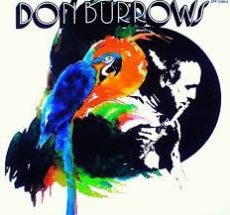
Donald Vernon Burrows was born on August 8, 1928 Marrickville, New South Wales, Australia and attended Bondi Public School. In 1937, visiting flutist and teacher Victor McMahon inspired him to start learning the flute, beginning on a B-flat flute. By 1940 he was captain of the Metropolitan Schools Flute Band and studying at the Sydney Conservatorium of Music.[2]
In 1942, Burrows had begun playing clarinet and appeared on The Youth Show, a Macquarie Radio show. In 1944 he was invited to play and record with George Trevare’s Australians. He became well-known in Sydney jazz circles and was performing in dance halls, nightclubs and radio bands.
During the 1960s and 1970s, Burrows had many engagements in Australia and the United States, including six years performing at the Wentworth Hotel in Sydney. In 1972, he was invited to perform at the Montreux Jazz Festival[4] and later the Newport Jazz Festival.
He received his first gold record in 1973 for his record Just the Beginning, instigating the first jazz studies program in the southern hemisphere, at the New South Wales Conservatorium of Music. He was appointed a Member of the Order of the British Empire (MBE) and appointed Chair of Jazz Studies at the conservatorium.
Though he mostly performed to classical music audiences through tours with Musica Viva and the Australian Broadcasting Corporation concert series, he had an extensive recording career with his groups and performed on albums by others. He also worked with Frank Sinatra, Dizzy Gillespie, Nat King Cole, Oscar Peterson, Tony Bennett, Stéphane Grappelli, Cleo Laine, and the Sydney Symphony Orchestra.
His arthritis from age 38, though making it somewhat difficult to play, never stopped him. In later years he had Alzheimer’s disease and lived in a nursing home in northern Sydney. Saxophonist, flutist and clarinetist Don Burrows transitioned on 12 March 12, 2020, aged 91.

More Posts: bandleader,clarinet,flute,history,instrumental,jazz,music,saxophone
Daily Dose Of Jazz…
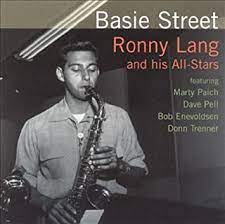
Ronnie Lang was born July 24, 1929 in Chicago, Illinois. Sometimes spelled Ronny, his professional début was with Hoagy Carmichael’s Teenagers. He went on to play for a year with Earle Spencer in 1946, then with Ike Carpenter, and Skinnay Ennis the following year.
Gained attention during his two tenures with Les Brown’s Orchestra between 1949–50 and 1953 to 1956, he recorded with the Dave Pell Octet in the mid-1950s. During this time he moved to California and attended Los Angeles State College of Applied Arts and Sciences studying music and woodwinds.
By 1958 he had become a prolific and busy studio musician in Los Angeles, often employed by Henry Mancini. Ronnie played the iconic sax melodic line in Bernard Herrmann’s score for the 1976 movie Taxi Driver. He also recorded with Pete Rugolo, Bob Thiele, and Peggy Lee.
Alto saxophonist Ronnie Lang, who also played flute and clarinet in the bop, progressive, big band, swing idioms, is now retired at 92.

More Posts: bandleader,clarinet,flute,history,instrumental,jazz,music,saxophone
Daily Dose Of Jazz…
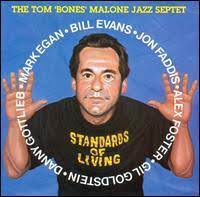
Thomas “Bones” Malone was born June 16, 1947 in Honolulu, Hawaii. He began playing professionally as lead trumpeter for Brenda Lee at a club in Jackson, Mississippi while enrolled at the University of Southern Mississippi. In response to a call from Warren Covington, leader of the Tommy Dorsey Orchestra, he began contracting musicians. After transferring to North Texas State University, Malone continued working as both a player and a contractor for groups. He graduated from North Texas State University with Lou Marini, and both were members of the One O’Clock Lab Band at North Texas.
After graduation, he worked in bands of Woody Herman in 1969, and during the early Seventies he worked with Duke Pearson, Louie Bellson, Doc Severinsen, Frank Zappa, and Blood, Sweat & Tears. In 1973, Malone began a close, fifteen-year association with Gil Evans, whom he has called a mentor. He recorded albums with Evans and toured Europe, Japan, and the Far East. In 1975 Malone toured with Billy Cobham and in 1976 with The Band.
From 1975 to 1985 he worked as arranger for Saturday Night Live and from 1981 to 1985 as musical director. He wrote the chart for the skit that introduced John Belushi and Dan Aykroyd as the Blues Brothers and worked on the film score for Blues Brothers 2000. He joined the CBS Orchestra in 1993, and contributed more than 1,600 arrangements to the Late Show with David Letterman.
As a studio musician, he has been heard on more than 1,000 records, more than 3000 radio and television commercials, and over 4,000 live television shows. In 2007 Bones was invited by music director Geoffrey Moull to arrange and perform a concert with the Thunder Bay Symphony Orchestra. In 2011 Malone was a guest artist with the University of Southern Mississippi Symphony Orchestra.
Trombonist, arranger, and producer Tom Malone, who also plays saxophone, trumpet, tuba, flute, and bass guitar, continues to expand his creative reach.

More Posts: bass guitar,flute,history,instrumental,jazz,music,saxophone,trombone,trumpet,tuba