

The Quarantined Jazz Voyager
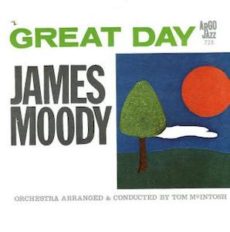
Once again the Jazz Voyager selects another rare gem from the stacks in his library and dusting it off places it on the turntable for another listen. This week it is an album by James Moody titled Great Day. The album was recorded on two simultaneous sessions, June 17 -18, 1963 at the Nola Penthouse Studio in New York City, produced by Esmond Edwards and released the same year on the Argo Records label.
The saxophone and flute work from Moody is always reliable and excellent for the avid listener. He has a penchant for switching from soul jazz to hard bop to mainstream, as he plays straight-ahead originals, standards, and ballads.
Benny Golson wrote the liner notes, Don Bronstein designed the cover and Esmond Edwards painted the cover art. The Great Day sessions historical significance is it is the first documented encounter for Thad Jones and Mel Lewis, who would go on to lead the Thad Jones~Mel Lewis Orchestra.
Tracks | 33:06 All compositions by Tom McIntosh, except as indicated- Great Day ~ 4:00
- The Search ~ 4:35
- Let’s Try ~ 3:22
- One Never Knows (John Lewis) ~ 5:18
- Opales’que (Dennis Sandole) ~ 5:01
- Blues Impromptu (James Moody) ~ 5:30
- Malice Toward None ~ 5:20
- James Moody ~ alto saxophone, tenor saxophone, flute
- Johnny Coles, Thad Jones ~ trumpet
- Hubert Laws ~ flute
- Hank Jones, Bernie Leighton ~ piano
- Jim Hall ~ guitar
- Richard Davis ~ bass
- Mel Lewis ~ drums
- Tom McIntosh ~ arranger, conductor, composer

More Posts: adventure,album,club,flute,genius,jazz,museum,music,preserving,restaurant,saxophone,travel
Daily Dose Of Jazz…
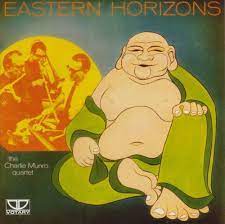
Charles Robert Munro was born on May 22, 1917 in Christchurch, New Zealand. While in his teens he became quite proficient on several saxophones and by 21 had moved to Sydney, Australia where he played in the bands led by Myer Norman and Wally Parks. In addition he worked as a sideman on various nightclub, theater, and ship gigs.
Serving in the military during World War II, Charlie went on to work with Wally Norman at the Roosevelt nightclub in Sydney. In 1950 he played with Bob Gibson, then joined the Australian Broadcasting Commission’s dance band in 1954, continuing to perform with the group through 1976 as a composer and arranger.
He worked extensively with Bryce Rohde in the 1960s, participating in many of Rohde’s Australian jazz experiments. He led his own bands toward the end of his career, and also worked with Georgina de Leon.
Saxophonist and flutist Charlie Munro, who also played the cello and delved into free jazz movement, transitioned on December 9, 1985, in Sydney.

More Posts: arranger,bandleader,cello,composer,flute,history,instrumental,jazz,music,saxophone
Three Wishes
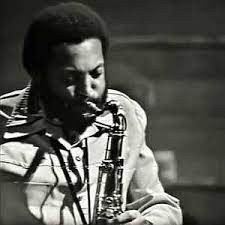
Harold Vick was asked what his three wishes would be and he told Pannonica this:
-
-
“To be able to play my instrument.”
-
“Some money.”
-
“And help a chick. You know: We have a common understanding!”
-

More Posts: flute,history,instrumental,jazz,music,pannonica,saxophone,three,wishes
The Quarantined Jazz Voyager
Remaining hesitant to be in crowds of people without a mask, more and more people are unmasking while we are still in the pandemic. Legislators are speaking unmask rhetoric and otherwise responsible people are listening. This Jazz Voyager is listening to my conscience and protecting myself and those around me.
This week I have chosen another quartet recording by the New York Jazz Quartet, founded by pianist Roland Hanna. The first iteration of the group consisted of flautist Hubert Laws, bassist Ron Carter, and drummer Billy Cobham. In 1974 the lineup changed to Frank Wess, bassist George Mraz, and drummer Ben Riley. Drummers Richie Pratt and Grady Tate also were enlisted to contribute their talents to the group at different times through the decade the band was together. The group recorded for the Inner City, Enja, Salvation and Sonet Records from 1972 to 1982
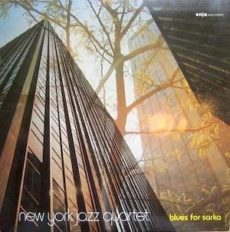
This album is the group’s fourth release, Blues For Sarka, recorded live on May 17, 1978 at The Domicile in Munich, West Germany. It was produced by Horst Weber and Matthias Winckelmann, recorded by Carlos Albrecht and released the same year on Enja Records. The cover photography was taken by Josef Werkmeister and the cover design was by Weber & Winckelmann
Track List | 45:11 All compositions by Roland Hanna except as indicated- All Blues (Miles Davis) ~ 15:29
- Rodney Round Robin ~ 5:44
- I’ll Tell You Tonite (George Mraz) ~ 7:14
- Blues for Sarka (George Mraz) ~ 7:11
- Smelly Jelly Belly ~ 9:33
- Frank Wess ~ flute, tenor saxophone
- Roland Hanna ~ piano
- George Mraz ~ bass
- Grady Tate ~ drums
More Posts: adventure,album,bass,club,drums,flute,genius,jazz,museum,music,piano,preserving,restaurant,saxophone,travel

Daily Dose Of Jazz…
Clotilde Rullaud was born March 1, 1978 in Reims, France and was immersed in the performing arts of music, theatre and dance from early childhood. At five, she began studying flute and singing at the conservatoire, before going on to complete her studies in jazz and improvised music at IACP in Paris, France and EDIM in Cachan, France. She explored opera singing with the tenor singer, Peterson Cowan.
Her musical identity developed through her travels through the Balkans, Ireland, Lebanon, the United States. Clotilde’s study of vocal techniques, inspired by Meredith Monk, fado, tango, Romani music, Turkish music, Persian music, Inuit throat singing and Bulgarian voices were also great influences.
She has recorded three albums as a vocalist and flutist, her 2007 debut with Hugo Lippi, Live au 7 Lézards She has also directed and produced a short film, and written and directed a multidisciplinary performance. With a repertoire spanning jazz, free improvisation and folk music, her career as a musician has led her to perform in France, Germany, Australia, Burkina Faso, China, South Korea, Japan, Luxembourg, the Netherlands, Switzerland, Taiwan, the United Kingdom and the United States.
Since 2007, Rullaud has taught at Martina A. Catella’s school, Les Glotte-Trotters in Paris, and conducted workshops for the festival Les Suds in Arles and for the Ateliers d’ethnomusicologie (ADEM) in Geneva, Switzerland. Moving to New York City in 2017 she collaborated with American pianist Chris McCarthy, producing Pieces of a Song, a repertoire of dark and beautiful pieces based on the writings of Diane di Prima, poetess of the Beat Generation.
She has performed with Olivier Hutman, Dano Haider, Antoine Paganotti, Tristan Macé, Albin Lebossé, Emmanuel Bex, Yann Cléry, Laurent Salzard, Gautier Garrigue, and Alexandre Saada, the latter collaboration produced A Woman’s Journey, a homage to American female protest songstresses.
She has received numerous awards for her work in both jazz and film. Vocalist, flutist and composer Clotilde Rulllaud, who is also an artistic director, filmmaker, producer and facilitator, continues to pursue the limits of her creativity.
More Posts: composer,flute,history,instrumental,jazz,music,vocal