

Daily Dose Of Jazz…
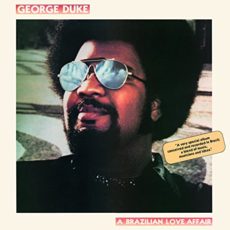
George Duke was born on January 12, 1946 in San Rafael, California and raised in Marin City. It was at the young age of 4 that he first became interested in the piano when his mother took him to see Duke Ellington in concert. He began his formal piano studies at the age of 7, at his local Baptist church. Attending Tamalpais High School in Mill Valley, he went on to earn a bachelor’s degree in trombone and composition with a minor in contrabass from the San Francisco Conservatory in 1967.
Initially he played with friends from garages to local clubs, George quickly eased his way into session work, before getting his master’s degree in composition from San Francisco State University. Although starting out playing classical music, his musician cousin Charles Burrell convinced him to switch to jazz and improvise what he wanted to do.
1967 saw Duke venturing into jazz fusion, playing and recording with violinist Jean-Luc Ponty, as well as performing with the Don Ellis Orchestra, and Cannonball Adderley’s band, and recorded with Frank Zappa and The Mothers of Invention on a number of albums through the 1970s. He also played with Ruth Underwood, Tom Fowler, Bruce Fowler from Zappa’s Overnite Sensation band that he was a part of, along with Johnny “Guitar” Watson and jazz guitarist Lee Ritenour. Lynn Davis and Sheila E recorded with him on his late-1970s solo albums Don’t Let Go and Master of the Game.
During the 1980s he collaborated with bassist Stanley Clarke and produced the Clarke/Duke Project that released three albums, he served as a record producer and composer on two instrumental tracks on the Miles Davis albums Tutu and Amandla, worked with a number of Brazilian musicians, including singer Milton Nascimento, percussionist Airto Moreira and singer Flora Purim, and in the 1992 film Leap of Faith featured gospel songs and choir produced by him and choir master Edwin Hawkins.
Duke was musical director for the Nelson Mandela tribute concert at Wembley Stadium in London, temporarily replaced Marcus Miller as musical director of NBC’s late-night music performance program Sunday Night during its first season, and was a judge for the second annual Independent Music Awards to support independent artists’ careers. He worked with Jill Scott on her third studio album, The Real Thing: Words and Sounds Vol. 3; and put together a trio with David Sanborn and Marcus Miller for a tour across the United States.
His educator side had him teaching a course on Jazz And American Culture at Merritt College in Oakland, California. He was nominated for a Grammy as Best Contemporary Jazz Performance for After Hours in 1999, was inducted into The SoulMusic Hall Of Fame in 2012, and was honored with a tribute album My Old Friend: Celebrating George Duke, produced by long-time friend and collaborator Al Jarreau, that received a NAACP Image Award for Outstanding Jazz Album in 2015.
As leader he recorded some four dozen albums and as sideman he worked with such artists as Third World, The Keynotes, Gene Ammons, Billy Cobham, Eddie Henderson, Alphonse Mouzon, Michael Jackson, Deniece Williams, Miles Davis, Dianne Reeves, John Scofield, Chanté Moore, Joe Sample, Phil Collins, Regina Belle, Teena Marie, Joe Williams, Gerald Wilson and Larisa Dolina among many others.
Keyboard pioneer, vocalist guitarist, trombonist, producer and composer George Duke passed away on August 5, 2013 in Los Angeles, California from chronic lymphocytic leukemia. He was 67. His songs have been sampled by Daft Punk, Kanye West and Ice Cube among numerous others.

Dose A Day-Blues Away

#preserving genius
More Posts: bass guitar,flute,keytar,piano,saxophone,synthesizer,trombone,vocal
Daily Dose Of Jazz…
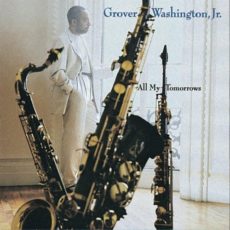
Grover Washington Jr. was born on December 12, 1943 in Buffalo, New York. His mother was a church chorister and his father was a saxophonist and collected old Jazz gramophone records, which put music everywhere in the home. Growing up he listened to Benny Goodman, Fletcher Henderson, and others like them. At the age of eight his father gave him a saxophone and he practiced and would sneak into clubs to see famous Buffalo blues musicians.
Leaving Buffalo he played with a Midwest group called the Four Clefs and then the Mark III Trio from Mansfield, Ohio. Then drafted into the U.S. Army he met drummer Billy Cobham, who as a mainstay in New York City, he introduced Washington to musicians around the city. After leaving the Army, he freelanced around New York City, but eventually landed in Philadelphia in 1967. The first two years of the Seventies decade provided his first recording sessions on Leon Spencer’s debut and sophomore albums on Prestige Records, together with Idris Muhammad and Melvin Sparks.
His big break came when alto saxophonist Hank Crawford couldn’t make a recording date with Creed Taylor’s Kudu Records and Grover took his place. This led to his first solo album, Inner City Blues in which he displayed his talent on the soprano, alto, tenor, and baritone saxophones.
His rise to fame with his first three albums established him as a force in jazz and soul music, but it was his fourth album in 1974, Mister Magic, that became his major commercial success. The album crossed over all the charts and with guitarist Eric Gale in tow again for the 1975 follow-up album Feels So Good proved both could reach #10. A string of acclaimed records brought Washington through the 1970s, culminating in the signature piece Winelight in 1980, in which he collaborated on Just The Two Of Us with Bill Withers and dedicated Let It Flow to Dr. J of the Philadelphia 76ers. The album went platinum, won two Grammy awards for Just the Two Of Us and Winelight and was nominated for both Record and Song Of The Year.
During the late 1980s and early 1990s Washington gave rise to Kenny G, Walter Beasley, Steve Cole, Pamela Williams, Najee, Boney James and George Howard. Over the course of his career he performed and recorded with Kathleen Battle, Kenny Burrell, Charles Earland, Dexter Gordon, Urbie Green, Eddie Henderson, Masaru Imada, Boogaloo Joe Jones, Gerry Mulligan, Don Sebesky, Johnny “Hammond” Smith, Mal Waldron and Randy Weston.
On December 17, 1999 while waiting in the green room after performing four songs for The Saturday Early Show, at CBS Studios in New York City, saxophonist Grover Washington Jr. collapsed. He was pronounced dead at about 7:30 pm at St. Luke’s-Roosevelt Hospital and his doctors determined he had suffered a massive heart attack. He was 56. In tribute, a large mural of him, part of the Philadelphia Mural Arts Program, is just south of the intersection of Broad and Diamond streets.
Give The Gift Of Knowledge
Daily Dose Of Jazz…
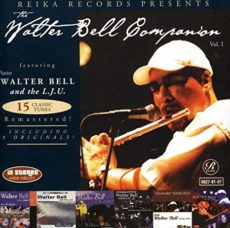
Walter Bell was born in Philadelphia, Pennsylvania on October 31, 1959 and is a self taught flutist and jazz historian. He moved to Richmond, Virginia to hone his craft and it was after this period of years that he rose to national prominence before moving back home. He is not one to double on saxophone, but stays true to his instrument having mastered the entire family of flutes from bass to piccolo. Carrying on the tradition of Herbie Mann, Hubert Laws, Yusef Lateef and Rhasaan Roland Kirk he focuses on jazz and Latin for his repertoire.
The founder and co owner of his own small label, Reika Records, Bell has released nine projects thus far. He performs nationally, has over 30 players that he rotates through his group, the Latin Jazz Unit. An in demand performer, he continually festivals, college & club dates and private receptions.
Flautist Walter Bell continues to perform and record, is the host a bi-monthly radio show on Washington D.C.’s WPFW Pacifica 89.3, performs a Sunday jazz brunch Hibachi in Philadelphia and still has time to produce and score TV themes for New Millenium studios with actor Tim Reid in Virginia.
Give The Gift Of Knowledge
More Posts: flute
Daily Dose Of Jazz…
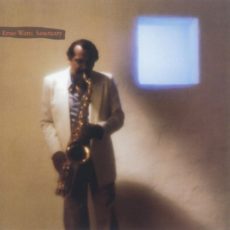
Ernest James Watts was born October 23, 1945 in Norfolk, Virginia. He began playing saxophone at thirteen. After a brief period at West Chester University, he attended Berklee College of Music on a Downbeat scholarship. He toured with Buddy Rich in the mid-1960s, occupying one of the alto saxophone chairs, with Lou Marini sitting the other.
He traveled to Africa on a US State Department tour with Oliver Nelson’s group and played tenor saxophone with The Tonight Show Band under Doc Severinsen for 20 years. During the Seventies he was a featured soloist on many of Marvin Gaye’s Motown albums, as well as on countless other pop and R&B sessions during 25 years as a first-call musician in the studios of Los Angeles, California.
In the mid-1980s Watts decided to rededicate himself to jazz, recording and touring with German guitarist and composer Torsten de Winkel, drummer Steve Smith and keyboardist Tom Coster. He joined bassist Charlie Haden’s Quartet West, played the saxophone on the Grease soundtrack, clarinet on The Color Purple soundtrack and performed on the opening theme song of the popular 80s sitcom Night Court.
Ernie founded Flying Dolphin Records and in early 2008, his Analog Man won the award in the 7th Annual Independent Music Awards for Best Jazz Album, worked with vocalist Kurt Elling, won a Grammy in 2010 for Best Jazz Vocal Album. He tours Europe twice a year with his own Ernie Watts Quartet, as well as Asia and summer jazz festivals the world over.
He has toured with the Rolling Stones, played the mystery horn on Frank Zappa’s album The Grand Wazoo, and has performed and recorded with Richard Groove Holmes, Alphonse Mouzon, Billy Alessi, Bobby Alessi, Gene Ammons, Paul Anka, Eric Martin, Willie Bobo, Brass Fever, Kenny Burrell, Lee Ritenour, David Axelrod, Donald Byrd, Stanley Clarke, Billy Cobham, Gino Vannelli, Randy Crawford, Kurt Elling, Torsten de Winkel, Hellmut Hattler, Dizzy Gillespie, Bobby Hutcherson, Milt Jackson, J. J. Johnson, Carole King, Charles Kynard, John Mayall, Carmen McRae, Blue Mitchell, Helen Reddy, New Stories, Moacir Santos, Lalo Schifrin, Bud Shank, Gábor Szabó, Gerald Wilson, Ndugu Chancler, Alphonso Johnson, Patrice Rushen, Joe Louis Walker, Barry Goldberg, Paul Jones, Chubby Tavares, T. Bone Walker, Big Joe Turner and Otis Span among others.
Tenor, alto and soprano saxophonist and flautist Ernie Watts has won two Grammy Awards as an instrumentalist and continues to perform, record and tour.
Inspire A Young Mind
Daily Dose Of Jazz…
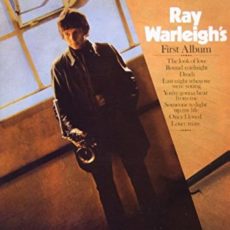
Raymond Kenneth Warleigh was born on September 28, 1938 in Sydney, New South Wales, Australia. He migrated to England in 1960, where he quickly established himself as an in-demand session player.
He played and recorded with many major figures and bands of the UK jazz and blues scene, including Alexis Korner, Tubby Hayes, Humphrey Lyttelton, Terry Smith, Ronnie Scott, Long John Baldry, John Mayall, Allan Holdsworth, Soft Machine, Georgie Fame, Mike Westbrook, Dick Morrissey and Kenny Wheeler, as well as Mike Oldfield, Nick Drake, and Charlie Watts. He accompanied visiting artists such as Champion Jack Dupree and his successful 30-year career partnered him with Dusty Springfield, Marianne Faithfull, Scott Walker and Stevie Wonder, among others.
Warleigh’s First Album was released in 1968 and in 1971 he played saxophone and clarinet with the loosely connected UK folk group P. C. Kent. In 1973 he joined Latin fusion band Paz, led by vibist and composer Dick Crouch. He featured with the band for 8 years playing a weekly Sunday residency at the Kensington, a pub in Holland Park.
He recorded seven albums as a leader as well as his sideman sessions with for Spotlite, Magnus and Paladin Record labels producing Kandeen Love Song, Paz Are Back , Paz Live at Chichester Festival and Look Inside. Members of the band were Dick Crouch leader and vibes, guitarist Ed Speight, Geoff Castle on keyboards, bass guitarist Ron Mathewson, drummer Dave Sheen and percussionist Chris Fletcher. His critically acclaimed last album Rue Victor Massé was issued in 2009 and is an improvisation with free-jazz drummer Tony Marsh.
In his leisure time he was an accomplished yachtsman before serious illness struck in 2011. Alto saxophonist and flautist Ray Warleigh passed away of cancer on September 21, 2015.
Sponsored By
Voices From The Community