

Daily Dose Of Jazz…
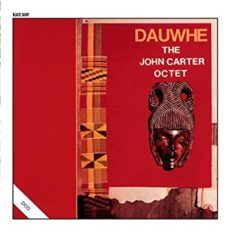
John Wallace Carter was born on September 24, 1929 in Fort Worth, Texas and attended I.M. Terrell High School. He played music with schoolmates Ornette Coleman and Charles Moffett in the 1940s.
From 1961, he was based mainly on the West Coast, where he met Bobby Bradford in 1965 and went on to work together on a number of projects, most notably the New Jazz Art Ensemble. He also played with Hampton Hawes and Harold Land. In the Seventies he became well known for his extraordinary solo concerts.
At New Jazz Festival Moers 1979 he and the German clarinetist Theo Jörgensmann performed for three days. This catapulted him to garnering wide recognition from around the world. He and Jörgensmann met again in 1984. The program of the Berlin Jazz Fest was built around the clarinet and after Carter’s solo performance, he and Jörgensmann also played together.
Between 1982 and 1990 Carter composed and recorded Roots and Folklore: Episodes in the Development of American Folk Music, five albums focused on African Americans and their history. The complete set was acclaimed by jazz critics as containing some of the best releases of the 1980s.
A clarinet quartet with Perry Robinson, Jörgensmann and Eckard Koltermann was planned for 1991, but Carter did not recover from a nonmalignant tumor. Later that same year he was inducted into the Down Beat Jazz Hall of Fame.
He recorded fourteen albums as a leader on the Black Saint, Flying Dutchman, Revelation, Dark Tree, Emanem, and Gramavision record labels. As a sideman he recorded with Horace Tapscott, Vinny Golia, and the Clarinet Summit. Clarinetist, saxophonist and flutist John Carter passed away on March 31, 1991.

Dose A Day-Blues Away

Daily Dose Of Jazz…
Norris Turney was born on September 8, 1921 in Wilmington, Ohio. He began his career in the Midwest, playing in territory bands such as the Jeter-Pillars Orchestra. He played with Tiny Bradshaw in Chicago, Illinois before moving to New York City, where he played with the Billy Eckstine Orchestra from 1945 to 1946.
Turney had little luck in New York and returned to Ohio to play in local ensembles through the 1950s. He toured with Ray Charles in 1967, then was hired by Duke Ellington, staying from 1969 to 1973. He was hired to play alto saxophone as an “insurance policy” due to the failing health of Johnny Hodges. He also played tenor saxophone and was the first flute soloist to ever play in Ellington’s orchestra.
Following his tenure with Ellington, he joined the Savoy Sultans, the Newport All-Stars and played in several pit orchestras. By the 1980s, he toured and recorded as a member of the Oliver Jackson Quintet, with Ali Jackson, Irvin Stokes, and Claude Black.
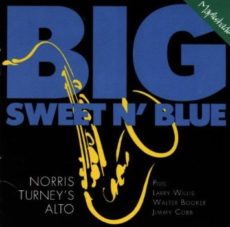
He recorded as a leader between 1975 and 1978, with I Let A Song with Booty Wood, Aaron Bell, Sam Woodyard and Raymond Fol. He released Big, Sweet ‘n Blue in 1993 with Larry Willis, Walter Booker and Jimmy Cobb. As a sideman he recorded with Randy Weston, Oliver Jackson and Red Richards. Flautist and saxophonist Norris Turney passed away of kidney failure on January 17, 2001, Kettering, Ohio.
Put A Dose In Your Pocket
Review: Morgan Guerin | The Saga
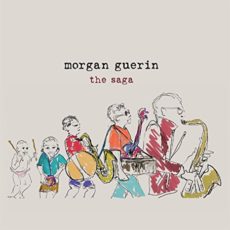
There is a reason for cover art. It speaks in silence for the artist. Thus, the listener should take a moment to immerse him/herself to visually understand the message the artist is attempting to convey. What I found in the artwork was a mini story of the instrumental journey from boyhood to arrive with a full arsenal by manhood. I realized I was viewing the preface of what was to come. Aptly titled The Saga, I knew a journey had taken place to get to this point as I inserted the disc into my computer. What I heard was an unexpected voice of a young man who had traveled far beyond his musical prowess. I was immediately reminded of Herman Hesse and Siddhartha’s sojourn, who left home to discover life through the lens of the world, only to return with greater self-awareness and peace.
To say he is compelling storyteller falls short of the message his music delivers. He is a messenger, come from a long line of griots who has given voice to a generation that unwillingly is forced to take the baton as have generations before him. From deep in the Louisiana culture you will hear the Second Line and rhythm and blues influences in his music. The very first drumbeat of Parallel sets the tone for his acknowledgement of the turbulent ecological and racial times the country is in. I am hearing the protest songs of the Sixties expressed in a rap delivered by Dashill Smith.
Blueprint delivers another message and eases us into a zone where discomfort is our journey foretelling, through the voice of Allana Hudson, the lies to humanity that contradict our ancestor’s wisdom. A fusion of sound that is ethereal beckons us forward in Tabula Rava, reminiscent of Mahavishnu, Santana, Zawinul and Return to Forever. Beginning with an Eastern calling and announcement of something majestic approaching, it builds to a cacophonous revelry in the spirit. It’s like witnessing something for the very first time that takes your breathe away or gives you pause. That tingly feeling of excitement that leaves you fulfilled for that brief moment in time. In The Saga is the journey of ups and downs, loves and loss, in the varied experiences that greet us along the way.
In Madeira there is settledness I hear when one finds a space that is easy and comfortable. This is where find solace With A Peace Of Mind that remains constant throughout our lives if we only allow it. Sharynwood Drive is my return home with all that has been discovered and learned, to be passed on to a new generation of explorers.
The Saga is a simple story told through the complexities of the music. The voices used to tell his story vary in emotion but the message is consistent. Listen carefully and you will see he has taken on a journey through the history of jazz, incorporating his youthful sensibilities within the standard language of jazz. One can feel the pulse of the music and there is beauty in the nuances throughout with the able assistance of his 11 accomplices. This was my musical journey with this young man of infinite wisdom, yet to be fully unleashed upon the world.
For those legions of jazz enthusiasts following the music trends, we await patiently for each decade to spew forth those chosen few who will humbly add their talent to the lexicon of the music. We guard the bastion for the rise of the exceptional to step forth onto the global stage. To our delight, our stalwart diligence has revealed just such a young man from amongst his peers. Hailing out of the birthplace of jazz, the name is familiar to us. It is Guerin… Morgan Guerin.
His Instruments: Drums, Alto & Tenor Saxophones, Piano, Fender Rhodes, EWI, EWI Vocoder, Organ, Flute, Moog Bass and Percussion.
The Band: Curtis Olawumi/flugelhorn, Daniel Wytanis/Trombone, Grace Sommer/violin, Julius Rodriguez/organ, Roland Guerin/electric bass, Paul “PapaBear” Johnson/electric bass, Risa Pearl/vocal, Dashill Smith/rap, Allana Hudson/spoken word, Patrick Arthur/electric & acoustic guitar, Brandon Boone/electric & upright bass.
Impressive!
carl anthony | notorious jazz | september 7, 2016
Give A Gift Of Jazz ~ Share
#preserving genius
More Posts: alto & tenor saxophone,drums,ewi,ewi vocoder,fender rhodes,flute,moog bass,organ,percussion,piano,review
Daily Dose Of Jazz…
Bennie Maupin was born August 29, 1940 in Detroit, Michigan. He started playing tenor saxophone in high school and attended the Detroit Institute for Musical Arts, while playing locally. He moved to New York in 1963, freelancing with many groups, including ones led by Marion Brown and Pharoah Sanders.
Well known for his playing as a part of Herbie Hancock’s Mwandishi sextet and Headhunters band and for performing on Miles Davis’s seminal fusion record, Bitches Brew. Maupin has collaborated with Horace Silver, Roy Haynes, Woody Shaw, Lee Morgan and many others. He has also performed on several Meat Beat Manifesto albums.
Noted for having a harmonically-advanced, “out” improvisation style, while having a different sense of melodic direction than other “out” jazz musicians such as Eric Dolphy.
Maupin was also a member of Almanac, a group with bassist Cecil McBee, pianist Mike Nock and drummer Eddie Marshall. He has recorded a half dozen albums as a leader and another three dozen as a sideman with John Beasley, Marion Brown, Mike Clark, Miles Davis, Jack DeJohnette, Eddie Henderson, Andrew Hill, Darek Oles, Lonnie Smith, McCoy Tyner, Lenny White, Patrick Gleeson and Jim Lang.
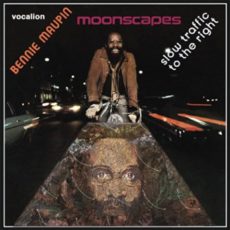
Multireedist Bennie Maupin, who plays various saxophones, flute and bass clarinet, failed to catch on as a bandleader, thus maintained a low profile during the past 15 years, until emerging in 2006 with the critically acclaimed Penumbra followed two years later Early Reflections on the Cryptogramophone label, then on Vocalion with Slow Traffic To The Left, Moonscapes. He continues to perform and tour.
Sponsored By

Daily Dose Of Jazz…
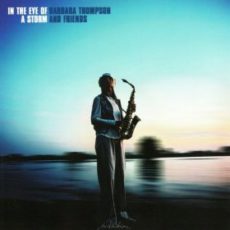
Barbara Gracey Thompson was born on July 27, 1944 in Oxford, United Kingdom. She studied clarinet, flute, piano and classical composition at the Royal College of Music, but it was the music of Duke Ellington and John Coltrane that caused her to shift her interests to jazz and saxophone.
Around 1970, Thompson she joined Neil Ardley’s New Jazz Orchestra and appeared on albums by Colosseum. Starting in 1975, she was a founding member of three bands, the first being the United Jazz and Rock Ensemble, with bandleaders Wolfgang Dauner, Volker Kriegel, Albert Mangelsdorff, Eberhard Weber, Ian Carr, Charlie Mariano, Ack van Rooyen and Jon Hiseman. The second was Barbara Thompson’s Jubiaba, a 9 piece Latin/rock band with Peter Lemer, Roy Babbington, Henry Lowther, Ian Hamer, Derek Wadsworth, Trevor Tomkins, Bill Le Sage and Glyn Thomas. The third, Barbara Thompson’s Paraphernalia, is her current working band with pianist Peter Lemer, vocalist Billy Thompson, bassist Dave Ball and Jon Hiseman on drums.
She was awarded the MBE in 1996 for services to music but due to her being diagnosed with Parkinson’s disease in 1997, she retired as an active saxophonist in 2001 with a farewell tour. Barbara went on to work exclusively as a composer exclusively, but returned to the stage in 2003 replacing the unwell Dick Heckstall-Smith during Colosseum’s “Tomorrow’s Blues” tour becoming a permanent member, and in 2005 she performed live with Paraphernalia in their “Never Say Goodbye” tour.
Thompson has worked with Andrew Lloyd Webber on musicals such as Cats, Starlight Express and Requiem. She has written several classical compositions, music for film and television, a musical of her own and has composed songs for her big band Moving Parts.
Sponsored By

www.whatissuitetabu.com
