

Daily Dose Of Jazz…
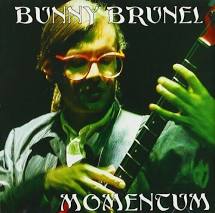
Bernard “Bunny” Brunel was born in Nice, France on March 2, 1950 and took up the electric and acoustic bass when he was fifteen. A self taught musician, he did attend for a time a classical conservatory to learn the basic technique of playing with the bow on the bass.
Brunel is a founding member of the jazz fusion band CAB along with Dennis Chambers, and Tony MacAlpine. Since their formation in 2000, they have released four studio albums and two live albums. Their second album, CAB 2, received a nomination for Best Contemporary Jazz Album at the 2002 Grammy Awards. Other musicians who have been members of CAB include Patrice Rushen, Virgil Donati, David Hirschfelder, and Brian Auger.
Bassist Bunny Brunel, who has played with Chick Corea, Herbie Hancock, and Wayne Shorter, and who has recorded ten albums as a leader, is involved in musical instrument design, film and television scoring, continues to perform and record.

More Posts: bandleader,bass,guitar,history,instrumental,jazz,music
Requisites
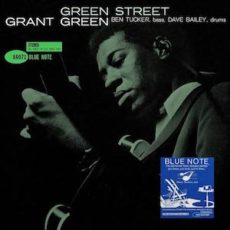
Green Street ~ Grant Green | By Eddie Carter
Grant Green steps into the spotlight with the second of four albums he released in 1961. Grant was one of the most interesting guitarists in jazz, possessing a gorgeous tone, speed of execution, and a distinctive lyricism in his playing that proved remarkably durable. He never failed to please his critics, fans, and peers throughout his career, but his time at Blue Note was particularly successful. Green Street (Blue Note BLP 4071/BST 84071) is a trio album like his label debut, Grant’s First Stand.
However, here the guitarist takes a different path than the usual organ/guitar/drums trio or a larger group featuring horns, a piano, or vibes to augment the rhythm section on later albums. His colleagues are Ben Tucker on bass, and Dave Bailey on drums. Both men provide a perfect backdrop for Grant to communicate a swinging style of jazz to the listener with rhythmic precision and finesse throughout the five-song set. My copy used in this report is the 2015 Music Matters Stereo audiophile reissue (MMBST-84071).
The first stop, No. 1 Green Street is a mid-tempo blues by the leader beginning with the trio presenting the catchy melody in unison. Grant takes over for the song’s only solo, giving him ample space to build an engaging statement that’s an ear pleaser with Ben and Dave pacing themselves behind him. ‘Round About Midnight by Bernie Hanighen, Thelonious Monk, Cootie Williams opens with a delicately tender theme by the trio continuing with an elegantly graceful showcase by the guitarist preceding a touching ending.
Green’s composition, Grant’s Dimensions ends Side One with high-spirited energy allowing Ben and Dave their first solo opportunity. Grant crafts a marvelous improvisation driving the rhythm firmly. Ben turns in a fine performance next with a bouncy bass interpretation flowing steadily into Dave’s impressive exchange with Green and Tucker ahead of the out-chorus.
Green With Envy by Grant begins Side Two affording each member a chance to speak individually with the leader giving the longest talk. After a vivacious melody by the trio, Grant delivers one of his most creative interpretations with a satisfying summation. Ben is up next, carefully selecting and bending his notes into an excellent reading with feeling. Bailey participates in an aggressive exchange with Green and Tucker for the final performance possessing a youthful intensity before a superb end theme.
Alone Together by Arthur Schwartz and Howard Dietz was written in 1932 and featured in the Broadway musical, Flying Colors. The trio’s rendition lowers the temperature by a few degrees, opening with a subdued introduction and theme evolving into a virtuoso lead solo by Grant punctuated by the inspired foundation from Ben and Dave. The bassist provides a walking bass line on the final reading that’s clearly expressed and well-defined, swinging smoothly into the theme’s return and slow fade.
Anyone who’s heard or owns a Music Matters Jazz reissue knows of the attention to the music through their remastering of the original tapes by Rudy Van Gelder. The amazing gatefold photos, and the covers themselves are worthy enough to be considered as album art plus the meticulous pressing by RTI. I listened to Green Street after hearing my 1995 Blue Note Connoisseur Series Stereo reissue, using it for comparison since both are 180-gram audiophile reissues. I was impressed by the Connoisseur LP’s sound and the detail of the instruments is clearly defined. In my opinion, it’s one of the best-remastered albums I’ve ever heard from that series by Capitol Records. However, when the stylus dropped on the MMJ 33 1/3 reissue, I discovered an extraordinary soundstage across the treble, midrange, and bass spectrum that’s absolutely mind-blowing.
There’s only one error on the LP, it appears on the Side Two label. Track Two is incorrectly listed as the 1937 song, Where Are You? by Jimmy McHugh and Harold Adamson. That tiny issue aside, if you’re a fan of jazz guitar by Kenny Burrell, Pat Martino, Wes Montgomery, Jimmy Raney, and Joe Pass, I enthusiastically invite you to take a trip to Green Street on your next record hunt. There you will find a jazz album that’s a real pleasure to listen to and sounds just as fresh today as when first released by one of the elite guitarists of Hard-Bop, Grant Green at the peak of his creativity! ~ Grant’s First Stand (Blue Note BLP 4064/BST 84064); Green Street (Blue Note Connoisseur B1-32088) – Source: Discogs.com ~ ‘Round About Midnight, Alone Together – Source: JazzStandards.com © 2020 by Edward Thomas Carter

More Posts: choice,classic,collectible,collector,guitar,history,instrumental,jazz,music

Daily Dose Of Jazz…
James Otis Wyble was born on January 25, 1922 in Port Arthur, Texas and in his early years worked for a radio station in Houston. He and guitarist Cameron Hill played Western swing, an outgrowth of jazz, in a band led by Burt “Foreman” Phillips. The sound of two guitars attracted Bob Wills, another fan of Western swing, and he hired both men for his band, the Texas Playboys.
His career interrupted by World War II, he served in the Army from 1942 to 1946, but returned to music after he came home. Jimmy continued to play in Western swing bands, but his interest in jazz surfaced on his 1953 debut album, The Jimmy Wyble Quintet. He would soon work with Barney Kessel and Benny Goodman, and then played with Red Norvo for eight years, including on a tour of Australia accompanying Frank Sinatra.
During the 1960s Wyble took a job as a studio musician in Los Angeles, California working as a guitarist for movies and television, playing on movie soundtracks, including The Wild Bunch, Ocean’s Eleven, Everything You Always Wanted to Know About Sex and Kings Go Forth, and played on TV shows such as The Flip Wilson Show and Kraft Music Hall.
He became an educator after taking classical guitar lessons from Laurindo Almeida, teaching guitar to Larry Koonse, Howard Roberts, Howard Alden and Steve Lukather among others. The 1970s saw Jimmy developing a two-line contrapuntal approach to guitar and composed numerous etudes in this style, publishing Classical/Country, The Art of Two-Line Improvisation, and Concepts for the Classical and Jazz Guitar.
During the 1980s, he left the music business, returning to performance in 2005. Larry Koonse, his former student, issued the album What’s in the Box with compositions by Wyble based on his book of etudes.
Guitarist, composer, and educator Jimmy Wyble continued to perform, record and teach until his death on January 16, 2010.

More Posts: composer,educator,guitar,history,instrumental,jazz,music
Daily Dose Of Jazz…
Igor Grigoriev was born on January 24, 1955 in Moscow, Russia and taught himself to play the guitar as a young child, and later obtained his master’s degree from a music institution in Russia. As a young boy in the late sixties, he was interested in the latest music of the time, rock and started his career, gaining fame by playing and touring around the world.
Becoming a band leader of the trio, Roof, with trumpeter Andrew Solovyov, and percussionist Michael Zhukov they recorded on Melodia Records and Leo Records. His group, Asphalt also gained tremendous popularity despite its short life span.
As he developed musically, Grigoriev became interested in Charlie Parker’s work, but in later years the influence of classical composers became evident in his music. Permanently migrating to the United States in 1989 he continued his career, as a classical and jazz musician, but later he became more and more interested in Avant-garde music.
Better known for his 1990s work, he rapidly assimilated the American avant-garde and forged his own, instantly identifiable style. His music of the 1970s and 1980s saw transition from rock to classical to jazz and to avant-garde music. Igor developed methods of simultaneously improvising bass lines, harmony and melodic lines. In his later years, his playing became less predictable and formulaic.
He has recorded a number of solo albums, as well as recording or performing with Stan Getz, Red Callender, Larry Gales, Milcho Leviev, Ira Schulman, Rod Oakes, and many others. Igor and Rod founded OGOGO in 1996, which is one of the most important organizations to perform improvised music. His central focus was free improvisation, though he occasionally appeared in more conventional jazz and classical contexts, such as big band, various ensembles, and string orchestra.
He composed and arranged for a wide range of music genres, did orchestra work for a Russian circus, and arranged music for theatrical plays. As an educator he taught guitar, music history, jazz history, ensembles, and improvisation at Los Angeles Harbor College and Cerritos College in Los Angeles, California. Guitarist, composer, arranger, band leader and educator Igor Grigoriev passed away on September 25, 2010.
More Posts: arranger,composer,guitar,history,instrumental,jazz,music
Daily Dose Of Jazz…
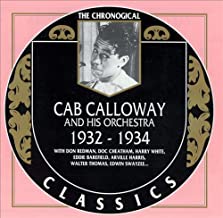
Morris Ellis “Fruit” White was born January 17, 1911 in Nashville, Tennessee and grew up in Peoria, Illinois. During the 1920s he played with Charlie Creath, Dewey Jackson, and Ethel Waters before joining The Missourians in 1928.
In 1930, Cab Calloway became the leader of the ensemble, with White becoming one of his most important sidemen. He remained with Calloway’s band until 1938. He played with Lionel Hampton in 1941, then left the music industry for good.
Banjoist and guitarist Morris White passed away In November 1986.