

Daily Dose Of Jazz…
Jesse Price was born on May 1, 1909 in Memphis, Tennessee and began on drums at age 14, and played locally with blues singers, including Ida Cox, and in the Palace Theater pit orchestra, early in his career.
A move to Kansas City, Missouri in 1934 saw him playing with George E. Lee, Thamon Hayes, Count Basie, and Harlan Leonard into the early Forties. He then moved to Los Angeles, California where Jesse worked with Ella Fitzgerald, Louis Armstrong, Stan Kenton, Basie again, Benny Carter, and Slim Gaillard through the decade.
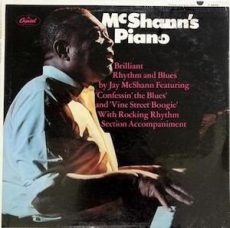
He recorded with Jay McShann when he was back in Kansas City in the 1950s. He led a band at the Monterey Jazz Festival in 1971, which included Harry Edison, Jimmy Forrest and Big Joe Turner.
Price recorded twenty-three tracks as a leader between 1946 and 1948, most of them for Capitol Records. All are published on a Blue Moon CD, The Singing Drummer Man; Jesse Price. The Complete Recordings 1946–1957.
Drummer Jesse Price transitioned on April 19, 1974 in Los Angeles.

More Posts: bandleader,drums,history,instrumental,jazz,music
Requisites
Boss Tenor ~ Gene Ammons | By Eddie Carter
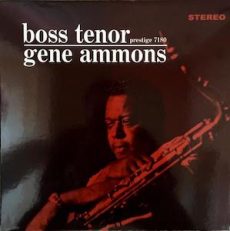
Gene Ammons enters the spotlight of this morning’s discussion with a splendid quintet date titled Boss Tenor (Prestige PRLP 7180/PRST 7180). It hit the stores in 1960 and was the first album Ammons recorded after spending two years in prison for narcotics possession. It’s also considered one of the best in his extensive discography. Here, the tenor saxophonist demonstrates his strengths in a program of two originals and five standards with an excellent rhythm section. Tommy Flanagan on piano, Doug Watkins on bass, Arthur Taylor on drums, and Ray Barretto on congas complete the ensemble. My copy is the 2016 Analogue Productions Stereo audiophile reissue sharing the original catalog number.
The quartet opens Side One by Hittin’ The Jug, a slow tempo blues by Gene Ammons that gets underway with a short solo by Tommy. Gene takes over for an exquisitely tasteful melody and opening statement. Doug answers the tenor with a laid-back reading as fresh as a cool breeze on a warm evening. Gene returns for a few final thoughts ahead of the closing chorus. The foursome picks up the pace for a lively rendition of Close Your Eyes by Bernice Petkere. Ammons shows off his spirited lyricism in the opening chorus and first solo. Flanagan briefly expresses the song’s sunny nature next as the rhythm section’s sprightly supplement holds everything together until Jug’s ending theme gently fades into silence.
The first side finale, My Romance by Richard Rodgers and Lorenz Hart, is captured in its purest essence by the ensemble. Tommy makes his entrance gently in the introduction. Gene takes over to present an elegant melody and a sweet expression of love in the song’s only interpretation, complimented by the trio’s sensuously tender accompaniment into a lovely ending. The quintet kicks off Side Two with a pleasure trip to see the Canadian Sunset by Eddie Heywood and Norman Gimbel. The rhythm section sets this enjoyable excursion in motion with their introduction, then Ammons proceeds to take a leisurely trip through the opening chorus. He completes the journey with an entertaining ride in the song’s only solo ahead of the theme’s restatement and close.
Gene’s Blue Ammons is next and reminiscent of The Happy Blues that Gene recorded in 1956. It begins with a two-instrument introduction by Doug and Art that grows into the saxophonist’s medium melody. Gene starts the solos with a relaxing presentation that’s light and airy. Tommy comes in next and swings comfortably in a short statement, then Gene has an easy-going concise conversation with Art before the closing chorus gently fades into oblivion. Charlie Parker’s Confirmation picks up the beat from the start of the quintet’s brisk melody, and Ammons opens the solos with an effervescent presentation. Flanagan follows him and gives an enthusiastic statement, then Watkins delivers a concise comment. Ammons and Taylor share a brief exchange preceding the closing chorus and exit.
Savoy, aka Stompin’ at The Savoy, by Benny Goodman, Andy Razaf, Arthur Sampson, and Chick Webb, pays homage to the Savoy Ballroom in Harlem, where Webb was the orchestra leader, and people danced their troubles away during the Depression. Gene leads the quintet in the melody with a toe-tapping beat that extends to his spirited opening solo. Tommy soars cheerfully into the subsequent statement, and Ray adds a short footnote during the theme’s reprise and climax. Bob Weinstock supervised the initial album, and Rudy Van Gelder was the recording engineer. Kevin Gray mastered this reissue; the album cover is worthy of hanging on your wall, and the record is pressed on 200 grams of audiophile vinyl that’s dead silent until the music starts.
The sound quality of this reissue is so spectacular that if you close your eyes while listening, you’ll swear the quintet is playing right before you in your listening room. Ammons and company are at their best from the first note to the finale of every track. I happily recommend Boss Tenor for a spot in your library if you’re discovering Gene Ammons for the first time or are a longtime fan. It’s a fantastic performance that will enjoy repeated listens on the turntable for anyone who loves and appreciates the tenor sax!
~ Close Your Eyes, Confirmation, My Romance, Stompin’ at The Savoy – Source: JazzStandards.com ~Canadian Sunset – Source: Wikipedia.org © 2023 by Edward Thomas Carter

More Posts: choice,classic,collectible,collector,history,instrumental,jazz,music,saxophone
Daily Dose Of Jazz…
Ronaldo Folegatti was born on April 30, 1958 in Rio de Janeiro, Brazil and started playing the guitar at age 10. He studied mathematics and received a master’s degree in science.
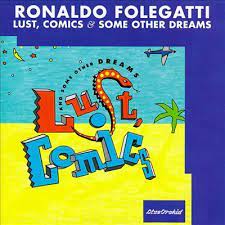
When he was twenty-two, he moved to Germany and started a career in music. He released his debut album, Sound of Watercolors, in Germany in 1990. He recorded his sophomore album, Lust, Comics & Some Other Dreams, with Till Brönner and Ronnie Stevenson. The album crossed several genres including jazz, big band, free jazz, and Brazilian.
In 1995 he returned to Brazil and five years later recorded two more albums, Mazy Tales and Anjos & Estrellas. In 2005 he released Jamming! with guest appearances by Randy Brecker, Will Lee, Joel Rosenblatt, Zé Canuto, Teo Lima, Marcelo Martins, and Ada Rovatti. Composer, guitarist, and record producer Ronaldo Folegatti, who had been treated for cancer for two years, transitioned on August 1, 2007, Teresópolis, Brazil.
More Posts: bandleader,composer,guitar,history,instrumental,jazz,music,record producer
Daily Dose Of Jazz…
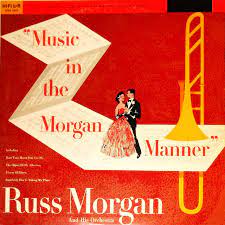
Russell Morgan was born on April 29, 1904 in Scranton, Pennsylvania into a Welsh family. He was encouraged to express himself musically from the age of seven. His father was a former drummer, his mother a pianist in a vaudeville act. He began studying piano and worked in the mines with his father to earn money to help support the family and pay for his lessons.
By 14, he was earning money as a pianist in a Scranton theater. Purchasing a trombone he learned to play and in 1921 he played trombone with the Scranton Sirens, a popular band in Pennsylvania. Russ moved to New York in 1921 at 18 and three years later he was writing arrangements for John Philip Sousa and Victor Herber. He then joined Paul Specht’s orchestra and toured throughout Europe with the likes of Paul Whiteman, Charlie Spivak, and Artie Shaw. After returning from Europe, Jean Goldkette invited him to Detroit, Michigan to lead his band with former associates Tommy and Jimmy Dorsey, Chauncey Morehouse, Joe Venuti, Eddie Lang, Bix Beiderbecke, and Fuzzy Farrar.
His first records were made for OKeh in mid 1930 and for Parlophone and Odeon, usually under the name Russell Brown and his Orchestra. During the early 1930s, Morgan joined the group of anonymous studio groups recording pop tunes for the dime store labels, which included Banner, Melotone, Oriole, Perfect, Romeo, Conqueror, and Vocalion.
For a short time in the Thirties he arranged for Fletcher Henderson’s Orchestra. In 1935, he played trombone with the Original Dixieland Jazz Band when they recorded four sides for Vocalio and two sides for Brunswick. He was offered the position of musical director for Detroit radio station WXYZ and his show, Music In The Morgan Manner, became one of the most popular radio shows.
An automobile accident in the early 1930s nearly sidelined his career but after several months in the hospital, Russ started again in New York City as an arranger for the George White Scandals, the Cotton Club Revue, and the Capitol Theatre. When not arranging for the Broadway shows, he worked as a pianist or trombonist with orchestras led by Phil Spitalny, Eddie Gilligan, Ted Fio Rito, and Freddy Martin.
He would go on to join the Freddy Martin Orchestra, become music director at Brunswick, hosted The Russ Morgan Show on the Mutual Broadcasting System and formed an orchestra at Rudy Vallee’s insistence. He landed his first engagement at the Biltmore along with Vallee’s band. He was music director for the Rinso-Lifebuoy Show on NBC and the Philip Morris radio series on NBC and CBS for two years.
Through his career he had four songs that charted, was music director for NBC and CBS and hosted television shows, On August 7, 1969 trombonist, arranger, composer, conductor and bandleader Russ Morgan, who has a star on the Hollywood Walk of Fame, transitioned at the age of 65 in Las Vegas, Nevada.
More Posts: arranger,bandleader,composer,conductor,history,instrumental,jazz,music,trombone
Daily Dose Of Jazz…
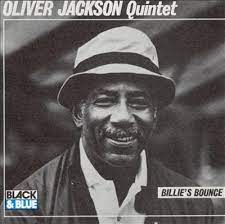
Oliver Jackson was born in Detroit, Michigan on April 28, 1933. He played in the 1940s with Thad Jones, Tommy Flanagan, Wardell Gray, and had a variety show with Eddie Locke called Bop & Locke. After working with Yusef Lateef from 1954 until 1956, he moved to New York City, where he played regularly at the Metropole in 1957 and 1958.
Following his stint at the club he worked with Teddy Wilson, Charlie Shavers, Buck Clayton, Benny Goodman, Lionel Hampton, Kenny Burrell, Earl Hines and the JPJ Quartet with Budd Johnson through the Sixties.
Later in life he played with Sy Oliver from 1975 to 1980, Oscar Peterson, and then George Wein’s Newport All-Stars. As a bandleader, Jackson led a 1961 date in Switzerland, and recorded at least five albums for Black & Blue Records between 1977 and 1984.
His brother and bassist Ali Jackson performed with him both at the beginning and towards the end of their careers. Drummer Oliver Jackson, who was also known as Bops Junior, transitioned from a heart failure on May 29, 1994 in New York City at the age of 61.
More Posts: bandleader,drums,history,instrumental,jazz,music