

Requisites
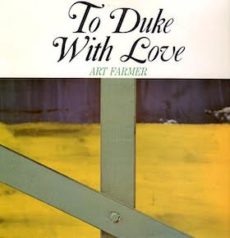
To Duke With Love~Art Farmer | By Eddie Carter
I was looking for something to play a few nights ago when I came across a 1976 album by one of my favorite trumpet players, Art Farmer. To Duke With Love (East-West EW-8012) is this morning’s choice from the library submitted for your consideration. I’d forgotten how much I enjoyed this record and after listening, began writing about it for this week’s column. This album was one of my Mom’s favorites and she loved the velvety softness of Art’s flugelhorn. It was because of her love of jazz and the joy of listening to the albums together that I became a fan also. Art plays the flugelhorn exclusively on this six-song letter to Duke Ellington and he’s working with a brilliant trio, Cedar Walton on piano, Sam Jones on bass, and Billy Higgins on drums. My copy used in this report is the 1978 Stereo reissue (Inner City Records IC 6014).
Arthur Stewart Farmer’s first album as a leader was Work of Art (1954). He co-led The Jazztet with Benny Golson from 1959 to 1962. After the group disbanded, he had a successful twenty-year solo career until the band reformed in 1982 to 1986. Art reunited with The Jazztet again during the nineties to perform live at various festivals. He was comfortable in any setting and could play anything, on an uptempo tune, Farmer played vigorously with a fiery passion. At midtempo, his gift of expression was precisely defined, and with slow-tempo ballads and standards, Art skillfully constructed them with innocence and romanticism.
Cedar Walton was an immensely gifted and prolific pianist who typically built perfect solos from simple ideas, proving himself an exemplary accompanist and versatile leader in large ensembles and small groups.
Sam Jones had a beautiful sound on bass with a splendid technique and a marvelous grasp of harmony, he’s best known as one-third of the rhythm section in The Cannonball Adderley Quintet and Sextet. Sam was among the first to make the cello sound plausible on a jazz album, and his bass lines always enhanced any record as the leader of the date or as a sideman. Billy Higgins was the drummer of choice on some of the most memorable Hard-Bop and Free Jazz recordings. He appeared on over seven hundred records including Funk and Rock albums. There was an unmistakable power in his playing, but when called upon, Billy’s drumming could also be considerate and thoughtful, and he brought his A-game every time he sat behind the drums.
Side One opens with the 1935 jazz standard, In a Sentimental Mood by Duke Ellington and Manny Kurtz. Art makes an enticingly delicate introduction to the melody, then takes the lead on a slow and sultry statement. Cedar follows with an impressively tender interpretation into the foursome’s luscious close. The 1931 Duke Ellington, Irving Mills standard, It Don’t Mean a Thing begins with an energetic introduction by Jones backed by just Higgins before Farmer and Walton come in to state the theme. Walton takes off first with a briskly stated opening chorus after a brief riff by Higgins. Farmer follows, adding some searing heat on the next performance. Jones gets the last word with an exuberant closing statement ahead of the quartet’s exit.
The Star-Crossed Lovers appeared on Such Sweet Thunder (1957) as part of a twelve-part suite based on the works of William Shakespeare. This Duke Ellington, Billy Strayhorn tune gives Farmer a showcase to emerge ever so gently on the theme after a luscious introduction by Cedar. Art gives a pretty presentation as sweet as Johnny Hodges achieved on the original song. Cedar also performs beautifully on a gorgeous finale before the coda. Duke Ellington’s The Brown Skin Girl In The Calico Gown was first recorded by Duke and Ella Fitzgerald on Ella at Duke’s Place (1965). It starts Side Two with a duet by Farmer and Jones, segueing into the ensemble’s touching theme. Farmer has the first spot with an attractive interpretation. Walton takes the reins next and is enchanting preceding the unison ending.
The standard Lush Life is afforded a slow, meditative treatment on the opening chorus. Billy Strayhorn wrote the song in 1933 but fine-tuned it until 1938 when he performed it for Ellington. The song’s lyrics describe the author’s weariness of the nightlife after a failed romance. Art paints from a seductive palette of delicacy and elegance on the first solo. Cedar infuses the next reading with a tender expression of love, culminating an exquisite rendition. The album wraps with Duke Ellington’s Love You Madly, written in 1950 and featured on Duke’s Big 4 (1974). After a short Walton introduction, the ensemble provides a happy aura led by Farmer who grooves at midtempo on the melody and lead solo. Walton eases into a medium groove on the final reading that’s an absolute joy.
To Duke With Love was recorded in 1975 by East-West Music in Japan, less than one year after Ellington passed away. The engineer is Ben Taylor and Stan Ricker mastered the album at JVC Cutting Center. It has an excellent soundstage, effectively capturing the essence of Art’s tastefully restrained tone. Farmer recorded over sixty albums as a leader, over seventy as a sideman, and an additional twelve as a member of The Jazztet. He passed away from a heart attack on October 4, 1999, at age seventy-one. If you’re a fan of Art Farmer and in the mood for some soothing jazz, To Duke With Love is a great session honoring one of the greatest composers of all time, Duke Ellington. It’ll repay its owner with many listens for years to come and I highly recommend it for a spot on your shelf! ~Duke’s Big 4 (Pablo 2310-703), Ella at Duke’s Place (Verve Records V-4070/V6-4070), Such Sweet Thunder (Columbia CL 1033) – Source: Discogs.com ~In a Sentimental Mood, It Don’t Mean A Thing, Lush Life – Source: JazzStandards.com ~Art Farmer, The Star-Crossed Lovers, The Brown Skin Girl In The Calico Gown, Lush Life, Love You Madly – Source: Wikipedia.org © 2021 by Edward Thomas Carter

More Posts: choice,classic,collectible,collector,history,instrumental,jazz,music,trumpet
Daily Dose Of Jazz…
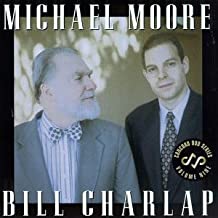
Michael Moore was born May 16, 1945 in Glen Este, Ohio and started on bass at age fifteen, at Withrow High School in Cincinnati, Ohio. He performed in ensembles and the Presentation Orchestra in George G. “Smittie” Smith’s Withrow Minstrels and played with his father in Cincinnati nightclubs.
Attending the Cincinnati College Conservatory, he played with Cal Collins and Woody Evans locally. He toured Africa and Europe with Woody Herman in 1966, and recorded with Dusko Goykovich while in Belgrade.
The 1970s saw Michael working with Marian McPartland, Freddie Hubbard, Jim Hall, Jimmy Raney, Bill Evans, Benny Goodman, Jake Hanna, Warren Vache, Herb Ellis, Zoot Sims, Ruby Braff, George Barnes, Chet Baker, and Lee Konitz. In 1978, he auditioned for and was hired by Bill Evans after longtime bassist Eddie Gómez had left the group and Evans was in transition with drummer Philly Joe Jones.
Leaving after five months due to dissatisfaction with the group, late in the decade he began working with Gene Bertoncini, with whom he would play into the 1990s. In the 1980s he worked with Sims again and with Kenny Barron and Michael Urbaniak. A member of the Dave Brubeck Quartet from 2001 until Brubeck’s death in 2012. Bassist Michael Moore continues to pursue his musical career.

More Posts: bandleader,bass,history,instrumental,jazz,music
Daily Dose Of Jazz…
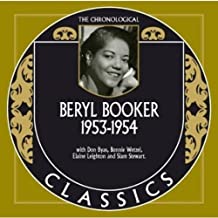
Bonnie Wetzel was born Bonnie Jean Addleman on May 15, 1926 in Vancouver, Washington. She learned violin as a child, and was an autodidact on bass. She played with Ada Leonard in an all-female ensemble, and soon after worked in a trio with Marian Grange.
Marrying trumpeter Ray Wetzel in 1949, the pair worked in the Tommy Dorsey Orchestra in 1951. She went on to play in Beryl Booker’s trio with Elaine Leighton in 1953, touring Europe in 1953-54 and recorded for Discovery Records.
She also played with Herb Ellis, Charlie Shavers, Roy Eldridge, and Don Byas. Later in the 1950s she freelanced in New York City. Double bassist Bonnie Wetzel passed away on February 12, 1965 at the age of 38.
More Posts: bass,history,instrumental,jazz,music
Daily Dose Of Jazz…
Warren Smith was born on May 14, 1934 in Chicago, Illinois, to a musical family. His father played saxophone and clarinet with Noble Sissle and Jimmie Noone, and his mother was a harpist and pianist. At the age of four he studied clarinet with his father. He graduated from the University of Illinois in 1957, then received a master’s degree in percussion from the Manhattan School of Music in 1958.
One of his earliest major recording dates was with Miles Davis as a vibraphonist in 1957. In 1958 Warren found work in Broadway pit bands and also played with Gil Evans. In 1961 he co-founded the Composers Workshop Ensemble. In the 1960s Smith accompanied Aretha Franklin, Nina Simone, Lloyd Price, and Nat King Cole; he worked with Sam Rivers from 1964–76 and with Gil Evans again from 1968 to 1976.
In 1969 he played with Janis Joplin and in 1971 with King Curtis and Tony Williams. He was also a founding member of Max Roach’s percussion ensemble, M’Boom, in 1970.
In the 1970s and 1980s Smith had a loft called Studio Wis that acted as a performing and recording space for many young New York jazz musicians, such as Wadada Leo Smith and Oliver Lake. Through the 1970s Smith played with Andrew White, Julius Hemphill, Muhal Richard Abrams, Nancy Wilson, Quincy Jones, Count Basie, and Carmen McRae. Other credits include extensive work with rock and pop musicians and time spent with Anthony Braxton, Charles Mingus, Henry Threadgill, Van Morrison, and Joe Zawinul.
He continued to work on Broadway well into the 1990s, and has performed with a number of classical ensembles. Smith taught in the New York City public school system from 1958 to 1968, at Third Street Settlement from 1960 to 1967, at Adelphi University in 1970–71, and at SUNY-Old Westbury from 1971. He remains connected to the music at 87.
More Posts: bandleader,history,instrumental,jazz,music,percussion
Daily Dose Of Jazz…
Robert C. Plater was born May 13, 1914 in Newark, New Jersey and began playing alto sax at age 12. He played locally in Newark with Donald Lambert and the Savoy Dictators in the 1930s. From 1940-42 he played with Tiny Bradshaw before spending 1942-45 serving in the U.S. military during World War II. After his discharge he worked briefly with Cootie Williams, then played intermittently with Lionel Hampton between 1946 and 1964, recording eleven albums with the band.
He also arranged with Hampton, as well as doing some freelance work on the side. In 1964 he took Frank Wess’s place in the Count Basie Orchestra, where he recorded thirty-nine albums and played until his death. His only recordings as a leader were four songs for Bullet Records in 1950.
He was the co-composer of Jersey Bounce, a popular dance number in the 1940s, recorded by various musicians including Glenn Miller and Ella Fitzgerald. Alto saxophonist Bobby Plater passed away on November 20, 1982 in Lake Tahoe, Nevada.
More Posts: arranger,history,instrumental,music,saxophone