

Daily Dose Of Jazz…
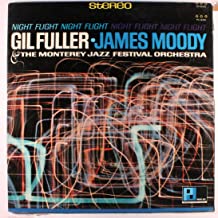
Gil Fuller was born Walter Gilbert on April 14, 1920 in Los Angeles, California. In the 1930s and 1940s, Fuller did extensive work writing and arranging for bandleaders such as Les Hite, Floyd Ray, Jimmie Lunceford, Billy Eckstine, and Tiny Bradshaw. He also worked with Benny Carter, Benny Goodman, Woody Herman, Count Basie, Machito, and Tito Puente.
Post World War II, he found himself increasingly in demand as a bebop arranger along with fellow modern arrangers Tadd Dameron, Gil Evans, and George Russell. Fuller’s work with Dizzy Gillespie was of particular note, yielding the tunes Manteca, Swedish Suite, Tin Tin Deo, and One Bass Hit. He is the composer of the jazz standard ballad I Waited For You, co-credited with Dizzy Gillespie.
Starting his own publishing company in 1957, he continued to work with some jazz musicians including Stan Kenton in 1955 and again during the 1960s. Gil also branched out into film music and pop with Ray Charles, among others. Arranger Gil Fuller passed away on May 26, 1994 in San Diego, California.

More Posts: arranger,history,instrumental,jazz,music
Three Wishes
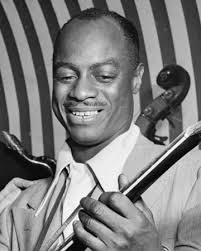
When Tiny Grimes responded to Pannica’s inquiry, he only had a single wish:
- “I don’t need but one: security. Pay my rent, my automobile. The rest would take care of itself. Just give me a telephone, so I can get to my gigs.”
*Excerpt from Three Wishes: An Intimate Look at Jazz Greats ~ Compiled and Photographed by Pannonica de Koenigswarter

More Posts: baroness,guitar,history,instrumental,jazz,music,pannonica,three,wishes
Daily Dose Of Jazz…
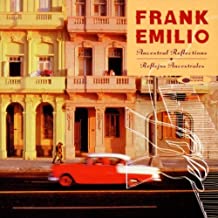
Frank Emilio was born Francisco Emilio Flynn Rodríguez on April 13, 1921 in Havana, Cuba to an American father and Cuban mother. Despite being blinded at birth due to damage to his eyes by the doctor’s forceps, unable to distinguish shapes as a child he became totally blind by his late teens. Orphaned at age five he was raised by his aunt and uncle. At 13 years old, he won an amateur music contest and shortly after began to play danzones by Antonio María Romeu. In 1938 he interrupted his career to complete his studies at a school run by Cuba’s National Association for the Blind.
During the 1940s, Flynn became part of the filin music scene which comprised jazz-influenced bolero composers. He accompanied singer Miguel de Gonzalo. In 1946 he founded the Loquibambia ensemble together with guitarist and composer José Antonio Méndez, and they started to work for the Mil Diez radio station. By 1949 they accompanied the famous Conjunto Casino in the recording of their song Átomo. Two years later he founded Los Modernistas, and played at Radio Cadena Habana, toured the island before disbanding. Flynn then joined a son ensemble, Alejandro y sus Muchachos, and in 1955 he recorded four songs with Arcaño y sus Maravillas.
By the late Fifties he would go on to pioneer small-ensemble Cuban jazz. After the Cuban Revolution, the members of the Quinteto Instrumental remained in Havana, playing and recording. In the late 1970s and 1980s, his band expanded and recorded their debut album. During the 1990s Flynn recorded several albums including Barbarísimo, Tribute to Ernesto Lecuona and A Tiempo de Danzón for Milan/RCA Records, and Ancestral Reflections for Blue Note. In 1998 he made his American debut, with Los Amigos, in a Jazz at Lincoln Center gig and the following year he reunited with his American relatives.
Between 2000 and 2001 he spent much of his time with his relatives in California, where he played live occasionally and gave lectures at California State University, Los Angeles. Pianist Frank Emilio, who played danzas, danzones, filin, descarga, and Afro-Cuban jazz, passed away on August 23, 2001 in Havana.
More Posts: bandleader,history,instrumental,jazz,music,piano
Daily Dose Of Jazz…
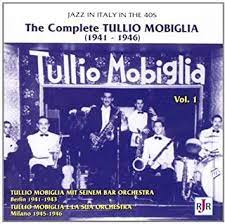
Tullio Mobiglia was born in Carezzano, Italy on April 12, 1911. Passionate about music, he graduated in violin at the Niccolò Paganini Conservatory in Genoa, Italy. In 1934 he began playing in orchestras on ships, often traveling to the United States where he was able to approach jazz, becoming friends with some musicians such as Coleman Hawkins.
He quickly emerged as the best Italian saxophonist of the period, and was called to play in the Mirador Orchestra. By 1940 Tullio was to Berlin, Germany achieving great success, to the point of being hired for a certain period in Heinz. Wehner Orchestra. 1941 saw him forming his first band of Italian musicians, with whom he published the first 78 rpm recordings.
During his career he had the opportunity to play with Django Reinhardt in another Berlin club, the Femina Bar. Due to the ban on playing American music he was only allowed to play European music, however, many pieces are written by Mobiglia himself.
Mobiglia returned to Italy in 1943 and two years later reformed his orchestra with other musicians, obtaining a contract with Columbia Records, where he recorded several 78s. In the following years he recorded with Telefunken, Cetra and Durium, resuming the playing of his first instrument, the violin. By 1967 he was teaching violin at the Jan Sibelius Conservatory of Helsinki, Finland to teach the violin, a position he held until the 1980s, while continuing to perform in the Finnish capital where he spent the last few years of his life. Saxophonist and bandleader Tullio Mobiglia passed away on July 24, 1991 at the age of 80 in Helsinki, Finland.
More Posts: bandleader,history,instrumental,jazz,music,saxophone
Requisites
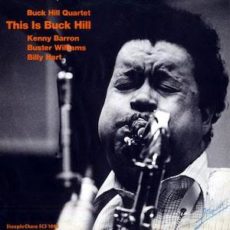
This Is Buck Hill ~ Buck Hill Quartet | By Eddie CarterMy first choice from the library for April is by one of the hidden stars of jazz. His name was Roger Wendell Hill, but everyone would know him by his nickname Buck. Hill began his professional career as a musician in 1943 while working as a Washington D.C. mailman. Buck first worked with Charlie Byrd in the late fifties, later appearing on albums by Shirley Horn, Alan Houser, and Shirley Scott. He also performed with Miles Davis, Dizzy Gillespie, Max Roach, and Sonny Stitt but didn’t record as a leader until the late seventies. Buck also played the clarinet and soprano sax, but the tenor sax was his primary instrument. This Is Buck Hill (SteepleChase Records SCS 1095) is a 1978 release offering all the excitement and energy of an after-hours jam session. He’s working with an outstanding rhythm section, Kenny Barron on piano, Buster Williams on bass, and Billy Hart on drums. My copy used in this report is the 1978 US Stereo album.
Side One starts with Tokudo, an original by Buster Williams that the bassist would record again a year later on his album, Heartbeat. This tune begins at a brisk tempo for the melody, and everyone is afforded a solo opportunity. Buck delivers the goods with aggressive momentum on the first presentation. Kenny shifts into high gear on the next reading. Buster dips into a soulful groove on the third statement, and Billy gives a dazzling performance before the out-chorus. Yesterdays by Jerome Kern and Otto Harbach is one of the most recorded jazz and pop compositions since its creation in 1933. The group swings at a medium tempo on the main theme. Hill gradually builds the excitement on the first statement to a sensational climax. Barron offers a beautiful sentiment in the next reading. Williams swings to a groovy beat preceding a luscious ending.
A blistering introduction by Billy begins Oleo by Sonny Rollins. The foursome gets things underway with a very quick melody. Buck takes off like the Road Runner for a high-octane fast ride including three unaccompanied verses of white heat. Kenny powers the next interpretation with energetic exertion, then Billy has a final furious exchange with Buck culminating into a brilliant climax.
Side Two begins with the first of three selections by the leader. I’m Aquarius is a beautiful ballad that originally appeared in a suite on trumpet player Alan Houser’s 1973 album, No Samba. It opens elegantly with a cascading flow of tenderness from Barron segueing gently into the melody with Hill directing the ensemble softly. The tenor remains tastefully restrained on the opening statement. Kenny closes with a delicate sensitivity leading to a sultry coda.
S.M.Y. is a lively original possessing an irresistible beat exuding happiness from the first notes of the opening chorus. The saxophonist starts the ball rolling with some vigorous blowing. Kenny digs in for some good rocking jazz next, then Buck supplies an abundant supply of high-voltage current into the theme’s reprise. The album closes with Two Chord Molly, an uptempo tune allowing everyone except Hart to contribute lengthy readings. The trio lays down a swinging line on the introduction with Hill providing vast amounts of energy to the festive melody. Barron delivers an enthusiastically rigorous lead solo. Buster gets down to business next with an intense workout. Buck accelerates on the closer producing electrically charged notes. During Hill’s statement, you can hear someone commenting (I’m sure positively) on his performance.
The man behind the controls is Elvin Campbell, whose work can be heard on many jazz albums. This record is well recorded, and the highs, midrange, and bottom end are all very detailed with an excellent soundstage and crystal-clear clarity. Buck recorded three more albums for SteepleChase, Scope (1979), Easy To Love (1982), and Impressions (1983). Hill passed away at age ninety on March 20, 2017. You’d never suspect this was the quartet’s first recording together because the music is excellent, and their interaction is seamless. Buck also meets the challenge of writing good compositions with strong performances inspired by Kenny Barron, Buster Williams, and Billy Hart. On your next vinyl hunt, I’ll hope you’ll consider This Is Buck Hill for a spot in your library. He was a veteran jazzman who certainly deserves a place alongside the greatest to ever blow the tenor saxophone! ~ Easy To Love (SteepleChase SCS-1160), Heartbeat (Muse Records MR 5171), Impressions (SteepleChase SCS 1173), No Samba (Straight Ahead ARS 001), Scope (SteepleChase SCS 1123) – Source: Discogs.com ~ Oleo, Yesterdays – Source: JazzStandards.com ~ Alan Houser, No Samba – Source: Album liner notes by J.R. Taylor ~ Roger Wendell Hill, Tokudo, Heartbeat, Scope, Easy To Love, Impressions, Elvin Campbell – Source: AllMusic.com, Wikipedia.org © 2021 by Edward Thomas Carter

More Posts: choice,classic,collectible,collector,history,instrumental,jazz,music,saxophone