

Daily Dose Of Jazz…
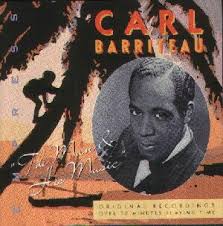
Carl Alrich Stanley Barriteau was born on February 7, 1914 in Trinidad, but was raised in Maracaibo, Venezuela. He played tenor horn in Trinidad from 1926 to 1932, before playing the clarinet in a local police band from 1933 to 1936. At the same time, he also played in Port of Spain with the Jazz Hounds and the Williams Brothers Blue Rhythm Orchestra.
Moving to London, England where he played in Ken Johnson’s West Indian Swing Band. Melody Maker named him “best clarinetist” for seven consecutive years. In the 1940s Carl led his own group on recordings for Decca Records.
He did several USO tours for American troops from 1958 to 1966. He emigrated to Australia in 1970. Clarinetist Carl Barriteau passed away on August 24, 1998, in Sydney, Australia.

More Posts: clarinet,history,instrumental,jazz,music
Daily Dose Of Jazz…
Nelson Boyd was born on February 6, 1928 in Camden, New Jersey. He played in local orchestras in Philadelphia, Pennsylvania around 1945, and then moved to New York City in 1947.
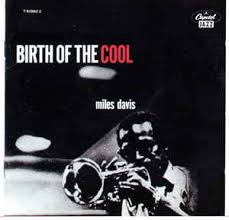
While living there Boyd first performed with Coleman Hawkins, Tadd Dameron, and Dexter Gordon. He would go on to play with Sarah Vaughan, Dizzy Gillespie, and Charlie Barnet in 1948. In 1947, he recorded with Fats Navarro and Charlie Parker. He later played with Jay Jay Johnson and recorded with Miles Davis on Davis’s Birth of the Cool sessions in 1949. In addition, Davis’s song “Half Nelson” was named after Boyd because of his stature.
After 1949, Nelson often played with Gillespie and toured the Middle East with him in 1956. Later, he recorded with Melba Liston in 1958 with her trombone ultimates on Melba Liston and Her ‘Bones. He also did sessions with Max Roach and Thelonious Monk.
He recorded four albums with Gillespie, and one each with Milt Jackson, Charles McPherson, Max Roach, and Sonny Stitt, Bud Powell, and J. J. Johnson. Bebop bassist Nelson Boyd, whose last recordings were in 1964, passed away in October 1985.
More Posts: bass,history,instrumental,jazz,music
Daily Dose Of Jazz…
Wyatt Robert Ruther was born on February 5, 1923 in Pittsburgh, Pennsylvania. Playing trombone in high school before picking up the double-bass, he studied at the San Francisco Conservatory of Music and the Pittsburgh Musical Institute.
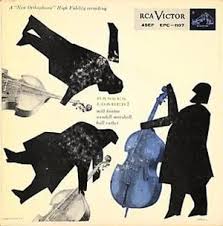
From 1951 to 1952 he played in New York City with Dave Brubeck and Erroll Garner from 1951-55. A sought after bassist Wyatt toured with Lena Horne in 1953 and recorded an album under his own name alongside Milt Hinton in 1955 for RCA Records entitled Basses Loaded. Following this he played with Toshiko Akiyoshi in 1956, then studied at the Royal Conservatory of Music in Toronto, Canada.
While in Canada he played with the Canadian Jazz Quartet for two years beginning in 1956 and then in 1957 with Peter Appleyard. During the same period back in the States, Ruther played with Ray Bryant, Zoot Sims, Bob Brookmeyer, and Chico Hamilton. From the end of the Fifties to the mid~Sixties he toured with George Shearing, went on a world tour with Buddy Rich, played in Gerry Mulligan’s quartet, then joined Count Basie.
In the late 1960s, Wyatt worked freelance in the San Francisco area, and played at the Olympic Hotel in Seattle, Washington in the early Seventies. Moving to Vancouver, British Columbia, Canada he played with Fraser MacPherson from 1975 to 1979. He went on to play at the Ankor Hotel in Vancouver in the early 1980s, and while there worked with Sammy Price, Jay McShann, and Dorothy Donegan. Returning to San Francisco in 1984, he played with Stan Getz, Lou Stein, John Handy, Benny Carter, and Jerome Richardson late into thedecade and early Nineties. Bassist Wyatt Ruther played until he passed away of a heart attack at age 76 on October 31, 1999 in San Francisco, California.
More Posts: bandleader,bass,history,insrumental,jazz,music
Daily Dose Of Jazz…
Harold Andrew Dejan was born on February 4, 1909 into a Creole family in New Orleans, Louisiana and took clarinet lessons as a child before switching to the saxophone. He became a professional musician in his teens, joining the Olympia Serenaders and then the Holy Ghost Brass Band.
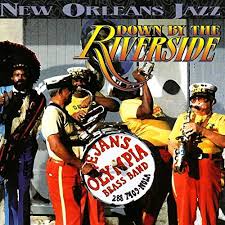
He played regularly in Storyville, at Mahogany Hall, and on Mississippi riverboats. He also worked in the mail office of the Lykes Brothers Steamship Company for 23 years. In World War II, he played in Navy bands, then returning to his day job and his parallel musical career after the war, he led his own band, Dejan’s Olympia Brass Band, from 1951, was considered one of the top bands in New Orleans.
The band often appeared at Preservation Hall, recorded nine albums, and also toured internationally, making 30 concert tours of Europe and one of Africa. It was featured in the James Bond movie Live and Let Die, and as well as in many TV commercials.
Suffering a stroke in 1991 left him unable to play the saxophone, but he continued as a band leader and singer until shortly before his death. Alto saxophonist and bandleader Harold Dejan, known affectionately as Duke, passed away on July 5, 2002 in New Orleans.
More Posts: bandleader,history,instrumental,jazz,music,saxophone
Daily Dose Of Jazz…
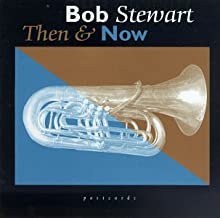
Bob Stewart was born in Sioux Falls, South Dakota on February 3, 1945. He received his Bachelor of Music Education degree from the Philadelphia College of the Performing Arts and his master’s degree in education from Lehman College Graduate School.
Stewart taught music in Pennsylvania public schools and at the Fiorello H. LaGuardia High School of Music & Art and Performing Arts in New York City. He is now a professor at the Juilliard School and is a distinguished lecturer at Lehman College.
Stewart has toured and recorded with such artists as Charles Mingus, Gil Evans, Carla Bley, Muhal Richard Abrams, David Murray, Taj Mahal, Dizzy Gillespie, McCoy Tyner, Freddie Hubbard, Don Cherry, Nicholas Payton, Wynton Marsalis, Charlie Haden, Lester Bowie, Bill Frisell and many others in the United States, Europe, and Eastern Asia.
He was a frequent collaborator with saxophonist Arthur Blythe from the 1970s into the early 2000s, often taking the place of the string bass that traditionally supports a jazz ensemble. In their review of Blythe’s album Lenox Avenue Breakdown, the editors of The Penguin Guide to Jazz called Stewart’s title track solo “one of the few genuinely important tuba statements in jazz. Tubist Bob Stewart continues to be a part of the jazz scene.
More Posts: bandleader,history,instrumental,jazz,music,tuba