


Daily Dose Of Jazz…
Roberto Magris was born June 19, 1959 in Trieste, Italy. By the 1980s he was leading the jazz trio Gruppo Jazz Marca with whom he recorded three albums, Comunicazione Sonora, Aria di Città and Mitteleuropa. In 1987 he put together an Italian quartet that stayed together for nearly 20 years, touring Europe, Asia, Australia, and South America and recording two albums, Life in Israel and Maliblues.
In the 1990s he founded the acid-jazz groups DMA Urban Jazz Funk and Alfabeats Nu Jazz, performing in Europe and in America. In 1998 Magris formed the Europlane Orchestra that included several jazz musicians from various European countries. With the Europlane Orchestra he recorded three albums Live At Zooest, Plays Kurt Weill, and Current Views.
2005 saw Magris partnering with Hungarian saxophonist Tony Lakatos on the album Check-In in 2005 he went on to collaborate with bassist Art Davis and drummer Jimmy “Junebug” Jackson on the album Kansas City Outbound issued by JMood. That same year, he hooked up with alto saxophonist Herb Geller on the album Il Bello del Jazz and some years later, JMood released another album with Herb Geller titled An Evening with Herb Geller & The Roberto Magris Trio – Live in Europe 2009.
During his time in the United States, Magris has become the musical director of JMood and has also recorded two albums in tribute to the trumpeter Lee Morgan, two trio albums with Elisa Pruett and Albert “Tootie” Heath devoted to the music of pianist Elmo Hope, and another to the legacy of alto saxophonist Julian “Cannonball” Adderley.
While in Los Angeles, California he recorded with Idris Muhammad and saxmen Paul Carr and Michael O’Neill, one album with Sam Reed, a double CD set in tribute to the bebop era, three albums with his trio from Kansas City and performed with his sextet that included trumpeter Brian Lynch at the WDNA Jazz Gallery in Miami, Florida. In Chicago, Illinois he recorded with a group including trumpeter Eric Jacobson and tenor saxophonist Mark Colby.
His influences have been Wynton Kelly, Tommy Flanagan, Bill Evans, Kenny Drew, Jaki Byard, Randy Weston, McCoy Tyner, Andrew Hill, Paul Bley, Don Pullen, and Steve Kuhn. He has recorded nearly three dozen albums as a leader or as a member of groups he has founded. Pianist, composer and arranger Roberto Magris continues to perform, record and tour.

More Posts: bandleader,history,instrumental,jazz,music,piano
The Quarantined Jazz Voyager
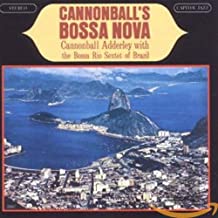
From the library of The Quarantined Jazz Voyager comes a favorite album from Julian “Cannonball” Adderley. It’s his 1962 recording titled Cannonball’s Bossa Nova that was released the following year on the Riverside label. However, the album was reissued on Capitol Records several times with different covers and titles.
Cannonball selected eight tunes composed by Durval Ferreira and Maurício Einhorn; João Donato; Antonio Carlos Jobim; Sérgio Mendes; Vinicius de Moraes and João Gilberto for a total of 34:46. The songs are Clouds, Minha Saudade, Corcovado, Batida Differente, Joyce’s Samba, Groovy Samba, O Amor Em Paz (Once I Loved), and Sambop.
The performers that were enlisted for this date were: Cannonball Adderley – alto saxophone, Sérgio Mendes – piano, Durval Ferreira – guitar, Octavio Bailly, Jr. – bass, Dom Um Romão – drums, Pedro Paulo – trumpet (#2, 4-5, 7-8) and Paulo Moura – alto saxophone (#2, 4-5, 7-8).
Remain diligent my fellow voyagers in staying healthy, continue to practice social distancing, and don’t be so anxious to rush back to the new normal. It has been said that music soothes the savage beast, so listen to great music. I share that music to give you a little insight into the choices this voyager has made over the years of collecting during this sabbatical from jet setting investigations of jazz around the globe.

More Posts: choice,classic,collectible,collector,history,instrumental,jazz,music,saxophone

Daily Dose Of Jazz…
Rudy Rutherford was born Elmer H. Rutherford on June 18, 1924 in Huachuca City, Arizona. He began performing in the early 1940s with Lionel Hampton and Count Basie. Initially taking Jack Washington’s place in Basie’s orchestra as a baritone saxophonist, once Washington returned from military service, he switched to alto saxophone.
1947 saw Rudy moving to Teddy Buckner’s band, though he continued working with Basie into the early 1950s. He worked with Wilbur De Paris late in the 1950s and appeared with Chuck Berry at the Newport Jazz Festival in 1958. He would record with Dicky Wells, Dinah Washington and Lurlean Hunter.
In the 1960s he worked with Buddy Tate and spent several years with Earl Hines in the mid-1970s. Saxophonist and clarinetist Rudy Rutherford, who worked with Illinois Jacquet in the 1980s and was active in performance until his death, passed away on March 31, 1995 in New York City.
More Posts: clarinet,history,instrumental,jazz,music,saxophone
Daily Dose Of Jazz…
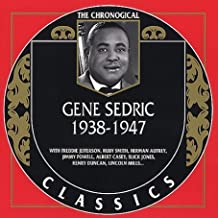
Gene Sedric, born Eugene Hall Cedric on June 17, 1907 in St. Louis, Missouri into a family where his father played ragtime piano. He played with Charlie Creath in his hometown and then with Fate Marable, Dewey Jackson, Ed Allen, and Julian Arthur.
Joining Sam Wooding’s Orchestra in 1925 he toured Europe with him until 1931 when the unit dissolved. During his time in Europe he recorded with Alex Hyde. When he returned to New York City he played with Fletcher Henderson and Alex Hill, before joining Fats Waller’s Rhythm in 1934, where he remained to 1942. When Waller went on solo tours Sedric found work gigging alongside Mezz Mezzrow in 1937 and Don Redman from 1938 to 1939).
Sedric put together his own group in 1943, prior to playing with Phil Moore in 1944 and Hazel Scott in 1945. He put together another ensemble from 1946–51, playing in New York City. His later associations through the late 1940s into the early 60s include time with Pat Flowers, Bobby Hackett, Jimmy McPartland, Mezzrow again, Conrad Janis, and Dick Wellstood. He recorded sparingly as a leader in 1938, 1946, and with Mezzrow in 1953.
Clarinetist and tenor saxophonist Gene Sedric, who acquired the nickname “Honey Bear” in the 1930s because of his large camel hair coat, passed away on April 3, 1963 in New York City.
More Posts: bandleader,clarinet,history,instrumental,jazz,music,saxophone
Three Wishes
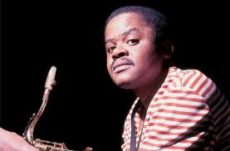
The Baroness inquired of Stanley Turrentine what his three wishes would be if was to be given and his response was:
-
-
“Health.”
-
“For my children to have a chance in life.”
-
“Success in my music.”
-
*Excerpt from Three Wishes: An Intimate Look at Jazz Greats ~ Compiled and Photographed by Pannonica de Koenigswarter

More Posts: baroness,history,instrumental,jazz,music,pannonica,saxophone,three,wishes