

Daily Dose Of Jazz…
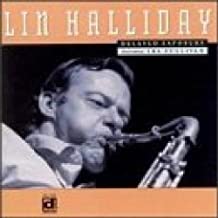
Lin Halliday was born on June 16, 1936 in De Queen, Arkansas and was raised in Little Rock, where he played the saxophone and clarinet in school. After he moved to Los Angeles, California in his teens he began playing professionally, performing with saxophonist Joe Maini.
A move to New York City in 1958, Nashville, Tennessee in 1966, and Chicago, Illinois in 1980, his style was influenced by the musical cultures of all three cities. Halliday made his debut album, Delayed Exposure, for the Chicago jazz label Delmark Records in 1991. His sophomore album the same year, East of the Sun and Where or When in 1993 with saxophonist Ira Sullivan were well received by the Chicago jazz community.
He became a staple attraction at many Chicago jazz clubs including the Green Mill, the Bop Shop, Joe Segal’s Jazz Showcase, and the Get Me High Lounge. His performance on trumpeter Brad Goode’s 1998 album Shock of the New won him greater admiration with the Chicago jazz scene. Lin was also featured on the 1995 album Stablemates with Chicago saxophonist Eric Alexander.
Saxophonist Lin Halliday, who recorded five albums as a leader and one as a sideman with Cecil Payne all on Delmark, passed away on January 25, 2000.

More Posts: bandleader,history,instrumental,jazz,music,saxophone
Daily Dose Of Jazz…
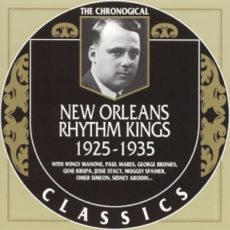
Paul Mares was born on June 15, 1900 in New Orleans, Louisiana and was self-taught on the cornet and trumpet and picked up his early experience laying the riverboat Capitol playing with the Tom Brown Band. Leaving his hometown in 1919 he moved to Chicago, Illinois and worked with Ragbaby Stevens before freelancing around the city.
In 1921 Paul formed the Friars Society Orchestra, a group that prominently featured trombonist George Brunies and clarinetist Leon Rappolo. From 1922-23, the band recorded for Gennett Records and became one of the best-regarded bands in the city. The band, which broke up in 1924, included up-and-coming jazz musicians, including the members of the Austin High School Gang and Bix Beiderbecke.
Mares who was influenced by King Oliver, played in New York for a short time, went back to New Orleans the following year and led a couple more sessions. In 1934, a move to Chicago the following year had him making a brief comeback and leading a recording session that resulted in four titles before he retired again.
By 1935 Mares he was playing trumpet and fronting a recording session with his band called Paul Mares and his Friars Society Orchestra. The name referred to the Friar’s Inn club where the Rhythm Kings had first played in Chicago. The 1935 band included the white New Orleanian and N.O.R.K. veteran Santo Pecora on trombone, the black New Orleanian Omar Simeon on clarinet and the Chicagoan altoist Boyce Brown, as well as George Wettling on drums, pianist Jess Stacey, bassist Pat Pattison, and guitarist Marvin Saxbe.
He then largely retired from playing to work in the family fur business, and the New Orleans Rhythm Kings passed into history. He ran a barbeque restaurant, did defense plant work during World War II, and returned to music in 1945, leading a final band from 1945-48 that unfortunately never recorded. Cornetist and trumpeter Paul Mares passed away on August 18, 1949 in Chicago.
More Posts: bandleader,cornet,history,instrumental,jazz,music,trumpet
Requisites
JAMMIN’ IN HI-FI WITH GENE AMMONS | By Eddie Carter
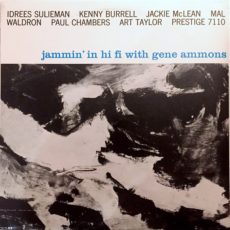
Submitted for your consideration this morning is a 1957 session led by tenor saxophonist Gene Ammons that’s one of the fine jam sessions Prestige released in the late Fifties. Jammin’ In Hi-Fi With Gene Ammons (Prestige 7110) brings the saxman together with a world-class sextet of musicians who would become leaders themselves and create some of the best music known as Hard-Bop. Idrees Sulieman on trumpet; Jackie McLean on alto saxophone; Kenny Burrell on guitar; Mal Waldron on piano; Paul Chambers on bass and Art Taylor on drums. My copy used in this report is the 1984 Mono reissue (Prestige Original Jazz Classics OJC-129 – P-7110).
The album opener is the first of two originals by pianist Mal Waldron, The Twister comes at you at medium speed, swinging from the opening notes of the septet’s melody. Gene leads off the solos cruising at a comfortable speed with plenty of imagination in each verse of the opening statement utilizing a few excerpts from Kerry Dance, Moose The Mooche, and 52nd Street Theme. Idrees follows with a bluesy reading stamped with a down-home, soulful flavor. Jackie takes the next solo enthusiastically building a series of foot-tapping excitement in each verse, then Kenny takes over making his presence felt on the next interpretation with a fine solo performance. Mal follows with a blues-rooted groove that flows smoothly. Paul solos impressively on a brief reading leading to an exchange of riffs between all three horns and Kenny into the ensemble’s closing coda.
Four by Miles Davis was written in 1954, making its first appearance on the ten-inch album, Miles Davis Quartet released that year. The septet’s version of the jazz standard takes an unusual journey after the collective theme treatment. Sulieman, Ammons, McLean, and Burrell take two choruses each in that order, then one chorus apiece twice, followed by a half-chorus each. Walton skillfully constructs three verses for a concise interpretation that are paced leisurely but stated explicitly. Taylor exchanges with the front line before the septet returns for the ending theme.
The 1936 popular song Pennies From Heaven by Arthur Johnston and Johnny Burke opens the second side. It serves as the title song for the film that year and starts with a slow-tempo duet between Gene and Kenny that expands into a pleasant midtempo melody. Ammons displays a powerfully rich sound on the opening statement, followed by Burrell who swings easily into a relaxing reading. McLean also weaves a sweet-toned delivery on the next solo. Sulieman delivers a soulful performance next on the muted horn, and Waldron explores some intriguing ideas on the closer preceding the tranquil climax.
The album closer is the second Waldron original, Cattin’, a funky blues that opens with a solo introduction by Paul that evolves into the septet’s opening chorus. Gene sets the tone first with a neatly paced stroll through the lead solo, then Kenny turns in a splendid performance. Idrees delivers a statement of informal casualness on the next solo, then Jackie gets your fingers popping and toes tapping with a soulful groove. Mal responds with a light, breezy interpretation of tasteful simplicity ahead of the septet’s return for the finale.
Fantasy has done an excellent job with the remastering of Mr. Van Gelder’s original recording. The album has an excellent soundstage with no harshness during the highs, midrange, and low end with the septet coming through your speakers as if they’re in your listening room. Jammin’ In Hi-Fi With Gene Ammons is a very pleasant, fun, and enjoyable LP that I’m sure will make a fine addition to any fan’s library who’s a fan of his, Hard-Bop or the jam session. In 1960, and 1964 for the second and third reissues, the album’s title was changed to The Twister!
~Kerry Dance, Moose The Mooche, 52nd Street Theme – Source: album liner notes by Ira Gitler ~Four, Miles Davis Quartet (Prestige PRLP-161); The Twister (Prestige PR-7176) – Source: Discogs.com ~Pennies From Heaven – Source: Wikipedia.org SynopsisJammin’ In Hi~Fi with Gene Ammons is an album by saxophonist Gene Ammons recorded on April 12, 1957 and released the same year on the Prestige label.
Track Listing | 50:12- The Twister (Mal Waldron) – 12:15
- Four (Miles Davis) – 13:02
- Pennies from Heaven (Johnny Burke, Arthur Johnston) – 13:02
- Cattin’ (Waldron) – 11:58
- Gene Ammons – tenor saxophone
- Idrees Sulieman – trumpet
- Jackie McLean – alto saxophone
- Mal Waldron – piano
- Kenny Burrell – guitar
- Paul Chambers – bass
- Art Taylor – drums

More Posts: choice,classic,collectible,collector,history,instrumental,jazz,music
Daily Dose Of Jazz…
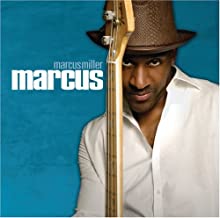
Marcus Miller, born William Henry Marcus Miller Jr. on June 14, 1959 in Brooklyn, New York and raised in a musical family. Classically trained as a clarinetist, he also plays keyboards, saxophone and guitar. He began to work regularly in New York City, eventually playing bass and writing music for jazz flutist Bobbi Humphrey and keyboardist Lonnie Liston Smith.
Spending 15 years as a session musician, he arranged and produced frequently, was a member of the Saturday Night Live band from 1979 to 1981, and co-wrote Aretha Franklin’s Jump To It along with Luther Vandross. He has played bass on over 500 recordings, appearing on over 500 albums by such artists as Herbie Hancock, The Crusaders, Wayne Shorter, McCoy Tyner, Frank Sinatra, George Benson, Michael Jackson, Beyoncé, Mariah Carey, Eric Clapton, Dr. John, Aretha Franklin, Elton John, Joe Walsh, Jean-Michel Jarre, Grover Washington Jr., Donald Fagen, Bill Withers, Bernard Wright, Kazumi Watanabe, Chaka Khan, LL Cool J, and Flavio Sala.
He won the Most Valuable Player award given by NARAS to recognize studio musicians three years in a row and was subsequently awarded Player Emeritus status and retired from eligibility. In the nineties, Miller began to write his own music and make his own records, putting a band together and touring regularly.
Between 1988 and 1990 he appeared regularly both as a musical director and as the house band bass player in the Sunday Night Band during two seasons of Sunday Night on NBC late-night television, hosted by David Sanborn.
As a composer, Miller co-wrote and produced several songs on the Miles Davis album Tutu, including its title track. He also composed Chicago Song for David Sanborn and co-wrote ‘Til My Baby Comes Home, It’s Over Now, For You To Love, and Power of Love for Luther Vandross and wrote Da Butt, which was featured in Spike Lee’s School Daze.
Miller hosts a jazz history show called Miller Time with Marcus Miller, is a film score composer, was nominated and won several Grammy Awards. Bassist Marcus Miller continues to perform, record and tour.
More Posts: bass,clarinetist,guitar,history,instrumental,jazz,keyboards,music,saxophone,vocal
Daily Dose Of Jazz…
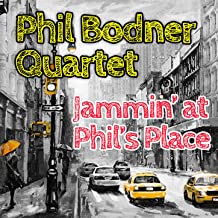
Philip L. Bodner was born June 13, 1917 in Waterbury, Connecticut and played in the Forties and 1950s as a sideman for studio recordings in New York City. He played on jazz sessions with Benny Goodman, with Miles Davis and Gil Evans in 1958.
Organizing The Brass Ring, a group modeled after Herb Alpert, in the mid-1960s they had popular success. Bodner also played with Oliver Nelson and J.J. Johnson during that decade. His associations in the 1970s included Oscar Peterson, Yusef Lateef, Peanuts Hucko, Wild Bill Davison, Ralph Sutton and he also played the signature piccolo part on the disco hit The Hustle by Van McCoy. Other work in the 1970s included playing with Ralph Sutton and Johnny Varro, working with Mingus Epitaph, and arranging Louie Bellson’s tribute to Duke Ellington’s Black, Brown and Beige.
The 1980s saw him working in a swing style with Marty Napoleon, Mel Lewis, George Duvivier, Maxine Sullivan, and Barbara Carroll. He released an album under his own name, Jammin’ at Phil’s Place, on Jazzmania Records in 1990, with Milt Hinton, Bobby Rosengarden, and Derek Smith as sidemen.
Multi-instrumentalist and studio musician Philip Bodner, active in jazz and popular music idioms. Best known as a reedist, he played clarinet, saxophone, oboe, English horn, piccolo, flute, conductor and arranger passed away on February 24, 2008 at age 90 in New York City.
More Posts: clarinet,english horn,flute,history,instrumental,jazz,music,oboe,piccolo,saxophone