

Daily Dose Of Jazz…
Sonny Greer was born William Alexander Greer on December 13, c. 1895 in Long Branch, New Jersey. He played with Elmer Snowden’s band and the Howard Theatre Orchestra in Washington, D.C., before joining Duke Ellington. Meeting him in 1919, he was Ellington’s first drummer, playing with his quintet, the Washingtonians. He then moved with Ellington into the Cotton Club.
As a result of his job as a designer with the Leedy Drum Company of Indiana, Greer was able to build up a huge drum kit worth over a then-considerable $3,000, including chimes, a gong, timpani, and vibes.
A heavy drinker, as well as a pool-hall hustler when he needed to retrieve his drums from the pawnbroker, in 1950, Ellington responded to his drinking and occasional unreliability by taking a second drummer, Butch Ballard, with them on a tour of Scandinavia. This enraged Greer, and the consequent argument led to their permanent estrangement.
Sonny continued to play, mainly as a freelance drummer, working with musicians such as Johnny Hodges, Red Allen, J. C. Higginbotham, Tyree Glenn, and was there for the iconic 1958 Art Kane black-and-white photograph A Great Day In Harlem. He was part of a tribute to Ellington in 1974, which achieved great success throughout the United States.
Never recording as a leader, he was quite active as a sideman recording with not only seven albums with Duke but another twelve albums with Johnny Hodges, Bernard Addison, Louis Armstrong, Earl Hines, Lionel Hampton, Lonnie Johnson, Brooks Kerr, Oscar Pettiford, Rex Stewart, Victoria Spivey, and Josh White.
Drummer Sonny Greer , best known for his work with Duke Ellington, passed away of a heart attack on March 23, 1982 in Lenox Hill, on the upper East side of Manhattan.

More Posts: bandleader,drums,history,instrumental,jazz,music
Requisites
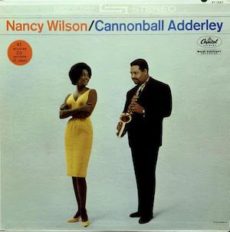
Nancy Wilson/Cannonball Adderley | By Eddie Carter
I’ve been a fan of Nancy Wilson and Cannonball Adderley since I was a kid, and the album up for discussion to begin December is one of my absolute favorites. It features one of the most beautiful voices in jazz coupled with a dynamic quintet that was becoming one of the best small ensembles and very popular with the public. This morning’s choice from the library is a 1961 album, Nancy Wilson/Cannonball Adderley (Capitol Records T-1657/ST-1657). Backing the duo are Nat Adderley on cornet, Joe Zawinul on piano, Sam Jones on bass, and Louis Hayes on drums. My copy used in this report is the 1962 US Stereo reissue (the Capitol Records logo is at the noon position on the label). This record holds a special place in my heart because it was the first album, I ever owned that was autographed by everyone in the group.
The quintet came to Leo’s Casino (Cleveland Ohio’s premier jazz club for many years) for a weekend performance, and my uncle Ben went to see them. After their first set had concluded and during the break, he let Cannonball know I was a big fan of his album, Somethin’ Else (1958). As a result, everyone signed it and he gave it to me for Christmas; once I opened the package, I forgot all about the toys. When Nancy came to the club a year later, he got her to sign it also. I had that autographed copy from 1962 to 1996 and it was my most prized possession until a fire destroyed my Mom’s home. Though a devastating loss, her and my Stepdad’s lives were spared, and that became a significant blessing to both my sister and me. Also, the memory is still a treasured one that always makes me smile whenever I play my current copy. That’s enough about me, gang, let’s get to the report.
Side One starts with Save Your Love For Me by Buddy Johnson. The rhythm section introduces the song delicately, then Nancy entices the listener with a seductive opening chorus tastefully trailed by Nat on muted cornet. Cannonball comes in on the next verse with a perfect example of soft and silken tenderness. The rhythm section’s reflective accompaniment is quite beautiful behind Nancy’s vocals leading to a gentle ending. Teaneck by Nat Adderley was initially known as A Little Taste and first heard on Portrait of Cannonball (1958). The ensemble takes off at a fast gallop on the spirited introduction and theme. Cannonball is a bundle of energy on the lead solo. Nat is as resourceful on the second reading with radiant intensity and Zawinul says plenty on an assertive, hard-driving solo preceding the group’s vigorous exit.
Never Will I Marry by Frank Loesser made its debut in the Broadway musical fantasy, Greenwillow (1960). Nancy and the quintet present a lighthearted rendition with her voice as an additional horn to the agile beat of the front line. In between her blissful vocals on the opening and closing chorus, Cannonball makes quick work of a concise, lively contribution in an equally effective fashion. I Can’t Get Started by Ira Gershwin and Vernon Duke first appeared in the musical, Ziegfeld Follies of 1936. This jazz standard is one of the most beautiful songs from The Great American Songbook. Adderley unfolds the attractive melody slowly, accompanied by the trio’s soft support, then continues with a daintily polite opening statement. Zawinul responds with a delicately pretty touch on the finale ahead of the altoist’s elegant reprise and ending.
The Old Country by Nat Adderley and Curtis Lewis is the story of a sad, lonely individual in the twilight of his life. Nancy is the narrator whose lyrics recall all he had and lost because of his choice to remain isolated and alone. This tune begins at midtempo by Nancy and Nat who equals her lyrics with meticulous skill on the muted cornet. Cannonball kicks off the solos with a chorus of uncluttered swinging. Joe adds a concise performance that flows smoothly into the climax. One Man’s Dream by Charles Wright and Joe Zawinul begins at a brisk pace with a zesty melody in unison. Cannonball is out of the gate first with an invigorating opening statement, succeeded by Nat who delivers the second solo with sheer vitality. Zawinul takes a short reading, then the front line shares a final conversation ahead of the reprise and ending.
Happy Talk by Richard Rodgers and Oscar Hammerstein II comes from South Pacific (1949). It starts Side Two with an upbeat treatment by Nancy and the ensemble. Nat’s muted cornet leads the quartet on the introduction into her jubilant lyrics. Cannonball also shines on a short comment. Never Say Yes by Nat Adderley starts with a muted introduction and opening solo that’s handled with finesse. Cannonball comes next with a lively presentation that adds to the exhilaration. Zawinul wraps up the conversation with youthful exuberance, ahead of Nat’s graceful finale. Nancy sings one of the prettiest jazz standards next, The Masquerade Is Over by Herbert Magidson and Allie Wrubel. She’s the dominant presence here and presides with an intimate sincerity in a tender expression of love lost. Zawinul, Jones, and Hayes follow her into a soft summation.
Sam Jones’ Unit 7 became the closing theme for Cannonball’s groups during their live performances, and the bassist recorded another version on Down Home (1962). The quintet opens with a bluesy beat by both horns leading the group on the theme. Cannonball builds the first solo with melodic inventiveness. Nat follows with a sweet tone and impeccable intonation. Joe struts through the closing statement with a joyfulness that’s extremely revealing. The finale is A Sleepin’ Bee by Harold Arlen and Truman Capote. It premiered in the musical House of Flowers (1954) and starts innocently with a brief piano introduction by Zawinul. Nancy shares the spotlight with Jones for the first verse before the ensemble joins in for the melody. Nancy’s voice is in superb form on this midtempo gem and Cannonball turns in a brief solo of incredible emotion and feeling. She closes the song as she began, in a duet with Jones that ends softly.
Nancy Wilson/Cannonball Adderley is exactly as stated on the cover; forty-one minutes, and fifty-nine seconds of some of the best jazz you’ll hear. It was produced by Andy Wiswell and Tom Morgan who were the men behind many great Capitol albums during the sixties. This reissue has an excellent soundstage that still stands up well sixty years later. Nancy’s vocals are splendidly interpreted, and she holds your attention on every song. She made thirty-seven albums over a two-decade career at Capitol Records. Cannonball also flourished at Capitol after leaving Riverside, recording seventeen albums from 1964 to 1970. Here, they demonstrate their vibrant improvising in a swinging, straight-ahead set that’s right on target. If you’re a fan of Hard-Bop and great vocals, Nancy Wilson/Cannonball Adderley is a happy session that’s sure to thrill old and young fans and one of the best things you can do for your turntable!
~ Down Home (Riverside RLP 432/RLP 9432), Portrait of Cannonball (Riverside RLP 12-269), Somethin’ Else (Blue Note BLP 1595/BST 81595) – Source: Discogs.com ~ A Sleeping Bee, Happy Talk, I Can’t Get Started, Never Will I Marry – Source: Wikipedia.org © 2021 by Edward Thomas Carter

More Posts: choice,classic,collectible,collector,history,instrumental,jazz,music,saxophone,vocal

Daily Dose Of Jazz…
Anthony Tillmon Williams was born of African, Portuguese, and Chinese descent on December 12, 1945 in Chicago, Illinois and grew up in Boston, Massachusetts. He studied with drummer Alan Dawson at an early age, and began playing professionally at the age of 13 with saxophonist Sam Rivers. Saxophonist Jackie McLean hired Williams when he was 16.
At 17 Williams gained attention when he joined Miles Davis in what was later dubbed Davis’s Second Great Quintet. A vital element of the group, his playing helped redefine the role of the jazz rhythm section through the use of polyrhythms and metric modulation.
He recorded his first two albums as leader at nineteen for the Blue Note label, Life Time in 1964) and Spring in 1965.. He also recorded as a sideman for the label including, in 1964, Out to Lunch! with Eric Dolphy and Point of Departure with Andrew Hill.
By 1969, he had formed his trio, the Tony Williams Lifetime, with John McLaughlin on guitar and Larry Young on organ. Lifetime was a pioneering band of the fusion movement. Disbanding the group, in 1975 he put together a band he called The New Tony Williams Lifetime, featuring bassist Tony Newton, pianist Alan Pasqua, and English guitarist Allan Holdsworth, which recorded two albums for Columbia Records..
In mid-1976, Tony reunited with Herbie Hancock, Ron Carter, and Wayne Shorter. Freddie Hubbard replaced Miles Davis who was in the midst of a six-year hiatus. The resulting record was later released as V.S.O.P. and the group toured for several years and produced a series of live albums released under the name V.S.O.P. or V.S.O.P.: The Quintet.
1979 saw Williams, McLaughlin and bassist Jaco Pastorius united for a one-time performance at the Havana Jazz Festival. This trio came to be known as the Trio of Doom. In 1985, returning to Blue Note he released six albums through 1993, playing his compositions almost exclusively ubtil he left Blue Note for the final time.
He lived and taught in the San Francisco Bay Area, was one of the pioneers of jazz fusion, and was inducted into the Modern Drummer Hall of Fame in 1986. On February 20, 1997 he checked into Seton Medical Center in Daly City, California, suffering from stomach pain. Three days later, while recuperating from gallbladder surgery, drummer Tony Williams passed away of a heart attack at 51 on February 23, 1997.
More Posts: bandleader,drums,history,instrumental,jazz,music
Daily Dose Of Jazz…
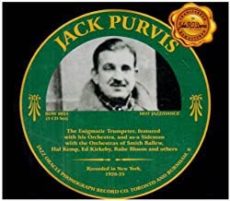
John “Jack” Purvis was born in Kokomo, Indiana on December 11, 1906 and became uncontrollable after his mother’s death in 1912. This resulted in being sent to a reform school, but while there, he discovered that he had an uncanny musical ability, and soon became proficient enough to play both the trombone and trumpet professionally. Leaving the reformatory he continued his high school education, while playing paying gigs on the side. One of the earliest jobs he had as a musician was with a band led by the Royal Canadian Mounted Police. Not long afterward, he worked with the dance band of Hal Denman.
After high school he worked in Indiana for a time then went to Lexington, Kentucky where he played with the Original Kentucky NightHawks. Around this time he learned to fly planes. In 1926 he was with Bud Rice and toured New England. The remainder of 1926 and the beginning of 1927 was with Whitey Kaufman’s Original Pennsylvanians. For a short time he played trumpet with Arnold Johnson’s orchestra, and by July 1928 he traveled to France with George Carhart’s band. A brush with the law forced him to return to New York City in 1928.
From 1929 on he joined Hal Kemp’s band and recorded with Kemp, Smith Ballew, Ted Wallace, Rube Bloom, the California Ramblers, and Roy Wilson’s Georgia Crackers. He led a couple of racially mixed recording sessions including the likes of J.C. Higginbotham, and Adrian Rollini. He worked with the Dorsey Brothers, Fletcher Henderson, Fred Waring, Charlie Barnet. the New Orleans Symphony Orchestra.
Moving to Los Angeles, California he found success with radio broadcasting, worked with the George Stoll Orchestra as a writer, and arranged for Warner Bros. Studios. He composed Legends of Haiti for a one hundred and ten piece orchestra.
Arrested in Texas in 1937, he spent a total of nine years in prison for robbery and breaking parole. After his final release he worked at non-musical careers which included working as a chef, aviator, carpenter, radio repairman and a mercenary. One of the earliest trumpeters to incorporate the innovations pioneered by Louis Armstrong in the late 1920s.
His mental stability was always in question, having attempted suicide on several occasions. Trumpeter Jack Purvis, who played trombone, harp, andcomposed Dismal Dan and Down Georgia Way, passed away on March 30, 1962.
More Posts: arranger,harp,history,instrumental,jazz,music,trombone,trumpet

Daily Dose Of Jazz…
Irving Fazola was born in New Orleans, Louisiana on December 10, 1912 and receiving the nickname “Fazola”, he used it as his last name. Influenced early by Leon Roppolo, he was playing professionally by age 15. He worked with Sharkey Bonano, Candy Candido, Armand Hug, and Louis Prima. He joined the Ben Pollack band when it came throughNew Orleans and performed with it in Chicago, Illinois and New York City.
After brief time with Glenn Miller and Gus Arnheim, Fazola became a member of the Bob Crosby band in 1938. He achieved some fame with this band, ranking as top clarinetist in the DownBeat magazine polls of 1940 and 1941. After leaving Crosby, he worked in bands in Chicago, New York, and New Orleans, including time with George Brunies at the Famous Door, before settling in New Orleans in 1943.
A heavy drinker, which contributed to his weight and failing health, clarinetist Irving Fazola, who influenced Pete Fountain, passed away of a heart attack at 36 on March 20, 1949.
More Posts: clarinet,history,instrumental,jazz,music