

Daily Dose Of Jazz…
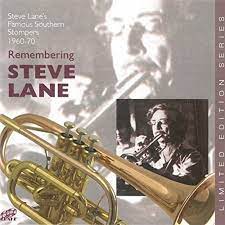
Steve Lane was born on November 7, 1921 in London, England where his father was a concertina player who recorded with the Rio Grande Tango Orchestra in the 1920s. Having heard his first jazz in the Rhythm Clubs of the late 1930s, his first choice of instrument was guitar, but, following wartime service, he switched to the cornet on which he soon developed a jazz style based on the hot trumpeters of the 1920s he so much admired, with particular emphasis on his role leading the collective ensemble.
A gifted composer of vocal and instrumental pieces, he deftly incorporated female vocalists as an integral part of the band, thus presenting a range of songs carefully chosen to showcase the singer, and the supporting musicians strictly trained in the art of accompaniment. A taskmaster offering little compensation and weekly rehearsals, his personnel changed often but allowed him the ability to discover young talent such as pianists Martin Litton and Bruce Boardman and trombonist Bob Hunt.
Steve led his own Southern Stompers jazz band in the early 1950, and also led and recorded with his Red Hot Peppers and the VJM Washboard Band for over 50 years. In 1952 he established the Ealing Jazz Club, and in the Sixties establishe the West End Jazz Club and was a founding partner of VJM Records.
Cornetist, guitarist, composer, arranger and bandleader Steve Lane, who was a traditional jazz player, passed awya on August 22, 2015 at age 93.
More Posts: arranger,bandleader,composer,cornet,guitar,history,instrumental,jazz,music,vocal
Daily Dose Of Jazz…
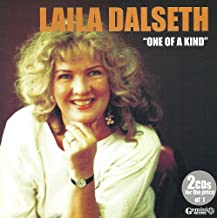
Laila Dalseth was born November 6, 1940 in Bergen, Norway. After an early debut in her hometown she became active on the Oslo, Norway jazz scene, recording with Kjell Karlsen, Egil Kapstad and Helge Hurum’s big band. Her first recording was Metropol Jazz in 1963, then she was a part of Stokstad/Jensen Trad Band from 1973 to 1975. This she followed with a stint in a band with Per Borthen, then at Teatret Vårt in the play Havhesten in 1976.
>With her own band, Laila recorded Listen Here! (1999), 1960’s album One of a Kind (2000) and then Everything I Love (2003), all on the Gemini label. Her L. D. Quintet consisted of her husband Totti Bergh on saxophone, pianist Per Husby, bassist Kåre Garnes and Tom Olstad on drums.
Dalseth was awarded Buddyprisen in 1976, the Spellemannprisen i klassen jazz on three occasions, for Just Friends in 1975, Glad There is You in 1978 and in 1984 for Daydreams. International recognition came in the Eighties with her release of for the record Time for Love with Red Mitchell, Travelling Light with Al Cohn, and into the 1990s with The Judge and I with Milt Hinton, A Woman’s Intuition, her own sextet featuring guitarist Philip Catherine, and into the new century with We Remember You with Al Cohn, and Everything I Love.
At 80, vocalist Laila Dalseth has recorded thirteen albums, received eight awards and remains active on the jazz scene.
More Posts: bandleader,history,instrumental,jazz,music,vocal
Daily Dose Of Jazz…
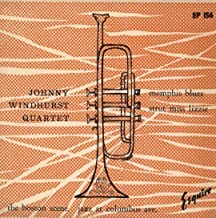
John Henry Windhurst came into this world on November 5, 1926 in New York City, New York and was a self taught trumpeter. At the age of 15 he played his first public performance at Nick’s, and made his professional debut during the spring of 1944 at one of Eddie Condon’s concerts at the Town Hall, both venues in New York City. By eighteen he replaced Bunk Johnson in Sidney Bechet’s band for a Savoy Cafe gig in Boston, Massachusett, which launched his career as a trumpeter.
Going on to play with Art Hodes and James P. Johnson at the Jazz at Town Hall concert in 1946, Johnny then moved to the midwest and after a brief stint in the Chicago, Illinois jazz scene he returned to the Savoy Cafe as a member of Edmond Hall’s band. Eventually he moved west to experience the west coast jazz scene in California. However, his inability to read music forced him to decline gigs with Benny Goodman and Woody Herman, emphasizing his preference for informal jamming.
Over the years, he played with Louis Armstrong, Nappy Lamare, Eddie Condon. Ruby Braff,George Wettling, Jack Teagarden and Barbara Lea. He also led his own band, Riverboat Five, through Columbus, Ohio and Boston for several years, opting to play colleges and small venues instead of the most popular east coast venues and nightclubs.He also did some off-Broadway work with Conrad Janis in the musical Joy Ride.
Windhurst only made one recording with his swing quartet called Jazz at Columbus Avenue, for the Transition label in 1956. On the record label Jazzology, George Buck released The Imaginative Johnny Windhurst which showcased his unique trumpet style. The LP was recorded at a showcase in Massachusetts, where the decision to record it was made on the spot just as the show began. The spontaneous set flaunts his innovative playing on timeless numbers such as Back In Your Own Backyard, Strut Miss Lizzie and Lover Come Back to Me.
He eventually moved upstate to Poughkeepsie, New York with his mother, where he finished his career in a dixieland band at Frivolous Sal’s Last Chance Saloon. Trumpeter Johnny Windhurst passed away from a heart attack at the age of 54 on October 2, 1981 in Dutchess County, New York.
More Posts: bandleader,history,instrumental,jazz,music,trumpet
Daily Dose Of Jazz…
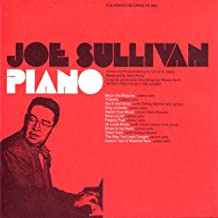
Joe Sullivan was born Michael Joseph O’Sullivan on November 4, 1906 in Chicago, Illinois. The ninth child of Irish immigrant parents, he studied classical piano for 12 years and by age 17, he began to play popular music in silent-movie theaters, on radio stations, and then with the dance orchestras, where he was exposed to jazz. Graduating from the Chicago Conservatory he was an important contributor to the Chicago jazz scene of the 1920s.
Sullivan’s recording career began towards the end of 1927, when he joined McKenzie and Condon’s Chicagoans. Other musicians in his circle included Jimmy McPartland, Frank Teschemacher, Bud Freeman, Jim Lanigan and Gene Krupa. In 1933, he joined Bing Crosby as his accompanist, recording and making many radio broadcasts.
Contracting tuberculosis in 1936, while convalescing at a sanitarium in Monrovia, California in 1937, Crosby organized and appeared in a five-hour benefit for him at the Pan-Pacific Auditorium in Los Angeles, California on May 23, 1937 in front of an audience of six thousand. The show was broadcast over two different radio stations, with fourteen bands attending and raised approximately $3,000 for Sullivan.
After suffering for two years with tuberculosis, Joe briefly re-joined Bing Crosby in 1938 and the Bob Crosby Orchestra in 1939. In 1940, when leading Joe Sullivan’s Cafe Society Orchestra, he had a minor hit with I’ve Got A Crush On You. By the 1950s, he was largely forgotten, playing solo in San Francisco, California, and marital difficulties and excessive drinking caused him to become increasingly unreliable and unable to keep a steady job.
In 1963, he met up with old colleagues Jack and Charlie Teagarden plus Pee Wee Russell when they performed at the Monterey Jazz Festival. Pianist Joe Sullivan passed away on October 13, 1971 in San Francisco at the age of 64.
More Posts: bandleader,history,instrumental,jazz,music,piano
Daily Dose Of Jazz…
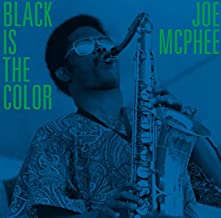
Joe McPhee was born November 3, 1939 in Miami, Florida and grew up in Poughkeepsie, New York. He began playing trumpet when he was eight, before learning other instruments. He played in various high school and then military bands before starting his recording career. His first recording came in 1967 when he appeared on the Clifford Thornton album titled Freedom and Unity.
McPhee taught himself saxophone at the age of 32 after experiencing the music of John Coltrane, Albert Ayler, and Ornette Coleman. During the late 1960s and early 1970s, he lectured on jazz music at Vassar College.
In 1975, Werner Uehlinger started the Swiss label Hathut Records with the specific intent of showcasing McPhee’s music. In the 1980s, he met Pauline Oliveros, began studying her musical theories, and worked with her Deep Listening Band.
Not having been signed with any major label in his native United States, Joe was better known throughout Europe until the 1990s. His 1996 album As Serious As Your Life, which takes its title from the jazz book by Val Wilmer, has been said to arguably be the finest of his solo recordings, according to the AllMusic review.
He has recorded or performed with Ken Vandermark, Peter Brötzmann, Evan Parker, Mats Gustafsson, Jeb Bishop, The Thing, Clifton Hyde, Jérôme Bourdellon, Raymond Boni, and Joe Giardullo. Since 1998, he, Dominic Duval, and Jay Rosen have performed and recorded as Trio X. In the 1990s Dominique Eade and McPhee had a jazz ensemble called Naima.
He has written reviews and commentary for Cadence magazine and was awarded the Resounding Vision Award by Nameless Sound. Multi-instrumentalist Joe McPhee, who plays tenor, alto, and soprano saxophone, trumpet, flugelhorn and valve trombone, is most notable for his free jazz work done from the late 1960s to the present day.
More Posts: bandleader,flugelhorn,history,instrumental,jazz,music,saxophone,trumpet,valve trombone