

Daily Dose Of Jazz…
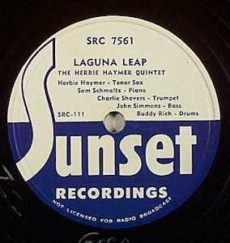
Herbert Haymer was born on July 24, 1915 in Jersey City, New Jersey, and played alto saxophone from age 15 before picking up the tenor at age 20.
Through the Thirties he played with the Carl Sears-Johnny Watson Band, then played with Rudy Vallee, Charlie Barnet, Red Norvo and Jimmy Dorsey from 1937 to 1941. The early Forties saw Herbert playing with Woody Herman, Kay Kyser, Benny Goodman, and Dave Hudkins.
In 1944, he enlisted in the Navy, and after returning he worked as a session musician, including dates with Red Nichols and again with Goodman. In 1945, he led a quintet featuring Charlie Shavers and Nat King Cole on recording, and had three songs issued on Keynote Records in 1946. In 1949 he recorded with Frank Sinatra.
Saxophonist Herbert Haymer, known primarily as a saxophonist in big bands, was killed in an automobile accident after a session on April 11, 1949 in Santa Monica, California.

More Posts: bandleader,history,instrumental,jazz,music,saxophone

Daily Dose Of Jazz…
Claude Luter ws born on July 23, 1923 in Paris, France the son of a professional pianist and studied the instrument with his father before moving to the clarinet in his teens. Seduced by jazz, he abandoned his training as a naval architect, although he retained an interest in sailing and later qualified as a private pilot. He went on to take clarinet lessons from a pit orchestra player, and pursued his passion for jazz by following the Claude Abadie band around Paris’s Latin Quarter clubs in the late 1930s, sometimes acting as a helpmate to the band’s frail trumpeter, the writer Boris Vian, with whom he made his debut on record in 1944.
Encountering trumpeters Pierre Merlin and Claude Rabanit, who became key members of his first band in 1946. Already recording as Claude Luter et Ses Orientais for the French Swing label, Luter and company moved over to the Vieux Colombier, popular with the existentialist crowd. He began a friendship with the trumpeter’s New Orleans-born clarinetist, Barney Bigard, a connection later cemented on record.
Among Luter’s principal influences was soprano saxophonist Sidney Bechet. As luck would have it, Bechet made concert appearances in Paris in 1949 and was teamed with Luter’s down-to-earth trad band at the Salle Pleyel. He also sat in with them at the Vieux Colombier, beginning an association that endured after Bechet settled permanently in France.
Luter later visited New Orleans, Louisiana a number of times, recorded there and took part in the centenary celebrations of Bechet’s birth. He also attended the tribute concert for Louis Armstrong’s 70th birthday in Los Angeles, California in 1970. Clarinetist Claude Luter, who doubled on soprano saxophone, passed away on October 6, 2006 in Paris at the age of 83.
More Posts: bandleader,clarinet,history,instrumental,jaz,music
Daily Dose Of Jazz…
Albert Laurence Di Meola was born July 22, 1954 in Jersey City, New Jersey and grew up in Bergenfield, New Jersey where he got his education through high school. When he was eight years old, he was inspired by Elvis Presley and the Ventures to start playing guitar. His teacher directed him toward jazz standards.
Attending Berklee College of Music in the early 1970s, by nineteen he was hired by Chick Corea to replace Bill Connors in the pioneering jazz fusion band Return to Forever with Stanley Clarke and Lenny White. He recorded three albums with the band, all of which cracked the Top 40 U.S. Billboard pop albums chart. After the group disbanded in 1976, Al set out on a solo recording career demonstrating his mastery of jazz fusion, flamenco, and Mediterranean music.
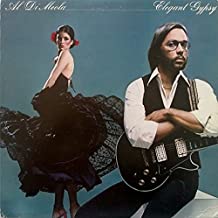
His debut solo album Land of the Midnight Sun in 1976 led to his follow-up His 1977 sophomore album Elegant Gypsy that went gold. His early albums were influential among rock and jazz guitarists. He went on to explore Latin music within jazz fusion, the electronic side of jazz, and along with Jan Hammer and Jeff Beck composed the Miami Vice theme.
Throughout his career he explored his acoustic side, world music and modern Latin styles in addition to jazz and rediscovering his love of the electric guitar in 2006, In 2018, Di Meola was awarded an honorary doctorate of music from his alma mater, Berklee College of Music.
Guitarist Al Di Meola, who cites his jazz influences as guitarists George Benson, Kenny Burrell, Clarence White and Doc Watson, continues to push the envelope with his music.
More Posts: bandleader,composer,guitar,history,instrumental,jazz,music
Daily Dose Of Jazz…
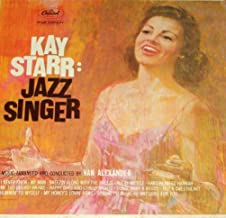
Kay Star was born Catherine Laverne Starks on July 21, 1922 on a reservation in Dougherty, Oklahoma, to an Iroquois Native American father and an Irish/Native American mother. The family moved to Dallas when her father got a job at the Automatic Sprinkler Company,and herer mother raised chickens, whom the young girl serenaded in the coop. When her aunt Nora heard her 7-year-old niece she arranged for her to sing on a Dallas radio station, WRR. Finishing 3rd one week in a talent contest, she placed first every week thereafter. When given a 15-minute radio show, she sang pop and country songs and by age 10 she was making $3 a night during the Great Depression.
The family moved to Memphis, Tennessee where she continued performing on the radio singing Western swing music and a mix of country and pop. While working for Memphis radio station WMPS, misspellings in her fan mail inspired her and her parents to change her name to “Kay Starr”.
By the age of 15, she was singing with the Joe Venuti Orchestra, then went on to work with Bob Crosby and Glenn Miller, who hired her to replace the ill Marion Hutton. After finishing high school, she moved to Los Angeles, California and signed with Wingy Manone’s band. In 1943 she sang with Charlie Barnet’s ensemble, retiring for a year after contracting pneumonia and later developing nodes on her vocal cords as a result of fatigue and overwork.
By 1946 Starr had a solo career and a year later signed a contract with Capitol Records, who also had Peggy Lee, Ella Mae Morse, Jo Stafford, and Margaret Whiting on their roster. In 1948 with a union strike she was left with old songs no of the female singers wanted to record.
In 1950 Kay returned home, heard a recording of Bonaparte’s Retreatby fiddler Pee Wee King. Contacting Roy Acuff’s publishing house in Nashville, got his permission to record the song, he wrote some lyrics and it became her bigget hit selling close to a million in sales. Signing with RCA Victor Records she hit the top ten with My Heart Reminds Me, then returned to Capitol and most of her songs had jazz influences.
After leaving Capitol for a second time in 1966, Starr continued touring the US and the UK, recorded several jazz and country albums on small independent labels including How About This, a 1968 album with Count Basie. By the late Eighties she performed in the revue 3 Girls with Helen O’Connell and Margaret Whiting, and in 1993 she toured the United Kingdom as part of Pat Boone’s April Love Tour. Her first live album, Live at Freddy’s, was released in 1997 and she sang with Tony Bennett on his album Playin’ with My Friends: Bennett Sings the Blues.
Vocalist Kay Starr, who recorded thirty~six albums, passed away from complications of Alzheimer’s disease on November 3, 2016 in Los Angeles at the age of 94. On June 25, 2019, The New York Times Magazine listed her among hundreds of artists whose material was reportedly destroyed in the 2008 Universal fire.
More Posts: bandleader,history,instrumental,jazz,music,vocal
Three Wishes
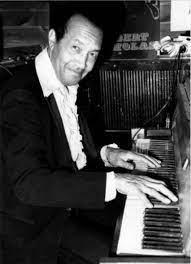
Sir Charles Thompson had but one thing to say in response NIca’s inquiry:
1. “To have you and be able to command you as a king! And be happy together, doing everything we want to do, forever.”
*Excerpt from Three Wishes: An Intimate Look at Jazz Greats ~ Compiled and Photographed by Pannonica de Koenigswarter

More Posts: baroness,history,instrumental,jazz,music,pannonica,piano,three,wishes