

Three Wishes
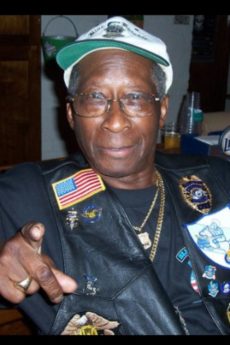
Nica asked Frankie “Downbeat” Brown what he would wish for if he had three and he told her:
1. “A successful music career. By that I mean year~round.”
2. “That I could have my home, car, and a few dollars in the bank, so that, if I get old, I’m covered, in fact.”
3. “The third one would be for my two sons and my daughter to be successful in whatever they do. In other words: behind me.”
*Excerpt from Three Wishes: An Intimate Look at Jazz Greats ~ Compiled and Photographed by Pannonica de Koenigswarter

More Posts: baroness,drums,history,instrumental,jazz,music,pannonica,three,wishes
Daily Dose Of Jazz…
Barbara Gracey Thompson was born on July 27, 1944 in Oxford, England. She studied saxophone and classical composition at the Royal College of Music, but it was the music of Duke Ellington and John Coltrane that made her shift her interests to jazz and saxophone.
Around 1970, Thompson was part of Neil Ardley’s New Jazz Orchestra and appeared on albums by Colosseum. Beginning in 1975, she was involved in the foundation of three bands: United Jazz and Rock Ensemble, a group of bandleaders; Barbara Thompson’s Jubiaba, a nine piece Latin/rock band; and Barbara Thompson’s Paraphernalia, her most recent band with pianist Peter Lemer, vocalist Billy Thompson, bassist Dave Ball, and the late Jon Hiseman on drums.
Awarded the Most Excellent Order of the British Empire (MBE) in 1996 for her services to music, due to Parkinson’s disease diagnosed in 1997, she retired as an active saxophonist in 2001 with a farewell tour. After a period of working as a composer exclusively, she returned to the stage in 2003.
Following hospitalization with atrial fibrillation, she landed a role in an accident and emergency department featured in an episode of the Channel 4 fly-on-the-wall television documentary “24 Hours in A&E” in October 2020.
Thompson has worked closely with Andrew Lloyd Webber on musicals such as Cats and Starlight Express, his Requiem, and Lloyd Webber’s 1978 classical-fusion album Variations. She has written several classical compositions, music for film and television, a musical of her own and songs for the United Jazz and Rock Ensemble, Barbara Thompson’s Paraphernalia and her big band Moving Parts.
She played the incidental music in the ITV police series A Touch of Frost starring David Jason, and flute on Jeff Wayne’s Musical Version of The War of the Worlds. Saxophonist and flutist Barbara Thompson remains active.

More Posts: bandleader,flute,history,instrumental,jazz,music,saxophone
Daily Dose Of Jazz…
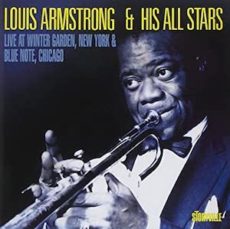
Augustus “Gus” Aiken was born on July 26, 1902 in Charleston, South Carolina. He started playing trumpet with the Jenkins Orphanage band.
He was first recorded professionally in 1919. In the 1920s he worked with several groups, but his best known work would be with Louis Armstrong. He went on to play with Sid Catlett, Roy Eldridge, and Elmer Snowden before his career declined. The end of the Big Band era and the rise of rock and roll is seen as causing the decline.
Trumpeter and cornetist Gus Aiken, who also played blues, passed away on April 1, 1973 in New York City.
Requisites
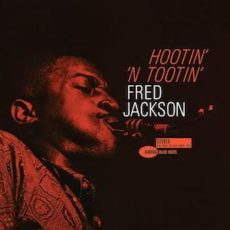
Hootin’ ‘N Tootin’ ~ Fred Jackson | By Eddie Carter
Submitted for your approval from the library this morning is an album by tenor saxophonist, Fred Jackson who began his brief career in 1951 as an R&B saxophonist with Little Richard. A decade later, he worked with blues legend, B.B. King, and has also appeared on a few other Blue Note albums before leaving the jazz scene during the mid-sixties. Fred recorded and released his only album as a leader, Hootin’ ‘N Tootin’ (Blue Note BLP 4094/BST 84094) in 1962. Here, he is working with Earl Van Dyke on organ, Willie Jones on guitar, and Wilbert Hogan on drums. The program consists of seven original tunes by the saxophonist and my copy used in this report is the 1992 Toshiba-EMI Limited Japanese Stereo reissue sharing the original catalog number.
Dippin’ In The Bag starts Side One with a delightfully perky introduction by the quartet. Fred opens with a relaxing theme moving with a spring and a bounce in its step, then Willie constructs a spirited statement that flows steadily into Fred’s final comment ahead of the foursome’s closing chorus fading from view. Southern Exposure is a slow-paced succulent meal introduced by Jones and the rhythm section with some soulful, home-cooking. Jackson brings the fried chicken, black-eyed peas, and collard greens to the melody and adds the potato salad for the first reading. Van Dyke serves the steak and burgers with a highly seasoned sauce on the next interpretation. Jackson wraps up the bluesy meal with a tasty dessert preceding the quartet taking their leave after an enjoyable dinner.
Preach Brother moves the pace to a medium-fast tempo with a spirited church-like feel propelled by Hogan’s drums. Fred delivers the opening chorus and first sermon with a groove that just will not quit. Willie gives the next talk and has fun for one verse. Earl sums up the lesson jumping for joy in the finale ahead of the ensemble’s exit. Hootin’ ‘N Tootin’ begins Side Two with a brisk introduction and melody in unison with an emphasis on lively statements from everyone. Jackson is up first with a swinging reading, then Jones offers a moment of hard cooking. Van Dyke takes an enjoyable romp on the next solo, followed by a short exchange between Hogan and Jackson. The drummer provides an exclamation point with his only solo before the ending.
Easin’ On Down takes the foot off the accelerator for a carefree collective theme with everyone right at home. Fred breaks the ice first with a carefree, easy-going swing. Willie supplies a laid-back response on the next solo. Earl steps into the spotlight last on a smooth course towards Fred’s return with a closing message into the climax. That’s Where It’s At picks up the pace again with the foursome suggesting a skillful virtuosity that is irresistible. One thing piquing my interest is the quote of the Black spiritual, Wade In The Water (1901) in the tenor saxophonist’s and organ’s solos. Jackson burns brightly on an exceptional first statement. Van Dyke also cooks with imaginative verses that crackle and Jones has a feisty performance in-between.
Earl leads off Way Back Home with a brief introduction making everyone feel comfortable as Fred states the mellow opening chorus. He continues providing the spark on the first solo, then Willie executes the next reading proficiently. Earl delivers a highly effective closing statement before the ensemble wraps it up. After Hootin’ ‘N Tootin’ was released, Fred Jackson returned to record his second album at the Van Gelder Studio with the same group plus Sam Jones. Due to poor sales of his debut, the other seven selections weren’t released until they appeared on the CD album of Hootin’ ‘N Tootin’ (1998). Jackson appeared on three other albums for Blue Note as a sideman, Face to Face (1961), Along Came John (1963), and The Way I Feel (1964)!
The music on Hootin’ ‘N Tootin’ is perfect to enjoy at the start of your day or after work, during or after dinner, or for late-night listening. The sound quality is good, but not great. The problem is the microphone placement for the organ is over-modulated when Earl Van Dyke is accompanying Fred and Willie’s solos throughout the album. The only other time I experienced this on a Rudy Van Gelder recording was on Open House (1966). Despite this issue, if you are a fan of Soul-Jazz or jazz organ with a bop flavor, I offer for your consideration, Hootin’ ‘N Tootin’ by Fred Jackson, a tenor saxophonist whose career deserved a better fate and whose music deserved greater recognition!
~ Along Came John (Blue Note BLP 4130/BST 84130), Face to Face (Blue Note BLP 4068/BST 84068), Hootin’ ‘N Tootin’ (Blue Note Connoisseur Series CDP-21819), Open House (Blue Note BLP 4269/BST 84269), The Way I Feel (Blue Note BLP 4174/BST 84174) – Source: Discogs.com © 2021 by Edward Thomas Carter
More Posts: choice,classic,collectible,collector,history,instrumental,jazz,music,saxophone
Daily Dose Of Jazz…
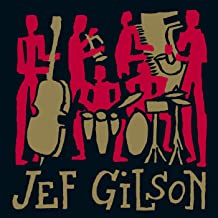
Jef Gilson was born on July 25, 1926 as Jean~François Quiévreux in Guebwiller, France. As a clarinetist he began playing with Claude Luter in the Boris Vian band. After that stint he switched to the piano. The experience of the Dizzy Gillespie Big Band led him to become an arranger and big band leader. In his band played, among others Bill Coleman, Bernard Vitet, Jean-Louis Chautemps, François Jeanneau, Michel Portal, Jean-Luc Ponty, Bernard Lubat, Lloyd Miller and Henri Texier.
For a time he was musical director of the vocal sextet Les Double Six. Gilson’s free jazz recordings did not materialize into success, and in 1968 he temporarily went to Madagascar. His 1971 return saw him concentrating first on ethno jazz, then total improvisation. In 1973 he founded his label Palm, and released recordings with his orchestra Europamerica, and with Butch Morris. For this more arranged record, which started reflecting his achievements of free jazz, he was awarded the 1978 Prix Boris Vian.
Up to his final days he lived withdrawn in Ardèche, France. Pianist, arranger, composer and big band leader Jef Gilson passed away on February 5, 2012.
More Posts: arranger,bandleader,composer,history,instrumental,jazz,music,piano